The learning never stops

classroom
Class is in session

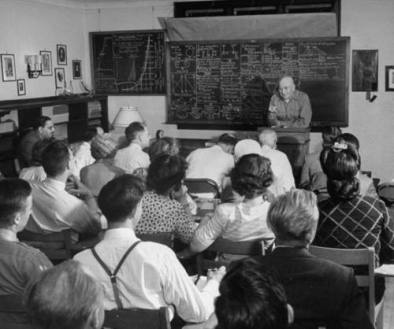
I had the good fortune this past weekend to attend a writing retreat in the serene hills of Malibu, the core of which was a seminar given by noted screenwriting consultant Bill Boyle (who was featured here in my recent Ask a Script Consultant series).

This was by no means “Intro to Screenwriting”, but more along the lines of taking your writing beyond the basics and making it richer and more layered so it reads more like a script written by a professional. Each idea and concept was explained using examples both written and visual.

The way you describe a scene so the words really pop off the page. Writing a character’s introduction to create a solid image of what kind of person they are. Creating dialogue composed of exactly-right words and with a rhythm so it sounds exactly as it should.

And this is just a small part of what was covered. There was a lot of information to process – in fact, I’m still processing it now.

Added bonus for me – a one-on-one with Bill to talk about steps to take to help get my career going.

The big question at the wrap-up session was “Did you get anything out of this?” This isn’t something I could answer right away. I really had to mull it over. In the end, my response, which still applies, was this:

There was a lot to take in, so I don’t think the results will be immediate. It’s not a superficial fix. All of it is something you really need to think about before and while you’re writing.

I have a strong suspicion that in the coming weeks and months, the more I write, the information that was presented will work its way onto my pages. I’ll probably develop my own method of doing it, which will then most likely become an automatic part of my writing process.

Am I glad I went? Very much so. It also gave me the chance to meet and talk with other writers, which is always great. Would I recommend this sort of thing to writers seeking to improve their skills? Definitely. (Here’s a link to Mia Terra Tours, the company that runs them)

No matter how much you think you know about screenwriting, there’s always more of what you don’t know. So when you get an opportunity like this to increase your knowledge and improve your skills, take advantage of it and do it.
The Force is strong with this one

galaxy
Don’t get your knickers in a twist. This isn’t about that.

Star Wars: Episode VII officially opens today, and my God, what an impact this is having. I’ve been a fan since way back in ’77, but not to the point of sleeping in front of a movie theatre for days on end.

I’m opting to wait a couple of days and let all the crazy hoopla die down. It’s not like it’ll play for a week and disappear. Even the neighborhood theatre up the street is playing it on both screens. That’s saying something.

Looking at this phenomenon from a screenwriting point of view, you can’t help but be impressed with the world that’s been created here. Count me among those inspired by the creativity on display in these films and who strive to achieve something similar with our own work.

I’ve written before how I’d love to write the next STAR WARS (as would a zillion other writers), but I don’t mean a sprawling epic space opera, although that would be kind of cool.

I’m talking about an entertaining story of memorable characters and situations that you never get tired of seeing. That thrills you with its overwhelming sense of wonder. The sheer joy of being swept away as this tale unfolds before your eyes and ears.

Do I have that ability? Hard to say, but I like to think so. Nobody thought STAR WARS was going to do well, and you know how that worked out.

So in the meantime, I’ll keep plugging away, telling my own stories the best way I can, and hope that someday I come close to accomplishing something similar. At the very least, it’ll be fun trying.

See you at the movies.


Relocating to a state of zen – OR – Ohmmmmmm

I'll wear the orange, but no way am I shaving my head
I don’t mind the orange robes or the incense, but no way am I shaving my head

As has been well-documented round these parts, I recently entered my western in two contests. One includes feedback as part of the entrance fee, the other gives it as an option.

I don’t usually go the feedback route when it comes to contests, but it had been recommended, so I bit the bullet and opted to do it.

You know that nervous feeling you get in the pit of your stomach while you’re waiting for some kind of potentially life-impacting news? That’s exactly what I was experiencing. Despite my confidence in the script, plus positive comments from friends and trusted colleagues, the butterflies were still taking up residence in my mid-section.

No matter how much I tried to redirect my concentration on working on the low-budget comedy, that nagging thought about the contest feedback would not go away.

What if after all was said and done, the general consensus was that the script sucked and I’d wasted all that time and effort for nothing? Sometimes there’s nothing as powerful as a writer’s self-doubt. It can be downright crippling.

Then the first email came in. If I’d been hooked up to a heart monitor, the thing would have blown a fuse in trying to keep up.

The notes were very positive. Some intriguing comments about what the reader thought needed work, but they seemed to really enjoy it. Possibly even a lot, which was extremely reassuring.

The way I see it, if the reader isn’t gushing over how perfect and wonderful the script is, then I figure there’s not much chance it’ll place, let alone win. Turns out I’m cool with that. While it would be great to win, this is still a pretty solid result.

Two days later, the next email came in. Oh jeez. All those positive feelings I’d reestablished vanished in a puff of smoke. Here we go again.

But much to my surprise, these notes were on par with their predecessor. Lots of positive things to say, plus some suggestions about potential fixes, plus a few things the reader didn’t catch that I thought were fairly obvious, or at least hadn’t been an issue before.

These notes also included scores in 16 categories. Out of a potential 10, I got 2 8s, 2 10s, and the rest were 9s, which was fantastic. Final score 135 out of 150. Not perfect, but still – they seemed to like it, and nobody’s saying, “You suck! Give up now!”  Again, do I think I’ll win? Not likely. Place? Maybe. But right now, that doesn’t seem important.

This whole experience definitely feels like a “face your fears” kind of thing. I know I can do this, and each draft really does help me improve. I was psyching myself out about how I’d do, and ended up actually doing better than expected. That’s pretty good. And since each set of notes had similar things to say about a particular part of the script, I have plenty of time to work on making those fixes before the deadlines for more high-profile contests like PAGE and the Nicholl. Also pretty good.

But most of all I really like the fact that now I can finally put aside thinking/worrying/obsessing about these contests with a little more confidence in my abilities and get back to focusing on developing my other scripts*.

*I’m taking part in the “write an entire script in November” project, but I admit to having had a bit of a head start by working on the low-budget comedy, which was already around the halfway point. But getting this draft done by the end of the month would still put me ahead of schedule.

-My writing chum Justin Sloan, who’s interviewed me as part of his Creative Writing Career book series, has launched the similarly-named Creative Writing Career podcast. A great listen for creative writers interested in several fields, including screenwriting, books and video games. Highly recommended.

Getting over overwriting

Whattya think? Too much?

It’s a bad habit of mine, definitely happens in the first draft, and then has to be slowly and surgically removed with each successive draft that follows.

Simply put, I put too much detail into a scene. I visualize in my mind how it plays out, and that’s what I put on the page.

There’s nothing wrong with it. It’s probably my equivalent of a “vomit draft”, where everything gets written down because you know you’re going to go back and edit and rewrite it multiple times. It’s a starting point.

So after you’ve got that first draft written, how do you know what to get rid of?

Like with sculpting a statue out of a block of marble, just chip away anything that doesn’t belong.

Say you have a scene that runs 1 3/4 pages. Do you know what the point of the scene is? Does it advance the plot and the characters’ development? Is there a way to have the scene still do that but with significantly less words? Can you cut the whole thing in half? Can you cut it by 75 percent?

How much of the scene is just back-and-forth dialogue? How detailed are you when it comes to what the characters are doing? (“He climbs the first step of the stairs, pauses to catch his breath, wipes his sweaty brow, then advances another step.” That sort of thing).

Do you describe parts of the scene that, when you really think about it, really don’t have much or anything to do with moving the story forward (how a room is decorated, what the characters are wearing, etc)? I’ve been reading a lot of scripts lately, and have seen all of these on display.

It’s like this is the culmination of three important screenwriting rules:

get in late, get out early
get to the point as soon as possible
write as if ink costs a thousand dollars an ounce

Don’t be of the mindset that you can’t or won’t change anything. Yes, this is your baby, but what’s more important? Your writer’s ego or telling your story in the best, most efficient way possible?

I had a first draft that was 132 pages. Just about every person who gave me notes said it was too long, and that it had to be at least 20-30 pages shorter. At the time, I thought that was asking too much. If I really pushed myself, I could cut maybe 10, 15 tops.

But as I went through each rewrite, trimming wherever I could, savagely wiping scenes, characters and dialogue from existence, it kept getting shorter until I got it down to 107. A whole 25 pages cut, just as was suggested. It took a while, but I got there.

Whittling each scene down to its bare essentials not only helped make the script better, but also proved beneficial to developing my writing and editing skills so while I’m sure I’ll continue to overwrite in the future, at least I’ll be better prepared to deal with it.

A refresher course we can all use

Okay, class. Who needs more time to work on their script?

I’ve had a lot of goings-on with loglines over the past couple of days, which prompted me to re-post this gem from a little over 2 years ago.

Enjoy.

“Scenario:  You’re at a social function, engaged in idle chit-chat. The topic of you being a screenwriter comes up.

“What’s your story about?” they will undoubtedly ask.

The chance you’ve been waiting for!  What do you say?

You want to pique their curiosity, and not bore them.

In the simplest of terms:  provide a quick summary of the main characters(s) and what happens in the main storyline.

Avoid too much information, non-essential characters, intricate subplots, how it’s a metaphor for this totally different other thing, or generic phrases like “and learns about themselves” or “stumbles into a world she wasn’t prepared for” or the ever-dreaded “wackiness ensues.”

What are the components of an effective logline? Just the following:

1. A protagonist with a flaw.

2. An antagonist with a goal.

3. The situation that pits them against each other

4. What’s at stake/what happens if the protagonist fails?

That’s pretty much it. Keep it simple. Nothing too specific or generic.

Make sure you emphasize the genre. If it’s a comedy, play up the comedic angle. A thriller, go for the suspense. That sort of thing.

And most importantly, make it sound interesting. This is your best chance to grab their attention, so make the most of it (and make sure the script is just as good).”

-3rd half-marathon of the year this weekend. Training’s been more sporadic than I would have liked, so hoping to break 1:55, but will settle for under 2 hours.