Characters are people!

soylent green
Go ahead. Say it like he would. You know you want to.

I’d always heard how your script should somehow reflect “the human condition”, but never really had a firm grasp of eactly what it meant or how you would accomplish that.

I mentioned the phrase in a discussion with another writer, to which they responded “I don’t care about that. I just want to tell good stories.”

But isn’t the story about the characters to begin with? And a story with under-developed characters won’t be as good as one where the characters feel like actual people.

Accomplishing that has always been one of my biggest challenges.

A comment I’ve received more than a few times in the past is that the reader finds my characters good, but somewhat incomplete. They’re established and believable, but only to a point. This isn’t saying they’re flat, one-dimensional caricatures (something I’ve unfortunately seen in many other spec scripts), but they don’t feel completely real.

Readers/audiences want to be able to relate to the characters in your script. They might feel they’re only getting a glimpse into what kind of person the protagonist is, or know there’s more to them, but that “more” isn’t there, and they want to see that. And this doesn’t just apply to the main characters; it’s everybody.

Digging a little deeper and offering up a few more details would help flesh them out, which in turn would make for a stronger story.

When I recently sent a script out for notes, the reader asked if there was anything specific I wanted them to focus on. Without a doubt, it was the protagonist and the antagonist. I felt while they were good, there was definitely a need to make them better.

The reader agreed and made some good suggestions about how that could be achieved. “We don’t know as much about these two characters as you might think,” they wrote. Since I was the writer, I had a little more insight into their respective backstories and what made them the people we see, but some of those details had stayed in my head, rather than been transferred onto the page.

So I went about adding in some small details here and there; a line of dialogue or a seemingly insignificant action. A few touches to give a little more insight into what makes them tick; why they are the way they are.

All of this, combined with a few alterations with the plot, makes this latest draft feel really different, and hopefully stronger, than its predecessors. I’m giving it a few more days to simmer, and will then give it another look to see if that vibe still holds.

What I’m also hoping is that from here on in, I’ll be able to apply this kind of approach to all future drafts, which would in theory, help achieve the same results but in a shorter amount of time.

Hope and ambition. Just two parts of the human condition, right?
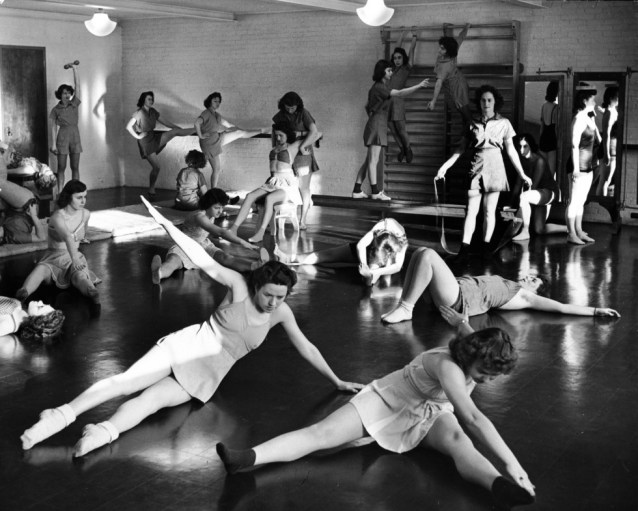
Work those writing muscles!

00748604.JPG
Feel the burn! C’mon! Just one more page!

Earlier this month, I hosted a networking event for screenwriters from the Bay Area and throughout northern California. It was fun and I got to make some new connections as well as reconnect with some already-established ones.

(Can’t recommend this sort of thing enough. Getting to know other writers in your area helps all involved.)

Part of the event involved introducing ourselves and offering up a little background info, including our individual screenwriting- or film-based experience (there were a few writer-directors) and a thumbnail description of our current works-in-progress.

When it was my turn, I mentioned the blog and how I was dividing my time between a few rewrites. At that point, one of the attendees raised his hand.

“A few rewrites? Like, all at the same time?”

I clarified that I’d work on one script for a few days, or at least until I thought I made some significant progress, take a day off, then dive into another one.

“But don’t you find it kind of difficult to stay focused?” He also added that he was relatively new to screenwriting, so the concept of working on a script and then suddenly shifting gears into one that’s totally different was a little mind-blowing.

I explained it this way:

I’ve been doing this a while, and all of these scripts are at least third, fourth, or higher drafts. I’ve gotten to know the stories and characters for each one pretty well, so I can jump right in, fully aware of what each rewrite requires. It might take a while (along with several more rewrites) to finally get there, but I’ve found that always working on something has really helped make the whole process easier.

It really is like exercising. It’s kind of tough and challenging when you’re starting out, and takes time to learn how to do it properly. Then you figure out a pace and/or system that works best for you (with everybody having their own methods and routine). You will indeed discover that the more you do it, the easier it gets.

I try to write every day, even if I only have 30 minutes to spare. You might think such a short amount of time isn’t worth the effort, but I’d disagree. Better to spend a little time writing than no time at all. Friend-of-the-blog Pilar Alessandra even wrote a book to help you do just that. (totally unsolicited plug. It came to mind while I was writing this.)

If you go into a writing session with an idea of what you want to accomplish, it’s a great use of your time. And if you sit down, not entirely sure what to do, you’re still giving yourself the opportunity to focus, which is always good.

That’s really what it all comes down to: Want to be a better writer? Find the time to write.

And reading helps a bit too.

I see what you did there, Mr. Kasdan

Marion Ravenwood
A handful of lines + a solid right hook = insight into 2 key characters

Of all the notes I’ve received about my western, the ones that really stood out the most were about developing the characters a little more – especially the titular protagonist.

I’ve also been spending some time reading, watching and analyzing the scripts and films that influenced it. Namely, RAIDERS OF THE LOST ARK (along with its sequels) and a few others involving female leads who kick ass.

It’s a great opportunity to explore what makes a character tick. A lot’s been written about the “exposition without being blatantly expository” scene in RAIDERS with Indy and the government men, but I’ve been paying more attention to other scenes; the ones that offer up a bit more about what kind of person Dr Jones is as seen through his interactions with other characters.

-Indy discussing with Marcus the implications of finding the Ark.

-The reunion with Marion (see photo above)

-The encounter with Belloq in the cafe in Cairo.

All of these (and a few more) present an aspect of Indy’s character WHILE ALSO advancing the plot. It takes a lot of effort to do that and do it well.

I’ve also been working my way through the infamous story conference transcript, where Spielberg, Lucas, and Kasdan work out the story based on Lucas’ idea of a “swashbuckling archaeologist”. While you can easily find the memo itself, check out this phenomenal post that also analyzes some key points of what’s being discussed.

A lot of this is what I’ve been focusing on during this rewrite. More than a few of my notes highlight certain scenes and say something like “This would be a great place to show us more about her.” So that’s part of what I’ve been trying to do.

I originally thought it would be really tough to implement those kinds of changes, but using RAIDERS et al as guidelines and knowing my objectives for each scene, it actually hasn’t been as challenging. Sometimes all it requires is a few extra lines of dialogue or a modified action line. It’s not always easy, but it definitely feels a little less daunting. Also helping – working on one scene at a time.

In the meantime, progress on the rewrite/polish continues at a healthy pace and I really like how this new draft is shaping up. I suspect the end result will be a little more than just slightly different from previous ones, and hopefully the changes will really take the script to the next level.

A change for the better

gym
A struggle now, but worth it in the end

Ah, the sensation of liberation that comes from not holding back AT ALL when you really throw yourself into a rewrite.

That’s kind of how it’s been working out for the latest draft of my western.

What was originally anticipated as a nerve-wracking ordeal involving constantly second-guessing my choices has actually become quite a fun, thrilling, and surprisingly eduational experience.

Part of the initial objective was to flesh out the characters some more while keeping the story intact. The former seemed to pose the biggest challenge. Tough, but not impossible.

I figured the best approach was to take it scene by scene, starting with page one and the mindset of “what can change about these characters?”

I couldn’t say if it was having not looked at the script for several months, or just going into this with a “just have at it” attitude, but there was definitely something different about this time. Both for me and the story.

The words came, and I really like how it’s coming along so far. There are the expected slight modifications to the story, but nothing too drastic, and overall it feels a little more developed.

In the meantime, the “one scene at a time” approach seems to be working out just fine. I thought the script was pretty decent before, but now think there might actually be a chance the end result could be even better.

One last ride

cowboys
Saddle up

Last week, work on the comedy outline wrapped up a bit earlier than expected, so while I wait for the notes on that, I’ve decided to venture back into some territory I’d considered over and done with.

My western.

Although it’s done alright in some contests (and I suppose top 15 percent in the Nicholl isn’t too shabby), I really think it can be better. Plus, more than a few opinions and comments from totally non-biased outside parties confirm this.

As one set of notes so succinctly put it, “Don’t get me wrong. The story’s a lot of fun and the structure is solid. It’s the characters that could use more development. Nothing too drastic, but just enough to flesh them out a little more.”

Makes sense to me.

On top of that, a recent conversation with another writer, who is starting on their new western script, included mention of how I should read the script for UNFORGIVEN – even though that and my script are worlds apart.

I downloaded it and started reading it. Just a few pages in, and it absolutely confirms I need to step up my game. There’s no reason I shouldn’t strive to present that kind of quality, even in a script that would most likely be labeled a “popcorn-tentpole” kind of story.

Luckily for me, I’ve always enjoyed working on this story and am actually kind of psyched about jumping back into it. I thought it was pretty good before, and now hope to make it even better.

Safe to say this should be pretty interesting.