Al…most…there!

A few weeks ago I completed a hearty rewrite of the animated fantasy-comedy. Notes from readers continue to trickle in.

Responses have been generous with their excitement and enthusiasm about it, along with some extremely insightful notes.

I’ll admit to hoping the script was strong enough as is, but there’s no denying the effectiveness of those notes, which means at least one more draft in my future.

Not crazy about that, but if it needs some more work, then so be it.

I’m not as prolific – and definitely not as fast – as other writers, but this approach works for me. I’d rather take the time to really fine-tune something than rush through it and have it not be as solid as can be.

The silver lining here is that each draft is better than its predecessor, as you would expect. Each round of notes helps contribute to making the script and my overall writing better.

It might seem just out of reach now, but I’m confident that both I and this script will eventually get there.

I appreciate the praise, but need the criticism

I had a great notes zoom call with a script consultant this week for the animated fantasy comedy spec.

They really enjoyed it, and had a lot of nice things to say – about both the story and the writing. Admittedly, those were all very gratifying to hear.

But I was more interested in what they thought didn’t work, or at least could use some tweaking.

Fortunately, it wasn’t a long list – just a handful of things, really. And even better, just about all of them were easily fixable.

This has been my m.o. since way back when I first started. Yes, it’s great to hear somebody say nice things about your script, but I need to know what doesn’t work. How else can I make the script better?

It also helps that my readers have some strong analytical skills. They won’t hesitate to point out both the strengths and weaknesses in my work, and that’s the sort of thing a writer needs if they want to improve.

Naturally, I don’t agree with every single note and/or suggestion, but I can see where they’re coming from. Looking at your script from somebody else’s perspective can help you see issues you might not have even considered. That’s also helped me a lot as well.

It all comes down to the single most important question when it comes to notes and feedback: will this make the script better?

Based on my recent series of notes and how the subsequent rewrites/polishes turned out, I’d offer up a resounding “absoutely”.

Speaking of which, I went through and made some of the changes suggested by the consultant – which also trimmed it a little more to a pleasantly round 100 pages.

Now it’s out to what is hopefully my last set of readers. Once those notes come in and any appropriate changes are made, the shift into contest-entering mode can begin.

There’s also the soul-sucking process of having to write a synopsis, but I’ll focus on the positive stuff for now.

Q & A with Anat Wenick of The Write Script

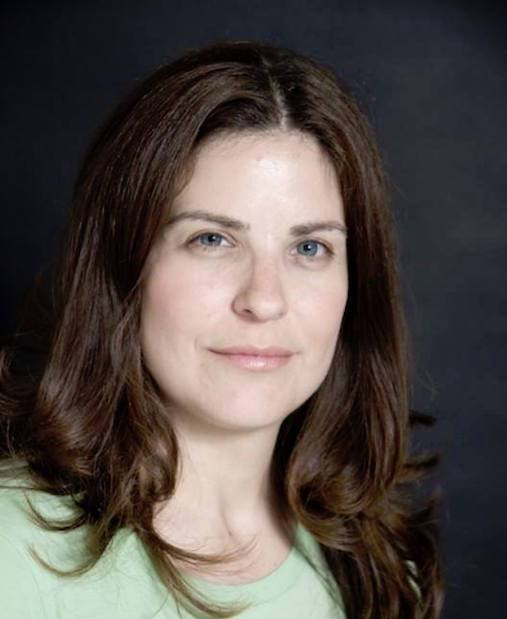
Anat Golan-Wenick started her career in the entertainment business working as a production assistant and researcher in a team that produced series for a large educational channel, while also pursuing a bachelor’s degree in Film/Television and English Literature. After graduation, Anat moved to Los Angeles to dip her hands into the screenwriting pool. Her screenplays have won or placed in contests like Sundance Table Read My Screenplay, StoryPros, Scriptapalooza and others, with one getting optioned by the producer of THE LAST WORD with Shirley MacLaine and Amanda Seyfried.

After taking a script analysis class, Anat discovered her true passion in the entertainment business: reading and improving other writers’ scripts. She became a reader for companies like Amazon Studios, Crispy Twig Productions, The Radmin Company, the Atlanta Film Festival and others, while developing connections with creative voices she aspires to bring to the big and small screens. In her spare time, Anat volunteers as the Secretary on the Board of the San Fernando Valley Writers’ Club (a chapter of the California Writers’ Club).

What’s the last thing you read/watched you considered to be exceptionally well-written?

Not really “the last thing”, but KIDDING on Showtime is a great example of how dialogue, visuals and story come together perfectly. Also on Showtime is I’M DYING UP HERE, which very skillfully weaves many plotlines together. Netflix’s SHTISEL is an example of how a story about a seemingly insignificant part of the world’s population can be made relatable. And for those catering to the younger audience, I recommend studying BOY MEETS WORLD. In terms of reading, THE CARTOONIST’S MASK by Ranan Lurie is a book I’d love to see adapted to screen.

How’d you get your start in the industry?

I always thought I would be a screenwriter. But an internship (followed by a full time position) at a TV station, working on a youth drama, set me on another course. I was a rookie intern when I was allowed to join my first script meeting. I sat quietly, just hoping to learn as much as possible, when the director, an amazing woman by the name of Yael Graf, turned to me and asked for my opinion. Without thinking, I said the solution won’t work. A second later, I was mourning the loss of the best (and only) internship I ever had, when much to my surprise, the director actually wanted to know why I reached such a conclusion. Based on my explanation, the script was revised.

A few years later, I took a script reading class. Based on my analysis, the instructor encouraged me to pursue this career. My hope is to move from script reading to creative executive so I can work with undiscovered writers to help bring their stories to the screen.

Is recognizing good writing something you think can be taught or learned?

Akiva Goldsman once said: “Writing is both a pleasure and a struggle. There are times when it’s really aversive and unpleasant, and there are times when it’s wonderful and fun and magical, but that’s not the point. Writing is my job. I’m not a believer of waiting for the muse. You don’t put yourself in the mood to go to your nine-to-five job, you just go. I start in the morning and write all day. Successful writers don’t wait for the muse to fill themselves unless they’re geniuses. I’m not a genius. I’m smart, I have some talent, and I have a lot of stubbornness. I persevere. I was by no means the best writer in my class in college. I’m just the one still writing.”

You can absolutely become a better writer. But just like any other job – if you want to be good at it, you have to study it, stay on top of new trends, and practice, practice, practice.

What do you consider the components of a good script?

Visual over telling. Don’t say “he walks into a room,” say “he skips, dashes, stumble, falls, dances, shuffles into a room,” etc.

Know the genre you’re writing. Nothing wrong with a horror rom-com, but make sure characteristics of all genres are present in the script.

A well-executed “wait for it” moment. Scripts that constantly challenge me to wonder what will come next, even in based-on-true-event movies. Sure, we all know the Titanic is going to sink, but we wonder what will happen to the protagonists.

If you spent time developing your characters’ external and internal conflicts, make sure to address them during the climactic moment. In CASABLANCA, Rick must get Ilsa and Victor safely to the airplane (external), while saying goodbye and convincing the love of his life to exit his (internal).

Good balance between dialogue and action sequences. Allowing the two to play off of one another, rather than feeding viewer/reader with a spoon.

What are some of the most common screenwriting mistakes you see?

Excessive usage of voiceover for no reason. Personally, I’m not one of those “never voiceover” believers, but use it with caution.

Unimaginative character description (i.e. JANE DOE, 26, pretty).

Unnecessary camera and other directorial instructions as well as endless parentheticals in dialogue sequences.

Undeveloped subplots.

Usage of “Starts to,” “Begins to,” “Commences to,” etc. as well as “beat.” These phrases can kill the flow of a screenplay, especially when writing an action-adventure movie. Instead of using “beat”, state what causes it (i.e. biting lip, looking away, cracking knuckles, etc.). Instead of “starts to walk but rethinks it,” consider “marches off. Halts.

What story tropes are you just tired of seeing?

I would read anything, but if you’re going to write about vampires or zombies, make sure you put a fresh spin or angle on the genre. WARM BODIES and INTERVIEW WITH THE VAMPIRE are two good examples. If writing a romcom, love doesn’t have to be the ultimate goal. In WORKING GIRL, the protagonist wanted a career, and along the way she found love.

What are some key rules/guidelines every writer should know?

Read, watch, internalize, and execute in your own writing, repeat.

Connect with other professionals. You never know when an early connection will lead to a later opportunity.

When receiving comments, always thank the person even if you don’t agree with them.

Your work may get rejected not because it’s not great, but because it’s not what the company is looking for. Do your research before sending.

Entertainment attorneys are a lot more approachable than agents and managers, and often can get your screenplay to the right hands.

People will have a more favorable view of you if when boasting about your achievements, you take a moment to acknowledge others. So when posting “my screenplay just advanced to quarterfinals/semi-finals/finals in “this and this” contest, add “congrats to all others who advanced” or “thank you for this opportunity, etc.

Even if making the slightest change to your script, make sure to save it as a new version. You never know when you may want to refer to an older version.

Always email yourself the latest version of your script, not just in PDF format, but in the writing-program-of-your-choice format, so you can restore the file if the software fails to open.

Ever in a slump and can’t come up with an idea? Public domain is your friend. Either adapt a project, or use it as the base for your own interpretation (e.g. how EASY A was inspired by THE SCARLET LETTER).

Have you ever read a script where you thought “This writer really gets it”? If so, what were the reasons why?

The number of scripts I recommended can be counted on one hand. However, I have yet to encounter a project that was not salvageable, even those I scored extremely low. I encourage all writers to watch Toy Story 3: Mistakes Made, Lessons Learned to realize we all struggle to “really get it.”

How do you feel about screenwriting contests? Worth it or not?

Winning a contest can do wonders to boast the spirit, but winning alone will do nothing to advance a writing career, unless you build on the momentum. I recommend listening to Craig James, Founder of International Screenwriters’ Association (ISA) advice on Screenplay Contest Strategy.

How can people find out more about you and the services you provide?

I mostly read for agencies, studios and contests. Screenwriters often don’t want to hear the truth about their screenplays, they just want someone to say they’re great, as Josh Olson wrote in his article “I Will Not Read Your F*%!ing Script”. However, I have done quite a few free readings for aspiring screenwriters. They can find me through my website The Write Script, social media like LinkedIn and Twitter, or through the San Fernando Valley Writers’ Club, where I volunteer as a Board Member. Writers don’t have to pay big bucks for a quality reading. Join a writing group or a writing community like Talentville that tells it like it is, and swap screenplays.

Do your research if you plan to pay for someone to read your script, especially if they boast about recommending your material to their contacts within the industry. I once encountered a person advertising his reading services on known screenwriting platforms, stating he was a final-round reader/judge for the Austin Film Festival and an Emmy Award Winner. Since the prices he charged were low for someone with such experience, I researched his claims and found out they were far from true. This is not to say the person didn’t give good feedback, but writers can receive the same type of professionalism for much less, or even for free.

Readers of this blog are more than familiar with my love/appreciation of pie. What’s your favorite kind?

I have yet to find a pie I haven’t liked, and not for lack of trying. I volunteer as a tribute to boldly go where no pie lover has gone before to try new flavors. Has hazelnut chocolate cheesecake pie been invented? (Editor’s note: it has.)
Q & A with Jenny Frankfurt of Finish Line

Jenny Frankfurt is the founder of The Finish Line Script Competition. She was a literary manager in LA, NYC and London for over 20 years.

What’s the last thing you read/watched you considered to be exceptionally well-written?

I May Destroy You. Hands down the best show I’ve seen in the past year, and I’ve watched A LOT during Covid lockdown.

I also think Revelation, which won the Grand Prize Winner in this year’s Finish Line competition, is one of the best pilots I’ve ever read.

How’d you get your start in the industry?

I was at Tisch School of the Arts at NYU in the Cinema Studies Department and applied for a job as a floater (permanent temp) at the William Morris Agency. I got the job and realized I wouldn’t be able to do do it and fulfill any kind of classes. Since my plan was to work in representation after I graduated, I dropped out and started working instead. Though I wish I had finished college for personal reasons, it was the greatest opportunity I could’ve had. My time at William Morris (now William Morris Endeavor) was the most educational of my career.

Is recognizing good writing something you think can be taught or learned?

The more writing, bad and good, you do, and films/TV you watch, also bad and good, the better one can be at discovering what good writing truly is. Good writing is not subjective in my opinion, but one’s taste in various styles of writing is. I’ve always been a voracious reader since I was little. When I started covering scripts for the talent department at William Morris, I’d read them incredibly carefully and determine what roles were important for casting and not. To read something carefully is one of the most important elements of being a good recognizer of what is working and what isn’t. That and having an open heart and mind to story, ideas and the ways storytelling connects to our emotions. The more you read and pay attention, the more these things become evident.

What do you consider the components of a good script?

It’s become clearer to me that the writer’s voice is the most important thing in a script. It’s what sets a great script apart from a good script. Theme and emotion ought to be linked, and when done right can be very powerful. Characters written without feeling will come across as just that – they’ve been outlined and written. All of this, when done really well, pops off the page. It’s a joy to see.

What are some of the most common screenwriting mistakes you see?

Lack of planning in a story. Set pieces that are there only because the writer had a cool idea and stuck it in a script that doesn’t connect to that scene or narrative. Ideas and development of characters that are just good enough. Just good enough isn’t enough anymore. Energy on the page is a necessity.

What story tropes are you just tired of seeing? 

Crying in the shower, sliding down the wall, a single tear. Mainly though forever the answer to this question will be road trip movies. Almost impossible to write them without them being full of every trope. Joe needs $25K or his mother will not get the operation she needs and gosh, an opportunity to get this money happens to present itself and hijinks occur. It may be fun, it may have merit, but it’s a trope.

What are some key rules/guidelines every writer should know?

There are no rules.

Just tell the story.

Outline. 

Create an interesting setting and fascinating characters. Plop them in and let it happen.

Research the industry; know the ‘players’, read the trades.

When you receive notes, take what you like and leave the rest. Keep your voice.

Leave your ego at the door.

Have you ever read a script where you thought “This writer gets it”? If so, what were the reasons why?

Oh wow, yes. But most of the time if you ask the writer they don’t know that they have! There’s a certain beauty in a confident piece of writing, no matter the medium. It’s a lack of excess rather than an addition of something. It’s the combination of just enough emotion, character development, story hook, theme. Just tell the story.

Seeing as how you run a screenwriting contest, what are the benefits for screenwriters to enter the Finish Line competition?

You can rewrite and resubmit new drafts for free throughout the competition and our notes are fantastic. They really are. They’re actionable so they don’t just say what works and what doesn’t, but we offer suggestions on how to fix it when it’s not working. We work with our writers so you feel connected; not just a fee thrown into the ethers. We want to help you get your script in the best shape you can by the end of the competition. If you don’t win, you still have a better script for another competition or a manager or producer. 

Also, we have a large number of mentors – over 40 throughout film/tv and in the US, UK, Canada and Australia. Top people. People who can actually make things happen. From this 40 you usually get another 5-10 from referrals from the mentor and we add a few more on once we know the winning scripts and determine who else might respond. So there are a lot of people you’re meeting and building a working relationship with. We really mentor you throughout. We always go the extra mile and stay in touch, continuing to help long after the year has passed.

Lastly, we don’t overcharge and you can connect with your consultant if you need to clarify notes. We’re available to you. And we speak to all the semi-finalists after the competition and talk about the industry, your script, game plans for representation, etc. We end up working with some of the semi-finalists as well!

How can people find out more about you and the services you provide?

Our website is chock-full of information at www.finishlinescriptcomp.com. And you can email us with questions at info@finishlinescriptcomp.com. We’re on Twitter, Instagram and Facebook too!

I’d also like to point out if you have a script for a feature, short, or TV pilot, both this year’s Finish Line Script Competition and the Tirota/Finish Line Social Impact Competition are now open for submissions. Click on the link above for all the details.

Readers of this blog are more than familiar with my love/appreciation of pie. What’s your favorite kind? 

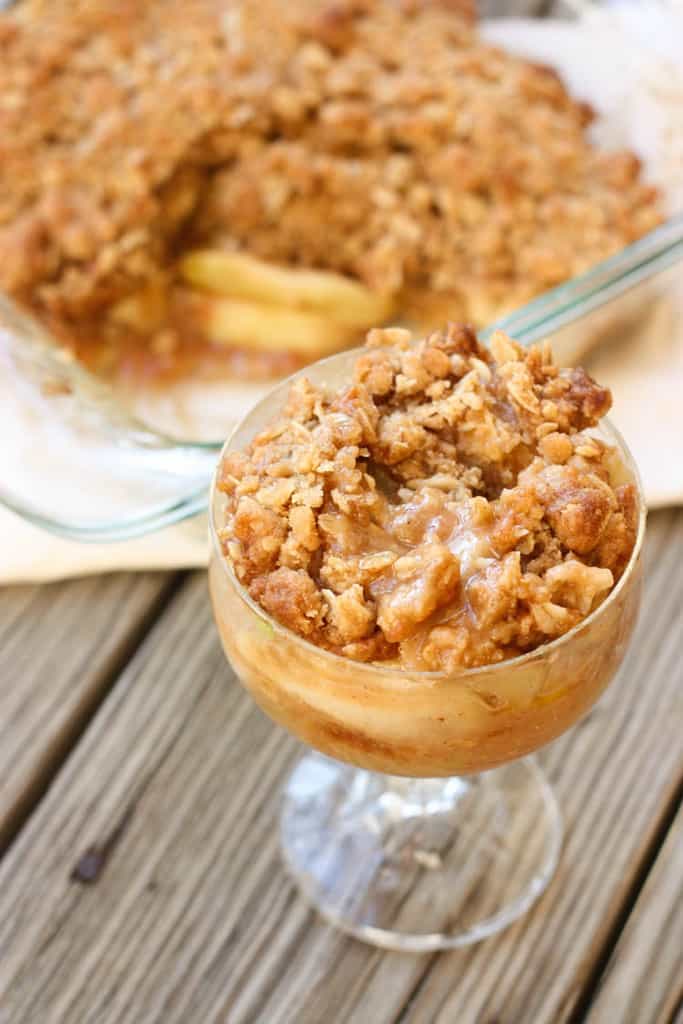
Hands down, it’s apple. Preferably apple crisp. ‘Merica, right?

Reading truly is fundamental

marilyn book

Even though I’ve been spending a lot of time working on new scripts, I’ve also made a recent effort to start reading more scripts.

The contents of the folder on my desktop labeled “TO READ” include around a dozen scripts of well-known produced films and those of my associates within my social network, along with a few I received with the advice “you really should read this”.

It’s a lot of scripts to work my way through. I’ve completed three so far, and each one has been amazing. It’s a fantastic experience I can’t recommend enough.

What’s probably the most important aspect is that taking a look at all these different scripts lets you see the multiple ways of how a story can be told on the page. Each and every script does an amazing job with its own interpretation of “Show, don’t tell.”

It also helps because many times we’re so wrapped up in our own material that reading something new and original where you have no idea what’s going to happen gives your imagination a much needed rest. You can literally just sit back and enjoy the ride.

When you get so wrapped up in the story that you can easily visualize it playing out in your head, and the words and pages just fly by, then you know you’re in the hands of a skilled writer who knows what they’re doing.

Very important – while you shouldn’t try to straight-out copy somebody else’s style, you can at least let it influence how shape your own. Don’t just read a script – study how it’s put together.

Is the writing crisp and colorful? Are you able to follow the story? Is the sequence of events organized so that you can’t imagine it happening any other way? Do the scenes make their point fast and move on? Do the characters seem like actual people? Does the dialogue sound natural and get the point across without being too on-the-nose?

These questions – and so many more – will come up while I’m reading a script for the purpose of giving it notes. But if somebody says “Read this. I think you’ll like it.” and notes are NOT involved, then it’s easier for me to read it just for the sake of enjoying it, and not feel the need to be critical.

That being said, it’s still tough for me to take off my editor’s hat – even for a casual read. It’s not uncommon for me to find the occasional typo or ask a question about something I’m just not sure about. This isn’t me being critical on purpose. Quite the contrary. When something like that takes me out of the story, I want to let the writer know so they can fix it and prevent it from happening for the next reader.

Even though this is a read for enjoyment, certain technical factors still come into play for me. Does it look good on the page? Is there a lot of white space, or do I have to endure big blocks of text? How’s the formatting? Any misspelled words? Pretty much – do they have the basics down?

And the stories themselves – WOW! Some are in genres I love, others totally new to me, and even a few offering a totally new take on an old standard. Even though I may not be a fan of something, I can still appreciate and enjoy a well-told story.

Also very important – after you finish reading, especially if it’s a friend’s script, thank them for letting you take a look, and let them know what you thought of it (preferably in the positive). If it’s a produced script and the writer is on social media, you can let them know that way. I’ve done this a few times, and each time the writer was very appreciative.

At my current rate, I’m getting through about two to three scripts over the course of a week, so I have at least another month to month and a half before the folder empties out.

I’m looking forward to getting through this batch, and even more so when it’s time to start compiling the next one.