While work continues on my actual writing projects, I’ve also been trying to reduce the number of scripts in my “Scripts to Read” folder.
It’s a decent-sized mix of recent and not-so-recent films, along with material written by professionals, colleagues, and “Hey, I saw you posting about this on social media. Sounds cool. Could I read it?”
It’s amazing how fast you can go through a script when you don’t have to give notes. Even more so when it’s exceptionally well-written, which a lot of these are.
One pair in particular, both written by the same pro.
Each script was unique unto itself, primarily in its story/concept. But you could tell that they were written by the same writer. A very distinctive style for how the stories played out, how it looked on the page, and even moreso in terms of voice.
One detail in particular that really stood out was the lightning pace in which these stories are told. Scenes are brief, to the point, and really move things forward. There’s no lingering, no unnecessary dialogue. The writer really adheres to the “get in late, get to the point, move on” method.
These were scripts that once you started, you didn’t want to stop. Honestly. The writing really was that good.
It’s also worth mentioning that these scripts don’t necessarily break any screenwriting rules, but they sure do bend them. Nothing major or drastic, but the writing is so strong that you’re willing to overlook this unusual approach.
Reading these scripts definitely makes you appreciate (and enjoy) how well-written they are, and also starts you thinking “My scripts aren’t at this level, so what can I do to get them closer to it?” Not that I’d ever try to duplicate this writer’s style – that would be futile. It’s more about letting my own voice and style really come through on all those fronts.
I’ve always been guilty of overwriting scenes, and seeing this very streamlined presentation is a good reminder that I should try for that as well.
It’s probably a good thing that I’m reading all of these scripts now because it’s still relatively early in the rewrite/overhaul phase for my scripts. I don’t think it’ll be too much of an issue to start applying what I’m picking up into them.
My scripts were good, but now it feels like there’s more potential for them to be much, much better. Here’s hoping.
In addition to all the work on my scripts, the short film and the recent writing conference, I’ve been making more of an effort to read more scripts. Fortunately, members of my network of trusted colleagues continue to come through and provide me with a constant supply of quality material.
It may be part of a swap, or they ask me to read their latest draft and give notes, and sometimes it’s just for hell of it.
I try to read one per week, preferably in one sitting, but that’s a time management thing. Not having to do notes really speeds things up.
The latest lineup includes two pilots, two features, and the manuscript for a book about screenwriting – all from writers I know, and another writer sent me three scripts from an established pro; one in production, the second just announced, and the third in development.
Sometimes I’ll track down the script for a film I really enjoyed and want to see how the writers had it on the page, and then see how it compares to what’s onscreen. I’ve also started compiling a list of scripts I’d love to read.
Reading scripts can be incredibly helpful. Seeing how somebody else put their story together along with how it reads on the page can influence your own methods. Not that you should try to copy them, but it helps you hone your skills and craft to make your writing more effective, as well as establishing your writer’s voice.
Speaking of voice – check out scripts by Shane Black, Quentin Tarantino and Brian Duffield as shining examples. Great writing, each with a distinctive voice that really engages and involves the reader.
Reading scripts can also help motivate ideas. If I’m feeling stuck, I’ll watch a scene that’s similar to what I have in mind, then find the script to see how it reads on the page, then figure out a different way for mine to go.
I’d forgotten how satisfying it is to take the time to read a script. Doesn’t matter whose it is. Good writing is good writing, great writing is better, and a solid, well-written script is the best.
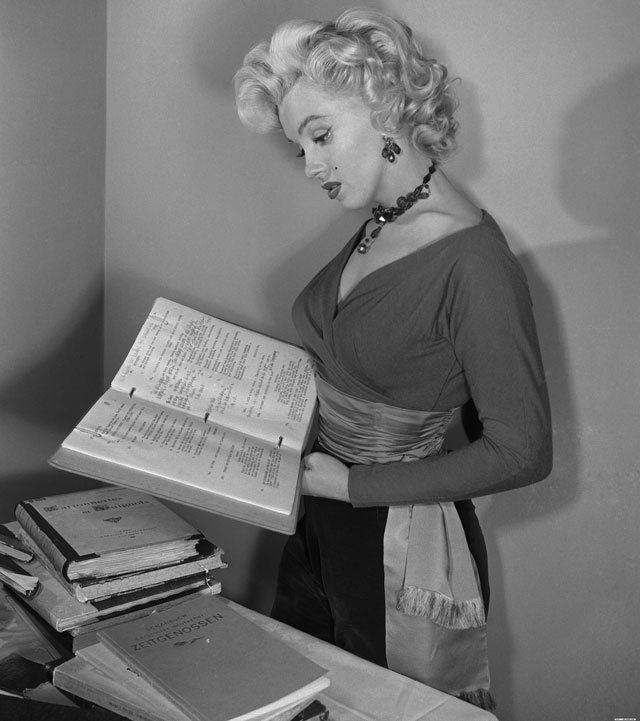
“Hmm. Billy’s new script. Something about men dressing up as women to hide from gangsters? Hope it’s funny.”
I’ve seen a good number of articles and online comments recently about how a script should convey the writer’s “voice”. That prompted this blast from the past from June 8, 2018.
Enjoy.
“When I’ve done script notes for writing colleagues, no matter what the genre is, I can usually tell who wrote it – because of the way it reads. Each writer has their own particular style, so each of their scripts has its own corresponding “sound”. Or I’ll get notes back on my material which often includes a comment along the lines of “this sounds like something you’d write”.
This isn’t just about dialogue. It’s about a writer’s overall style, or how they tell the story of their script. You don’t just want the reader to read your story; you want them to experience it. Which can be accomplished by adding that extra layer.
Everybody develops their own individual style, and it takes time to find it. The more you write, the more you’ll be able to hone your writing to reflect your own individuality.
Just a few things to think about:
-How does your script read? Is the writing crisp and efficient, or are you wasting valuable page real estate with too many lines of your loquacious verbosity? Taking it one step further, do you use the same words over and over, or do you relish any opportunity to give your thesaurus a solid workout?
-How is your story set up and how does it play out? Is it simple and straightforward, or complex and full of deliciously tantalizing twists and turns? Are you working that creativeness to show us things we haven’t seen before, or is just page after page of the same ol’, same ol’?
-Is it a story somebody besides you would want to see? Just because you find the subject matter interesting doesn’t mean it has universal appeal. However, there is the counter-argument to that in which you could attempt to have your story include elements that would satisfy fans of the genre while also appealing to newcomers.
-Can’t ignore the population within the pages. Are your characters well-developed and complex, or do they come up lacking? Do we care about them, or what happens to them? Can we relate to them?
-What are your characters saying, or not saying (subtext!)? How are they saying it? Do they sound interesting or dull as dishwater? Very important – do they sound like actual people, or like “characters in a movie”?
Remember – the script is a reflection of you. A solid piece of writing shows you know what you’re doing. Offering up something sloppy is simply just sabotaging yourself.
Who hasn’t heard a variation on the line about a script being a cheap knockoff of a more established writer? While I can understand admiring a pro writer’s style, why would you attempt to copy it? It probably took them a long time to find their own voice, and by trying to write like they do, you’re denying yourself the opportunity to do the same thing for yourself.
Or to put it another way: they didn’t take any shortcuts to become the writer they are today, so why should you?”
When was the last time you read a script that was really hitting on all cylinders?
Great story, cinematic writing and vivid imagery, compelling characters, the whole kit and kaboodle.
What’s the one thing that ties all of them together?
That writer’s voice.
We hear about it all the time, and I’ve always described it as how the writing in a script is a reflection of the writer’s style.
If you read a script by Shane Black, Judd Apatow, Nora Ephron, or Quentin Tarantino, you’d know it by the way it reads. Each one is written in the distinctive voice of each writer.
And that’s what you want to achieve with your writing. When somebody reads your scripts, they’ll know it was you.
The need to establish your own voice when it comes to your scripts can’t be stressed enough.
I’ve read a lot of scripts that try to mimic an established writer’s voice, and it usually falls flat. Part of the reason is that the writer is trying too hard to sound like the established writer, which seems counterproductive. If I want a script that reads like Judd Apatow wrote it, I’ll read a Judd Apatow script.
It also doesn’t help that some of these established writers created a niche for themselves with their writing style, so anybody who comes after them with the same approach will immediately be labeled a pale imitation. You might have a phenomenal script, but if the only thing somebody remembers about it is that it’s just ripping off Tarantino, you’ve just wasted everybody’s time.
Now this isn’t to say that you can’t write in a similar style, but you need to put your own spin on it to help it stand out.
What are some of your strengths, writing-wise? In what areas do you really shine? Is there a way you can apply that to other aspects of your script? You want your script to have a real impact on the reader; one with a strong voice can help accomplish that.
Another benefit of a script with a strong voice is that it helps make it that much more memorable. Not only does it leave an impression, but chances are it’ll stick with the reader long afterward. Many’s the time I’ve finished reading a script and within five minutes don’t remember a thing about it. Sure, the writing may have been adequate or possibly just slightly above average, but a lack of a distinctive voice from the writer is a key missing ingredient.
Then there are those I’ll remember a long time after. Maybe it was the story or even just the concept, or the protagonist, or a great scene/sequence. No matter what it was, you could come to me a few months from now, or maybe even next year, and ask “Hey, do you remember that script about ____?”
Tim Schildberger is an experienced writer, script coach, and co-founder/Head Judge of Write LA – an annual screenwriting competition that gives writers a chance to get read by managers, and hear their winning script read by professional actors in LA (and posted on YouTube). He cares far too much about helping writers improve their craft and get access to the industry. Tim is an expat Australian, a former TV journalist, writer on the globally popular soap opera NEIGHBOURS, newspaper columnist, creator of a comedy/reality series for the Travel Channel called LAWRENCE OF AMERICA, and one of the key members of the original BORAT team. He has stories.
In his spare time, Tim is a husband, parent, tennis player, road tripper, and he and his family foster kittens. Seriously. Twitter: @write_la Instagram: @writela
What was the last thing you read or watched you considered exceptionally well-written?
I hate to be a cliche, but THE CROWN – sets the bar very high. Peter Morgan is a genius. His ability to tell story with and without words, and build tension in scenes that on the page might appear boring, is remarkable. THE QUEEN’S GAMBIT had similar skill, attaching us to an unconventional character quickly and effectively. Feature films – I loved PALM SPRINGS – structurally, and characters/dialogue, and who doesn’t love a woman solving the problems using education and intellect!
How’d you get your start in the industry?
I was 22, living in Australia (where I’m from), working as a trainee TV News Producer. I had applied to newsrooms, and I’d called up various TV series, asking if they needed a writer. It was a simpler time. A nightly soap opera, NEIGHBOURS, let me do a writing submission, which they liked – and said they’d get back to me. In the meantime I got the job in TV news.
One day, six months later, I got a call in the newsroom, it was NEIGHBOURS, asking if I’d like to write an episode. I said yes, obviously. They mailed me the scene breakdowns, I typed my script on a typewriter, and ten days later mailed it back. All after working a full day in the newsroom. I did that 5 more times before it all got far too overwhelming. I was the youngest writer they’d ever had, and that experience made it clear to me that writing, in all its forms, was my future.
What was the inspiration for creating the Write LA competition?
We wanted to create a competition we’d want to enter. I’ve been writing for a long time – and I’ve entered competitions large and small. I’ve won a few, placed in a bunch, and it became clear that many of the writing comps out there don’t really do much when it comes to attracting attention, gaining industry access, or launching careers. And pretty much none put any kind of focus on helping writers improve their command of craft. So our goal was to build a competition that somehow combined both goals – to help with the craft, and to help with the access.
What makes Write LA unique compared to other screenwriting competitions?
Two things I think separate us. First, we are a competition run by actual writers. So we are able to deliver a certain degree of respect and admiration for the act of actually finishing a script and entering it – that many competitions lack. We know how it all feels.
Second, we stand proudly in front of the competition. Everyone knows I’m the co-founder and Head Judge. When you email a question, it comes to me. I do an enormous amount of reading, and I’m supervising every aspect of the competition. We try hard not to be a faceless comp where sometimes it can feel like you’re sending your script into a void, and then hoping something emerges. It matters to us that the entrants feel ’seen’.
A big concern for writers entering a screenwriting competition is the quality/experience level of its readers. How does Write LA address that?
I hear that. And I’ve experienced it first hand. A script will make the Nicholl semifinals, and won’t make it out of the first round somewhere else. And then you get ‘feedback’ that feels like it was written by someone who never actually read the script, they just strung a few buzzwords together.
So to address that – I’m heavily involved in the reading process. I’ve handpicked our small team, I do a ton of reading personally, and I set pretty clear parameters when it comes to what I’m looking for when it comes to command of craft. Every script that makes it into our top 15 semi finalists will have been read by at least three different people, including me.
We give every script, whatever the genre, or whether it’s a TV pilot or feature, full respect and attention. And all the additional feedback (offered at an extra fee), is done by me personally. So there is a consistency of the feedback, and a name attached to it (mine). I’m not interested in telling anyone what I would do, I’m focused entirely on maximizing the opportunities presented by the writer and doing my best to empower them to bring the most out of their idea, and their skills.
What do you consider the components of a good script?
Gosh – this isn’t easy to answer quickly, but I’ll try. For me, a good script needs fleshed out characters, who face clear challenges – no matter how big or small. Because no matter how detailed the world, or ‘big’ the story, if we don’t care about the characters, it’s all a waste of time.
Also, an understanding of the audience experience is awesome. A writer who is aware of audience expectations, and is able to manipulate those expectations is exciting. And finally, a clear sense of where the story is heading. Not a lot of extra clutter. Just a solid story, competently and confidently told.
What are some of the most common screenwriting mistakes you see?
Misuse of Scene Description is HUGE. Using it to reveal character details an audience couldn’t possibly know. Using it to show off a writer’s literary command – with all sorts of flowery descriptions that waste time, rather than establish ‘mood’.
Not writing an outline. I’m confident I can pick within 5 pages if a writer has an outline, and a firm idea of who this story is about, and where it is going. And taking too long to dive into story. Spending page after page building a complicated world, and then finally starting some sort of story – is a big mistake. Even STAR WARS had a brief title explanation, and then we were into Darth Vader storming Leia’s ship. The rest we figure out as we go.
Lastly, I have to add too many spelling errors. A sloppy script does not inspire confidence.
What story tropes are you just tired of seeing?
A character waking up, turning off their alarm, and getting into the shower as the first thing we see. Happens WAY more often than you would expect, and is not only dull, but unwise. What viewer who sits in a darkened movie theatre wants to see a feature film start that way?
I’m also not a fan of drawn out action sequences. It’s great that you see the car chase in your head, but all a reader cares about is ‘does someone important die?’
Oh, and a shot of ‘overdue bills’ on the kitchen table. Anything but that please. I see a lot of stereotypes with the characters too – which usually tells me a writer is basing a character on another character they’ve seen in a movie or on TV – rather than an actual, flawed, complex human being.
What are some key rules/guidelines every writer should know?
What you are doing is more about hard work than flashes of inspiration. It’s less about talent than it is about grind.
Accept that re-writing is inevitable. Your first draft will not be a work of art. It’s a starting point.
Learn to receive notes as comments on the words on a page, not a personal attack, or a statement on your writing ability.
Characters are more important than story nowadays. Put the extra effort into figuring out who they are, and their emotional journey through your story.
What you are doing is brave, and awesome, and you should feel very proud of yourself every time you finish anything. Every time. Plenty of people talk about writing something. You went and did it. That’s huge and should never be ignored.
There is no work of art in the history of human beings that has ever been loved by 100% of the people. Accept that your work will not be universally loved – because humans are humans.
Details matter. Every scene matters. Every line of dialogue matters. Everything you do is conveying a message to an audience. Understand and embrace that.
Have you ever read a script where you thought “This writer really gets it”? If so, what were the reasons why?
I read many scripts like that! I read hundreds of scripts a year, so I regularly find writers who are very skilled. As for reasons, I would say the absolute, clear number one is making me feel something. I’m not alone in this. I tell anyone who’ll listen if you can make a reader feel a genuine human emotion, that is FAR more important and impactful than any set piece, world, intricate story or cute scene description. It isn’t even close.
Also, it’s fun to read scripts by writers who think about the audience, and work hard to provide us with a rich, enjoyable experience. I know the expression “write what you know” is popular. My version is “write what you know, but make it accessible to strangers.”
And while I’m here, let me add that writing what you know really refers to your emotional experience and authenticity. Not your time in middle school. If you can dig into your emotional space, which is uniquely yours, and share that on the page – that authenticity connects you with a reader/audience, and goes a long way to establishing what the industry likes to call your “voice”. I’d like to say it was easy to do. It’s not. But it’s important.
Readers of this blog are more than familiar with my love/appreciation of pie. What’s your favorite kind?
I have to say I’m a big fan of custard. There’s a custard tart in my homeland Australia – a mini pie – which is very much my favorite. But as that doesn’t really exist here – I’m going to say I like banana cream, apple, peach, and I’m a big fan of all the cobblers and crumbles too. I don’t think I’d refuse any pie that came my way.




 Maximum Z