Q & A with Hudson Phillips of ScriptBlast

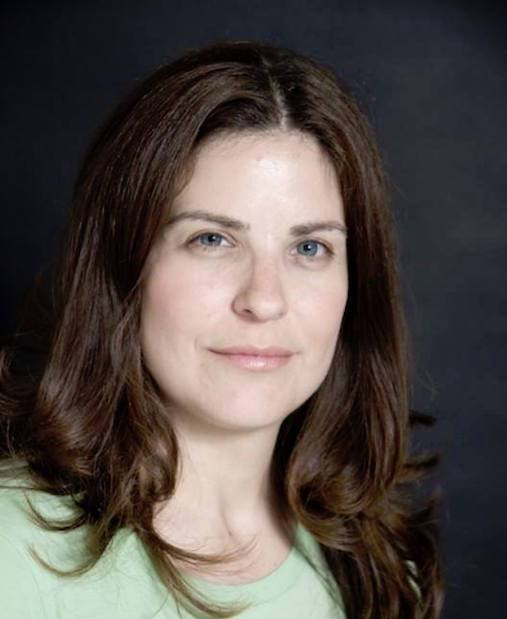
Hudson Phillips is a writer and producer from Atlanta, GA. He’s also the founder of ScriptBlast, an online community to help screenwriters navigate the emotional ups and downs of the writing journey, and host of the ScriptBlast Screenwriting Podcast.

What was the last thing you read or watched you considered exceptionally well-written?

The short story collection STORIES OF YOUR LIFE AND OTHERS by Ted Chiang is jaw-droppingly good. I don’t think I’ve ever read a short story collection where every single story is perfect. Each one is weird and memorable and moving and smart and tackles some big gigantic idea. I’ve also really enjoyed the Zoey Ashe series (FUTURISTIC VIOLENCE AND FANCY SUITS and ZOEY PUNCHES THE FUTURE IN THE DICK) by David Wong. Both are laugh-out loud funny with incredibly memorable characters in one of my favorite grounded science fiction worlds. 

Movie-wise, NOBODY was a surprisingly fresh take on the action hero. I could use the same line to describe SHADOW IN THE CLOUD, another film that shook up traditional action films. 

TV-wise, the first season of KILLING EVE really blew me away. I can’t think of a TV show that surprised me as much as that. 

How’d you get your start in the industry?

It is a very long, very winding road that has taken me here, where I still feel like I’m just getting started! I’d always been writing, but in my mid-20s I started taking it more seriously after a music career fizzled out. I ended up writing comedy scripts with two buddies of mine and the second script we wrote together (a sports comedy about church league softball) ended up getting optioned by Lionsgate films (thanks to a friend of a friend of a friend).

For a split-second we were “local celebrities” on radio and in the newspaper and then everything that could go wrong did go wrong. The writers strike happened, pushing it back a few years. Lionsgate changed out leadership and dropped the film. A local production company picked it up and made it, but completely threw our script out. I don’t think a single word of ours ended up on screen (I still haven’t seen it). So a quick high and low right out the gate. My two writing partners both gave up after a couple new scripts went nowhere, so I broke out on my own.

The problem with having writing partners is when you start writing on your own it’s like starting fresh all over again. So I leaned into the movies I loved the most – crazy sci-fi fantasy action adventure stuff – and started to write that. I’d write a script, send it out to connections in Hollywood, no one would be interested, and I’d write another one. I’d get occasional bites from a contest or the Black List, but nothing ever gained traction. I think in large part because I was a single dad to a young kid, so I couldn’t move out to L.A.

Pro tip: it’s SO much harder to make it in this industry if you’re not in the city where it all goes down. It was during this time of rejection after rejection that I started ScriptBlast as an online haven for writers to connect, talk about their struggles in a safe space, and find encouragement and inspiration. 

Being stuck in Atlanta, I leaned into what the city had to offer, which was great filmmaking talent and started making short films. This was a great way to get to know local actors and crew, and we started pulling together our little “collective” of talent until eventually, in 2017, we shot our first feature film, THIS WORLD ALONE. It’s a post-apocalyptic drama / thriller about three women attempting to survive in a world without technology or power. And after a very long 4-year journey (with a year-long pause for COVID), the film was finally released in May and is now available wherever you rent or buy movies online. 

THIS WORLD ALONE helped get my name out there enough and allowed me to make enough connections that I’ve since been hired to write a few other indie features. So while I’m not yet making a living at it, writing is bringing in a good second income right now. And I believe all these little seeds will eventually build momentum and add up to a career. Fingers crossed that 2021 is the year that it happens! 

Is recognizing good writing something you think can be taught or learned?

It’s interesting that you say “recognizing good writing” and not “becoming a good writer.” I don’t think recognizing good writing is something that can be taught or learned. But I don’t look at good writing that way. Good writing is a feeling. Good writing is being whisked away to another world and laughing and crying and cheering and getting done and immediately wanting to go back. A technically excellent screenplay that checks all the screenwriting boxes is not necessarily “good writing.” 

But I also think most people can be taught to become good writers (some just might take more time than others). I’d put writers into three categories:

Writers who can recognize good writing and turn around and immediately write an excellent story. 

Writers who can recognize good writing but struggle to write an excellent story.

Writers who can’t recognize good writing and will therefore never write an excellent story.

The ones who can be taught are in that middle level but I think 90% of us are in that middle level. We know what a great story looks like but it takes a lot of time and work and practice and patience to create one ourselves. 

What do you consider the components of a good script?

Such a great question. there’ s probably an infinite list, but here’s the first three that popped in my head:

Set-up and payoff. This is the easiest way to make your script look smart. Just set up everything you payoff and payoff everything you set up. Need a great line for your finale? Go back to your first act and find one that’s applicable. Have an item that represents something in the beginning? Make sure you bring it back in the end. My first rewrite is always looking for these things. 

Emotional honesty. We’ve all seen the movies (usually starring Adam Sandler) where you get this pat life lesson at the end like “spend more time with family.” These kinds of lessons are ultimately forgettable because they aren’t honest. They are themes we’ve seen a million times before. The real honest emotions aren’t pat answers, they are deep questions. Mark Duplass decries this as “you know when you’re up at 2am with your best friend and you’ve had too much to drink and you talk about your biggest fears? That’s what you should write your movie about.” Give the audience an answer, and they’ll forget it right after they leave the theater. Present the audience with an honest and brave question, and they’ll keep thinking about it long after they’re done. 

Tension & release. If a screenplay is a wavelength, it should go up and down. It’s all about pacing. A script should rise and fall and feel natural. I think this is one of the toughest things to teach because it’s a “feeling”. Lean into whatever genre you have, if it’s a horror movie it should be a little scary, medium scary, really scary, and then give us a break. If it’s a comedy, it should be a little funny, medium funny, really funny, and then give us a break. 

What are some of the most common screenwriting mistakes you see?

Telling someone else’s story and not telling your own. So many writers just regurgitate their favorite movies and don’t have anything unique to say about the world. Audience members don’t care about the “what” of your story, they care about the “why.” If you’re just writing something because “it’s cool” or “it’ll sell”, the audience can see right through that. It goes back to the “emotional honesty’ thing above. It’s the old saying “write what you know” but that doesn’t mean write about your day job or your current boyfriend, it really means “write what you feel.” If you’re emotionally connected to your story, your audience will be too. 

What story tropes are you just tired of seeing?

Usually the things that make me roll my eyes have to do with masculinity on film. I get so bored with cold, stoic, masculine action heroes. I’m equally tired of female action heroes who feel like someone went into the script and just did a search to change “him” to “her.” And don’t get me started on shallow descriptions of women in scripts “nerdy but beautiful” or whatever. Like the two films I mentioned earlier – NOBODY and SHADOW IN THE CLOUD, these are films with warm, broken, interesting, action heroes who lean into their vulnerabilities as much as their strengths. 

What are some key rules/guidelines every writer should know?

Here’s kind of a checklist I try to run through for every scene I write:

GOAL: What does your protagonist want in this scene and how are they going to get it?

CONFLICT: What obstacles make it difficult for your protagonist to reach that goal?

CHOICE: What difficult choice will the character have to make as a result of the conflict? 

STAKES: What is hanging in the balance with each choice?

TWIST: What does this choice tell us about the character that we didn’t already know?

THEME: How does this choice push the character’s emotional journey forward?

CONNECTIVITY: Can the elements of this scene be set-up in a previous scene or lay the ground-work for future scenes? 

VISUALIZE: Is there a visual or item that can replace obvious dialogue or action? 

LESS: Is there a “perfect line” or action that could say it better than a long drawn-out scene?

VOICE: How can you rewrite it to be more “you”?

Have you ever read a script where you thought “This writer really gets it”? If so, what were the reasons why?

The screenplays that I love all make me feel something. They get an emotional response out of me, whether that be fear or laughing or crying or warm-heartedness. They are masters of set-up and payoff. They surprise me at every turn and never make the obvious choice, I can’t predict where the story will go. They ask big questions about the world. 

How do you feel about screenwriting contests? Worth it or not?

On their own, I think they’re worthless. I don’t know if I’d go as far as calling them scams. I think a lot of contests are well-intentioned, but it’s a model built on 99% of writers who enter paying money and getting nothing in return. That industry has created a lie that writers can write one screenplay, enter a contest, win, get an agent, and go write Hollywood films. This lie is why so many writers give up after their first script. It’s heart-breaking to me. 

Having said all that, I still enter them. Why? Because I think they do have merit when combined with other things. It’s all about stacking the deck. If you google the winners of these contests, you’ll usually find that they’ve written multiple screenplays, have already made some indie films or short films, maybe published in a different medium, might even already have representation. A contest on its own means nothing, but when you put a win on your writing resume alongside a dozen other things, it helps stack the deck. 

If you’re going to enter a contest, pick and choose carefully. First, only enter contests that actually give you something of value, whether that be notes or industry access. Secondly, don’t enter the big, giant contests where you’re competing against 10,000 other writers. Instead, find all the local film festivals that have screenwriting competitions, enter those and then attend those festivals! A strong connection with another filmmaker at a festival is worth a million times more than a laurel on your website. 

I always tell writers “don’t put your career in the hands of someone else.” Contests are relying on someone else’s validation of your work. That’s a very unhealthy way to live. Go make a short film. Go make your own $1000 feature. Attend festivals and meet people. Seek out local producers and directors and pitch them ideas until you connect on something and go make it. Make a narrative podcast or YouTube series. There are a million options to advance your career and I suggest you do all of them. 

How can people find out more about you and the services you provide? 

I’ve been doing ScriptBlast as a free service for about 5 years cause I always struggled with charging for anything that wasn’t actually helpful for writers. So I just launched a new online community in 2020 where we have weekly Zoom calls, tons of free resources and courses, accountability worksheets, share notes on each other’s scripts, etc. It’s blown my own productivity through the roof just being a part of it, and multiple writers have finished their screenplays as a result of being in the group. And it’s only $10/month. You can try it free for a week at Members.ScriptBlast.com.

I also do a podcast and provide other free resources (like online courses or one-on-one consultations) you can find at ScriptBlast.com. And if you’re interested in checking out THIS WORLD ALONE, it’s available on all digital platforms. You can learn more at ThisWorldAlone.com

Readers of this blog are more than familiar with my love/appreciation of pie. What’s your favorite kind?

It’s hard to beat a slice of hot apple pie with a scoop of vanilla ice cream. But, if there is no heat source or ice cream, I might go with peanut butter pie.

Q & A with Cody Smart of Next Level Screenwriting

Cody Smart is an L.A.-based Latina writer, script consultant and script doctor with degrees in English Literature & Linguistics, Screenwriting, Development, and Producing, who prides herself of helping writers take their work to the next level, in both English and Spanish. She moved from Santiago, Chile to L.A. to pursue her masters, fell in love, and now enjoys family hikes chasing her toddler around in the perfect L.A. weather.

She worked as a script analyst at Sony for three years, reading hundreds of scripts, and honing her craft and learning to appreciate the development of scripts and how to best guide writers to deliver the best script possible.

She also works as a judge for seven film and screenplay competitions, where she’s learned what makes scripts engage readers and attract the attention of managers, agents and producers. As a writer herself, Cody has placed in multiple competitions, and won some awards.

Cody is also the head of coverage of Story Data, a script-hosting site, where she does a bi-monthly vlog with tips for screenwriters.

She also currently teaches two courses about Screenwriting, Script Doctoring and Get Your Script Contest Ready, as a UCLA Extension instructor in the Writers’ Program, and is developing a new TV Workshop for the fall quarter.

Cody has worked with a wide variety of clients, helping to provide in-depth script analysis, and also rewriting/doctoring hundreds of scripts in order to get them ready for production. She loves working directly with her clients, understanding their needs, and staying true to the essence of the story the client is trying to tell, in order to elevate the story and characters.

What was the last thing you read or watched you considered exceptionally well-written?

THE QUEEN’S GAMBIT. I was a little bit late watching it, as it came out in 2020, but I was so legitimately impressed at the quality of the writing. They managed to take chess, a “boring” subject that doesn’t lend itself to be that visual or entertaining, and turned it into an exemplary work of character development.

How’d you get your start in the industry?

While I was in grad school, I started interning at Sony, and that’s were I fell in love with the development side of things. Before that, I always thought my path was to be a writer only. Then I discovered how interesting developing and consulting was, helping other writers improve their work, and getting scripts ready for production.

Is recognizing good writing something you think can be taught or learned?

Yes, definitely. I believe everyone can learn if they have the will and want to do so. If you study scripts and films, and study your craft, you can learn what good writing is. That’s also what makes any writer a better writer: studying the best in the craft, lots of practice, and lots of rewriting.

What do you consider the components of a good script?

A good script is a great mix of different things: amazing characters that are three-dimensional and realistic, with real wants and needs, and great arcs. A world that aligns with the tone and genre, and that hopefully is also new in some way. A premise that either feels fresh and new or that is a new take on old ideas, making it feel fresh and new. Writing that has a voice of its own, and that makes you want to keep turning pages.

What are some of the most common screenwriting mistakes you see?

As a consultant & doctor as well as a judge for multiple festivals, I’m constantly looking at issues in scripts. Doing that, I’ve found these to be the most common:

– A premise that doesn’t work from the start. Usually this means you just have an idea, but no plot. Or you have an unoriginal concept or one we’ve seen hundreds of times before.

– Not proofreading, which leads to bad formatting, typos, grammatical errors, etc.

– Not outlining first – then you don’t know where your story is going, and it shows in your draft, as the story loses aim. Part of this could be when the story/the protagonist has no clear goal.

– Dialogue that doesn’t feel natural or no use of subtext.

– Starting scenes too early and leaving them too late.

– Not killing your darlings – some scenes may be greatly written, but if they don’t advance the plot, then you don’t need them in your script.

– Directing in your script – this tends to take the reader out of the world of your story.

– Not grabbing your reader/audience in the first 10 pages (or even the first 3!)

– Overusing transitions.

– Use of flashbacks that don’t move the story forward or don’t reveal any new information.

– Zero character introduction/description. No memorable introductions, so we forget them. Also too many characters being introduced at the same time, so we forget who’s who.

– The world of your story isn’t clear.

– Long chunks of descriptions – Readers are known to skip past these. 

– Too much exposition.

– No subplots or interesting supporting characters.

– Antagonists that are two-dimensional or formulaic.

– Writing a formulaic script just with the intention of selling it, instead of writing a unique story you’re passionate about that’ll definitely get you noticed (even if just as a writing sample).

What story tropes are you just tired of seeing?

Tropes work for a reason—audiences expect certain things in certain movies, like a falling in love montage in romcoms. But just because people expect them, that doesn’t mean they don’t want to be surprised. The tropes I’m tired of seeing are those that just follow tropes to the letter. I love when a writer turns a trope upside down and surprises the audience. When they don’t and deliver the same old things, then that’s when they’re boring and I don’t want to see them anymore.

What are some key rules/guidelines every writer should know?

– Show your voice in your script. That’s what will set you apart from the thousands of scripts being written every year.

– Write the story you want to tell as a writing sample to impress people, and open doors for you, even if it doesn’t get bought or filmed.

– Formatting exists for a reason. Follow it and don’t play games, or your script won’t get read, even if it’s amazing.

– It’s hard to come up with new ideas that haven’t been told. But new takes on old ideas that make the ideas feel fresh can be a great way of creating something that feels new.

-The best antagonists are just as interesting as the protagonist, and they’re the hero of their own story. When we understand their reasoning, that makes them much more powerful.

Have you ever read a script where you thought “This writer really gets it”? If so, what were the reasons why?

I remember when I read the script for JUNO. It had such a unique voice and point of view. It had a protagonist that felt real, with flaws and dreams. It explored what felt like real teenagers. It had amazing supporting characters, and we could understand everyone’s POV in the story, as different as they all were. And it was pretty contained. It could be shot for cheap. But most importantly, it wasn’t something completely new: we’ve seen stories about teen pregnancy before but it turned the idea upside down, making it feel so fresh that it ended up winning so many writing awards.

How do you feel about screenwriting contests? Worth it or not?

Totally worth it. I even developed a course called “Get Your Script Contest Ready” for UCLA Extension that debuts in June 2021. That said, having a contest strategy, knowing what appeals to contests, identifying the best contests to propel your career forward, and understanding that you also need to network and take an active role in getting your scripts out there are key things every screenwriter needs to know.

How can people find out more about you and the services you provide?

For information about my script consulting & doctoring services, or my writer services, they can check out my Facebook page (@NextLevelScreenwriting), my Instagram page (nextlevelscreenwriting), or send me an email (nextlevelscreenwriting@gmail.com).

I can share more about my services and background information, and we can talk more in detail about what they need help with, as I offer very personalized services.

Readers of this blog are more than familiar with my love/appreciation of pie. What’s your favorite kind?

Wow, this is such a hard question, because I have such a sweet tooth. But if I had to pick just one, I’d have to say my grandma’s pecan pie recipe. It brings back so many amazing childhood memories by the smell and taste of it, especially living far away from my family, and missing them all the time.

Q & A with Aiko Hilkinger

Aiko Hilkinger is an award-winning, queer, German-Japanese screenwriter from Colombia. She primarily works in fantasy and animation, and her pilot “Kate and Ava” placed her in Network ISA’s “Top 25 Screenwriters to Watch in 2021”. Hilkinger creates magical worlds filled with diverse characters that children and teenagers can relate to and see themselves represented in. Not only does she strive for diversity and inclusion in her stories, but most importantly, she believes that through her animation work she can connect with kids and help teach healthy communication and to own up to their mistakes.

When she’s not writing, Hilkinger works as a script analyst for big screenwriting contests and has recently started her own script consulting business.

What was the last thing you read or watched you considered exceptionally well-written?

I feel like I’ve said this to the point where the people who know me have gotten tired of hearing it, but Kipo and the Age of Wonderbeasts on Netflix has to be my pick. I honestly think the show made my 2020 much more bearable while also blowing my mind with their imaginative storytelling. The show was planned as a three-season arc and you can tell when watching it that it was meticulously planned as the story is just so tight and has a clear message all the way throughout.

How’d you get your start in the industry?

I actually don’t feel like I’ve “made it” into the industry yet. I joke that I graduated from “baby writer” to “toddler writer” in 2020 since it was a learning year for me. After I graduated from film school, one of my teachers helped me get an internship with an agency where I perfected my coverage skills. After that I applied to work as a script analyst for a contest site while entering some contests here and there for the first time.

I won some pretty cool awards this year and was named one of the Top 25 Screenwriters to Watch in 2021 by Network ISA. I’m looking forward to new opportunities this year, like getting signed and hopefully selling my first script or getting staffed in a room.

Is recognizing good writing something you think can be taught or learned?

I think you can teach someone what to look out for (structure, format, clear goals, etc.) in a script but after a while it becomes a feeling. It sounds strange, and it definitely is, but after reading as many scripts as I have, you start to very easily pick up on things that make a script good or bad. At times it has everything to do with those “rules” we’re taught in film school, and it’s easy to technically say why something isn’t working, but it’s only through practice of your own craft and opening yourself up to criticism that you really learn what works or doesn’t for you, and how to break those rules.

What do you consider the components of a good script?

A good script has something to say. I’m a sucker for a good theme, and I always suggest looking at it as a “thematic statement” or “the lesson the protagonist or antagonist will learn”. When a writer knows what they want to say with their piece, it gives the story direction, and it is much more enjoyable to see them get there.

Oftentimes when a script doesn’t know where it’s going, you can feel it, it’s like you’re wandering around aimlessly through a world, surrounded by characters who don’t know what they want and thus you don’t know what they need. Definitely start your writing journey by knowing your why (why do you want to tell this story and why does it need to be told now?).

What are some of the most common screenwriting mistakes you see?

One of the most common mistakes I see is characters not having a clear goal. A goal is the driving force behind the protagonist accomplishing something by the end of the script and without it, the story can drag on and become repetitive. We don’t want to see someone live their life day to day because it’s not dramatic; not every action pushes the story forward. That’s why it’s important that not only the protagonist has a clear goal, but the antagonist does as well, since they’re the ones who will get in the way of the protagonist.

I also recommend giving other characters goals of their own so that they can be more rounded and have something going on that gives them more depth other than doing whatever the protagonist needs them to do.

What story tropes are you just tired of seeing?

I’m exhausted of seeing every queer story be about “coming out” and dealing with homophobic families, friends, etc. It’s the same annoyance I have about POC films, especially Asian-American stories, only being about the struggle of immigration. There are so many other beautiful stories that can be told outside of the constant struggle to be accepted by a straight, white society that need to be told in order to showcase the beauty of our cultures and communities.

I want to watch a film about queer love that has nothing to do with strife or struggle, and I’m so happy that we’re slowly starting to get there with shows like Schitt’s Creek and She-Ra. And I would love to take my family to watch a film with characters that look like us where they’re just living their lives unapologetically, like Crazy Rich Asians and One Day at a Time.

What are some key rules/guidelines every writer should know?

Write with a purpose. Know your why. Why are you writing this story? And why is it important to tell it now?

Fill out a bullet point list of your main structure in order to know your main emotional turns before you start writing.

Always outline, even if you don’t like it. Look at your outline as your first draft.

Make sure your characters have clear goals (wants) and clear needs (areas for growth).

Sneak exposition through conflict.

Make sure your characters are emotionally motivated.

Antagonists should have a clear driving force behind them.

Read as much as you can and make it a variety (both produced and peer scripts) in order to figure out what works for you in terms of storytelling, and to practice pinpointing why they don’t work for you.

You don’t have to take every note you get. Take the ones that resonate and throw away the ones that don’t.

Have you ever read a script where you thought “This writer gets it”? If so, what were the reasons why?

The main reason is that it’s clear the writer has something they want to say. I know I’ve mentioned this a lot, but it truly is the most important thing you can do. The second I get your voice and understand your point of view, I’m in. It’s our job to make that as clear as possible because our voice is what will set us aside from other writers. It’s what we bring to the table, what we’ll get hired based on, so it’s the most important thing to develop. And through a lot of practice, giving and receiving notes, you’ll get there.

How do you feel about screenwriting contests? Worth it or not?

Contests can be worth it if you have money to splurge. I know a lot of people who haven’t had a lot of success from them and it can definitely be frustrating. I’ve had a very 50/50 experience. I didn’t make it into a few contests that I was excited about, but then I made it into one that really, really worked for me.

You have to be very clear with yourself about what you want out of these contests (exposure, management, etc.) and make sure you know they’re not your only chance to get into the industry. Also, be sure to ask fellow writers about their experiences in order to find out which contests are the best for you and your goals.

How can people find out more about you and the services you provide?

I am super active on Twitter – @aikohwrites. That’s where you can find me saying things I probably shouldn’t. And if you’re interested in my coverage services, you can go to aikohilkinger.com/script-coverage to find more information.

Readers of this blog are more than familiar with my love/appreciation of pie. What’s your favorite kind?

This is such a good question! My favorite is apple. My mom has always had her own recipe and her apples for some reason always taste amazing. But if we’re being more specific, I love a good, warm and buttery strudel (maybe with some ice cream and caramel).

Q & A with Jenny Frankfurt of Finish Line

Jenny Frankfurt is the founder of The Finish Line Script Competition. She was a literary manager in LA, NYC and London for over 20 years.

What’s the last thing you read/watched you considered to be exceptionally well-written?

I May Destroy You. Hands down the best show I’ve seen in the past year, and I’ve watched A LOT during Covid lockdown.

I also think Revelation, which won the Grand Prize Winner in this year’s Finish Line competition, is one of the best pilots I’ve ever read.

How’d you get your start in the industry?

I was at Tisch School of the Arts at NYU in the Cinema Studies Department and applied for a job as a floater (permanent temp) at the William Morris Agency. I got the job and realized I wouldn’t be able to do do it and fulfill any kind of classes. Since my plan was to work in representation after I graduated, I dropped out and started working instead. Though I wish I had finished college for personal reasons, it was the greatest opportunity I could’ve had. My time at William Morris (now William Morris Endeavor) was the most educational of my career.

Is recognizing good writing something you think can be taught or learned?

The more writing, bad and good, you do, and films/TV you watch, also bad and good, the better one can be at discovering what good writing truly is. Good writing is not subjective in my opinion, but one’s taste in various styles of writing is. I’ve always been a voracious reader since I was little. When I started covering scripts for the talent department at William Morris, I’d read them incredibly carefully and determine what roles were important for casting and not. To read something carefully is one of the most important elements of being a good recognizer of what is working and what isn’t. That and having an open heart and mind to story, ideas and the ways storytelling connects to our emotions. The more you read and pay attention, the more these things become evident.

What do you consider the components of a good script?

It’s become clearer to me that the writer’s voice is the most important thing in a script. It’s what sets a great script apart from a good script. Theme and emotion ought to be linked, and when done right can be very powerful. Characters written without feeling will come across as just that – they’ve been outlined and written. All of this, when done really well, pops off the page. It’s a joy to see.

What are some of the most common screenwriting mistakes you see?

Lack of planning in a story. Set pieces that are there only because the writer had a cool idea and stuck it in a script that doesn’t connect to that scene or narrative. Ideas and development of characters that are just good enough. Just good enough isn’t enough anymore. Energy on the page is a necessity.

What story tropes are you just tired of seeing? 

Crying in the shower, sliding down the wall, a single tear. Mainly though forever the answer to this question will be road trip movies. Almost impossible to write them without them being full of every trope. Joe needs $25K or his mother will not get the operation she needs and gosh, an opportunity to get this money happens to present itself and hijinks occur. It may be fun, it may have merit, but it’s a trope.

What are some key rules/guidelines every writer should know?

There are no rules.

Just tell the story.

Outline. 

Create an interesting setting and fascinating characters. Plop them in and let it happen.

Research the industry; know the ‘players’, read the trades.

When you receive notes, take what you like and leave the rest. Keep your voice.

Leave your ego at the door.

Have you ever read a script where you thought “This writer gets it”? If so, what were the reasons why?

Oh wow, yes. But most of the time if you ask the writer they don’t know that they have! There’s a certain beauty in a confident piece of writing, no matter the medium. It’s a lack of excess rather than an addition of something. It’s the combination of just enough emotion, character development, story hook, theme. Just tell the story.

Seeing as how you run a screenwriting contest, what are the benefits for screenwriters to enter the Finish Line competition?

You can rewrite and resubmit new drafts for free throughout the competition and our notes are fantastic. They really are. They’re actionable so they don’t just say what works and what doesn’t, but we offer suggestions on how to fix it when it’s not working. We work with our writers so you feel connected; not just a fee thrown into the ethers. We want to help you get your script in the best shape you can by the end of the competition. If you don’t win, you still have a better script for another competition or a manager or producer. 

Also, we have a large number of mentors – over 40 throughout film/tv and in the US, UK, Canada and Australia. Top people. People who can actually make things happen. From this 40 you usually get another 5-10 from referrals from the mentor and we add a few more on once we know the winning scripts and determine who else might respond. So there are a lot of people you’re meeting and building a working relationship with. We really mentor you throughout. We always go the extra mile and stay in touch, continuing to help long after the year has passed.

Lastly, we don’t overcharge and you can connect with your consultant if you need to clarify notes. We’re available to you. And we speak to all the semi-finalists after the competition and talk about the industry, your script, game plans for representation, etc. We end up working with some of the semi-finalists as well!

How can people find out more about you and the services you provide?

Our website is chock-full of information at www.finishlinescriptcomp.com. And you can email us with questions at info@finishlinescriptcomp.com. We’re on Twitter, Instagram and Facebook too!

I’d also like to point out if you have a script for a feature, short, or TV pilot, both this year’s Finish Line Script Competition and the Tirota/Finish Line Social Impact Competition are now open for submissions. Click on the link above for all the details.

Readers of this blog are more than familiar with my love/appreciation of pie. What’s your favorite kind? 

Hands down, it’s apple. Preferably apple crisp. ‘Merica, right?

Q & A with David Wappel

David Wappel is a screenwriter and story consultant. He recently wrote the screenplay for Long Gone By, now available on HBO MaxAmazon, and iTunes. Wappel worked in production and post-production for five years before turning to writing. His stories often feature themes of private courage, nostalgic longings, and contradictions.

He has consulted writers, producers, game developers, and others on their narrative work. In addition to screenwriting, you’ll find Wappel talking about Tolkien, Shakespeare, or sailing.

What’s the last thing you read/watched you considered to be exceptionally well-written?

This is a tough one for me, because I watch or listen to at least one Shakespeare production a week, and it’s hard not to just answer with one of his plays.

So setting the Bard aside, the last thing I watched that was exceptionally well-written was an episode of Star Trek: Deep Space Nine titled The Visitor. Written by Michael Taylor, it’s the second episode of season four of the series, and it’s deftly simple and incredibly human.

I also recently rewatched Dead Again, written by Scott Frank. I’ve already seen it a handful of times, but I wanted to share it with my parents. What I love most about the script is the way it continues to surprise throughout, with twists and turns both big and small. It’s like a rabbit hole that just keeps going down.

Oh, and if I’m not setting Shakespeare aside, the answer is The Globe’s 2015 production of The Merchant of Venice.

How’d you get your start in the industry?

I actually first started out working in post-production in Atlanta. I was an editor for a small production company. Editing is just writing with an extremely limited vocabulary. As an editor, you can only storytell with what is provided, and it’s actually pretty amazing how much power you have to manipulate the moments by organizing shots in various arrangements.

So when I made the pivot into writing, I had already been looking at story as sequential bits of information, and it helped me understand how to build a moment, a scene, a sequence, or a story, piece by piece.

Is recognizing good writing something you think can be taught or learned?

I’m going to be a bit cheeky and say it doesn’t have to be taught or learned. We already know when something is good writing from our emotional reaction. Humans are designed to have stories act on us emotionally. So instead of looking at a text and deciding if it is good writing or not, all you actually need to do is read it and look at yourself. If you’re responding to it, it’s good writing.

What isn’t as apparent, but can be taught and learned is why something is good writing. One can study the patterns and structures, micro and macro, that seem to crop up again and again as effective ways to produce emotions in the audience. Writing, I believe, is both an art and a craft, and has tools and techniques like any other craft. How to employ those tools and techniques can be taught. Why to employ those tools and techniques is a little bit trickier, because it’s far more subjective. That’s what makes it art.

What do you consider the components of a good script?

When I’m reading, I’m looking for a few things. One thing I find myself sensitive to is honesty. Are the characters acting in ways that feel truthful. And that doesn’t mean it has to be grounded, but it has to be truthful to the established world.

I’m also looking for specificity. Whether it’s a feature or an episode of television, I value a script that is doing a “deep dive” into a specific aspect of the human condition. That may sound like it needs to be profound, but it doesn’t. It just needs to be specific. Mediocre scripts tend be about a general idea, but the great ones take a very specific idea, and explore it fully.

On a technical level, I value clarity. Not only do I want to visually understand what is happening, but particularly for the screen, I want to have a good sense of how I’m seeing it. For me, that’s the biggest thing that separates screenwriting from other forms of writing, even playwriting. It’s the explicit visual component, and the limitation of the lens. I don’t need every shot selected, but I want a sense of how this will unfold on a screen.

In my opinion, a major component of a good script is restraint. I’m looking for human behavior, and nothing else. I want to see what characters are saying and doing, and draw my own conclusions. When I read a screenplay that tries to tease out meaning in the action lines (or even in the dialogue sometimes) I find myself checking out. It feels a bit like someone grabbing a puzzle piece and fitting it into the slot for you. People don’t do puzzles just because they like how it looks when it’s complete, they enjoy the act of completing it.

What are some of the most common screenwriting mistakes you see?

I think the most common screenwriting mistake I see is more of an artistic mistake than a craft mistake, and it’s basically not having a specific enough answer to the question, “What are you trying to say?”

Corollary to that question is this one: “Why do you want to say it?”

Those two answers can act as guideposts for a writer, and will help navigate story choices. Without some reflection on these, a technically proficient story will end up vague and dull.

What story tropes are you just tired of seeing?

Honestly, none of them. What I’m tired of seeing are tropes lazily explored. Tropes are simply common patterns that are emotionally effective. What often happens is that more than the underlying pattern gets repeated, and we get bored of seeing the same thing over and over again.

For me, the key to keeping tropes fresh is to understand why they are tropes in the first place. What is the pattern beneath it? There’s clearly a satisfying story element there, and going in the opposite direction to avoid a trope may be going in the opposite direction of that satisfying story element. You want to understand how it’s working so that you can approach it, then zig-zag away in a specific way. You’ll get all the benefit of a story pattern, without it feeling stale.

All that said, I’m completely over the “wife killed, husband wants revenge” trope.

What are some key rules/guidelines every writer should know?

This is in no way meant to be comprehensive or authoritative, but these are some guidelines I try to go by when writing.

-Writing is 90% thinking and feeling, and 10% typing.

-Melodramatic writing is not fixed on the page it occurs. It is fixed in all the pages preceding it, and then on the page it occurs.

-A character’s voice and a character’s worldview are two different things.

-People are different versions of themselves depending on who else is in the room. Characters should be the same.

-Adjectives and adverbs may point to opportunities for stronger nouns and verbs.

-Always be reading.

-Wardrobe, makeup, props, and production design all provide storytelling tools. Make sure you’re using them.

-Turn off the critic for your first draft. After that, question every word.

-When approaching a problem, see if it can be solved first by removing lines, rather than adding lines.

-Understanding how your characters interact with the world outside of the story of your script can provide insight for how they interact with the world within it.

Have you ever read a script where you thought “This writer gets it”? If so, what were the reasons why?

Plenty of times, and while I’m sure it’s different for everybody, for me  the answer is in showing simple, specific moments of humanity. When I feel like a writer lasers in on something small, and then continues to explore each facet of it through a sort of narrative microscope, then I feel like I’m in good hands.

How can people find out more about you and the services you provide?

You can check out my website, davidwappel.com, and while I have a page on there about my services, it’s also about me as a writer. The best way is probably to connect with me on Twitter.

Readers of this blog are more than familiar with my love/appreciation of pie. What’s your favorite kind?

Apple, by a mile.