Ask a Multi-Award-Winning Script Consultant!

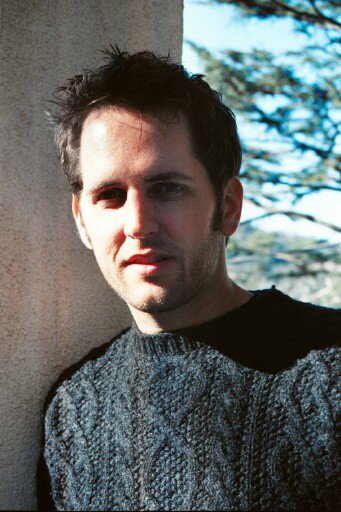
Erik Bork

The latest in a series of interviews with script readers and consultants who would be worth your while to work with if you want to get your script in shape. Today’s spotlight is on Erik Bork, who also runs the website Flying Wrestler.

Erik Bork is best known for his work as a writer-producer on the HBO miniseries Band of Brothers and From the Earth to the Moon – for which he won two Emmy and two Golden Globe Awards. He’s also worked on the writing staff of two primetime dramas, sold multiple original series pitches, and written pilots and features for such companies as Universal, Sony, NBC, Fox, Imagine, Original Film and The Playtone Company. He teaches screenwriting for UCLA Extension and National University’s MFA Program, and has been called one of the Top 10 Most Influential Screenwriting Bloggers.

His book The Idea: The Seven Elements of a Viable Story for Screen, Stage or Fiction is now available.

1. What’s the last thing you read/watched that you thought was incredibly well-written?

I’m continually impressed with how DOWNTON ABBEY tells interesting, emotional, heartfelt stories that are grounded in the realities of its setting, for the various kinds of people who populate it. I’ve been re-watching the first three seasons lately – and think it’s great model for what makes characters and stories compelling, and easy to invest in.

2. How’d you get your start reading scripts?

I’d been a professional screenwriter for about a decade and was being asked to speak to writers groups, teach classes, and give feedback on scripts.

3. Is recognizing good writing something you think can be taught or learned?

Absolutely!

4. What are the components of a good script?

An intriguing and original concept about a compelling and high stakes problem for a character most people can relate to (either the character, and/or the problem) – which focuses on that character as they actively try to solve it, which is complicated and difficult for them, and entertaining for us to watch. I think working with the ten genres in the SAVE THE CAT books are a great tool for working on achieving this.

5. What are some of the most common mistakes you see?

Writers jump to script too quickly, without really developing a concept that has the ingredients necessary to have a chance at success. Stories often don’t have a main character that readers understand and have reason to care enough about, and sometimes it’s not told subjectively through that one person’s point-of-view. The main story problem is often not high stakes enough to the main character’s external life situation (as opposed to their internal life of thoughts, emotions and attitudes). It might not be an active enough challenge where they are pushing the story forward, or a problem that is big enough and hard enough, with enough twists and turns to it. Ultimately, it comes down to achieving the audience’s strong caring, and holding onto that – which is not easy to do.

6. What story tropes are you just tired of seeing?

I get tired of violent adventure stories with life-and-death stakes and a simplistic good vs. evil approach. It’s easiest to grab an audience with that, but it tends to leave me cold – especially when it’s just about visual spectacle, as opposed to realistic characters going through something relatable.

7. What are the three most important rules every writer should know?

-Basic story concept is the most important thing, and hardest to get right.

-The audience must emotionally become one with your main character, which isn’t easy to achieve.

-It’s hard and rare to write something that REALLY works, even for professionals – so stay open to feedback, lots of rewriting, and a long-term process that requires a lot of persistence and ongoing belief.

8. Have you ever read a script that was an absolute, without-a-doubt “recommend”? If so, could you give the logline?

I don’t really provide coverage-style “recommend”/”consider”/”pass” ratings, and don’t exactly think in those terms. I’m more about helping the writer better their craft and project(s), and never look for or expect a script that comes to me to be something they could instantly do something with in the marketplace.

9. How do you feel about screenwriting contests? Worth it or not?

They’re in no way a panacea or golden ticket, and most of them probably won’t do much to advance one’s career – unless you finish really highly in one of the top contests. But it can be a good way to see how you’re doing, and get quality feedback, if you find the price reasonable.

10. How can people can get in touch with you to find out more about the services you provide?

You’ll find my script consulting page on my “Flying Wrestler” blog. You can also e-mail me directly at erik@flyingwrestler.com.

11. Readers of this blog are more than familiar with my love/appreciation of pie. What’s your favorite kind?

Cherry, hands down.

Scriptshadow Success Stories – part 1

As far as I know, Mr. Reeves does not know what evil lurks in the hearts of men. I , however, do.
As far as I know, Mr. Reeves does not know what evil lurks in the hearts of men. I, however, do.

As one of the multitude of screenwriters working on establishing a career doing exactly that, I’m always  exploring different potential avenues to get that first break.

In recent years, the website Scriptshadow (and its moderator Carson Reeves) has offered writers the chance to submit their script for review and feedback. While most are sent back to their keyboards with suggestions of potential fixes for the next draft, once in a while a script garners approval, hopefully leading to continuing success for the writer.

Today’s spotlight is an interview with two of four writers who fall into the latter category: Joe Marino and Alex Carl, whose scripts were voted 1st and 3rd, respectively, in the site’s recent Top 10 Amateur Scripts EVER.

Part 2 will post tomorrow.

1. What’s the title and logline of your script?

Joe Marino (JM): A Rose in the DarknessA secluded boy’s way of life is threatened when he befriends Rose – the girl who his parents have imprisoned in the family attic.

Alex Carl (AC): Fascination 127A group of men are hired by a mysterious client to remove Jim Morrison’s casket, give it to him for 24 hours and then return the casket into the ground before it is publicly exhumed to be moved to the United States.

2. What did Carson think of it?

JM: Thankfully, Carson loved it. I got the email from him the week of 2012’s Thanksgiving (a few days before the review came out), where he told me he was ecstatic about it. I ended up getting an “Impressive” rating (a score that, at the time, was only shared with “The Disciple Program” in non-pro scripts). It was surreal, to say the least. All writers dream of the day where their work is publicly appreciated – and I never thought I’d be among the lucky ones to have it happen to me.

AC: Carson’s reaction was great. I believe he tweeted out late at night after he’d finished it, saying some very encouraging things. I wasn’t on Twitter at the time and so didn’t see anything until his posted review in the morning with a grade of [XX] Worth the Read.

3. How about the reader comments? Did you find any of them useful?

JM: The SS comment board was extremely helpful in making suggestions to better develop the draft. They’re a smart and observant crew, and it was an honor to have them focus that attention on my work. “A Rose in the Darkness” definitely came out of that experience a better script.

AC: The readers were fantastic with input and constructive critiques. I used many of the notes in the comments section during rewrites.

4. What’s happened with the script since it appeared on Scriptshadow?

JM: The script had a healthy thrum of interest. In the end, though, interested parties either went with other projects they liked more or decided to wait until further notice.

AC: Since the review, the script’s been optioned, placed in the top 25 of The Tracking Board 2013 LaunchPad contest and placed in the top 15% in the 2013 Nicholl. It got close to a sale twice when it was under option and received several reads based off SS, but ultimately I believe the story may be “a little too out there” to ever get made. It’s “too big a budget to take a chance on” is what I’ve been told repeatedly.

5. What’s going on with your writing career now?

JM: I’ve been focusing a lot on TV pilots this past year. Been trying to remain as prolific as possible.

AC: I’ve written two other specs currently under option, and am co-writing a pilot.

6. How can somebody get in touch with you to inquire about this or other scripts of yours?

JM: Manager Brooklyn Weaver brought me in as an Energy Entertainment client, which has been a huge boon in helping me find a voice and develop scripts that have the best chance of getting sold.

AC: Email me at hagpok@hotmail.com

7. Is submitting a script to Scriptshadow something you would recommend?

JM: Absolutely. I wouldn’t be in the position I’m in or have the opportunities I have without Carson. If you believe in your script with unbiased eyes, I’d highly recommend it. My biggest suggestion: don’t submit your script unless you’re 100% certain it fully conveys your vision. Don’t send if there’s even a moment in your script where you just went “it’s good enough.” Being satisfied with “good enough” will kill this wonderful opportunity for you. Reach for the stars and don’t allow yourself to be satisfied with inferiority.

AC: Most definitely. Some incredibly talented writers on there who will give insanely constructive notes, not to mention Carson’s insightful review.

8. Readers of this blog are more than familiar with my love/appreciation of pie. What’s your favorite kind?

JM: It’s a tie between peanut butter chocolate and strawberry rhubarb (particularly Amish-made).

AC: Oh, that’s easy. Key Lime. I lived in the FL Keys for a bit, and Key Westers are as protective of their claim to the best Key Lime Pie on the planet the same way Buffalonians will defend their crown of ‘best chicken wings’.

Ask a Proficiently Perceptive Script Consultant!

Sidney Stephens

The latest in a series of interviews with script readers and consultants who would be worth your while to work with if you want to get your script in shape. Today’s spotlight is on Sidney Stephens of Sidney Scripts Consulting.

1. What’s the last thing you read/watched that you thought was incredibly well-written?

One of my favorite things is when a novel is adapted to the big screen. That’s when the writer in me really comes out to play. I’ll first read the book, then the screenplay, and eventually I’ll get around to seeing the film. I did this about a year ago with the hit TV series “Under the Dome” by Stephen King (only read the pilot script, however), and I also did this with “Gone Girl” by Gillian Flynn. It’s very interesting to see how the story changes from one medium to the next. I enjoyed both of these the most of my recent reads.

2. How’d you get your start reading scripts?

While getting my Master’s degree in Creative Writing years ago, I read numerous scripts, mostly for my classmates, friends and co-writers, and mostly as a pay-it-forward kind of thing. Over a year ago, a friend of mine asked if I would like to start up a script consulting business together. I’d done so much ‘freelance’ work that it made sense. Three months later, my friend backed out of the whole thing. I, on the other hand, rarely back out of anything. So here I am, sole owner of Sidney Scripts Consulting.

3. Is recognizing good writing something you think can be taught or learned?

Absolutely. Part of learning to write a good screenplay is learning to recognize what that means. And there’s no better way to do that than to read tons of screenplays. Breaking them down into what makes them good and what makes them great. The real trick to recognizing a good screenplay is not finding one that reads smoothly and is error free, its finding one that reads smoothly, is error free, and will translate all its intended emotion to the screen in a way that will captivate its targeted audience.

4. What are the components of a good script?

Believable characters and natural dialogue are two very important components of any decent script. Good characters are what draw the audience into the situation; they are what the audience relates to. If they aren’t believable or their dialogue isn’t natural or strong, it will leave the audience asking themselves why they even care to finish the script/film. Yes, settings are awesome and a twisty plot is always a great way to ramp up a screenplay, but without relatable, believable characters, its not enough to make a good script great.

5. What are some of the most common mistakes you see?

Some writers, mostly new writers, try to dictate every inch of how the story will play out on film. With tons of camera angles, actor cues, and scene transitions it is hard to stay in the story. It’s important for the writer to know their part of the process and to do just that. Let the actors do their jobs, allow the directors and cameramen do their job, and just stick to writing a great story. Always remember to show, not tell.

6. What story tropes are you just tired of seeing?

End of the world stories are really starting to wear me out. I think I’ve read every possible way the earth could end, blow up, shatter, freeze, burn, etc. and yet, the surrounding stories are all the same. Man saves family only to stay behind and sacrifice himself for the future of the world. The entire movie is watching them attempt to stop the inevitable only to fail miserably. Until finally, at the last possible moment, the guy saves the planet and is reunited once again with his loved ones. Yawn.

7. What are the 3 most important rules every writer should know?

  • Writing is rewriting. No matter how great you think your draft is, it needs a rewrite. Deal with it.
  • Have a target audience and know exactly what it takes to reach them.
  • Write what you know.

8. Have you ever read a script that was an absolute, without-a-doubt “recommend”? If so, could you give the logline?

I’ve definitely read some worthy scripts in my days as a consultant. However, it is only after working closely with the writer on rewrites and such and knowing what producers were looking for at that particular time. I think finding any script that is “without a doubt” anything is a rare find that all consultants want that next script on their desk to be.

9. How do you feel about screenwriting contests? Worth it or not?

Screenwriting contests are a great way to get your screenplay read and possibly receive some fairly descent feedback. However, using these contests to “break into the business” or as a way of earning thousands on their scripts, they better be something spectacular. The reality is, hundreds of thousands of writers enter screenwriting competitions every year, and only a handful make it past the volunteer readers in the initial read. Can it be your screenplay? Of course. It is worth it? Well, that depends on the writer.

10. How can people get in touch with you to find out more about the services you provide?

My website: www.SidneyScriptsConsulting.com

My Facebook page: https://www.facebook.com/sidney.stephens.9465

Email me with any questions: SidneyScriptsConsulting@gmail.com

11. Readers of this blog are more than familiar with my love/appreciation of pie. What’s your favorite kind?

Sorry, I’m a brownie girl!*

(*Editor’s note: The blasphemy of this statement will not be held against Ms. Stephens.)

Ask a Keenly Analytical Script Consultant!

Dimitri Davis

The latest in a series of interviews with script readers and consultants who would be worth your while to work with if you want to get your script in shape. Today’s spotlight is on Dimitri Davis of ScreenwritingU.com.

1. What’s the last thing you read/watched that you thought was incredibly well-written?


G.B.F. wins on best/most recent. So many laughs, such excellent pacing and quality characterization. One of the best high school movies I’ve ever seen.

2. How’d you get your start reading scripts?


Being the assistant at ScreenwritingU. Back when they were in the business of pitching reality TV, I read a lot of scripts, and then for research and preparing class materials, I read a lot more scripts, and whenever projects were in the works, I’d read more scripts.

 Between that and the classes and interviews I was reviewing all the time, it eventually dovetailed into professional-level coverage.

3. Is recognizing good writing something you think can be taught or learned?


Of course it can. Learning the techniques of good writing and plenty about the industry/marketing makes it fairly clear when writing is good or bad.

 Which has the side effect of making you talk at TV and movies, and inform your viewing companions what’s going to happen or how that was a pretty mediocre choice in scene, dialogue, etc.

4. What are the components of a good script?


A good script or a great script? A ton goes into it, but great scripts have great concepts, are page-turners, solid actor-bait, and leave you walking away feeling amazed (and/or punched). Beyond that, it depends on the particular story/genre/etc.

5. What are some of the most common mistakes you see?


The most common and worst mistakes I see are:

– Script/story focuses on the least interesting elements of the concept.

– Characters are underwhelming/underdeveloped, and thus make for mediocre dialogue & action choices (and fail to attract quality actors).

-Script/story fails to exploit great opportunities for drama/conflict/humor again and again, whether the opportunities arise from the characters, setting, plot or concept.

6. What story tropes are you just tired of seeing?


Obligatory sex scenes and throw-away romances. How excited do you think an actor is to see a thin-as-paper relationship in their scenes? How much do you think the audience will care when there’s no poignancy or quality drama behind the relationship?

So boring.

7. What are the 3 most important rules every writer should know?


There’s really only one rule, which should inform all of your screenwriting decisions: Don’t waste anyone’s time.

You waste your own time by sending out a script that isn’t awesome, or is cliche or tired. You waste people’s time by sending Comedy scripts to Horror production companies. You waste everyone’s time when your quick pitches are several paragraphs of details and aren’t laden with hooks. You waste your writing time when you embark on a script without figuring out a great concept, great characters, and a great story first. You waste everyone’s time when you make your tiny Indie script have million-dollar action sequences.

And so on and so forth. Hollywood has no attention span or respect for time-wasting. Your life has a limited amount of time. Why waste it?

8. Have you ever read a script that was an absolute, without-a-doubt “recommend”? If so, could you give the logline?


Yes and no, because such things are confidential. But of the few RECOMMENDS I have read, they all had great concepts and stories, and very good writing.

9. How do you feel about screenwriting contests? Worth it or not?

It depends on the contest and the script. If the script isn’t ready, it’s typically a waste of money and time (getting anything less than winner or finalist for anything but the Nicholl is a waste).

If the contest doesn’t yield some really tangible benefit, like great prize money, or industry contacts and referrals, or career prestige, then it’s a waste of time and money. You could be working on selling scripts and getting writing assignments instead of entering contests.

But there are contests that do those things, and you should definitely enter them with great scripts if you don’t have any industry contacts yet, or are working on elevating your career. Go for the great options out there.

10. How can people get in touch with you to find out more about the services you provide?


My coverage services are generally for ScreenwritingU alumni currently, but you can email me at dimitri@screenwritingu.com.

11. Readers of this blog are more than familiar with my love/appreciation of pie. What’s your favorite kind?


Pie-flavored.

Ask a One-person Multimedia Empire Script Consultant!

Pilar Simpsonized
This is what happens when you offer me a choice of photos

The latest in a series of interviews with script readers and consultants who would be worth your while to work with if you want to get your script in shape. Today’s spotlight is on Pilar Alessandra of On The Page.

Pilar Alessandra is the director of the instructional writing program On The Page,® host of the On the Page Podcast and a highly sought-after speaker and script consultant who’s trained writers at Disney, DreamWorks, ABC, the AFM and around the world. She is also the author of The Coffee Break Screenwriter and The Coffee Break Screenwriter Breaks the Rules Pilar’s greatest accomplishment is the success of her students. They work on TV shows such as Little Fires Everywhere, The 100, Dear White People, Grey’s Anatomy and The Chi and have sold feature films and pitches to Netflix, Sony, Warner Bros. and other major studios. For more information about Pilar, her classes, consultations, book and podcast, go to www.onthepage.tv

1. What’s the last thing you read/watched that you thought was incredibly well-written?

A script called BULLIES by Mike Grebb, one of the writers in my writing groups. It’s dark, honest and incredibly well written, and was included on the 2014 Bloodlist for top horror screenplays.  And a former student’s script called RIP CURRENT, inspired by the classic SHANE, that takes place in the world of Mexican drug cartels. I loved how it captured the tone of an old western, while also updating the story. It went on to get the writer representation from Jeff Portnoy of Bellevue Productions.

2. How’d you get your start reading scripts?

I was one of those oddballs who actually loved writing term papers in college. A friend of mine knew that and asked me to read a few scripts for an independent company she was working for. When I found out this was a real job, rather than just nerdy fun, I sent in my coverage samples to Amblin Entertainment and they hired me.

3. Is recognizing good writing something you think can be taught or learned?

Good analysts have a strong story sense to begin with, but I they also need to keep learning about how genres and writing styles change. They need to be observers of human nature to truly empathize with and understand characters.

4. What are the components of a good script?

A fresh idea. A compelling story. Descriptive but concise scene direction. Authentic dialogue.

5. What are some of the most common mistakes you see?

Writing “movie” characters. Many writers actually do this well, but they’re borrowing behavior and voices from characters they’ve seen onscreen, rather than inventing new ones from their own imagination.

6. What story tropes are you just tired of seeing?

A man’s family is kidnapped or missing and he racks up a high body count getting them back.   Though to be honest, I wouldn’t mind seeing this with a female lead. Could be a fresh take.

7. What are the 3 most important rules every writer should know?

-There are less “rules” in screenwriting than you think.

-Learn what those are anyway.

-Then break one of them purposefully and artfully.

8. Have you ever read a script that was an absolute, without-a-doubt “recommend”? If so, could you give the logline?    

“Adding insult to his already tragic life, a man is terrorized by a small bird.” The script is called “The Starling.” I know it sounds weird, but it’s beautiful. It was written by Matt Harris, a student of mine. After receiving lots of attention over the years, it was eventually bought by Netflix for 20 million dollars!

9. How do you feel about screenwriting contests? Worth it or not?

Worth it because some agents and managers use the big ones to vet material. Worth it too because they’re writing contests, not selling contests, so you have a chance with a script that isn’t conventionally commercial.

10. How can people get in touch with you to find out more about the services you provide?

Check out www.onthepage.tv to find out about classes, consultations, online offerings, book, DVD and the “On the Page Podcast.” You can also e-mail me directly at: pilar@onthepage.tv

11. Readers of this blog are more than familiar with my love/appreciation of pie. What’s your favorite kind?

Pumpkin, of course! It’s sweet and spicy. What’s not to love? (This is the best question ever.)