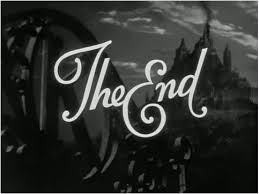
Those two magnificent little words

...but not really
(…but not really)

Actually, those words are “Fade Out,” as in The End of The Script, but you get the idea.

You reach that point in your work, type them in, and hit ‘save’. You take a second to sit back and savor the moment – an incomparable feeling of exhilaration.

Which is exactly what’s happened with the latest draft of the western spec now complete (added bonus – slightly ahead of schedule). I’ll allow a few minutes of satisfaction as it heads into the next round of feedback.

As expected, changes had to be made and darlings had to be killed, all based on some suggestions from the previous draft and a little last-minute inspiration. The end result – a stronger story with the characters getting a little more dimension.

At least that’s how I’m reading it.

So rather than be concerned about potential reactions, I’ll be distracting myself by jumping right into work on the mystery spec. If I can maintain my writing regiment of “whenever I can”, I’m hoping to have a first draft done by the end of the year. Fingers,  crossed, anyway.

-If you can spare a couple of bucks, please consider donating to this. I’ve never been there and don’t live anywhere near it, but think it’s incredibly important to help small, independent movie theatres stay in business. There are two weeks left, so give if you can.


Keeping the lines of communication open

uhura
Starfleet’s emergency backup plan for when Skype’s not working

Since signing with my manager earlier this year, our back-and-forth emails had somewhat dwindled. It seemed to be taking longer to hear back, and even those brief messages were less than encouraging.

Despite working on the new spec scripts, this, combined with my overactive imagination and requisite writer’s self-doubt, made me convinced that nobody was interested in the script.

And I mean nobody.

*Side note – want to feel even worse about yourself? Seek the opinions of those on a public forum. I think I’m truly done with that.

I needed to do something, which turned out to be sending my manager an email asking if he was available to talk.

Best thing I could have done.

I explained to him how I was feeling frustrated about not knowing what was going on, and asked if there was anything I else I could do to help move things along (apart from keep writing).

He totally understood, apologized for being incommunicado, and gave me the update – who the script had been sent to, including several studios and production companies. One studio had passed, another was still reading it, and somebody at a prodco really liked it and wanted to see what else I had.

We also discussed getting the new specs to him, the potential of one of them with a well-known production company and how he was adding a staffer who’d be more in the middle of all the action.

This ten-minute conversation was able to wash away all my self-doubt, inadequacy and just plain lousyness.

It’s hard enough to get representation, but once you do, it’s not all up to them. These people are busy, so it’s easy for you to fall off their radar. You have to be the one to remind them you’re still there. Don’t be afraid to ask “can we talk?”.

If you have questions or concerns, ask them. As I mentioned, it’s all too easy to let your imagination run wild and start generating counterproductive thoughts. The occasional update chat is the best way to stay positive and keep yourself focused.

Seeking the feng shui-ness of your script

A place for everything, and everything in its place

Got some great notes for my western spec. Some of the suggestions involve significant moments I hadn’t considered – now I have to figure out where these should take place. A daunting task indeed, but also not too challenging.

It’s one thing to plot out a story, but knowing how to do it effectively is a little more complicated.

You can’t just throw stuff in there and hope it sticks. Information has to be doled out appropriately so it not only fleshes out the characters, strengthens and advances the story and the plot, and most importantly, keeps the reader/audience interested.

If you’ve put together a solid outline (as you should before moving on to pages), all the help you need is right there in front of you. Take a look at how your story develops. Do things happen the way you want them to, and do they happen when you want them to?

As you work your way forward, are you seeing potential opportunities for where something could be added or possibly changed? Would that scene from way back near the beginning work better somewhere later on?

Once you find somewhere that scene could go, is it a good fit within the flow of how the story’s developing? Does it keep that forward momentum going while providing us with some kind of necessary information?

Take the time to figure these kinds of things out. It may be frustrating now, but once you work your way through it, you’ll have a better script and wonder what it was you were so worried about.

Being realistic in a work of fiction

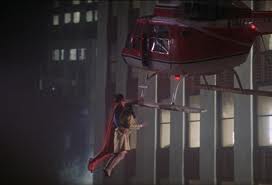
You're upset about the scientific inaccuracies in a comic book movie about an alien who can fly?
Some people were actually upset about the scientific inaccuracies in a comic book movie about an alien who can fly

“The monsters attack.”

This simple line in my action spec outline was the catalyst for a major thought process that continues to grow by leaps and bounds.  Questions are being raised that demand answers.

In creating this world, not only do I have to develop the story you’ll be following, but also fill in a lot of details about the world itself – which just happens to have monsters in it, which leads to more questions.  It never occurred to me to consider subjects such as biology, geology and the laws of physics as they apply to monsters (all of which play a part in the story).

“But it’s just a story,” some might say. “Don’t worry about stuff like that.” But it’s exactly the stuff like that that makes the story better, plus it shows I’m taking this seriously – even if it does involve monsters.

I’ve always had an intense dislike for writing that takes the easy way out in explaining something, or does it in a very half-assed way.  It makes it seem like the writer didn’t care enough to do a little more work.

It’s very important to me that not only are the events of the story based in reality, but the setting is as well.  This is something I strive for in everything I write – no matter what the genre.

The more detailed you can make the world of your story, the more believable it’ll be. But be careful not to overdo it – too much detail creates confusion. Just give enough to make ’em say “Yeah, that makes sense.” or “I can totally see that happening.”

Now it’s back to my research on which metallic alloy would be the most effective for killing monsters. So far, tungsten carbide seems to be the frontrunner.

The writing sprint: no training necessary

race
It’s not about speed; it’s how you handle the course

Finally, finally got to type in those illustrious words FADE OUT, which brings the first draft of the western spec to a satisfying close.

It’s very tempting to read it and see what needs work, but at this point, I’m opting to let it sit in hibernation while shifting the focus to the rewrite of the mystery-comedy.

While the previous draft is a more solid foundation than I thought, there are still some ideas I’m looking to incorporate.

Rather than jot a few down at a time, or hope inspiration hits every once in a while, I’m opting for a method that’s proven quite helpful in the past: the writing sprint.

Set aside 30 minutes. Just you and a blank page (paper or digital – doesn’t matter, although digital might be easier & faster to work with). Once that timer starts, write out scene ideas as fast as you can.  Don’t stop to think if they’re good or not. Just crank ’em out.

It’s not a bad thing to write what you already have, but maybe you’ll come up with something you never thought of, or suddenly hit on a solution to a problem that’s been bothering you.  Feel free to even take things a totally new direction. For now, there are no bad ideas.

It’s possible you could run out of gas before time runs out, but push yourself to keep going.

Once the 30 minutes is up, take a look at what you’ve got: a ton of (mostly) new material.

Pick and choose what works for you now, but make sure to hold on to the rest. Inspiration could hit from any of them, and you never know what might come in handy later.