Commencing transfer to second horse

horses
All these new ideas were really starting to nag at me (C’mon. They can’t all be gems)

Notes continue to come in for the low-budget comedy spec. I am very fortunate to benefit from the insight of such savvy folks. Lots and lots of great notes that will come in handy for the next batch of rewrites.

Taking a look at all the notes, along with the new ideas they trigger, makes me think about what changes could be made in future drafts. Changes that would strengthen the script on several levels, especially those where it’s been indicated the most work is needed.

This isn’t saying that I’ll blindly accept every single suggestion that’s been made. More like a combo of taking the ones I think work best and some of my own new ideas. That’s one bonus of getting multiple sets of notes.

I’m also expecting to alter parts of the story just enough that it’ll be slightly different from these earlier drafts while still retaining a lot of what originally appealed to me about the overall story/concept. There are a few new factors being thrown in, some of which I’m looking forward to begin implementing (and also fall into the category of “why didn’t I think of that before?”)

Thus the fun and thrillingness of it all continues…
Not everybody’s going to like it

pie
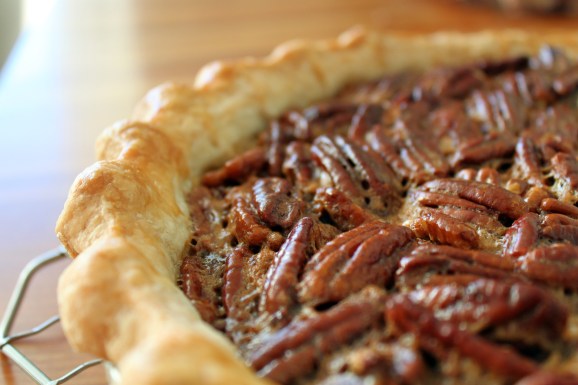
Astonishing as it is, some people actually don’t like pie. Heathens.

Notes and comments continue to come in for the comedy spec. I’m seeing some very insightful stuff that will prove most beneficial for the next draft.

Reactions range from “I loved it!” to “I was very disappointed with this.” The author of the latter even started things out by saying “I wanted to like it, but just couldn’t. I guess our senses of humor are just too different”.

And you know what? They’re right, and that’s totally fine. Comedy is subjective. Everybody likes different things. If it’s not for you, it’s not for you.

Would I have preferred they liked it? Of course. But they didn’t, and that’s all there is to it. I still value their opinion and will continue to ask them for feedback in the future.

But I also shouldn’t totally disregard what they had to say. They made some valid points and suggestions in their explanation of why it didn’t work for them, a lot of which could potentially be applied to the aforementioned rewrite.

Nor should I take one person’s rejection as the final word. They didn’t like it, but in no way does that mean everybody else will have the same opinion. For all I know, this one dislike is the exception to the rule.

This is one of those things that a lot of writers, especially newer ones, fail to grasp. You slave away on a script, and then you send it out, convinced it’s a work of genius. And you don’t get the reaction you were hoping for. PASS. Thanks, but no thanks. We’re working with something similar.

Heartbreaking, ain’t it? “How could they not have liked it?” you cry out to the writing gods. It’s just the way it is. Remember – it’s not about you. It’s about the script.

So you’ve got two choices. Obsess over the rejection, or accept it, put it behind you, and keep pushing forward. Maybe figuring out why their reaction was negative could help.

But don’t let that negative slow you down. Do what you can to turn things to your advantage. Like with practically everything connected to screenwriting, it won’t be easy.

Start by making sure you like it, and then take it from there.

Keepin’ it small

dogs
One might be a little easier to work with

When I first started working on scripts, I had sky-high ambitions to write the next Big Budget Blockbuster. So that’s the kind of stuff I wrote.

They may not have a chance of ever getting made, but I really like the stories they tell, and writing them definitely helped me improve as a writer.

Seeing as how it’s a lot easier to get a small-budget script made than a big one, it was recommended I scale things back a bit and write material within a more acceptable price range. It would be a challenge, but if it meant improving my chances, then that’s what I would do.

Used to working on Big Budget ideas, I downshifted my style to rely less on spectacle. It wasn’t easy. I don’t know if you’d say I stumbled through it, but it was a new approach and I did what I could.

It wasn’t the insurmountable obstacle I expected, and I might even go so far as to say I enjoyed it.

The end result – a script that could actually be made, and, producers take note, for a not-unreasonable amount.

Approaching a script with this kind of mindset has had quite an effect. Ideas for new stories seem to come easier, as does the developing and fleshing-out of said ideas. I’m not saying I can crank out a ready-to-go draft in record time, but the overall operation doesn’t take as long as it used to.

(Added bonus – this spec was a comedy, so hopefully my joke-writing has also benefitted.)

I was originally very hesitant to attempt writing something of a smaller nature, but working on these kinds of stories makes me feel like I’ve entered new territory.

Think I’ll stick around for a while.


The dreaded ensuing of wackiness

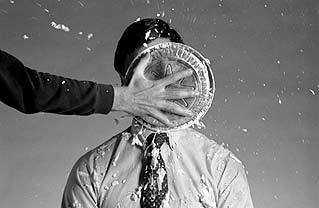
pie-in-face
Done right, this is comedy gold

As part of my work on the low-budget comedy spec, I’ve made an effort to read other comedies to help get a better understanding of how it could be done and hopefully some guidance I could apply to mine.

It’s always been tough for me to read comedy because my sense of humor doesn’t always align with others. Many’s the time I’ve read a script that garners universal praise for being gut-bustingly hilarious, but doesn’t do anything for me.

There is, however, one detail I’ve noticed that keeps popping up:

Unrealistic situations.

Things that seem to happen only for the sake of a joke, and not much else. These often feel forced and inorganic to the plot. Almost as if the writer thought “Hey, wouldn’t it be crazy if ____?”

In theory, potentially a good idea, but in execution – not really.

Some might argue that since it’s comedy, things don’t have to be realistic as long as they’re funny.

I beg to differ. If I don’t think something could actually happen, I will most likely not find it funny.

**side note – this doesn’t necessarily apply to slapstick or absurdist fare, which are two entirely different discussions**

Sure, there are comedies where the entire premise isn’t all that realistic to begin with, but even the humor in those should stem from the situation, rather than being a crazy assortment of wacky gags.

Going for the easy laugh or cheap joke doesn’t take much skill and shows a lack of sincere effort. If a writer does it once, chances are they’ll do it a lot. It also doesn’t offer anything new. Who wants a joke they’ve probably seen or heard a thousand times before?

Looking at comedies that would be considered strong, there are a lot of instances where the joke is an integral part of the scene, rather than feeling like something tacked on.

You’ll hear that the best comedy is the kind that makes you think. I prefer comedy that shows the writer did a lot of the thinking.

Being a blast from their past

corner
Hi. Remember me?

Earlier this year, I attended the Great American PitchFest, where in addition to fine-tuning my pitching skills, made some great personal and professional contacts.

Among the latter was a production company who was very interested in my fantasy-adventure. They ultimately passed, not because the script wasn’t for them, but because they’d found another project.

At the end of that email, they included the offer for me to stay in touch. This was in June.

Jump ahead a few months to last week. Sorting through old emails, I’d found that one and figured now was as good a time as any to reconnect. I sent a brief note reminding them who I was, asking about that other project, and if they were still interested in my script.

They remembered me, the other one was progressing nicely, and they definitely were.

A few days later, I had a very pleasant hour-long phone call with one of the partners (the other had a last-minute scheduling problem). We discussed my script, some of their other projects and a few related and not-related topics.

The call ended with them wanting to continue the conversation after the holidays, making sure the other partner would be on hand.

Will anything come of this? I don’t know, but for now, it’s very encouraging. Am I glad I sent that follow-up email? Damn straight.

Sometimes it feels as if the door gets totally slammed shut in your face, but there’s a chance they might leave it open for you just a little bit – enough for you to take advantage of it somewhere down the line.

Who wouldn’t rather have someone say “It’s not for us, but stay in touch” instead of just “Thanks, but no thanks”?

If you do get that open invitation, make the most of that time by working on something else. Your initial project may have gotten their attention or piqued their interest, so this way you can redirect all that nervous energy into your writing and be ready if they ask “What else have you got?” in that second go-round.

Be patient. And courteous. And respectful. A lot of these folks are working just as hard on their own projects as you are on yours. The last thing they need is dealing with a pushy writer bombarding them with emails.