This, rather than that


It's going to take a while to find the right path
It’s going to take a while to find the right path

The past several days have been all about revamping the story/outline of the monster spec. The percentage of what’s being eliminated from previous versions continues to grow on a daily basis.

A lot of what’s left still needs to be fixed, or at least changed. As much as I love the original ideas, they just weren’t working.

Part of the problem was my stubbornness to consider alternatives, and the frustration over trying to force the creativeness wasn’t helping either.

As has happened before, I had to ignore what I wanted, and concentrate on what worked for the story.  This had to be slow, calculated and meticulous, but I had one slight advantage this time around.

Remember that whole ‘previous draft’ thing? Turns out a lot of the contents are becoming just what I need by applying “What if…?” or “How about…?”

(Yet another example of why you should hold onto your previous drafts – they’re a treasure trove of of potential material)

These questions are proving to be more than adequate in creating foundations for developing new material. By taking a slightly different approach, new and previously unconsidered alternatives are making themselves known.

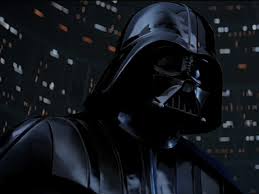
It has definitely yielded some positive results, including a drastic reconfiguring of the antagonist – originally conceived one way, but after finally accepting that changes were necessary and much tinkering, now fits into the story a lot better, and also provides for stronger conflict with the protagonist.

Don’t be afraid to consider new ways or different approaches to what you already have. While you may think it’s perfect the way it is, chances are it could probably use some reworking.
 

Getting up to speed – OR – Our story so far…

An informed audience is a happy audience

As work continues with the monster spec, some of the focus has been on figuring out the backstory of how things came to be and working out the events that lead up to where the plot starts.

If this were a novel, I could just include them in the whole body of work. Not so the case for a screenplay.

In as few scenes as possible, I need to educate the reader/viewer about this world, who’s involved and what’s at stake. Once that’s done, we shift gears and dive right into the story.

A recent example – PACIFIC RIM. The opening minutes are all about what’s already happened – giant monsters showed up, we built giant robots to fight them, and we’re off.

Consider the opening crawl in STAR WARS. A few paragraphs floating in space sets everything up: here’s what’s going on, immediately followed by a space battle.

While this kind of thing is necessary for a ripping effects-laden yarn, what if your story is about normal folks in the everyday world?

Same rules apply. We still need to know what’s going on and who it’s about. Give us those parts of the story now, and pepper it with the relevant details as we move forward.

The example I keep coming back to for this is the opening of FIELD OF DREAMS: Kevin Costner narrates a thumbnail sketch about his character over a series of photographs, then we’re on the farm in Iowa.

No matter what genre you’re working in, it’s important to know what happened before page one, both regarding the story and the characters. You don’t have to go crazy with details, but at least know what needs to be known.

The big difference a little something can make

Good by itself, but even better with that little extra step
A metaphor involving sprinkles – tasty and informative

For as much as we talk about crafting a story, developing characters, creating scenarios and other big-picture items, it’s also important we not forget the little things.

By ‘the little things’, I mean those tiny details that add just the right touch at that particular moment, and readers and audiences will notice them.

It might play a pivotal role in the story, but doesn’t necessarily have to. It’s hard to describe, but you definitely recognize it when you write it, read it or see it.

They can be almost anything. A one-time action. A casual line of dialogue. A fleeting glimpse of something, maybe in the background, or even the setting itself. No matter what it is, it has the amazing ability to make the story feel just a little more complete.

Just as an example, I had a scene end with a character asking for pancakes. To me, it was just a fun, throwaway line.  But to my manager’s script guy (who really knows his stuff), it was a “great example of what this character is like,” and something he could “definitely see her saying.”

All that from one line? Who knew?

This isn’t saying your script has to be chock-full of this kind of thing; more like sprinkled liberally, or at least used at your discretion.

Start out by focusing on organizing the main parts of your story so the structure’s in place. Then as you’re putting the rest of it together and filling in the gaps, you’ll discover plenty of opportunities to add in the aforementioned little things.


Out, damned trope! Out, I say!*

Do whatever you can to avoid falling into this perilous situation
Do whatever you can to avoid falling into a similar perilous situation

(*A slight variation on the actual line from MACBETH – Act V, Scene I. We’re all about accuracy around here.)

The more I work on the story of the monster spec, the more I realize how flimsy the villain’s plan is. I know what their objective is, but the biggest roadblock is figuring out HOW they’re going to accomplish it.

Part of the original story included a monster with shape-changing abilities taking the place of a high-ranking figure in world politics. At the time, it seemed good.

But now it just seems tired and stale. It really is something we’ve all seen before, which totally goes against what I’m trying to do. Coming up with a fresh, original story is one thing; telling it in a fresh, original way is another.

How often have you read a script or seen a movie or TV show and thought “Seen this before” or “Saw that coming a mile away”?

It’s easy to fall into the trap of using something that’s been used or done many times before. Cliches. Tropes. Clams. Call ’em what you will.  There’s nothing wrong with them, but it’s lazy writing.

Why would you go through the trouble of working so hard to create something new and exciting, but fill it with material that isn’t?

Read through what you have. Does anything come across as too familiar, or at least expected?

Look at that tired old chestnut as purely temporary, then go back and brainstorm a few alternatives which are totally opposite (or at least really different) but also accomplish the same thing.

Take a look at scripts and movies similar to yours. Can you see how they did it? Maybe it’ll inspire an approach you hadn’t thought of.

Feeling stuck? Ask for help. Twitter’s usually pretty good. You’ll soon discover that writers have the amazing ability to easily come up with ideas when it’s for somebody else’s project.

You’re a creative type, so get creative. You know there has to be a better way out of this. It may take a couple of tries, but you’ll get there.

In the meantime, I’ll be busy figuring out a new way for monsters to take over the world.

And you want to take over the world because…?

Not just the villain, but a key part of the whole story

So you’ve got your protagonist’s story planned all the way through. Beginning to end. You know what they want and what they need. That character arc is firmly in place.

What about your antagonist?

Have you put as much effort into developing their story? Do you explain why they’re doing this? What do they seek to gain from their actions?

A lot of the time, the bad guy is the more interesting character, so why wouldn’t you make just as much of an effort on fleshing them out?

The character we identify as the villain should see themselves as the hero of their story, with your protagonist the one standing in their way of achieving their goal.

Maybe there’s a previously-existing connection between the two, which can be gradually revealed as the story progresses.

How often has a writer explained the “why” behind the antagonist with a casual “Because they’re bad”?  Readers and audiences want a little more depth than that.

This isn’t saying you need to come up with an extensive backstory about their past and what led them down this path.  A few lines of dialogue can be just the thing to provide the reason why they’re doing this.

You’ve already spent a lot of time developing your hero’s journey. It only makes sense to do the same for the villain.