Building up to what it all comes down to

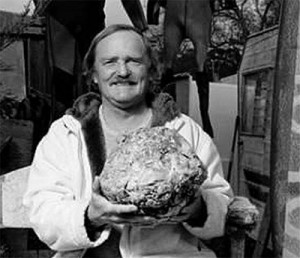
What he's holding represents what's at stake. Think about it.
What he’s holding represents what’s at stake. Hint: It’s not a rock

Time now for a very, very important question every writer needs to face:

Do you know how your story ends?

You come up with an idea, then proceeded to develop, shape, and organize all the stuff that happens in the middle, which eventually has led us to the where we find ourselves now: the big payoff. What the whole thing’s been about.

Everything your characters have been doing have been leading up to this. In theory, your first two acts have been about the protagonist’s world undergoing some drastic changes, how they dealt with it and now it looks like the bad guy’s going to win.

Which brings us to the grand finale that is Act Three, where our hero must somehow find a way to overcome these seemingly insurmountable odds, defeat the antagonist and hopefully come out of the experience a different person than the one they were way back when we first met them.

That being said, there’s still more to it.

-Your protagonist has a physical goal (what they want) and an emotional one (what they need). They can achieve both, just one or neither. Which applies to yours, and have you effectively steered the action to ensure that result? Can we see the changes they’ve undergone?

-Working with a subplot or three? If they haven’t wrapped up by now, better make sure to do it soon. Do you really want the reader to wonder “Hey! What happened to the part about ____?”

-Even a supporting character needs an arc to complete. Have you given each of them enough attention throughout the story to make this happen, and does their story wrap up in a convincingly believable way?

One of the most valuable lessons I’ve learned about putting a story together is that the central question (“Will the hero achieve their goal?”) is raised with the inciting incident around page 10, and each subsequent plot point raises it again, albeit with the stakes a little higher each time.

What happens in Act Three is where you show us how the central question is answered.

-And now, the much-heralded return of Movie of the Moment! This time, a way overdue look at GODZILLA (2014).

Wow. Everything PACIFIC RIM should have been. Instead of non-stop giant monster action, we get only glimpses as the focus is directed at the human aspect of the story. A much more effective approach.

While it’s not hard to suspend disbelief when it comes to a movie about giant monsters rampaging/duking it out in the downtown area of the city where I live, perhaps the most amazing piece of cinematic fiction (as observed by both K and myself) was in the background of one scene where a garage sign read “All-day parking $15”.

Now that’s make-believe.

They don’t call it a climax for nothing

Couldn't make this any more Freudian without going NSFW
Couldn’t make this any more Freudian without going NSFW

As the events of Act Three of the pulpy adventure spec outline slowly develop, it’s becoming more clear that retroactive edits/fixes/tweaks will be necessary for parts of Acts One and Two.

Act Three goes beyond making sure each of the main characters has something to do.  The actions they take should be tied directly into the main story, represents them overcoming their own personal obstacles and wraps up their individual storyline, all in the most satisfying way possible.

Hence the need to go back and make those changes. The more I can set up and effectively reinforce each character’s storyline, the better the payoff will be, both for them and the overall story.

I’ve always stressed the importance of setups and payoffs throughout a script. Everything we’ve seen in Acts One and Two should come to its appropriate conclusion in Act Three.

I’ve read a lot of amateur specs where something is set up early on and ends up either totally forgotten, treated as an afterthought or pays off with less of an impact than it should.

This is what you’ve been building up to for the past 90-plus pages.

Don’t let us down.

Doth it suck? Yea, verily

Because "Dude. Yorick. Bummer." just doesn't have the same panache
Because “Dude. Yorick. Bummer.” just doesn’t have the same panache

Oh, first draft. You teasing vixen.

I go over the story ideas in my head, everything coalesces and plays out like a well-oiled machine.

But try to transfer them onto the page, and it all discombobulates into a tangled mess on par with the cord on a pair of earbuds carelessly tossed into a gym bag.

Experienced writers know what I mean.

Although it took a while, I finally reached the end of Act Two in the revamping of the outline of the pulpy adventure spec. On one hand, I’m thrilled to have gotten here. On the other, I want to shrug my shoulders and mutter “eh, good enough” about the scenes and sequences that led up to this point.

They’re definitely far from perfect, and without a doubt will be totally different as future drafts come into play.

Let’s pause to consider the phrase “future drafts.” As in “there will be more”, emphasis on “will”. Not “might”. “Will”.

I recently connected with another writer on a networking site, and they ended our introductory correspondence by letting me know they had first drafts of their scripts available to read.

I sincerely hope not.

Unless you’re looking for feedback, don’t show your first draft to anyone. Ever.

The first draft is the attempt to put all your ideas into some kind of order. Know going in that it won’t be pretty, and will most likely be a big mess requiring a ton of fixes. Not a bunch of little edits, but huge, drastic steps. The end result should look totally different from what you started with.

Don’t regard rewriting as a chore or a slog. It’s something you have to do on a regular basis. It makes the script better and helps you become a better writer.

Consider the last script you wrote. How many drafts did it require to get to the point where you finally said it was done? And wasn’t each successive draft a little better, until the final draft turned out significantly improved compared to the very first one?

That’s what you should be going for. Every single time.

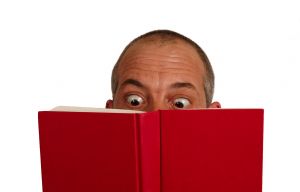
Go ahead. Try to stop reading.

pageturner
Absolutely nothing is going to divert my attention from this.

As a screenwriter working on making it as a professional, that’s been the underlying message for every one of my scripts.

I strive to create stories so involving, compelling and entertaining that each one immediately sucks you in and grabs your attention to the point where you have no desire whatsoever to stop reading.

You need to find out what happens next.

This is what I want when I read somebody else’s script, and it’s definitely what I aim for when I write mine.

Throughout the entire process of putting a story together, from the first spark of an idea to finishing the so-many-I’ve-lost-count rewrite, it’s a goal we’re consistently seeking to reach.

Being as objective as possible, take a look at your latest draft. How does it make you feel? Do the pages zoom by, move at a snail’s pace or just kind of plod along?

Does reading it excite you? Make you want to keep going? Can you easily visualize what’s happening?

Do the characters seem so developed that you actually care about what happens to them?

Always be challenging yourself as a writer. “Is this the best it can be?” “How can this be better?” “Would I pay to see this?”

You want your script to be irresistible, so do what it takes and put in the effort to make it that way.

Anybody can tell a story, but only the truly dedicated are willing to devote the time to learn how to tell it in the most effective way possible.

You mind running that by me again?


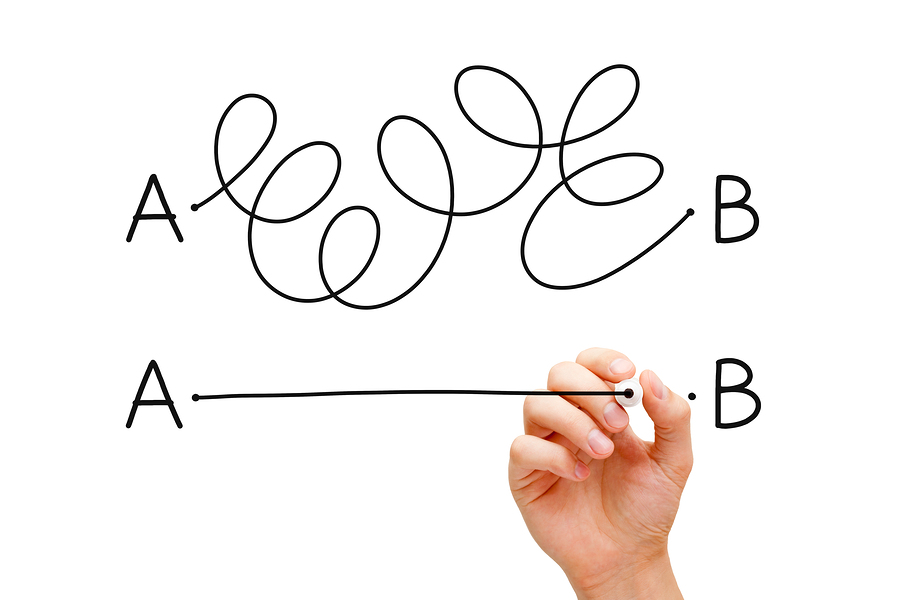
What we seek is somewhere between these two
Top choice is too much, while the bottom is too little

Pop quiz!

Pick any high-profile, mainstream popcorn summer movie from the past 10-15 years, and explain, in as few sentences as possible, how the story unfolds.

This doesn’t mean provide a logline; this is about having a plot that’s easy to understand.

Okay. Pencils down.

There’s been a disturbing trend of overstuffing a story and bombarding the audience with just too much information. It’s gotten to the point that a lot of the time, the details we need to know get lost in big expositional info-dumps, which makes us struggle to follow along, or at least keep up.

Who hasn’t had a lot of questions about the movie they just watched, but those questions are more along the lines of “What happened?”  You want somebody to want to watch your story again because they want to relive the great time they had the first time around, not because they seek answers.

I could list several recent major releases that had too many elements which simply made it less of an experience to watch them. Sometimes the details made no sense, or the explanations behind them weren’t adequate enough. If I have to go back and think about something from earlier on, then everything that came after that doesn’t have my full attention, which makes me not enjoy it as much.

Is it really too much to ask that a story be kept relatively simple to understand? This doesn’t mean to dumb things down.  It is possible to write a smart story with simple details. One of the many reasons certain older films still hold up is because they are smartly-written stories told in a simple, straightforward manner.

THIS is what has to happen, and THIS is how we get there. Of course you’re going to throw in complications, but that doesn’t mean you make it overly complicated.

It’s very tempting to want to show off your writing skills and keep adding stuff into your story, but that usually results in just too much going on.

There’s a big difference between throwing everything at the wall and seeing what sticks and carefully plotting out what happens.

Keep things simple when telling us what we need to know, and leave it at that.