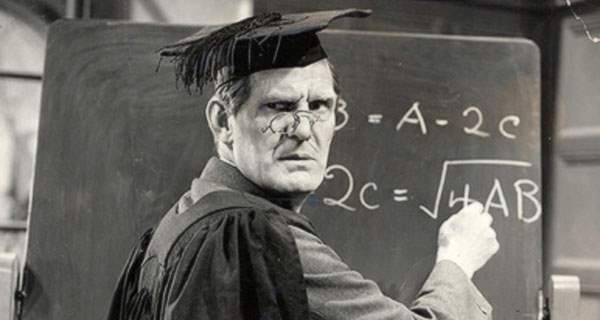
At least 11 choice “re-” words

teacher
No, class. “Relapse” is not one of them.

Progress on the latest draft of the comedy spec is coming along. Slowly, but still coming along.

Among the highlights:

repairing the script. Previous drafts had some notable and sizable problems on several fronts, so this is all about fixing them, or at least figuring stuff out to make it better overall. This is the main priority.

revising the story. Some of the scenes still work. The ones that don’t are out, with variations and totally new ones being developed and considered. A work in progress is a beautiful thing.

reviving older ideas. I keep all the notes and items jotted down over the course of working out the story, so there’s always a few items worthy of dusting off. This time around is no exception.

reorganizing the tone. Notes on a previous draft stated how uneven the story felt; like it was a few opposing ideas competing for attention. Currently working on streamlining things to make it all mesh better.

refurbishing characters and/or their traits. From the protagonist and antagonist to supporting characters to those appearing in one scene, everybody gets some kind of modification. Some big, some not-so-big.

reinvigorating the jokes. With comedy already being a subjective topic, I’m trying to come up with stuff I think is funny. Influences abound, and I want my sense of humor to be what runs that particular engine.

remaining calm. Finishing this draft won’t happen overnight, and trying to force creativeness or rush progress is the absolute wrong approach. Preferred method – taking it one step at a time.

resuscitating self-confidence. Writing a comedy’s tough enough to begin with. I’ve done it before, and despite a few missteps along the way, feel pretty solid about my chances this time around.

relinquishing the self-imposed pressure. Naturally, I want to have a good, solid script when I’m done (hopefully it won’t take many more drafts). Stressing about getting to that point won’t do me any good, which leads to the final point…

relaxing and recharging the writer. A good portion of my available time is spent writing or at least thinking about it. Working on it too much runs the risk of burnout, which would be completely counterproductive. Therefore, I allow myself time to simply step away and do something totally non-writing-oriented.

And when the time is right, I return to the rewrite.

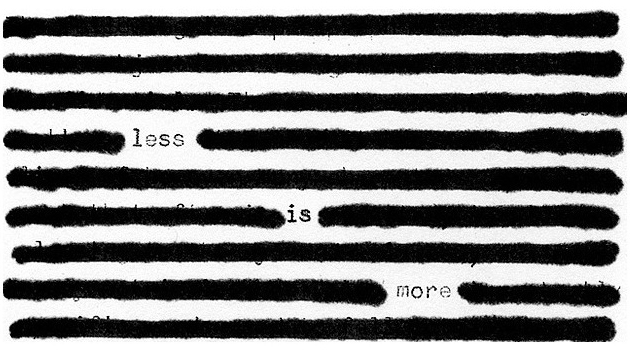
Whew! Took me a while to refine this, but I don’t recall being so resplendently relieved to be done. Even better, none of it had to be redacted.

One curtain falls, another rises

stage
Don’t go far, folks. Next show is on the way!

Among the sizable slew of ongoing projects of which I’m currently undertaking, finishing the edit/polish/rewrite of the pulp sci-fi spec was pretty high up near the top of the list.

Mostly because it was something I felt I absolutely had to do; sort of a “get it out of my system” thing.

And for now, it is. Finished. At least until the next sets of notes come in and the whole process starts all over again. No big deal. Par for the course.

Overall, I like how it turned out. As has been the case before, it was also simply just fun to write. That helped. And some of my readers from the previous draft were quite enthusiastic about what a fun read it is. That also helped.

Even though the story’s pretty much set in place, every once in a while inspiration would strike, or a suggestion would be made, and I’d come up with a way to potentially improve a particular moment, scene or sequence.

So off it goes to some very savvy readers, and my attention redirects to the much-interrupted overhaul of one of my low-budget comedies, which has been a sizable challenge on its own.

Creating amazing tales of thrills, excitement, and heart-pounding fantastic-ness? No problem. Trying to craft a smart, funny story? A challenge, to say the least.

Then again, I do loves me a good challenge.

Just the tune-up it needs

eastwood engine
Clint knows what needs to be fixed

The latest batch of notes on the pulp sci-fi spec have been analyzed, some even incorporated, resulting in the latest draft.

Thing is, something still seemed a little off about it. But after having spent a good chunk of time on it, I opted to give myself a little break and skip jumping right back in, and instead put it aside to simmer while I focused on a few other projects.

A couple of weeks have passed since then. The time felt right. I opened it up and simply started reading in the hope that maybe the solution would simply present itself along the way.

A lot of it still held up. It’s still a fun, fast-paced action-packed story.

But what really stood out this time was how there was a lot of unnecessary text on the page. It wasn’t a matter of overwriting; more of a “maybe a little more than you actually needed.”

I went back to page one and started editing, line by line. A word here, a phrase there. More and more of my darlings were being lovingly obliterated from existence, creating a somewhat tighter story that didn’t sacrifice any momentum (so far).

Some of the notes also mentioned the occasional lack of information in terms of backstory. I occasionally have the habit of thinking I’ve included an important detail or at least allude to it, when it reality – nope.

Using this fine-tooth comb approach has also enabled me to identify and plug up holes in the plot. Sometimes I might stumble onto a minor issue I didn’t even realize was or wasn’t in there, and am able to take care of it. Again – tighter and continued momentum.

This draft continues to progress nicely, and I’m hoping to wrap it up soon – but still making a point of taking my time and thinking my way to each solution.

-I’ll be running the first half of the San Francisco Marathon this weekend. While a time of 1:55 would be great, as long as I beat the 2-hour mark, I’ll be fine.

-If you’re a screenwriter in the San Francisco Bay Area or northern California region, and want to meet other screenwriters, the NorCal Screenwriters’ Networking Shindig on Sunday, July 30th, might be just what you need. 2-4pm at Kawika’s Ocean Beach Deli (734 La Playa – a block from the ocean!). Cost – FREE! Drop me a line if you’re interested.

Only include that which serves a purpose

redacted
Exactly

A just-starting-out writer had contacted me, asking if I could take a look at their spec.

I did. It wasn’t easy, but I did.

The script had a lot of the usual problems. On-the-nose dialogue. One-dimensional characters. A story that was more a jumbled collection of random events rather than a cohesive series of scenes and sequences.

But even with all of that, what really stood out was the excessive overwriting when it came to setting up a scene, with excessive being a major understatement. The writer seemed to feel the need to provide an extraordinary amount of details – for just about everything.

Just to name a few:

-What kind of furniture is in every single house or apartment
-What kind of food is on the table during a dinner scene
-Why a character, who’s only in one scene, is wearing a particular item of clothing, along with what it looks like
-A detailed list of all the items of clothing a character removes when getting undressed
-The direction a character is driving, along with street names

Did any of these have anything to do with the story?

All together now – of course not.

Then why is it in there?

I posed this question to the writer as part of my notes. They haven’t responded yet, but it’ll be interesting to see what they say about it.

I can’t remember the specific joke/comment about sculpting, but it’s something along the lines of “Start with a block of marble, and then chip away everything that doesn’t look like a (whatever you’re sculpting).”

Screenwriting’s very similar. While it’s true you should describe what we’re seeing, there’s no need to drastically overdo it. Some writers don’t know the difference between “painting a picture with words” and “overwhelming us with information”. Or worse, think they’re more or less the same thing.

They are most definitely not.

Everything on the page should have a reason for being there. If it doesn’t, take it out. Trust me, it will not be missed. If you argue that it should stay, you better have a mighty good reason why. Helpful tip – saying “Because I want it to” or “Because I like it” will totally invalidate your argument.

When the writing goes into Overly Descriptive Mode, it simply slams the brakes on the momentum of the story; things really do come to a screeching halt. Wouldn’t you rather the reader stayed interested in what’s going on, and not think “Hold on a second. Why is this here? Is it relevant?”

For a lot of writers starting out, they think they need to cover all the bases and include as much info and detail as possible. Only through constant self-educating will they eventually learn what they should and shouldn’t be doing.

I sincerely hope this writer takes my notes to heart and is able to figure out how to transition from the latter to the former.

A whopping 180 degrees

Turn-around
Which way?

The process of overhauling the low-budget comedy has proven to be quite the challenge. Notes from reliable sources had pointed out a few problems in need of fixing, and that’s what I’ve been laboring to rectify the past couple of weeks.

It hasn’t been easy.

One challenge was to let go of “what came before” in the previous draft. Sometimes it’s tough to wipe the slate clean and start anew, and this time was no exception. Once I set up how things play out, it’s not easy to push it aside and do something different.

Which isn’t to sat I haven’t been trying.

Even though you can’t force inspiration, I knew I could think my way through this. So, as has happened many times before, I stepped back and took a look at the full picture.

What was it about the previous draft that wasn’t working? Start with that and figure out ways it could be done differently. Let the imagination run wild and the creativeness flow.

First, I broke it down on a scene-by-scene basis. What’s the purpose of each one? Does it advance story, character and theme? And since it’s a comedy, is it funny? (That last one has been particularly challenging).

It’s been tough, but not insurmountable.

I’d managed to work my way into the first part of Act 2, but then hit a wall. Nothing was working.

I won’t say I was feeling desperate, but it was quite an effort to not pick up my laptop and fling it across the room.

But rather than engage in aggravated assault of electronic devices, I opted to give it one last try.

I went back to the notes. Many of the comments said more or less the same thing, especially regarding one in particular. I’d seen it before, but this time, something really resonated.

One of the most powerful tools in the writer’s bag o’ tricks is the Great What If? Use it wisely.

So I applied it to my problem. If THIS wasn’t working, WHAT IF I tried something different? And what better way to do something different than the total opposite?

And as it has many times before, there it was.

The more I applied this to the rest of the story, the more of it came together. It’ll require a little more rewriting for now, but gosh is this a lot better than it was before.

Forward momentum has resumed. Updates to be released accordingly.

-Bulletin board update! Filmmaker Diane Harder has a crowdfunding project underway for her short Penny Foster. Donate if you can!