The great exchanging of 2 cents

team vs wall
Sometimes you’re doing the lifting or pulling up, and sometimes you’re the one to whom it’s being done

One of the greatest benefits I’ve found from developing and interacting with my network of fellow writers is the mutual willingness to help out when that help is requested.

Just within the past month, I’ve had three requests for script notes and two for logline feedback. (Although I’ll be the first to admit my timing could use a little improvement. It always takes me longer than I think. But I make a point of doing it. That counts, right?)

And during this same time, I’ve contacted several associates, asking “If you have the time, what do you think of this?”

The advantage of this kind of arrangement cannot be understressed. While I’ve gotten a lot out of using professional feedback, I’ve also been extremely fortunate to have received some very insightful and helpful comments from other writers. I couldn’t even begin to tell you how much their suggestions have contributed to the improvement of my scripts and loglines.

Since politeness actually does count (and people will remember it, or the lack thereof), I make sure to send them a thank-you note, which includes “More than happy to return the favor.” Which I am. I enjoy reading and commenting on other people’s stuff. And I’ve yet to have one person say my notes weren’t helpful. To my face, anyway.

One of those written-in-stone tenets of screenwriting is “It’s not what you know, it’s who you know.” While this primarily applies to people working in the industry, it can also work for those of us trying to break in.

Take a look at your own personal network. How many of them would you be willing to contact and ask for a little help? And how willing would you be to help them if they came to you? Being helpful and supportive goes a long way for both parties.

Two evils. No waiting.

choices
Either way, things aren’t looking good

Good conflict makes for good story, right?

There’s the overall conflict of the story (hero vs antagonist), but there’s also the conflict that must be present in each scene. That metaphoric moment where the two opposing forces collide on some level.

And sometimes that conflict comes from choices your hero must make.

Given the choice between an easy solution and a difficult one, the easy one is…well, easier. You’ll see this in a lot of new-writer scripts.

But easy’s dull, no fun and makes for a boring story.

Conflict is key. Showing how your hero deals with it shows what kind of person they are. Without it, how can they end up different than when they started? We want to see how they deal with all of the conflicts they encounter over the course of the story.

How about if your hero didn’t have any alternative but to make the difficult choice? They could make the easy choice, but that would take them further away from their goal, whereas making the difficult choice gets them closer to it, albeit in a now-tougher set of circumstances.

You’ve created a bigger conflict, and made things more interesting.

Now let’s take it a step further. What if both choices were difficult? A is bad, but B is worse, and the only viable option is B. Don’t just make things tough for them. Take those circumstances to the edge of impossible.

You’ve just multiplied the level of interesting, not to mention grabbed your reader/viewer’s attention, with them guessing “what happens now?”

The best conflict comes from when a character has no choice but to choose the option that makes their situation worse.

Bonus points if you can organically tie those tough options into the whole story, rather than have them seem like isolated incidents.

The unscientific term would be “gut reaction”

trust your feelings
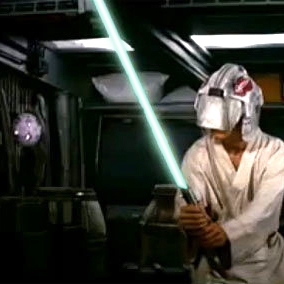
Learn to trust your feelings. Even with the blast shield down.

I’ve had the experience of working with some writing, both my own and other people’s, that required a second opinion. For some of them, I was the second opinion, while the others involved my work being reviewed.

An experienced professional asked me to take a look at another writer’s script, accompanied with their excitement and enthusiasm about it. Upon reading it, I found it severely lacking in a lot of screenwriting fundamentals (bad structure, shoddy character development, etc.), and said so as part of my notes of what was needed to improve.

I like to read a script twice before giving notes on it, and it took a lot of effort to get through each one – especially the second time. That whole time I was wondering “Where is this enthusiasm coming from?” This person knows what a good script looks like, and this one, to me, didn’t meet any of the necessary criteria. And if they felt this way about this script, could I trust their judgment on others?

Last week I’d been given the offer to have my query letter reviewed. I put it together with the elements I considered vital: quick one-sentence pitch, logline, reputable contest results. As fast a read as possible.

The response read like something churned out by a machine. Their recommendation was to follow “their blueprint”, which involved a lot of fill-in-the-blanks, how it’s similar to successful films (the more recent, the better!), telling the story from only the main character’s point of view, and concluding with “why I think this will be a hit” OR the underlying theme. The end result is several big unappealing blocks of text.

All of this felt totally and absolutely wrong. If I were the intended recipient, I might start reading, but would most likely lost interest very quickly and be very hard-pressed to want to continue, let alone finish it.

(With no intention of ever actually using a letter written following their guidelines,  I put one together and submitted it for review, just to see what they would say. Their follow-up comments reinforced my doubts, but that is a topic for another day.)

As you probably guessed, I’ll be sticking with my original format.

The takeaway from both of these experiences is that a writer must not only develop their writing and storytelling skills, but also the ability to trust their instincts. Know what works, not only for you, but in an overall sense.

Don’t always assume the other person is in the right. Sometimes they’re not.

Everybody will have an opinion about something. You might agree wholeheartedly or think the other person has no idea what they’re talking about. It takes time to learn how to determine which is which. You will make mistakes and bad choices along the way, but make the effort to learn from them so you don’t do it again.

Like with writing itself, the more you work at it, the better at it you’ll become.


How does your script move?

AMC Pacer
Not that kind of pacing

When you’re reading a script, are you able to notice how time is passing while you’re reading?

Have you zipped through a significant amount of pages without even realizing it? Or does it feel like this thing is just dragging on forever, and that even turning the page is going to require every last ounce of strength you’ve got?

A key factor in writing a script is establishing its pacing, or “how the story moves”. This is one of those skills that takes time to develop.

A script might be overwritten, or at least have too much going on that it distracts you from concentrating on the story. Or maybe it’s written in a flat, almost-monotone kind of way, which makes it tough to stay interested.

Who hasn’t read scripts containing scenes like all of these? And it’s probably reasonable to assume if the script has one scene like this, there are going to be a lot more just like it throughout the whole thing.

So what can you do about it?

The best advice is a two-parter.

The first is a quote usually attributed to David Mamet and/or William Goldman:

Get in late, get out early.

Get to the point of each scene as soon as possible, then get out and move on to the next one. Anything else is unnecessary and will slow things down, and you don’t want that.

The second is a universal rule of storytelling:

Don’t be boring.

Write so it holds our interest. Don’t overdo it, but don’t settle for the bare minimum either.

Get that momentum going, and do your best to keep it that way.

Make something happen

organizational chart
Time to get organized!

Lots of resolutions and goals being bandied about today, but that’s just the first step.

All the things you want to accomplish this year as a screenwriter. What are you doing to make them a reality?

It’s going to take a lot of work. It’ll be frustrating at times, but isn’t this something you’re willing to put yourself through hell for in order to see happen?

Give yourself some goals, but be realistic.

Write. Edit. Rewrite. Polish.

Watch. Analyze.

Read. Study. Learn. Hone.

Network. Connect. Share. Support.

Enter contests. Attend conferences. Pitch.

Research. Query. Reconnect.

Keep trying.

Don’t give up.

Enjoy yourself.

Make 2016 the year you make something happen for you.

Now go get started.