Reduce heat; let simmer for 2-3 months

I look exactly like that after finishing each draft, flour and all
Exactly how I look after finishing a draft, even though the flour wreaks havoc with my keyboard

It took a little longer than expected, but the revamped outline for the pulpy adventure spec is finally done.

As is my usual practice, I won’t take another stab at it for at least a couple of months partly because I’m feeling a little burned-out on it. This has been my primary focus for the past couple of months, and I just need a short break from it.

The other reason is I’m getting ready to jump into rewriting the Christmas-themed mystery-comedy. Notes are in place, so hopefully it won’t take too long.

But getting back to the outline, my original thought upon finishing it was the standard “It’s better than it was, but still needs a lot of work,” but experience has taught me that this may not necessarily be the case anymore.

I like to think I’m a stronger writer compared to a few years ago, so while I would never consider the material as it reads now as perfect, it may surprise me when I return to it as to how much better it is than I remember.

At least that’s what I’m hoping for.

On the other hand, I could read it and think “Where did that come from?”, “Well, that’s not going to work,” or even “Hmm. How much wine did I have that day?”

Taking it another step further, taking this break will enable me to pretty much forget a lot about the story, so I’ll be able to read it with fresh eyes and potentially come up with fresh ideas about how to improve it.

All things being equal, I like the way it turned out and am looking forward to getting back to it.

But first things first. Time to shift from the fight against monsters wreaking havoc to seeking out answers behind seedy goings-on in a holiday metropolis.

As always, watch this space for updates.

They don’t call it a climax for nothing

Couldn't make this any more Freudian without going NSFW
Couldn’t make this any more Freudian without going NSFW

As the events of Act Three of the pulpy adventure spec outline slowly develop, it’s becoming more clear that retroactive edits/fixes/tweaks will be necessary for parts of Acts One and Two.

Act Three goes beyond making sure each of the main characters has something to do.  The actions they take should be tied directly into the main story, represents them overcoming their own personal obstacles and wraps up their individual storyline, all in the most satisfying way possible.

Hence the need to go back and make those changes. The more I can set up and effectively reinforce each character’s storyline, the better the payoff will be, both for them and the overall story.

I’ve always stressed the importance of setups and payoffs throughout a script. Everything we’ve seen in Acts One and Two should come to its appropriate conclusion in Act Three.

I’ve read a lot of amateur specs where something is set up early on and ends up either totally forgotten, treated as an afterthought or pays off with less of an impact than it should.

This is what you’ve been building up to for the past 90-plus pages.

Don’t let us down.

Know the route you need to take

There's something to be said for taking the scenic route
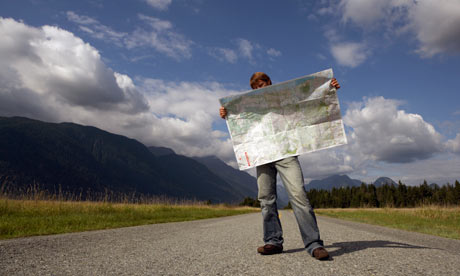
Which way now?

After having reached the midpoint of the pulpy adventure spec outline, I’d been struggling with getting to the next plot point.

Not helping was the almost total jettisoning of material from the previous draft. The story had since changed in a drastic way, so there was nothing to salvage.

While I knew where the story had to go, I couldn’t figure out how to get there.

The midpoint sequence ended the way it had to – hero fully committed to achieving his goal, but now on several levels, and the antagonist getting closer to achieving his.

But what happens next?

Exploring several options, something finally clicked and I remembered a very simple rule we all tend to sometimes forget:

It’s not what could happen, it’s what has to happen.

THIS is what the characters need to do to move things forward (with your protagonist being the primary mover), and the more challenging we can make their journey, the better.

There are plenty of options of how things can play out in your story, but it will take some effort (and a lot of rewriting) to find the one that it needs.

Put ’em through the wringer

Work on your script AND a load of laundry at the same time!

As work on the pulpy adventure spec plods forward, one of the key components of a solid script is constantly reminding me to use it to its fullest potential.

Conflict.  Without it, you won’t have much of a story.

While each scene should be advancing the plot, theme and character development, there also needs to be some kind of conflict.

You know that analogy about structure that involves your character getting stuck up a tree and having rocks hurled at them? Being stuck and the rocks would be the conflict.

(I can just imagine the studio note – “I love it! But does it have to be rocks? And how about a bush instead of a tree?” But I digress.)

Characters need to keep encountering obstacles that prevent them from achieving their goal.  Your job is to make those obstacles tough for them.

Here’s where things get interesting and how to make your script stand out from the rest – those obstacles can be in the form of just about anything.

Conflict doesn’t mean there should be a major argument or a slam-bang, knockdown punch-fest; more like the confluence of two opposing ideals with some degree of intensity.

Say you’ve got a character who absolutely needs to be somewhere at a certain time. It’s up to you to think of different ways to make their journey anything but easy. Lost keys, flat tire, car won’t start, traffic jam, and so on.

As the story progresses, so should the levels of conflict. Start off on a small scale, and then build so things just keeping getting worse. This can also be combined with raising the stakes so the reader/audience can’t help but wonder “How are they going to get out of this one?”

Something else to consider: try to make the conflict organic. Don’t have something happen because the story needs it to; make it feel like it belongs. Going back to the earlier example of the character trying to get somewhere – it makes more sense they would get pulled over for speeding, rather than, say, abducted by aliens or attacked by zombies (unless that’s part of the story).

Simply put, you have to put your characters through hell before they can get what they’ve been trying to get the whole time. If you’ve done a good job in making us want to root for them, the more we’re going to want to see them succeed.

The dreaded return of a foe most formidable

Who invited these guys?

Ah, writer’s block. So we meet again. It’s been a while.

Can’t say I’m happy to see you.

I was just sitting here, minding my own business, trying to put together the story of my new project (epic pulp adventure monster saga!) when you decided that was your opportunity to make your grand entrance.

Within seconds of your arrival, my creativeness, like Elvis before it, had left the building.

Curse you.

While I struggle with potential ideas and stare at two previous outlines in an effort to construct a third, you stifle my ability to figure out problems, think my way through scenarios and come up with how things should play out.

The ease with which I was able to previously deflect your efforts is no more. You’ve made the process tougher this time, and I do not like it.

The longer you stick around, the more frustrated I get, which makes it harder to develop a strategy that will see me triumphant and you soundly defeated.

What makes your presence even more aggravating is the off-the-charts levels of excitement I have about this project. Once the story is solid enough to my satisfaction, I will become a veritable writing machine and crank out material at a pace you wouldn’t believe.

Taunt me all you want, but I have worked way too hard and put in too much effort to let the likes of you stop me. I may be down, but I am definitely not out.

It may take a little longer than I’d like, or I could find a solution five minutes from now. Either way, I will work my way through this. I’ve done it before, and I’ll do it again.

And when that moment occurs, I will gladly show you the door and send you on your way, hoping it is a very, very long time until you even consider the idea of returning.