The dreaded ensuing of wackiness

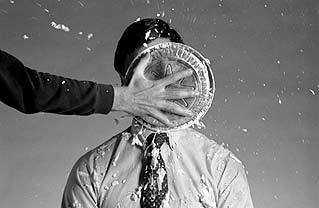
pie-in-face
Done right, this is comedy gold

As part of my work on the low-budget comedy spec, I’ve made an effort to read other comedies to help get a better understanding of how it could be done and hopefully some guidance I could apply to mine.

It’s always been tough for me to read comedy because my sense of humor doesn’t always align with others. Many’s the time I’ve read a script that garners universal praise for being gut-bustingly hilarious, but doesn’t do anything for me.

There is, however, one detail I’ve noticed that keeps popping up:

Unrealistic situations.

Things that seem to happen only for the sake of a joke, and not much else. These often feel forced and inorganic to the plot. Almost as if the writer thought “Hey, wouldn’t it be crazy if ____?”

In theory, potentially a good idea, but in execution – not really.

Some might argue that since it’s comedy, things don’t have to be realistic as long as they’re funny.

I beg to differ. If I don’t think something could actually happen, I will most likely not find it funny.

**side note – this doesn’t necessarily apply to slapstick or absurdist fare, which are two entirely different discussions**

Sure, there are comedies where the entire premise isn’t all that realistic to begin with, but even the humor in those should stem from the situation, rather than being a crazy assortment of wacky gags.

Going for the easy laugh or cheap joke doesn’t take much skill and shows a lack of sincere effort. If a writer does it once, chances are they’ll do it a lot. It also doesn’t offer anything new. Who wants a joke they’ve probably seen or heard a thousand times before?

Looking at comedies that would be considered strong, there are a lot of instances where the joke is an integral part of the scene, rather than feeling like something tacked on.

You’ll hear that the best comedy is the kind that makes you think. I prefer comedy that shows the writer did a lot of the thinking.


Shakin’ things up so much it registers on the Richter Scale

richter scale
Brace yourself

I recently took part in a group conversation with some other writers, and naturally, the topic came around to “So what else are you working on?” I always enjoy this sort of thing. So many great ideas out there.

When it was my turn, I mentioned some of what’s been occupying my time, which included the Christmas-themed mystery-comedy.

“A Christmas mystery-comedy? What’s that about?”

I launched into my 30-second elevator pitch. “LA Confidential with an all-elf cast.” The seedy underbelly of the world of Santa’s workshop. Guns. Sassy dames. Tough-talking gangsters. Intrigue. Double-crossings. The whole gin-soaked ball of wax.

While most thought it sounded like a lot of fun, one person looked absolutely horrified.

“Oh no!” they exclaimed. “My kids and I love Christmas. It’s supposed to be sweet and wonderful! I can’t believe you’d want to write something like that.” (All that was missing was them sprawled on a fainting couch, claiming to have the vapors while frantically fanning themselves.)

How could I not want to write this? Sweet and wonderful doesn’t make for good storytelling. I love this kind of story, and think it would make a great script.

This person makes it sound like trying something new is a bad idea because it messes with the comfort of the familiar. Yet one of the most common tenets is “Familiar, but different.” A story you’ve seen before, but told in an entirely new way. It’s what we should all work towards.

Everybody’s looking for something truly original and unique. Why in the world would you want to write something that doesn’t offer up anything new?

Every script you write is a golden opportunity to push your creativity to the limit so you really catch ’em off-guard. You know the story you want to tell, but it’s on you to truly surprise your reader/audience. Take things in an entirely different direction. They may think they know what’s coming, but you know better and look forward to how they’re going to react.

No matter what genre your story falls into, there will be certain expectations that come with it. The challenge of every writer is to not just meet those expectations, but toss them out the window and offer up a totally new and unexpected way of telling that story. Some people may not like it, but it’s most likely they’re in the minority, and therefore not your target audience.

Think about it. What kind of script are you more likely to take notice of and remember? One that goes for new and original, or one that plays it safe with the tried, true and predictable?

I know which one I’d pick, and will be waiting over by the window for your answer.

What comes after the light bulb?

light bulb
This is how it starts

Being a writer means your creativeness is always running, or at least should be. It never shuts off, and sometimes kicks in when you least expect it.

Inspiration can hit anytime, but are you prepared for when it does?

You could be doing something you do practically every day or see something seemingly normal, and all of a sudden think, “Hey! There’s a story here!” It could be whatever you can imagine: the basis for a short, an episode of a webseries, or part of a feature.

Then there’s the thrill as your mind races through all the potential possibilities. What if THIS happened? Or THIS? Ooh! I love THIS! It’s like a shot of adrenaline into the right side of your brain.

When the idea hits, do you immediately write it down, or is it suddenly burned into your brain so deeply that there’s no way you could possibly forget any part of it?

Of course, it’s one thing to come up with the idea. How far do you go with it? Does it lose its luster after a few days, and then you just give up completely? Do you hold onto it because there’s just SO MUCH POTENTIAL here? Do you tinker around with it, file it away, then come back to it weeks or months later?

How original an idea is it? Can you think of something that’s similar? Who’s your target audience? Is it something you yourself would actually pay to see?

Let’s also not forget that this is all based on your thinking. You love the idea, but what if somebody says “I don’t get it” or all you get is a shrug? Do you think the idea is worth developing? Is it one you’re prepared to slave away on for an extended period of time?

It’s easy to come up with the ideas, but definitely not easy to turn them into quality, fleshed-out screenplays. It takes a long time to get the hang of doing this, let alone doing it well. But don’t let the difficulty or length of the journey dissuade you from at least trying.

Start with the idea, and take it from there.

Is the original concept an endangered species?

Keep looking! They're out there somewhere.
Keep looking! They’re out there somewhere.

Quick! Name a recent successful film NOT based on a pre-existing property.

Right now, the only one I’m coming up with is INSIDE OUT.

Warner Brothers just blew $150 million on PAN, which finished 3rd its opening weekend, dropped to 6th this week, and has only made $25 million. It’s probably safe to say it’ll be one of the year’s pricier bombs.

Marvel unveiled its slate of something like 20 films over the next 5 years.

Every studio desperately wants the next Harry Potter, TWILIGHT or HUNGER GAMES franchise, but despite plenty of copycat attempts (e.g. GOLDEN COMPASS. DIVERGENT. PERCY JACKSON. SPIDERWICK CHRONICLES. MAZE RUNNER.), the search for a new heir to the throne continues.

Despite cries of “Ugh! Another reboot/remake/reimagining?” the public keeps paying to see them and the studios keep making them. (“It worked before, so it’ll work again!”)

And with so many other writers out there, both aspiring and professional, as your competition, there’s bound to be a lot of repetition and similarity of stories and ideas.

What’s an ambitious spec writer to do? Especially when you take into consideration the age-old adage “Nobody’s going to take a chance on an unknown writer.”

To say our work is cut out for us is putting it very, very mildly.

We are competing against source material from all kinds of media, so your script has to be jaw-droppingly amazing for it to have any kind of traction.

And even getting to that point ain’t easy.

Everybody always says they have an idea for a script, but how many are actually able to turn that into an honest-to-God original, as in “never seen that before”?

Every script you write has to be something that people who aren’t you would want to see. Totally brand-spanking new. Out of left field. New twist on an old idea. Familiar, but different. The more original and well-executed it is, the better your chances.

What is it about your script that makes it truly stand out from all the rest? How mind-blowingly original is the idea behind it?

There really is a demand for solid, well-written original scripts. It’s up to you make sure yours is all three.

Is your story worth fighting for?

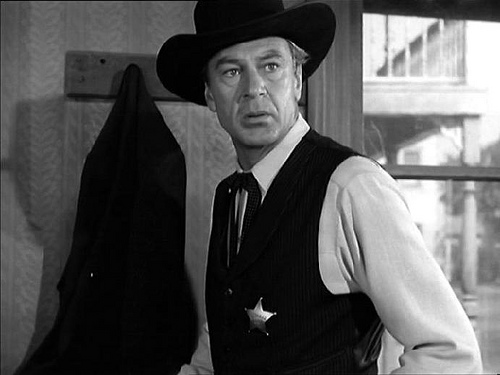
Will Kane knows what it's like to feel like one against everybody else
Follow Will Kane’s example (except without all the shooting and stuff)

The rewrite of my mystery-comedy has been put on hold because I’m teaching myself how to write a mystery, or at least how to be better at writing one. I bought a book and everything.

But I also don’t want to not be writing, so I’ve also decided to return to the low-budget comedy. It’s been a while since I’d read the outline, but it holds up more than I thought. Sure, it needs work and there are some spots where it says something like “SOMETHING FUNNY HAPPENS!,” but overall, I like it (hold onto that statement for just a bit).

Several months ago, I’d had the opportunity to have a brief chat with a writer who specializes in comedy. He asked what I was working on, so I pitched him the idea. He liked the concept, but was quick to poke holes in the story vis-a-vis the logline (which has since been rewritten), and didn’t care for how I had the story play out (as delivered in my thumbnail presentation).

“X should happen instead of Y! Having THIS CHARACTER connect with THAT CHARACTER is all wrong!” Plus some additional words to that effect.

Gosh.

I wasn’t expecting a standing ovation, nor did I expect it to be proclaimed a work of genius, but if this guy didn’t care for what I had, did that mean it was doomed before I even started?

Nope. Quite the contrary.

Several key things I had to remember:

-this was his opinion. One person, which is not a majority.

-his sense of humor and comedy stylings could be totally different from mine.

-it’s a work-in-progress in its very early stages. The end result will most likely be very different from the starting one.

-I think it’s a good story. Always have, always will. I have no intention of abandoning it or making any significant changes so as to gain his approval. I’m not writing this for him.

Every writer spends a lot of time coming up with story ideas, and then developing them as far as they’ll go. Stick to your guns if you believe in your story, but don’t totally block out advice and suggestions. Use what you think works best. Remember – this is YOUR story. If you think it works, then by all means, do what you can to make things happen.

It’s great when you get encouragement, but you’ll also encounter a lot of naysayers (“I don’t get it/like it, so it must be a bad idea.”). It’s all subjective. Everybody likes different things. If you believe wholeheartedly in your story, you have to do your absolute best to get the rest of us to be just as interested in reading it.

Just make sure to tell that story in the most entertaining, original and professional way possible. That’s all.