You don’t know me, but can you help me?

the-stranger
Let’s not complicate things with petty details like who I am

So this email arrived yesterday.

“Hi, Paul, Do you know any past or current Executive Producers that might be eager to engage in a new multi-billion dollar franchise that could be as good as “Harry Potter” or “Star Wars”?”

Immediate smartass answer: Well, of course I do, person-I’ve-never-communicated-with-before! I like the cut of your jib, especially with that totally unsolicited request for help! I’ll pass your info along straightaway! Even though I think smoking is a totally unhealthy thing, I’m going to learn how just to be able to literally light cigars with hundred-dollar bills which I’ll be grabbing out of the huge bags o’cash which will no doubt be continuously rolling in once Hollywood gets its mitts on this!

Secondary upon-reflection answer: Do you really think this is the best approach?

Sure, we’ve been connected on a networking site for several years, but as far as I can recall, have had absolutely no interaction during that time. No emails. No comments on a post. Not even a single “Hey, how’s it going?” And then, totally out of the blue, you come to me and ask for help.

I’m more than happy to help somebody out when I can, but it has to be somebody I know, somebody I’ve communicated with, and somebody I think is worth helping. Apart from this nebulous “connection” we have, to me you’re little more than a total stranger.

And you’re not asking for just any kind of help. You have what you proclaim to be “the next big thing”. If I had a dollar for every time I’ve heard or read that about a script/story/idea, I’d be able to fund my own franchise.

It’s great that you have a high opinion of your material, as you should, but keep in mind you might be the only one who does. You can prognosticate all you want, but that’s not going to impact anything. You can’t say something’s going to be a hit because you want it to be.

I’m still a little fuzzy on the details, but I think the title “Executive Producer” depends on the extent of that person’s involvement with the project. Until then, I believe “producer” is the appropriate title. Feel free to enlighten the rest of us in the comment section.

Let’s also discuss the fact that you sent this to me. Me. Why? I’m not exactly Mr Industry Insider. In fact, I’m more likely in the same boat as you; a nobody busting his ass trying to establish a career. Did you know that? Did you do any research, or are you just sending this to as many people as possible, hoping one of them works out?

I never responded to the email in question, simply because I don’t think it’s worth it. I suspect anything short of “Here are those names you asked for” would not be welcome, let alone “This is a really unprofessional email, and here’s why”. As always, I wish them the best of luck.

I’ll admit I’ve made a lot of mistakes over the years, but each one has been a learning experience unto itself. I’ve learned how to network, how to communicate, and how to interact. I know how to seek out help and how to offer it. I’m a firm believer in researching and finding out everything I can about whatever it is I’m working on.

I always strive to be as professional as I can when it comes to this sort of thing. Everybody’s a potential future partner/connection/resource, but I don’t take it for granted.

I’ll treat you with respect provided you do the same.

Quit them or queue them up?

q
As long as we’re emphasizing Qs today…(Yes, it’s a terrible joke. But that’s how we operate around here.)

Today is all about query letters.

I read about other writers who’ve gotten reads, representation, options and even production. There must have been something quite special about those letters (and scripts) to get those machines in motion.

There are also a select number of writers who’ve never had to use a query letter. Bully for them, I say. But I’ve never fallen into that category, so I’m firmly planted in the “those who send” group, which is still fine.

Taking a look at the somewhat limited results of my past efforts and reading about others’ experience makes me wonder in a “big picture” way about the nature and concept of the query letters themselves.

Are they worth the effort?

Naturally, if something happens as a result, of course they are. But even that appears to be a needle-in-a-haystack kind of scenario.

(Incidentally, any tales of query success are more than welcome in the comments section.)

There are so many factors to take into account, including but not limited to:

-who you’re sending to
-what kind of material they want
-they’re intrigued enough to want to read the script
-your script is a good match (or at least close enough) to what they want
-they think your writing’s strong enough
-they think they can make something happen with your script

Several years ago, an agent who’d struck out on their own (along with a sole assistant) told me that their office received approximately 75-100 queries a week. From around the world. Some were good, most were awful. A significant part of each morning was spent sorting through them. As you’d imagine, finding one, possibly two, that clicked seemed to be the norm.

Remember, this was a two-person operation. If they were getting that many, imagine how many the mega-agencies were getting, and still are. Possibly in the thousands.

The chances of success are minuscule, and grow smaller with each progressive step. Those not exactly in the know are more likely to think they’re the exception, but those of us who’ve been down this road before know better.

This isn’t to say that queries never work, but the odds definitely appear to be not in our favor. Luck and timing seem to also play significant parts. Maybe the person you’ve sent to just happens to be looking for a script exactly like yours. I’ve heard it does happen; just not very often.

But the dedicated, persistent and determined among us, including yours truly, will keep at it.

Even though my success rate hasn’t been the best, I’ll continue to do the research, find potential recipients, craft what I believe is a solid query, and send it out.

All that’s left is to wait, hope for the best, and keep busy working on other scripts, each of which will probably also have its own respective query letter get sent out sometime in the near future.

Thank you for being better than me

fancy pie
Mine don’t look like theirs yet, but give me time…

Via a writing colleague, I recently found myself in the possession of a pair of scripts written by a pair of pros.

“Open one and read a few words and you’ll be in for the rest of the script,” I was told.

And you know what? They weren’t far off.

I only got a few pages in, but found the writing to be extremely vivid and descriptive. No problem at all in painting those mental pictures with a powerful brush.

My only complaint – all that dazzling wordsmithing got a little too distracting, making it slightly tougher to focus on the story. Nevertheless, I’m looking forward to reading both scripts.

But I totally got my friend’s point: the writing was exceptionally engaging. It really grabbed you and made you want to keep going.

Compared to it, my writing comes across as kind of dry and might even be considered sort of dull and lackluster. Not to totally disparage my own work, but these writers are professionals. I, as it has already been established, am not.

But reading these scripts and others like them are good reminders of what I and every other writer should be trying to do. You don’t want a stick drawing. You want a finely-crafted elaborate work of art.

Speaking from experience, this isn’t easy. It’s almost like learning a new way of writing. It requires a lot of work, nor will it happen overnight.

But don’t despair. The good news is you can start working on these improvements practically immediately.

Take the last scene you wrote. How does it read to you? Does it compel you to want to know what happens next? Feel free to tinker with it until it gets to that point. Then do the same with the scene after it. And the one after that. And so on, and so on.

Think of it this way – you want the reader to “see” the scene in the same way you imagined it. Therefore, your challenge is to write it so the actions, images and dialogue in it come as close as possible to matching your version AND that no other description would do it justice.

Reading these professional scripts was at first intimidating in a “I’ll never be able to write like that!” kind of way. But with a continuous effort and a lot of work, there’s no reason to think I couldn’t come mighty close.

Plan accordingly forwardly

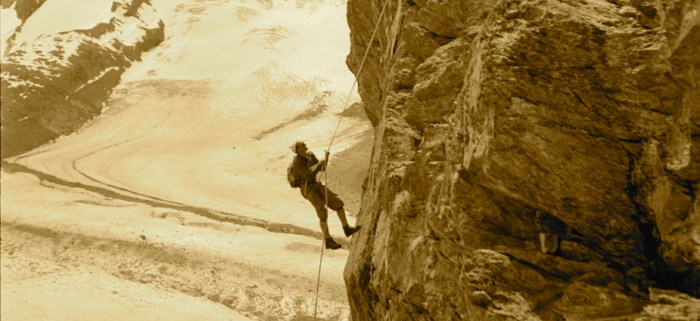
mountain climber
Know what’s ahead and what you’re going to do about it

Now that we’re well into the second half of the year, I’ve been working on scheduling out how I’d like the time between now and December 31st to be filled up, both writing and career development-wise.

As you’d imagine, there’s a lot of writing involved. Finishing the rewrite of one script, polishing another, cranking out a first draft of yet another. I’ve done what I can to establish realistic and achievable deadlines – no more writing marathons for me.

Add to that the efforts to network and meet with other writers, both in-person and online, along with pursuing viable avenues to get the work out there, such as query letters and contests.

One important part of all of this is that, for the most part, I’m the one overseeing all of this. Nothing will get done or happen if I don’t make the effort. As for the things I have no control over, especially the career-oriented ones, I’ll do what I can to get the ball rolling and see what develops.

A friend saw my list of objectives and said “Good idea. Plan to succeed.”

Part of this stems from exactly that. I’m working at this so I can succeed. Being organized about what you want to accomplish helps you stay focused on getting closer to actually achieving it.

While you’re working on your script, you should always be asking yourself “How can I make this better?” Well, this also applies to working on getting a career going. How can you make it better?

Keep writing. Your skills will improve and your number of completed projects will increase.

Seek out connections. The internet is your greatest tool for networking with other writers and folks within the industry. Very important – be nice.

Do your homework. Find out the necessary details as they apply to you and what you’re trying to accomplish. Whether it’s the best format for a query, if somebody’s contact info is still accurate, or which contest is a good match for your script.

Commit. You know all the things you need to do and want to do. Now dedicate yourself to doing them.

All of this may seem somewhat overwhelming at first, but get in the habit of making it a daily effort – even just a little at a time – and the results will start to take shape.

In it for the long haul

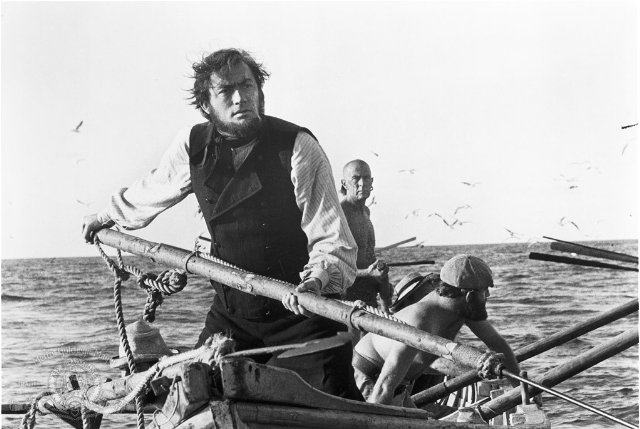
ahab
A somewhat extreme example, but you get the idea

Some days this is quite the struggle. You slave away on a script, send it out (contest, query, what have you) and hope for the best.

Unfortunately, a lot of the time, the best isn’t what happens. There will be rejection. A lot of it.

But every defeat is temporary, and a chance to regroup and try again.

In the beginning, when somebody tells you “no”, you take it personally. But you eventually grasp the concept that they’re addressing the writing, not the writer. You hunker down and keep going, continuously striving to improve.

The “no”s will still come, but eventually you get to the point where you simply shrug it off.

“Why even bother?” some might say. “Why keep doing this to yourself?”

Because the longer and harder you work at it, the closer you get to reaching that goal.

Because we feel this is a goal worth pursuing.

Because we’re compelled to.

Because we believe in our abilities.

Because we love doing it.

Success, especially when it applies to screenwriting, does not come easy. Or quickly. You will need an unlimited amount of patience and perseverance. This is going to be a long, perilous journey.

I’ve started walking. Who wants to come with me?

And I think this is a pretty good way to get things started.