A quick refresher course

library
Researching potential connections takes just as much effort

I’ve noticed a trend recently popping up on a few online screenwriting forums.

Writers are posting their material, asking for feedback. Concepts, loglines, the first page or the first few pages of their script. Any and all of them.

On one hand, I can understand the desire to get feedback. You want to know if what you’ve got works, and if it doesn’t, how it could be improved.

On the other hand, you’re asking what is, for the most part, an assortment of total strangers with unknown levels of experience to tell you what they think. Can’t say that I’m too crazy about that.

It’s like walking into a party where you don’t know anybody, standing in the middle of the room and shouting “Hey! What do you think?”

Don’t do that.

As has been stated many times on these pages – networking is key.

Professional relationships are a vital part of this business. They take time and effort to establish and maintain, but are definitely worth it in the long run.

You need to put yourself out there and get to know other writers, preferably in person, but online/virtually works just as well. Both have benefitted me greatly, and could do the same for you.

Here are a few previous posts which might come in handy.

Getting to know you

Try the direct approach

Lattes, lunches & kindred spirits

Hey! Long time no (preferred form of communication)

Now get out there and meet people.

-Two weeks ago, I ran the SoFi Golden Gate Half-marathon with a time of 2:01:16. Not bad, especially considering the amount of uphill.

This Sunday I’ll be across the Bay and running the Berkeley Half-marathon for the first time (it’s also my 5th and final race for this year). The course is a little flatter than San Francisco, so while coming in under 1:55 would be great, I’ll also be happy with anything under 2 hours.

Once again proving that the journey to succeed really is a (half) marathon, not a sprint.

See you at the finish line.

Keep your ego out of it

vintage lady writer
As much as she loved that scene, she eventually accepted the fact it would have to go.

I’ve received notes on three separate scripts in the past week or so, and each set is of  very high quality. Each does a very thorough and insightful job of spotlighting What Needs Work for each script.

Daunting and somewhat overwhelming at first, I’ve begun the slow and somewhat laborious process of analyzing and breaking down all the comments and suggestions. I won’t use everything, but there is definitely a lot of good material to work with.

I provided a total stranger with material, and they’re offering up their honest opinions about it. At first glance, some of the comments might be interpreted as negative, but they’re really not. This is what they saw/thought while reading my script.

No axes to grind. No vendettas. No hidden agendas. Just pure, honest opinions. I take what they said, figure out which parts I consider the most helpful, and proceed from there. Ten times out of ten, the result is a better script.

I was told once that getting critically constructive notes and being willing to accept them were signs of a quality writer. Honestly, that was a little surprising.

As much I’d like to think my stuff is great, the reality of the situation is that it’s more along the lines of “it’s okay/pretty solid, but could still use some work”, which is fine. That’s what rewrites are for. From my experience, the final draft is always different from the first. I wouldn’t have been able to produce that final draft without all those helpful notes.

Many times I’ll see a writer ask for feedback on their script, which they get, but might not be the high words of praise they were expecting. Are they ever? Then they respond with something along the lines of “You just don’t get my genius!”, and promptly reject any and all notes. The end result: a lousy script that’s not much better.

Helpful tip: don’t do that.

The whole reason you want notes is to find out how to make your script better. Hard as it is to believe, you can’t make it better if you’re not willing to accept criticism. You can be super-proud of the script you have, but don’t fool yourself into thinking it’s perfect just the way it is now.

Chances are it’s not.

What’s more important to you: having what you think is a good script, or having somebody give you tips that would actually help make it better?

Would we love to see our scripts play out onscreen, just the way we wrote them? Of course. But what you see is up there is usually a lot different from what how it originally read on the page. Happens all the time. Getting upset about it and decrying the sacrilege committed by altering even one letter or syllable from your precious text is definitely the wrong way to go.

In the next couple of days, I’ll be having separate in-depth discussions about two of my scripts with some of the people who gave me notes on them. My emotional state could probably be summed up with “excitedly nervous”. It’s a combination of looking forward to and feeling a bit anxious about hearing what they have to say.

But in the end, it’s not about the writer. It’s about the script and doing what’s necessary to make it better.

I’m here, but need to be up there

mountain climber
Onward and upward! (snappy hat optional)

I’ve been writing screenplays for quite a number of years, but only in the past, say five to six have I shown some significant improvement.

More than a few readers who’ve read my last three scripts have commented that each one displays a step up in quality a compared to its predecessor. Which is very nice to hear.

Feeling pretty confident in my skills and material, I submitted some of them to a few of the high-profile contests (or at least the ones that really matter). The results were less than encouraging. Don’t get me wrong. Top 15 percent in the Nicholl is nice, but it’s still falling short of expectations.

You can have the most incredible script you’ve ever written, enter it in a contest, and chances are it might still go nowhere. Contests are just one way in.

But I digress.

I figured there was nothing more that could be done with the scripts, so I might as well file them away and move on, using them for occasional query letters.

However.

While my scripts may not be similar to those that win contests (can you imagine me writing a coming-of-age story set in 70s Reno?), they’re still fun, entertaining reads, and my passion and enthusiasm for them continue to burn strong and bright.

Like with my writing skills, they’re good, but can still be better.

That’s why I’ve decided to do what I can to make that actually happen. I’ve already gotten several sets of notes on some of my scripts, and most mention the same issues, along with some potential fixes.

As always, I have the luxury of picking and choosing which suggestions to implement, and I sincerely hope the end result is a collection of scripts of decidedly higher quality.

It’s been quite an effort for me to get my writing to get to the level it is now, and spending a little more time on trying to make it better will be definitely worth the effort.

99 44/100%, or somewhere thereabouts

838-02487048
Gotta be really careful when seeking the exact formula

It was quite an undertaking, involving lots of rewriting, editing and reorganizing, including plenty of self-imposed stress, but the latest draft of the pulp sci-fi is complete.

It could definitely benefit from a little more work – another draft or two would make it that much better, but it’s exactly the kind of fun thrill ride I set out to write, and I really like how it turned out. One of my guidelines has always been “Write something you would want to see.” Man oh man, would I want to see this. And based on some of the notes I received from my squadron of trusted colleagues, so would they. Such an encouraging thing to hear.

Quick side note – I absolutely could not have gotten this script to this point of development without those exceptionally helpful notes. Thanks, chums! Each and every one of you has once again proven yourselves invaluable!

Networking. Worth it like you wouldn’t believe.

So for now, I’ll be taking a little break to let that script simmer for a bit as my focus is redirected towards revamping the outline of the comedy spec. Thrilled to say that even that seems to be coming along nicely, including a most productive writing sprint that got me to the next plot point. Always a good thing.

As much as I hate setting up deadlines for myself, I’m really hoping to have a decent first draft done by the end of the year – at the very latest. If I can maintain a pace like I have over the past few days, no reason I wouldn’t be able to type FADE OUT by Thanksgiving.

Totally doable.

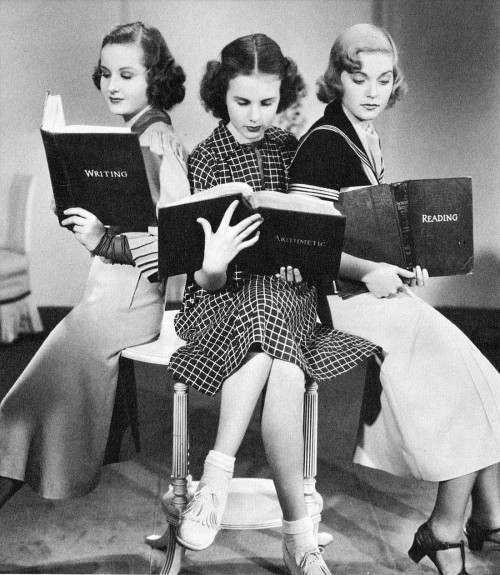
Educate thyself

reading 2
Quiet, please. Writers at work.

Chances are you came to this blog/post via a link from an online screenwriting group or forum. (If you’re a first-timer – welcome! Feel free to subscribe.)

When time permits, I’ll browse through some of the groups to check out what kinds of subjects and topics are being discussed. There are also questions. A LOT of questions. Those can range from “How do I get an agent?” to “What’s the proper format for this?” to “How do these pages look?”, all of which will yield a wide variety of answers.

I don’t usually comment because most of the time I come into it late and somebody with just as much if not more experience than me has already said what I was going to say.

There was a recent post where somebody asked what the best screenwriting book was. Answers ranged from several well-known titles to “read scripts instead”.

To a certain extent, I think those are both good answers. The books that helped me the most were Dave Trottier’s The Screenwriting Bible, primarily in terms of getting a good handle on formatting and the basics of structure, and Paul Lucey’s Story Sense, which expanded on both (and appears to be out of print, but still worth tracking down a copy.)

While some books might help you get a grasp of the basics, the real learning comes from immersing yourself in reading scripts and working on your own. Another helpful practice is to watch a film with the script in hand, following along with the action onscreen while seeing how it’s written on the page.

Reading a script can really help show you what should and shouldn’t be there, which you can then apply to yours.

This doesn’t just apply if you’re just starting out. I still get a kick out of reading scripts, whether it’s from the Black List, or one somebody recommended, or even when someone asks me for notes. Bonus points if it’s somebody within my network of writing colleagues; I know they can deliver the goods, and that’ll be reflected in their script.

I’ve also seen my fair share of terrible scripts, usually identified as such by the content of the first page. If that’s not good, there’s little hope of improvement for the rest of it. The silver lining here is you will quickly see how NOT to do it, thereby ensuring you won’t duplicate it.

So while you should definitely devote time to writing your script, make sure you set some time aside to read scripts. You’ll be entertained AND learn at the same time.

-Filmmaker/script consultant/friend of the blog Jimmy George is offering a special limited-time discount for first-time clients – 50% off all script services. No matter what you’re working on, whether it’s a feature, a short, or TV, Jimmy’s ready to help you out. But better hurry – the offer’s only good until October 11th.