Q & A with Suzanne Gundersen of ScreenwriteNOW

Suzanne Gundersen is Founder of ScreenwriteNOW and Inner Story Consultant who mentors & teaches screenwriters and industry creatives how to clear the path that lets their story flow.

Since 2015, she has skillfully helped screenwriters overcome fears, worries & blocks on demand, get focused and sharpen creativity, build tremendous confidence, and deepen their emotional worldview into wisdom & truth, to hook audiences into wanting more.  She uses natural tools & techniques that relieve tension & stress, so her clients become more authentic and embodied in their work.

She expertly shares a technique she calls Neuro-Energy Tapping, a self-use acupressure technique that calms the mind and relaxes the body; combined with her 3RP Method, creates powerful shifts towards experiencing the 5C’s; centered calm, clarity, creativity and confidence! 

Her programs “Just Write Now” and “Get Pitch Ready” have helped thousands of screenwriters get focused into their creative rhythm & flow, effortlessly finish scripts and pitch with confidence.  “My Worldview”  is a program that helps writers transform their personal hero’s journey, so they can express their authentic value and emotional truth in their writing & presenting their work. 

Her work supports individuals and groups, she speaks & leads online workshops and programs. Visit www.screenwritenow.com to download her free e-book and schedule a complimentary consultation to discuss your needs & goals.

What was the last thing you read/watched you thought was incredibly well-written?

So many things! But the one I’ve been watching recently has been QUEEN OF THE SOUTH. I particularly enjoyed the first two seasons because of the subplots. There were some exciting and integrated subplots that threw the main plot into a lot of twisting. I always feel like really good writing and really good shows have a lot of integrated storylines at lots of different levels; at the surface level, at the deeper level, sideways. I’ve watched other seasons since then, but the writing for those has been a little bit flatter, more one-dimensional.

How did you get started in the industry?

I’ve been working in natural stress management for over fifteen years, and about five years ago, I was approached by a writer who asked if I could help her with her writer’s block. She led me to another published author who was working on a series of books who asked if I could help her with her writer’s block. She then referred me to a good friend of hers who was a showrunner on a network show, and asked if I could come in and help her writers room. I had no idea what that meant. I just knew I could help people clear their blocks.

I got into the writers room and found out that there was a writer who was getting divorced, a writer whose child was diagnosed with autism, and there was another one who had dealt with the recent death of her mother. All of these distractions were coming into play as to why they weren’t cohesive in the writers room. I worked with them as a group to help them get back in the zone together, and I worked individually with those three to help them process what was really going on in their lives and distracting them from being creatively on focus and on point.

From there it’s been a lot of word of mouth. I’ve done podcasts, had my services offered as a prize at festivals, I get to speak and teach classes at different screenwriting schools, including through Zoom during COVID. It’s all been a lot of fun.

You focus more on helping a writer utilize their emotions as part of their writing process, which includes a spot-on accurate description as the writer’s own “hero’s journey”. Why is it important for a writer to focus on their own emotions as much as on what they’re writing?

What else are we writing if not about our own emotional wisdom? We are energy as a person. We’re energy in motion, which is emotion. We’re learning through lots of different experiences that we go through in life. The hero’s journey just seemed to be a really great way to analogize between the story that’s being written in our own lives and what we’re writing about is really our own lives. I take people on their own hero’s journey by looking at the top two or three unresolved life experiences that don’t sit with them very well. When we don’t process things, we put a closed door to it, which keeps us from being able to access the emotional wisdom. I help the writer go on their own hero’s journey to go and resolve those life experiences, so they’re not afraid to write from the places they’re trying to avoid.

When writers are writing, they’re really writing about different parts of themselves. If the writing is flat, it’s often because they haven’t done the work to transform their own hero’s journey and  the unresolved life issues keeping the rich emotionally deep parts of themselves at bay. For them to be able to focus on their emotions and writing, and do it from a place of peace and wisdom, it’s very empowering and helps them to be able to write those deeply connected storylines that are really going to grab their audience.

Another common experience for writers is the dreaded writer’s block, which can be quite an obstacle. How does your Just Write NOW! program help a writer towards overcoming it?

We are either allowing or blocking, and that can be creatively, professionally, or personally. Just Write NOW is a program I developed which shows how to use one simple effortless technique to help the writer get back into focus. And not just mental focus, but into that creative rhythm and flow; that writing zone where they sit down and go “Oh my gosh, I just wrote for hours!”, or “I can’t believe I just made it through the whole first act!”, or “Those ten pages just flowed out of me!” Often that comes from being able to clear whatever is in the path that’s keeping you from your natural creative rhythm and flow.

Just Write NOW is a program that gives the fundamentals of a technique I call Neuro Energy Tapping, and a process I call 3RP, which stands for Resolve, Release, Reframe and Project. Neuro Energy Tapping is a self-use acupressure technique that helps to calm the mind and relax the body, and help the writer get into their rhythm and flow. It’s good for anybody dealing with all kinds of personal or professional obstacles, or experiencing “blank page syndrome”, or feels backed into a corner they can’t write their way out of.

The program lays out using this tapping technique to clear those distractions, and then using the 3RP method to help them transform that stress to get to a place of broader perspective about those distractions and back to the task at hand of that creative rhythm and flow. Once they’re back in there, I ask them to write down what their formula is for that. What do they tell themselves? What do they believe about themselves? What does it feel like to write? What are the best conditions to be able to write in? Is it the temperature? Is it an environment? Is it your favorite sweatshirt? Just Write NOW helps them to clear the distractions and dip into that creative rhythm and flow and really anchor it by identifying all the characteristics that keep them in that zone. That way they can get into it fairly quickly when they’re not there.

You mentioned “the 3RP Method”, which is a big part of your approach. What is that, and how does it work?

Resolve, Release, Reframe and Project, which is a sequence of how you’re processing distractions so you can get focused.

The first R is resolving. “How do we know our distraction?” What’s our evidence or proof? Is it a blank page? Did you get a lot of feedback from a manager or agent, and you’re resistant to doing it? Or maybe you’re feeling stuck. Whatever the symptom is, we’re looking to resolve it. We use the tapping technique to help them loosen the grip on that stress.

The second R is releasing it. When we’re doing this tapping technique, we’re sending a message to the part of the brain called the amygdala, as well as to the central nervous system to say “it’s okay to calm down now”. It’s easier to release something when we’re no longer feeling threatened, so that helps our stressed-out brain start to calm down too.

Once we’ve resolved and released it, we can move on to the third R of reframing it, which means once you’ve stepped out of a metaphorical tornado of blocks in your life and you’re feeling a little bit easier about things, how can you now think about that thing that was blocking you? What new ideas can you bring, whether it’s a new inspiration to write or a new way to look at the thing that was creating the distraction that’s not as big of a deal as it was before. And this happens in a way that’s truly unique and organic to the individual.

When that happens, I guide them towards the P portion, which is to project; to really look forward into their writing and be in that zone, where we can start to identify the formula for what it’s like to be in that creative rhythm and flow, and be able to go there when they need to.

You also mentioned Neuro Energy Tapping. What is that, and what are its benefits? Not just for writers, but for everybody.

I’m kind of a neuroscience geek. I call it Neuro Energy Tapping, but you may know it out in the mainstream world as “emotional freedom technique” or “the tapping solution”. The benefits are that it helps stop and slow the momentum of thoughts, feelings, the body’s reaction experience in the moment. It also helps to be able to open up new pathways for people to feel more at ease and get a result, and start building momentum in the direction they want. It’s a self-use acupressure technique where you literally use your fingertips to tap on energy points, and when you do that, you can shift and experience how you’re feeling your body, your emotions and your mind.

And it’s not just for writers. I just happen to apply it to help writers because it’s really a great technique to help clear distractions and get people focused; specifically for creative people to help them get into their rhythm and flow. Everyone can use it. It’s a wonderful, natural stress relief technique that can be used anytime, anywhere, to break the connection between the mind and body that might be causing stress or struggle.

It goes without saying that writing a screenplay can be exceptionally stressful. Was this part of the inspiration for your “reprogramming your stress” method? Is this something anybody can do?

Yes! Writers have so many great ideas, and that’s the fun part of writing. The real work of writing isn’t just the skill of putting it together, but being able to write from those places of emotional depth and wisdom. The process I take you through for reprogramming your stress is to be able to go to those distractions and processing them with the 3RP method. You can have those experiences and thoughts sit within you with that much more peace.

Once you’re at a place of peace, you can actually write more confidently, and really be able to put all the intricate parts of a script together. This involves a lot of thinking and emotion, so all that tapping helps to reprogram the stress to help spread it out into “bite-size pieces”. Take whatever’s causing the triggers and neutralize them to be able to allow that kind of organic refrain about how to go about doing the real work of putting the story together in a meaningful way.

You also offer a “Get Pitch Ready” package, which involves building confidence as part of pitching a project. Why do you think the idea of pitching is so intimidating to writers, and what are some potential solutions to dealing with it?

Get Pitch Ready is a program I teach that shares how to be able to really connect with your inner authentic value, and that’s what sells stories: you and your willingness to be seen and be authentic. Whatever story you’re writing, it’s probably been written a hundred times, but the way you tell it and your own willingness to be vulnerable to be sharing your own wounds, to expose yourself emotionally, is really what’s going to make you and your story stand out.

I’ve listened to a lot of pitches, and people just write it all out. It sounds great while they’re writing it, but it doesn’t bring that authentic voice to when they share it. I help people connect with their confidence, or what I call “their inner lion/lioness”, so when they stand up onstage like a lion, this commanding presence. That way they can deliver their authenticity in their pitch.

We’ve got to clear whatever references that we have that are keeping us in the way from feeling safe to be seen, whether we’ve been rejected in the past, or seen other people get rejected. I truly believe there’s no such thing as rejection. It’s either you’re being redirected to deeper levels of self-connection, which the more safe you feel within, the more you can authentically express that value to other people, and that’s what’s going to get people hooked onto your story.

People reading this may say, “That’s not how it was in the past.” And that’s true. It was a lot about what people thought others wanted to hear, or what they wanted them to be, but I think the value system of the future is authenticity, and the more you know your own value and can clear any worries or fears of rejection from the past, that’s what’s going to help you stand out and pitch with success.

In your series of YouTube interviews with experienced professional creatives, you ask each person for “the one golden nugget of advice” they’d pass along. Have there been any common themes, and have any really stood out for you?

There’ve been so many! I’ve done so many interviews, so everybody has their own unique story as to why they have that particular “golden nugget”. I don’t want to share anything specifically, because something might resonate for one person, but not for somebody else. All the incredible people I’ve interviewed have had some experience that’s led them to share what they learned from it in their own unique way. That’s what I love about the industry wisdom in the series I’ve been doing.

How can people find out more about you and the services you provide?

Check out my website – screenwritenow.com, which also includes my online classes, a list of my appearances on podcasts, and if you want to find out about private or group consulting work to help writers process what might be getting in their way of being able to be the best writer they can. I’m also on Twitter – @screenwritenow1

Readers of this blog are more than familiar with my love/appreciation of pie. What’s your favorite kind?

Pecan, and I love dark chocolate in it, because why not? With some nice whipped cream on top.

Q & A with Bob Saenz

BobNHS

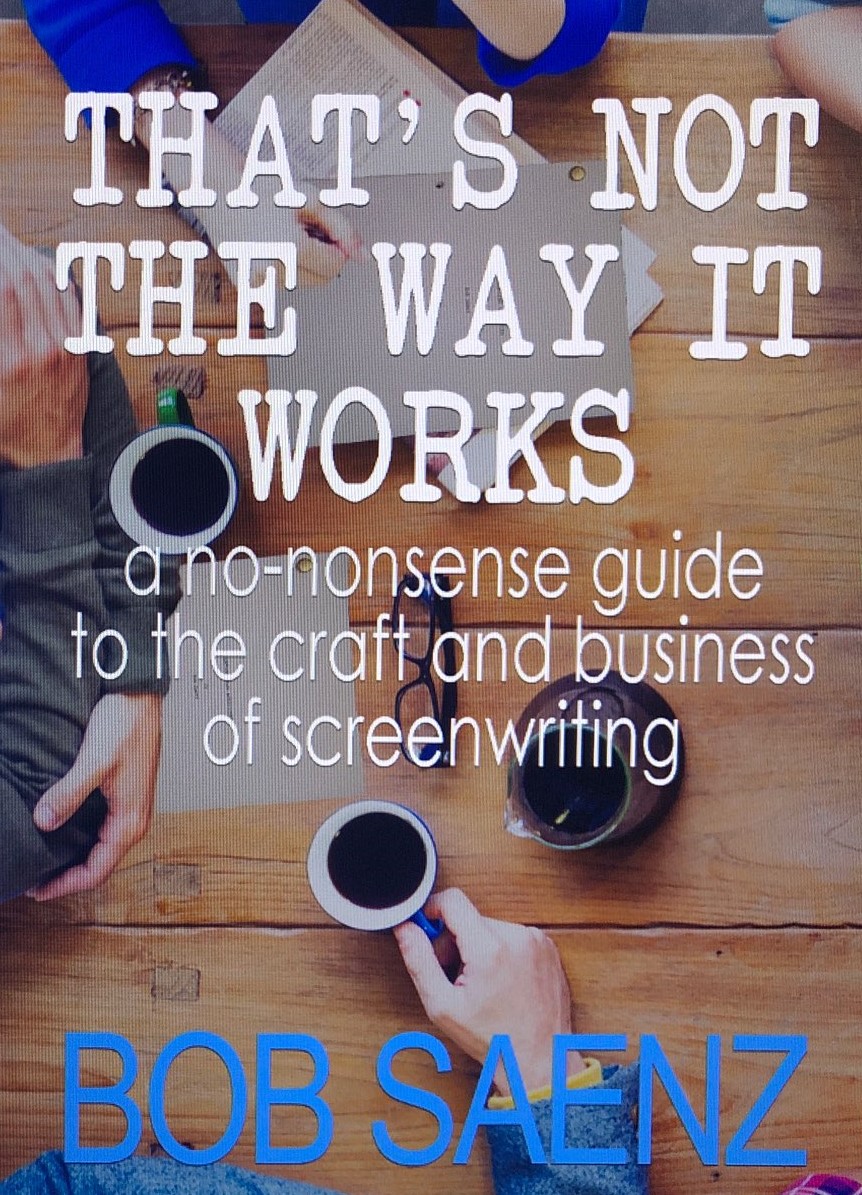
TNIWIT cover1a

Bob Saenz is a screenwriter, actor and author. His produced works include Hallmark’s Help for the Holidays, Rescuing Madison, Sweet Surrender, On the Twelfth Day of Christmas, Sound of Christmas, The Right Girl, Christmas in Love,  the theatrical Church People, and the black comedy thriller Extracurricular Activities. He does rewrites and polishes on film and TV projects for Producers and Production Companies. His screenwriting book THAT’S NOT THE WAY IT WORKS was released in 2019.

His acting roles include a 6-year run recurring character run on the TV show Nash Bridges, Hallmark’s Valley of Light, Francis Ford Coppola’s Jack, David Fincher’s Zodiac, Finn Taylor’s Unleashed, Church People, and The Village Barbershop, among dozens of others. He was a radio DJ on KYCY-FM in San Francisco, played the last 10 years in the 60’s rock band The BSides, and has done voicework on video games, documentaries, and commercials.

Editor’s Note – I’ve had the pleasure of knowing Bob personally for a few years. His insight and advice has proven invaluable to helping me become a better writer, both in terms of craft and career.

What’s the last thing you read or watched that you thought was incredibly well-written?

A spec script by a writer named Rene Gutteridge called Where the Wind Comes. Maybe the best spec I’ve ever read. Just spectacular. Was emotionally affected by it. Stunning.

What was the inspiration/motivation for your book That’s Not The Way It Works?

Two things. One, I’ve been teaching and speaking at writers’ conferences all over the country the last few years and everyone who was there speaking had a book, except me. I complained to my wife about it and she said, “What’s stopping you from writing one?” So I did.

Two, there’s not a single one I could find out there that spoke plainly about the business of being a screenwriter.

With so many screenwriting books out there, what is it about yours that makes it unique?

The tone. It’s conversational. My experience. It’s filled with what I have learned actually succeeding at it. With more than a dozen films produced, I used all that experience to write about what I know. And, I talk first hand about the business of screenwriting. What the writer needs to know about that part of it, which is just as important as writing a script, and how to approach that.

While the first half of the book is about the actual writing of a script, the second half covers the not-as-discussed “what happens AFTER the script is written (i.e. the business aspects)”. What advice would you give to writers who want to learn more about this?

As I say in the book – find out that it’s not easy, it’s not instant gratification, and you have to work at it. Hard. You can succeed; it just takes time and a business plan. I think the book helps with that. Realizing that writing a script is only the beginning of your journey is a BIG eye-opener for most writers who dream of doing this.

Yes, the script needs to be something people would want to choose to see and has to be good, but that’s not the end of it.

The book has a great chapter about dealing with rejection. What are some key takeaways and advice you’d offer to writers?

The main takeaway is that rejection isn’t personal. Producers and reps don’t care enough about you to make it personal. It’s ALL about the content. Whether they love your script and not or can use it at that time or not. There are hundreds of reasons to reject a script… you have zero control and it’s not personal. Even the most famous screenwriters get rejected on a regular basis. It’s an everyday occurrence. You have to learn to live with it or it’ll destroy you.

Another important issue writers tend to overlook is the need to effectively market themselves in addition to their script. While the chapter about what NOT to do is entertaining (and a bit eye-opening), what are your suggestions about what writers SHOULD DO?

Use the avenues that producers and reps have opened to the writer. Querying. Something that is an art unto itself and something I delve into pretty deeply in the book with a whole section on query letters.

Networking. There’s a huge section in the book about this.  The dos and don’ts. One thing to always remember about networking: It’s about building relationships, not using people. People who can help you absolutely know the difference and will run away from you if you try and use them.

Contests. The Nicholl and Austin are the ones who will pretty much always get you reads in LA if you final or win them. I’ve had friends get their films made doing well in both of these. Neither are easy to do well in because of the sheer number of entries, but they can pay off.

The last way is through referrals, especially to get a rep. If you know a producer or director or star who will refer you… but again, this goes back to networking and having the great scripts to back it up.

What do you consider the components of a good script?

The most important thing is a great story. It also has to be lean and mean. Brevity and white space are your friend. You aren’t writing a novel. You want just enough in there to have the reader see the film in their head and to be able to fill in what they want to as they read, engaging them in the story that way. Again, a big section in the book about this.

I will say this: Producers are ONLY looking for STORY. Screenwriters can never forget this. Don’t over-complicate the read. You can write a complex story without making it hard to read. Oh… spelling and grammar are important, too.

What are some of the most common screenwriting mistakes you see?

The main one? Choosing the wrong story to tell. Telling a story no one wants to see. Whether it’s not sustainable, not interesting, ridiculous, something that’s been done a thousand times before, something you can see every day in TV reruns… there are a million reasons NOT to write this kind of story. You need to go through a pretty thorough checklist (in the book) and make sure it’s a viable story before you do the time consuming hard work it takes to write a good script. Why do all that hard work on a story that’ll be Dead On Arrival?

Another big mistake I see all the time is writers not doing their research about the topics they choose to write about. Writing things that would never ever happen. You have to ground your script in the reality of the subject matter before you take liberties with it.

What are some key writing guidelines every writer should know?

-AIS – Putting your Ass In the Seat. You have to be disciplined. Producers expect you to be disciplined. Good to start doing that at the beginning.

-Never give up. This is so hard to do, you’ll get discouraged on a regular basis. It’s a lot easier to give up than to stick with it because it takes years to succeed in. Notice I didn’t say it CAN take years, I said it TAKES YEARS, because in every case, it does. You aren’t going to be the exception.

-Don’t cheat on research. Take the time to actually learn about the things you’re writing about. Go out and learn them. A big section in the book about this.

-Again…. for emphasis…. choose a story that is viable for producers and audiences. Don’t just pull something out of the air and write it.

-You’re not writing a novel. Leave everything that isn’t directly hooked to your story or plot points out of your script. One rule of thumb? You know all those people listed in the credits of a film? It’s your job to do everything they don’t. You aren’t a costume designer or a casting agent or set designer…. or… any of them. They don’t ask to write the story, you don’t try and do their job.

You’ve managed to establish and maintain a writing career while living outside of Los Angeles. What are some of the pros and cons about it you’ve experienced?

Pros: I don’t live all that far away (400 miles) and can be at any meeting on a day’s notice, so it’s been fine for me. I am in LA multiple times a year, sometimes for more than a week at a time. It’s expensive… but also my choice. There’s a section is the book about moving to LA and when to pull the trigger and do it if you need to.

Con: I’m not in LA networking all the time. Out of sight, out of mind is a real thing. Not worth moving there for me, though.

Readers of this blog are more than familiar with my love/appreciation of pie. What’s your favorite kind?

Peach. Nothing else comes close.

peach pie

A slight course correction

XEaj

For the most part, my involvement with this year’s big contests is more or less over. Top 15 percent for Nicholl – not too bad. Total whiff for PAGE again, which makes me 0 for 4. Not expecting much out of Austin.

Results from some of the smaller contests are about the same. Semifinalist in one, quarterfinalist in another, and a few not-at-alls.

A bit on the disappointing side, but all is not lost. On the contrary. It’s actually helped force me into making a pretty important decision.

After much self-evaluating, I’ve opted to drastically cut back on contests for next year and ongoing. Most likely, I’ll keep it limited to just the big three mentioned above. And even entering those isn’t a certainty. They’re the ones that hold the most potential for getting the ball rolling on a career – not guaranteed, of course – but the most potential.

No delusions of grandeur. I’ll continue to take my chances and see how things go. If I do well, great. If not, no big deal.

And just for the hell of it, maybe one or two smaller ones every once in a while. Might as well have a little fun.

Moving forward, the focus now shifts to improving my writing skills and making my material better. Reading a lot of professional scripts, especially those in the same genres as the ones I’m writing, shows me my level of expertise isn’t where I need it to be.

If I want to make this work, I need to get better. No other way to put it.

It’ll be tough, but I’ve come this far and the final objective continues to feel a little bit closer with each new draft.

I’m fortunate enough to know a lot of savvy writers, along with more than a few quality consultants, so getting constructive feedback and guidance can only work to my advantage.

As a colleague once told me, “It’s not about contests. It’s about Hollywood.” Sure, contests are fun and all (especially when you win, or at least place highly), but I’d rather focus on writing quality material and getting them in the hands of people who can actually make something happen with them. Representation. Assignments. Rewrites. A sale. I’m not picky.

My long-term goal has always been to become a working writer, and I think I can still do it. It may not happen as soon as I’d like, but hopefully by really buckling down and pushing myself to keep at it, I’ll have a better shot at turning that goal from a dream into a reality.

Wish me luck.

A few important reminders (for me and anybody else)

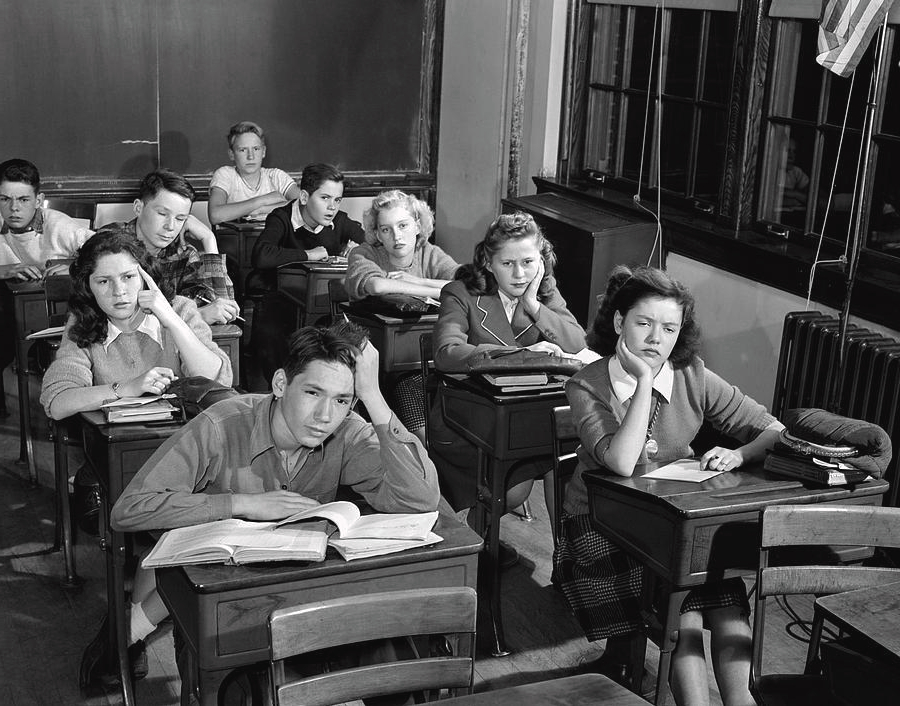
high school classroom
“I know you didn’t do as well as you’d hoped, so look at this as a learning experience.”

Yet another busy week around Maximum Z HQ, including quite a bit of doing script notes, polishing the latest draft of the comedy spec and punching forward on the horror-comedy outline.

Fun stuff all around.

It also included my western placing in the top 15 percent of this year’s Nicholl, which is the second time for this script, and third overall. Not bad, but still not enough to get to the quarterfinals. At first I was feeling kind of down about it, but realized (and was reminded by more than a few colleagues) that a much larger number of scripts didn’t even make it that far, so I should still regard this as a positive.

Suffice to say, it looks like there’s a little more tweaking in store so as to get this script and at least one other ready for next year (along with a few other top-tier contests).

Since this blog recently hit the 9-year mark, of course there are some previous posts of relevant content.

A screenwriter’s 5 stages of grief (contest edition)

A little-post comp analysis

My race, my pace

Fall back. Regroup. Hit ’em again.

In it for the long haul

To all of you who had a script advance in PAGE and/or the Nicholl, my heartiest of congratulations. Steps are already being taken to reinforce the notion of me being among that group next year.

That’s the hope, anyway.

Q & A with Angela Bourassa and Tim Schildberger of Write/LA

Write LA Logo

hs-e1521810938693.jpgTim S

Screenwriters enter contests for a variety of reasons: industry connections, cash, software, notes on their script. And there are a lot of contests to choose from. How your script places can make a significant impact on helping you establish a screenwriting career.

And now there’s a new contest that wants to help you do just that.

Write/LA launches today (with early bird pricing in effect until April 30th), and is the brainchild of Angela Bourassa and Tim Schildberger. I had the opportunity to speak to them about it.

But first, a little background info…

Angela Bourassa is the founder and editor in chief of LA Screenwriter, a leading online resource for working and aspiring screenwriters around the world. Angela graduated from UCLA back in 2008 and has been writing feature screenplays — mostly comedy — ever since. In addition to writing, she spends much of her time wrangling her 18-month-old son, watching Survivor (#DropYourBuffs), and trying to keep track of which jail her public defender husband is visiting today.

Tim Schildberger is the founder of LiveRead/LA as well as a script consultant, writer with thirty years’ experience, an expat Australian, creator/writer of a Travel Channel comedy/reality series no one saw, and the man who led the team who found all the people for the feature film Borat. He’s a big fan of Aussie rules football (which isn’t anything like football or soccer or any other known sport) and baking treats with his twin girls for LiveRead/LA’s events.

Both of you have extensive experience providing information & resources to screenwriters. Tell us about your respective paths to get there.

Tim: I started writing for an Australian soap opera called Neighbours when I was 21. For the last twenty years I’ve been in the USA, and I’ve been a member of a writing group that holds weekly live reads. Not only has working with actors helped me enormously as a writer, but so has hearing all the feedback from my peers. That experience helped me overcome my hatred of re-writes (does anyone like re-writing?) and showed me the only path to becoming a better writer is writing more, sharing your stories, and being open to feedback. It also showed me I have an aptitude for identifying strengths and weaknesses in other people’s work, offering suggestions while maintaining the writer’s self respect.

In 2016, I decided that rather than continue assisting others with their scripts as a favor – which was becoming a little time consuming – I would put my own spin on the live read concept and build a new collaborative community, so I launched LiveRead/LA – and it’s already helped many writers. But I wanted to do more – to help more writers, to reach more people. I couldn’t make it happen alone, though, so it wasn’t until I met Angela and we discovered we had a similar sensibility about helping and giving back that Write/LA was born.

Angela: I started LA Screenwriter in 2011, and at first it was just a small blog where I would bring together produced scripts that I wanted to read and screenwriting articles that I found helpful as I worked toward my own dream of becoming a working screenwriter. But over the years, it’s really taken off, and now thousands of people a day come to the site for advice and resources, and that’s a responsibility I take very seriously.

I’ve thought about launching an annual competition before, but I honestly think that a lot of the screenwriting competitions out there – maybe even most of them – are ripoffs that don’t have the writer’s best interests at heart, and I didn’t want to be part of that cycle. I only wanted to start a competition if I had the ability to offer great prizes and great judging that could actually help writers in their careers, and that ability showed up in the form of Tim.

What prompted you to create Write/LA?

Tim: I was prompted to create Write/LA because I wanted to share what I’ve learned about writing, about the power of hearing your work read by actors, and about giving and receiving feedback. And the importance of interacting with working industry folk. Los Angeles is the global epicenter of writing for TV and film, so it seemed obvious to try to find a way to bring people to LA to learn, connect, and be celebrated for what they’ve achieved so far.

Angela: And I really wanted to be a part of Tim’s vision, because his idea for this competition and the prizes got me excited. Both of us are writers, so we know what it feels like to do well in a competition and then end up with no real benefit. We’re trying to change that by creating a competition that we both would want to enter.

What makes Write/LA different from other screenwriting competitions?

Tim: Write/LA is a competition aimed at the process of writing at a professional level. Most other competitions offer prizes in the hopes of discovering a script that can sell or a writer who can get representation. We’re focused on building command of the craft. Let’s be clear – our three grand prize winners will be writing while they’re in town. They’ll also be mingling with working writers and Industry people and gathering knowledge and experience that’s vital for lasting success. We aim to help our writers become professionals, not just one-hit wonders. It’s that combination of experience, education, and celebration that sets us apart.

What sort of criteria are you looking for in scripts that are entered?

Tim: We’re looking for evidence of command of the craft. That means we want original stories, compelling characters, an understanding of format and genre, and way above all else – an emotional connection with the material. There has been so much written about the structure of writing for TV and film: act breaks, inciting incidents, midpoint turns, and the rest. As a result, many writers are good at moving characters from point A to B to C.  But very, very few are good at letting us know what this particular story is doing to the emotional well being of the characters. An audience needs to feel something, or the script is flat.

As I like to say, no teenage girl saw Titanic ten times because it was a cool special effects movie about a boat sinking. They felt for Jack and Rose. We want to find scripts that make us feel, show us the writer knows how to tell a story, and will really benefit from the grand prize we’re offering.

Angela: That’s why we’re not judging film and television scripts separately. We’re accepting both, and we might end up with completely different genres and formats for the three grand prize winners, which I’m personally really excited about. We’re interested in emotional, engaging storytelling above all else.

Seeing as how this is Write/LA’s inaugural year, what are you hoping to establish with it in terms of opportunities for screenwriters?

Angela: We want to establish ourselves as a different kind of screenwriting competition. Our prizes stand out from the crowd, and we’re hoping a lot of writers out there understand the undeniable value of a private, intensive writing lab, an inside look at the industry, and the value of having their words read in front of an invite-only LA crowd.

Tim: Our winners will have a rare gift for any writer – a moment to be celebrated. Obviously, we hope their time with us will be a springboard to a writing career, or perhaps the final step toward breaking through, but what we’ll be focused on is helping them make connections and bring their writing up to a professional level so that – when they’re ready – they can begin long and successful writing careers.

We will also give everyone who makes the quarterfinals and above something of value. Being named a quarterfinalist feels good, but usually means little else. We want to change that.

Readers of this blog are more than familiar with my love/appreciation of pie. What’s your favorite kind?

Tim: Gosh. I love pie. But if you’re forcing me to choose, I think I lean toward the more pudding/custard pies. In Australia we have custard pies, which are my absolute favorite. But here in the US, I love a good banana cream pie. No disrespect to the fruit pies – as I said, I wouldn’t say no to any of them!

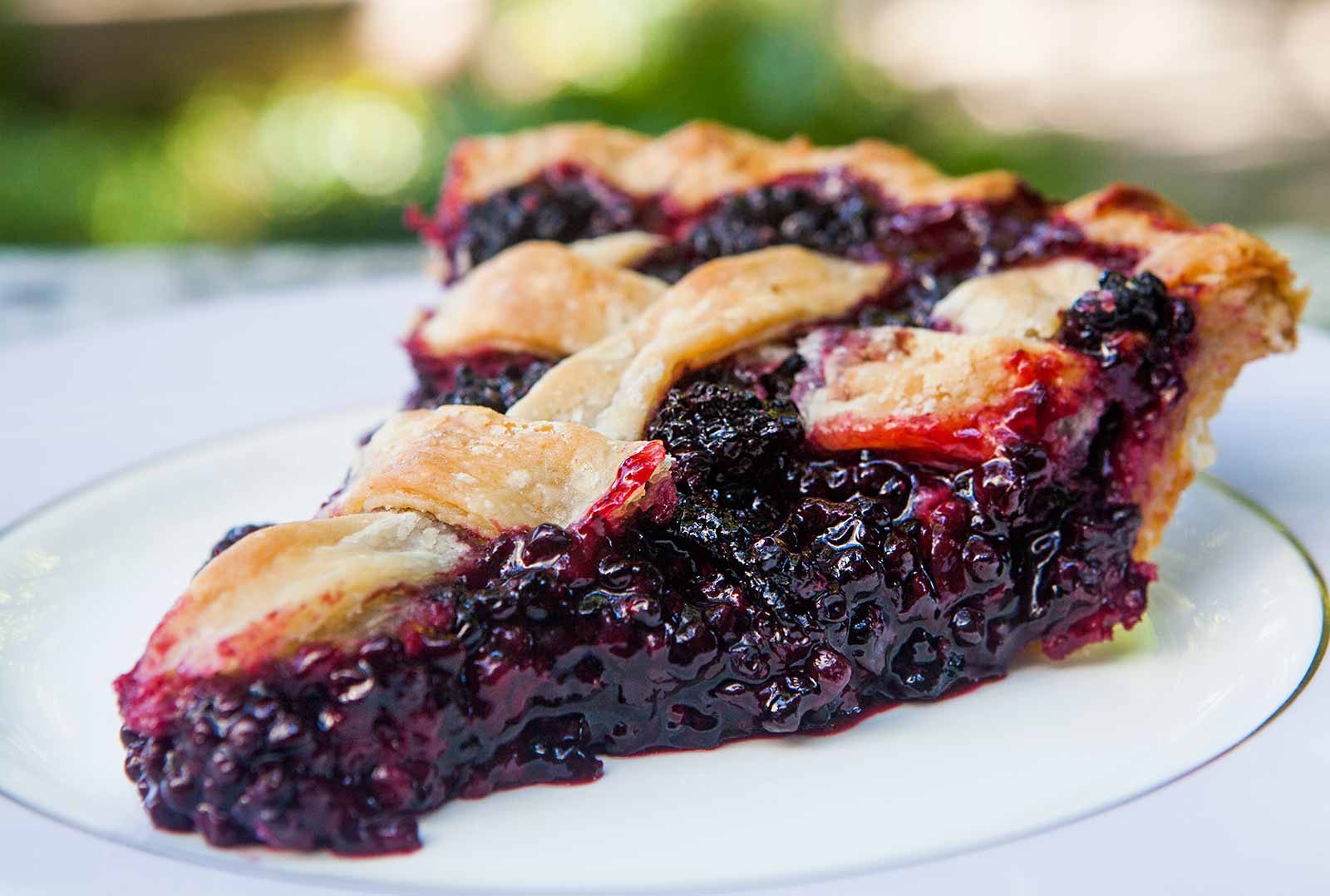
Angela: For me it has to be blackberry. Blackberry pies remind me of my childhood. But I’m a sucker for basically any sweets that don’t have nuts. (Apologies to the pecan pie fans out there.)

banana cream pieblackberry pie