One inch at a time

A lot of my time lately has been jotting down ideas – and lots of ’em – about the new spec. Some random, some of a “this leads to that, which in turn results in this” nature.

As I recently said on social media, it’s a big beautiful jumbled mess, and I’m absolutely thrilled about it.

Just a few weeks ago I was stressed there wasn’t enough to the story, but then the gears started turning and the ideas started coming, and it was off to the races.

Since then, I must have filled in at least half a dozen pages in the notebook for this project with every single thing that popped into my head about it. Even more surprising is how much of it came from out of the blue – all kinds of stuff that never would have occurred to me before. Can’t really say that some kind of ‘on’ switch was tripped, but something was ignited somewhere.

Not only are ideas covering aspects of the story making themselves known, but so are ideas about the things you don’t see onscreen – emotional beats, character development, and so forth. It begs the question – what took it so long to show up?

There’s a lot to go through, and confidence levels are running high that there’s more on the way. There’ll be a lot to sift through to figure out what to keep and what to put aside for potential use at a later time (or another script).

This may be moving at a slow pace, but it’s definitely starting to take shape. What that shape is remains to be seen, but I like it.

From the archives: Guaranteed to last forever

A key element in this

My father passed away last weekend. One of the fondest memories I have of him is recounted in this post from March 2016, and is still relevant today.

Enjoy.

Something just a little different and of a somewhat personal nature today.

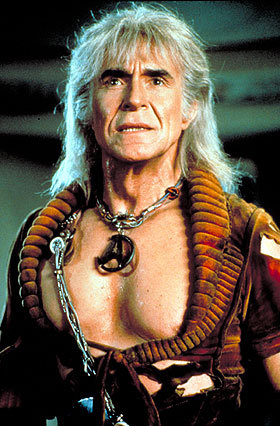
In the summer of 1982, I went to see Star Trek II: The Wrath of Khan.

With my dad.

At a night-time show (probably the 7:30 one).

As a thunderstorm raged outside (typical south Jersey summer weather conditions).

It was a great night.

All of these elements combined to make what was one of the most memorable times I’ve ever had at the movies. What made it that way? I can’t say specifically, but it just was.

It’s still something I will truly never forget. If I ever get to meet Nicholas Meyer, I’ll make a point of telling him that.

Maybe someday a dad and his son or daughter will go to see a movie I wrote, and that child will experience the same sensation I did: the creation of a memory they cherish for the rest of their life.

(Whether or not they tell me about it in their adult years is beside the point, but I wouldn’t object.)

What writer wouldn’t want to have their work be the basis for something like that?

And now I’m a dad who enjoys going to the movies with my child. Could history repeat itself and we see a movie, and we have a great time, and it’s something she’ll remember for the rest of her life?

So far, it hasn’t happened yet (as far as I know).

But it sure is fun to keep trying.

From the archives: Two shoulders, no waiting

shoulder
Plus two sympathetic ears at no additional cost

Over the past few weeks, as part of group Zoom calls and one-on-one discussions, I’ve discussed with other screenwriters the frustration with how things are going for the writing, establishing/maintaining a career, and just the overall experience. And the current writers strike ain’t helping much, either. Sometimes all you can do is listen and offer encouragement and moral support. It might not be much, but it can still make a difference. It also reminded me of this post from August 2019. Enjoy.

Trying to make it as a screenwriter is a tough choice to begin with. It’s a long, drawn-out process that takes a long time before any significant results can be achieved. Sure, there are exceptions, but for the most part, it remains a marathon, not a sprint.

And that also means there’s going to be A LOT of heartache and disappointment along the way, and that can really take its toll on you. Not to sound too New Age-y, but all that negative energy can do significant damage to your confidence and self-esteem.

“This is never going to work.”

“I can’t do this.”

“Why do I even bother?”

If you’ve never said or thought any of these things, I’d love to know how in the world you managed to accomplish that and still call yourself a screenwriter.

Many’s the time I’ve seen comments on a public forum from another writer that echo these sentiments, or had them send me a private note saying something similar.

And I feel for them – whole-heartedly. I’ve been that writer thinking those thoughts a lot, too.

Do I wish I could help them out in any capacity? Without a doubt.

Even though it may not be much, I’ll offer up whatever support or encouragement I can. Don’t underestimate the power or effectiveness of telling somebody you’re in their corner. It makes quite the difference knowing you’re not alone during this tumultuous journey.

I once got a note from a writer I barely knew. They knew a writer I knew, and had seen some of my postings online. We were both semi-finalists in a prestigious contest, and it was the day the finalists were being announced.

For reasons totally unknown to me, they contacted me, asking if I’d received any kind of update. I hadn’t.

“Having a total shit writing year so far so I’m clinging to anything positive ha,” was their response.

I told them I was sorry to hear that, and offered up my own frustratingly good-but-not-great batting average, along with a few words of encouragement in the vein of “much as it hurts to get thrown off, you just gotta keep getting back on the horse”.

They were in total agreement.

An hour or so later, the finalists were announced. I wasn’t one of them. But they were. Naturally, I was disappointed, but also happy for them because they had something good happen.

The takeaway here is that you’re not alone in this. Every other writer goes through it. We’re all going to have a lot of bad days, probably a lot more than the number of good days, and it can be tough to get through it, let alone come out stronger.

This is one of those added benefits to networking and connecting with other writers. You’re not just helping to develop your writing and analytical skills, you’re creating your own emotional support network.

Chances are you’ll have a stronger relationship with a small number of people; the ones you’ve interacted with, or shared scripts, exchanged notes, etc., on a more regular basis.

Don’t be afraid to reach out and tell one of them “Hey, I’m not feeling too good about this right now. Mind if I talk about it?” They’ll understand, and be supportive about it (in theory). Just being able to talk about it could help you feel a little better.

Screenwriting is complicated enough, and gets even more so when you throw all your hopes and ambition into it. Sometimes you’ll feel strong, powerful, ready to take on the world. And sometimes you’ll feel like the world’s beaten you to a bloody pulp with no hope for recovery. (Again, I’ve experienced both.)

You can’t force yourself to feel better and restore your confidence, but you can take little steps to help yourself out – at your own pace. And any help you might need is always there and easily accessible.

The heart of the matter

The past few weeks, part of my writing schedule has involved revising the outline of my animated fantasy-comedy spec. It’s been fun to develop – having a previous draft to work with really helps. The action sequences, the story, the jokes and sight gags haven’t been too difficult, but I’ve been making more of an effort to build up the emotional aspect.

This isn’t to say I’ve never included that. It just hasn’t been as prevalent in the early stages of planning and plotting process.

It’s not enough to just show the stuff that’s happening, you need to show how it’s relevant to the characters. While the plot is about the external goal (what do they want?), there’s also the importance of establishing their internal goal (what do they need?).

Sometimes the internal and external goals work together, and sometimes a character will achieve one and not the other. There’s also the tried and true “they got what they wanted, but it wasn’t what they needed” (and vice versa). It all depends on how the writer wants to the story to go.

To help myself get a better grasp of this, I’ve been reading the scripts for and watching other animated films to see how they approach it. There has also been the occasional “read a few pages of the script, then watch how it plays out onscreen”.

*helpful tip – for prime examples of incorporating emotion into story, you can’t go wrong with well-made animated films. They do a fantastic job of setting everything up as fast and efficiently as possible. Sometimes singing is involved. And as it should be with live-action, each scene manages to include advancing the characters’ emotional arc as well as the story arc.

As more than a few readers have said to me, sometimes my writing is more about what we see onscreen and not as much about what’s happening to the characters on the inside. Hopefully that won’t be the case this time around. Since I’m still outlining the story, I try to include what the emotional impact is in each scene. Does the point of the scene affect the character(s) the way it’s supposed to?

At first, this was pretty challenging, but watching how other films accomplished it, it wasn’t as daunting as I initially thought, plus the more I think about it and plan for it, it’s not as bad as I thought. It’s helping with the overall development because I’m taking that sort of detail into consideration as part of the initial planning stages, as opposed to trying to work it in later, along with avoiding a few unnecessary rewrites.

Since this is a slightly different approach for me, I’m sure it’ll be chock-full of trial and error along the way, but am fairly confident it’ll yield the results I’m hoping for.

Q & A with Scott McConnell

Scott McConnell is a writer/story consultant who has worked as a producer in Los Angeles and in fiction development. Scott edits stories from inside them as a writer. He finds solutions to story problems and can especially focus on improving a story’s premise. Scott believes this is where most films/scripts succeed or fail. He also finds that many good writers don’t focus enough on theme. It is through theme that a writer moves an audience emotionally. Scott can edit low budget features as well as big budget blockbusters. He fixes scripts for individual writers and production companies around the world.

Scott started in the business as a story analyst in Los Angeles; analyzing scripts for Roger and Julie Corman, Samuel Goldwyn and the Sundance Institute, among others. He was later the showrunner (writer/producer/director) of the U.S. nationally syndicated LIVE LIFE AND WIN! and he co-wrote the reality series HOLLYWOOD BOOT CAMP. He has found the story by studying footage, reading scripts/books, pre-interviewing talents, and writing or editing the script. Scott is a member of the Producer’s Guild of America and of the Australian Film Institute (AACTA.)

What was the last thing you read or watched you considered to be exceptionally well-written?

Regarding television, I’m a big fan of the English series VICTORIA, about Queen Victoria. The writing is often excellent, especially in season one, which dramatized a young girl developing herself in high stakes circumstances to become queen of an empire and the loving wife of a man she admires but who often has different ideas to her and is at times in romantic conflict with her because she is also his queen and leader.

Regarding film, I think SAVING MR. BANKS is brilliantly written, especially its dramatization of a profound theme and the integration of its two main plot lines from different time periods. The characters were intelligently written and layered, while the arc of the protagonist is beautifully climaxed.

How’d you get your start in the industry?

My first start in the business came after I graduated from UCLA Extension (scriptwriting) and did some interning work at industry places in town and started my own script analysis business. The study and volunteer work allowed me to get experience so I was skilled and employable.

Is recognizing good writing something you think can be taught or learned?

It is something that is learned. But there are great individual differences in how much someone might actually know about what makes a good story. And it’s hard for readers to see a story objectively as it really is and not be prejudiced by their own values and tastes.

What do you consider the components of a good script?

There are two basics to any script. First there is the mechanics of how well it is written: its structure, clarity of its theme, use of dramatic devises, the development of its character and relationship arcs, the nature of its climax, and so forth. That is, the storytelling skill.

And then there is the values side of the story, the actual nature of the specific content. For example, its theme and sensibility, the values and goals of the characters, the nature of the conflicts and the theme resolution. That is, the values the story is dramatizing.

A good script has skilled storytelling and universal, important and personal values that the audience cares about. It is the nature of these values that especially makes a story or film an enduring classic.

What are some of the most common screenwriting mistakes you see?

The biggest mistake I often see is that writers do not give their characters agency (free will). That is, more specifically, the writer does not create a protagonist who has a big main goal that drives the story and underpins its structure. One of the negative consequences of this lack of agency in characters is that it becomes the writer who drives the story by dropping contrived and coincidental problems onto the heads of the characters. Such a story lacks logic, believability and suspense.

Another common writing mistake I see all the time is that the concept of the story was not developed properly. Many scripts, for example, have unoriginal, uninteresting or one-layer premises. Creating a strong premise is the hardest and most important part of writing a story.

A mistake I see in good writers is that they often haven’t mastered theme, so they don’t know how to use it to give depth to their story and to induce deep emotion in their audiences.

What story tropes are you just tired of seeing?

Some writers want to throw in the latest political fad or fashion.

Other writers think that chases, fights and explosions are what make an action script great. They aren’t. Look at two of the great actioners, DIE HARD and GLADIATOR: both of these stories have layered and driven characters enduring terrible personal problems.

What are some key rules/guidelines every writer should know?

The first rule of all writing is to have something interesting to say or show. If your story – its premise, characters, plot, climax – are not interesting then it doesn’t matter how well you structure your story, for example, no one will care.

I think every creator of a script should have a story expert outside of their story bubble vet and edit their script, and the closer to the front end of the story creation this is done the better.

Have a writing process. Many writers who don’t have a writing process never finish their story or don’t know how to. A writing process can be learned and should be. A good writing coach can teach you one.

Have you ever read a script where you thought “This writer really gets it.”? If so, what were the reasons why?

That’s pretty rare. Most scripts, produced and unproduced, have issues. But I remember a script I edited about two years ago where I was impressed that these two writers were really in charge of the story and the writing. That is, that with some fixes this script would make a good movie. These writers had a layered, intriguing concept, an escalating plot line and characters who I cared about and I was anxious to see who among the leads won. (The three leads in conflict were all good guys but in a big conflict.)

How do you feel about screenwriting contests? Worth it or not?

That’s a good but difficult question. At best I’m mixed on contests. Yes, there are some good ones that can help a writer get doors opened or be noticed, but for other contests you have to worry about who is reading these piles of scripts. My concern is that too many contest readers seem to be straight out of college where they haven’t studied the great classic plays/novels nor analysed the
truly well written films. They tend, I also worry, to be naturalistic and PC in their reaction to story content. I hope I’m wrong but….

My suggestion to those considering entering contests is to vet carefully. For example, look to see if the contest has some clout, that being a winner or a placing near the top will truly open doors, etc. Also try to see the loglines of previous winners. If they’re rubbish, be wary, as you should be if any samples of coverage by the contest’s graders indicates a focus not on story essentials. Also try to determine if that contest prefers a certain genre over others. Good luck. Caveat emptor.

How can people find out more about you and the services you provide?

I edit scripts of many genres and forms, have a mentorship program to teach writers a writing process while they actually write a script, and other writing and development services. People can learn more about me on LinkedIn at this page: https://www.linkedin.com/in/scottamcconnell/

Or write to me via email: scottm100@gmail.com

People can also find my articles on screenwriting on Script, Creative Screenwriting and MovieMaker.

Readers of this blog are more than familiar with my love/appreciation of pie. What’s your favorite kind?

American Pie! (the song, not the movie)