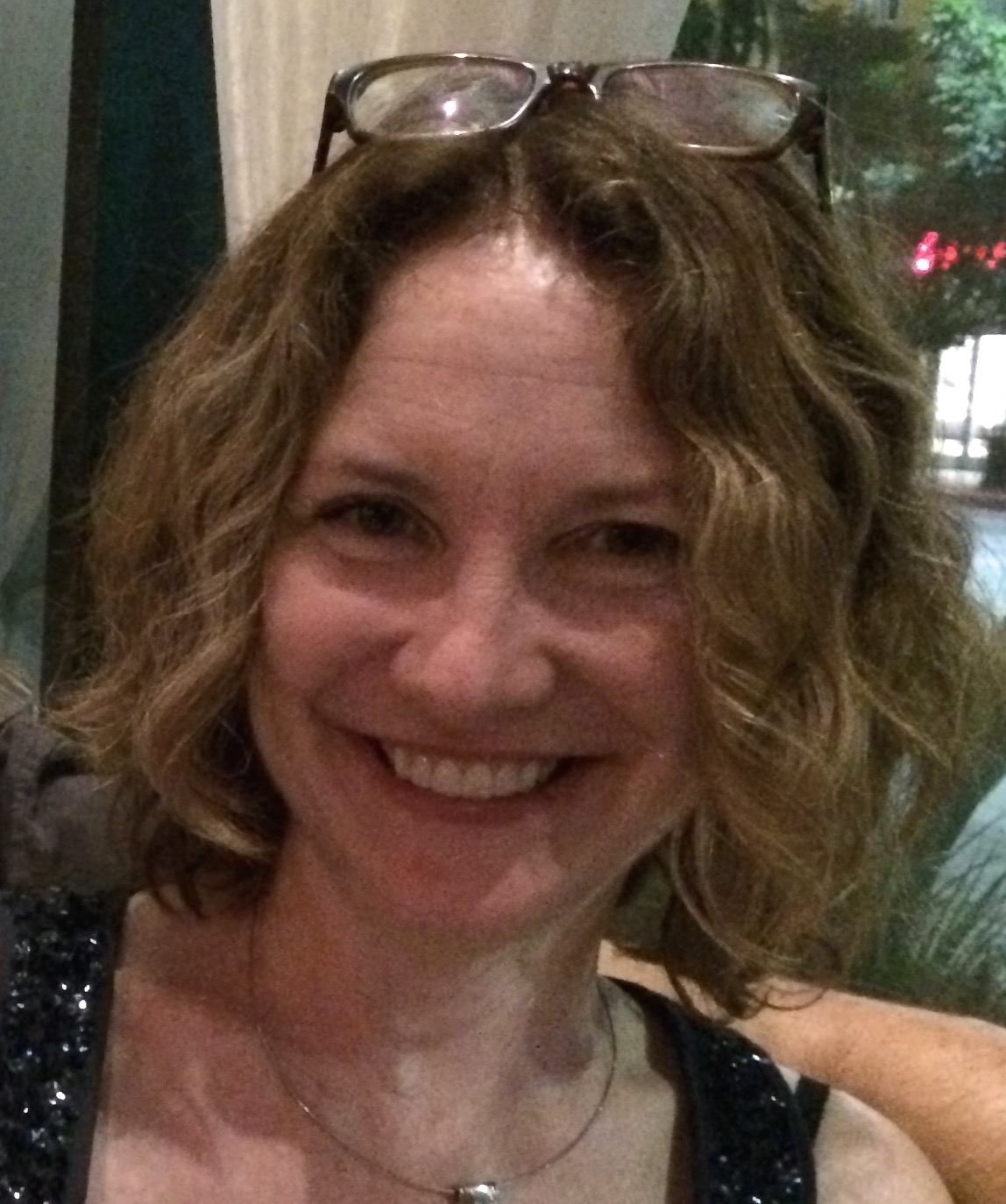
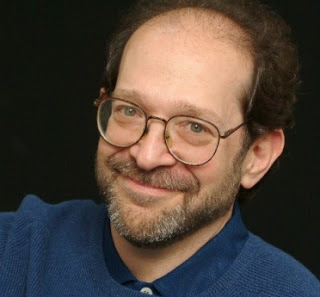
Ask an Astonishingly Productive Script Consultant!

Bill Boyle

The latest in a series of interviews with script readers and consultants who would be worth your while to work with if you want to get your script in shape. Today’s spotlight is on writer-educator-consultant Bill Boyle of www.billboyle.net.

*editor’s note – Bill passed away in July 2018

Veteran screenwriter Bill Boyle has been involved in the film industry in both Canada and the U.S. for over 25 years as a writer, director, agent, producer, story editor, and mentor. Mr. Boyle has the rare honor that every screenplay and television series he has written has been produced or optioned. He currently has four screenplays produced and a fifth scheduled for production. Two others are presently under option. Additional information on the films can be found at www.billboyle.net or at www.imdb.com

In addition to screenwriting, Mr. Boyle devotes a significant amount of his time sharing his experience mentoring younger screenwriters. He teaches screenwriting at UCLA and has lectured throughout Canada and the United States.

Mr. Boyle is one of the most popular script consultants in the industry. He has consulted on over 1,000 screenplays worldwide. Creative Screenwriting Magazine rated him among the top 10% of screenwriting consultants. He is the lead proponent of a visual style of screenwriting called “The Visual Mindscape of Screenplay” that focuses on the visual and visceral aspects of screenwriting. His book of the same name was released in 2012.

1. What’s the last thing you read/watched that you thought was incredibly well written?

I am a huge fan of Jo Nesbo’s novels. His visual exploration of the environments he creates are so visceral that once read it is impossible to ever forget them. As for screenplays, I recently read Nightcrawler and found it exceptionally well-written.

2. How’d you get your start reading scripts?

If you mean reading scripts as a job, I was never actually a script reader. I was a manager in Canada and read many scripts that my actors were up for, as well as reading the work of my own screenwriters and playwright clients.

3. Is recognizing good writing something you think can be taught or learned?

It needs to be taught, but not taught as in learned; taught as in establishing the ability to connect fully with the writing and to remain focused. That ability and willingness to be fully immersed in the screenplay allows the reader the conduit into the rhythm, pacing and flow of the narrative. Sounds obvious, but it is my experience that the vast majority of writers ‘skim write’, which is to say they focus all of their attention on what they want the scene to say and little on the atmosphere and pacing of their scenes.

4. What are the components of a good script?

A good script is one that captures the visual and visceral imaginations of the reader. Actually, it’s a misnomer to say we’re writing for the reader, when actually we’re writing for the viewer within the writer. Besides being a visual expression of the story, a good script also expresses the proper pacing and atmosphere within each scene. These are the two elements most often missing in a screenplay.

5. What are some of the most common mistakes you see?

-Detailed Action

-Skim writing

-Blueprint Narrative lacking pace, atmosphere and visual expression

-Overwritten dialogue that lacks a pulse.

6. What story tropes are you just tired of seeing?

The two things that disturb me the most are how fundamentalist screenplay instructors and gurus have poisoned the creative minds of so many young writers.  This attitude of “my way or the highway”, or the ever-growing list of things a screenwriter must not do (Voiceovers, Camera Angles and Directions, Character Descriptives, Flashbacks, etc) is absurd.

For me the big one is the white on the page dictum. Of course, part of the art of screenwriting is the ability to tell the story in a succinct, near-haiku style. This form of brevity allows the story to flow and remain in the Absolute Present Tense. But this should never go beyond the point where it strips the narrative of its creative purpose.

I actually believe that white on the page is a way of devaluing the writer’s role in the filmmaking process. I seriously question when and why white on the page become more important that what is on the page.

7. What are the 3 most important rules every writer should know?

-Screenwriting is first and foremost a visual expression. Whether you choose to ignore it or not there is always and image on the screen.

-Establish pacing and atmosphere in your scenes so as to create a visceral experience within the reader/viewer

-Every action, element and scene of a screenplay exists in the Absolute Present Tense

8. Have you ever read a script that was an absolute, without-a-doubt “recommend”? If so, could you give the logline?

A script by Canadian screenwriter Laura Beard called ‘A Quiet and Distinguished Gentleman’. It was about a French Catholic detective who must overcome the bigotry of an English Protestant city and police force to solve a brutal axe murder in 1930. There are things she does with that script that to this day I still use in my lectures. A brilliant and very clever piece of work.

9. How do you feel about screenwriting contests? Worth it or not?

I am not a fan of screenwriting contests. Before I explain why, let me make the distinction between contests and fellowships. I think the fellowships (Nicholl, Praxis, Disney, etc.) are excellent programs.

I swear to god I have never heard a ‘true’ story of someone having a script produced based on a contest, which, considering how many there are out there, is rather shocking.

This idea of letting the writers know that they have moved to the next tier and then the quarterfinals, semifinals, etc., is their rendition of Three Card Monte. They let you think you win for a while so that you come back for more. What other reason is there?

10. How can people get in touch with you to find out more about the services you provide?

Check out my web site www.billboyle.net. You can also sign up for my newsletter, blog notices, online course dates and when spaces open up for my Unlimited Script Mentoring Program.

11. Readers of this blog are more than familiar with my love/appreciation of pie. What’s your favorite kind?

I will go for pretty much anything except the pie in The Help.

Ask a Significantly Astute Script Consultant!

Laurie Ashbourne

The latest in a series of interviews with script readers and consultants who would be worth your while to work with if you want to get your script in shape. Today’s spotlight is on writer-producer-consultant Laurie Ashbourne.

After seeing Who Framed Roger Rabbit in an old theater in Philly, Laurie knew that she had to be a part of that process.  Within 6 months she was in Disney Feature Animation‘s new studio in Florida working on a Roger Rabbit short and The Little Mermaid, and stayed on through the production of Lilo and Stitch. Leaving that cocoon to create and own her work, she quickly segued to live action and documentaries as a writer, producer and script supervisor.

With four features she wrote as work-for-hires in production, a dozen ghost- writing films and pilots in development, an independent animated feature in pre- production, an original story she wrote (10-31) was recently announced on the fast-track to production with acclaimed producers Eli Roth and Roger Birnbaum and a bio-pic she wrote is in early stages with Bohemia Group Originals.

Laurie is also longstanding story analyst for the likes of Amazon Studios Feature Films and Austin Film Festival.
In addition, she oversees several projects in development via her company, LA Story Studio. Her documentary work continues as well, as a producer for iconic director Robert Greenwald’s Brave New Films banner where she just co-
produced, SUPPRESSED – the fight to vote (2020), and RACIALLY CHARGED (2021), featuring two-time Oscar winner, Mahershala Ali.

1. What’s the last thing you read/watched that you thought was incredibly well-written?

I recently read a screenplay for a competition that was amazing. It was so well-paced and had such a perfect economy of words, twists and great characters – I wish I could share it with you, but I have no doubt that sooner than later everyone will have a chance to see it on screen.

For watching, the film LITTLE BOY. About 4 years ago the casting director asked my son to read for the part, so I was sent the script. It was such an emotional story that read really well, even though it broke some traditional pet peeves of mine, I completely overlooked them because I was so engrossed in the story. My son ended up sending in a video read because I was on a job in Virginia AND he had just lost his 2 front teeth so we knew the read wouldn’t go over at its best. Regardless, we went to see it (and I have to say the boy they had for the lead did a great job). I immediately could see where they had to change some things but it mostly stayed true to the script. I enjoyed the film and it was completely emotional, but I could definitely see how it read better than it played.

2. How’d you get your start reading scripts?

My first job in the industry was with Walt Disney Feature Animation, and as a department head I was in on a project from development through to final reels. But I didn’t start reading them professionally until I left the company to work in independent film, over ten years ago.

3. Is recognizing good writing something you think can be taught or learned?

The tenements of the craft can be taught easily but if a sense of story isn’t there then those ‘guidelines’ become hard and fast rules that can overlook a good story and what it needs to be brought up to industry standards. Learning story is possible, but it’s not for everyone, those that it is for can’t let it go. I’ll use my son as an example again. He will watch a movie until he knows it by heart and then pick apart the structure and characters, all by his own will. He said to me the other day, “When a movie does well, they automatically make a number two, and they do it quickly, and when that doesn’t do well they spend more time working out number three. Number twos always stink.” He’s 10, so I think it’s safe to say that a sense of story is ingrained in his psyche with no teaching other than immersing himself in something he enjoys.

4. What are the components of a good script?

Characters with an emotional want that comes across as genuine – in this case it’s the difference between a homeless person holding up a sign that says “will work for food” and one that holds up a sign that says “hungry, broke please give”. The audience is much more likely to attach themselves to a character who is willing to do what it takes to survive – the character that is willing to work for his food.

Craft contains a lot of things that get a bad name as hard and fast rules, and it’s true that if you are trying to break in you have to look like you are willing to adhere to industry standards, truth is your craft demonstrates mastery of cinematic story SOME formatting issues can be overlooked. So at the top of the mastery of cinematic language is, giving the actors something interesting to do that advances the plot and peels back the layers of their character. This does not mean writing verbose prose; that is not cinematic. Cinematic is thinking like a director in your mind, but conveying that action in words that do not include camera direction.

5. What are some of the most common mistakes you see?

-Misuse and abuse of parentheticals and exclamation points

-Typos and poor formatting

-A misunderstanding of scene headings in content and purpose

-A great idea poorly executed, usually in character and pacing

-A poor balance of dialogue and action (which is usually because of way too much dialogue)

6. What story tropes are you just tired of seeing?

It seems to be cyclical; every year there is more of one than another, so I guess that falls into chasing trends. Right now, there seems to be a lot of smaller character pieces, which is good for independent film, but with specs that are trying to break in (rather than going out and producing the indie on your own), it’s really difficult to get behind a moody character wandering the town or country instead of facing an uncomfortable truth. So it goes back to the homeless analogy – why do I care about this person, and please make it interesting without a having a diary in voiceover.

I admit it’s a bit of a catch-22, it’s also very difficult for an unknown to break in with a tentpole, but there is a happy medium where there are just enough elements to give the audience and producers something worth the investment of time and money.

7. What are the 3 most important rules every writer should know?

-Your material will not resonate with everyone, but if it’s not resonating with anyone, it’s time to analyze those notes you thought were shit.

-Write because you have to get a story out of your system, not because you want to strike it rich or win a contest.

-Let the audience (or reader) get to know your character through the action we see them take on screen, not via a laundry list of their traits.

8. Have you ever read a script that was an absolute, without-a-doubt “recommend”? If so, could you give the logline?

Sure. I’ve had the pleasurable honor to move a lot of scripts forward and nothing makes me happier than to see writers I worked with or read be working in the industry. Frankly, most scripts that come to me don’t have a logline, and I craft one for the coverage – most contest scripts don’t come with loglines. Loglines when done well are a craft unto themselves and contests are won on these concepts, but a great logline does not make a great script. This goes back to one of my top three: Most great ideas fall short on execution and again, I really think that comes down to sense of story. I personally write a logline before (during and after) I write a script. Writing it out at the start helps shape your outline. But just as the outline will change as you write, the logline should too, by becoming tighter.

I recently read a logline on LA Screenwriter called The Muffin Men – it was really brilliant. But who knows if the script is?

9. How do you feel about screenwriting contests? Worth it or not?

Yes, but do your homework. There are more scams than legitimate career changers. It’s worth it to get your script in top-level shape and submit to the top-tier contests (which there are less than 10) the odds are tougher due to the number of submissions but if you seriously want to advance your career, there’s no use in wasting money on the Podunk USA’s screenplay competition.

10. How can people get in touch with you to find out more about the services you provide?

My company at LA Story Studio, my blog 1st 10 pages, or via Stage 32 – https://www.stage32.com/LAstory.

11. Readers of this blog are more than familiar with my love/appreciation of pie. What’s your favorite kind?

I’m not much for desserts, but I like apple if it’s fresh and not overly gooey, or key lime. When I was a kid I was all about Tastykake cherry pie.

Ask a Chock-full-of-Moxie-and-Gumption Script Consultant!

Amanda Nelligan

The latest in a series of interviews with script readers and consultants who would be worth your while to work with if you want to get your script in shape. Today’s spotlight is on Amanda Nelligan, aka Scriptgal.

Amanda was born and raised in Western Massachusetts. She attended Brown University and received a Bachelor of Science degree in biochemistry. While at Brown, Amanda became involved with the Brown film society and its weekly comedic film magazine – The Film Bulletin – which cemented her life-long love of movies. After working briefly at a medical research lab, Amanda moved to Los Angeles and embarked on her film career. Her first job was as an assistant to a literary agent. From there, she worked at Disney, then ran development for a number of production companies. Amanda went back to grad school in psychology and worked as a therapist and as a research project manager at UCLA before launching ScriptGal. Amanda enjoys baking, hiking and scuba diving and lives with her husband in Sherman Oaks, CA.

1. What’s the last thing you read/watched that you thought was incredibly well-written?

I can’t pick just one – different movies are great for different reasons. I really enjoyed NIGHTCRAWLER – whip-smart dialogue and a character I’ve never seen before. It also had a resolution that defied convention. EDGE OF TOMORROW is a meticulously plotted, fun, time-bending action film, which is so hard to do right. And WHIPLASH didn’t miss a beat (pardon the pun.) In terms of television, TRANSPARENT was terrific. JUSTIFIED and THE AMERICANS are two incredibly well-written series I never miss.

2. How’d you get your start reading scripts?

I moved to Los Angeles shortly after college. My first industry job was for a boutique literary agent who had an A-list roster, so my introduction to Hollywood was through writers. After that, I worked as a development exec – meaning my job was to find scripts and to work with the writers to develop those projects into viable features and television shows. I worked as a creative executive at Disney, then ran development for two production companies. I didn’t like all the politics/crap in the movie business, so I left and went to grad school and worked in another field for a while. But movies are my passion and I love working with writers, so ScriptGal started as an experiment, in a way, and three plus years later. here I am.

3. Is recognizing good writing something you think can be taught or learned?

I think recognizing good writing is a matter of natural instinct, which not everyone has, plus a lot of practice – a.k.a. reading. And reading everything – not just screenplays. Novels, essays, short stories, etc. As a script reader, you need to understand what makes a good story. I think a rule of thumb is that when you forget you’re reading, you know the writing is good – good writing transports you.

4. What are the components of a good script?

A compelling protagonist or anti-hero and a worthy antagonist. We should be able to relate to the protagonist in some way. The antagonist can be a classic villain, a disease, a monster or even the weather. But no matter what the story is, it’s essential that we care what happens. Also, a good script needs to make you feel something. Joy, sadness, fear… Bottom line, the script needs to tell a good story. It can be written in crayon and have a million typos, but if the story is compelling it will shine through.

5. What are some of the most common mistakes you see?

Too much description. It’s a real skill to write just enough to give you sense of what the audience will be seeing and hearing on screen. If the color of someone’s dress isn’t essential to the story, don’t include it. Another related mistake is describing things that would be impossible for an audience to know. Stuff like a character’s face shows the pain of the loss of his wife two years earlier. That’s cheating – essential information needs to be revealed the way the audience would discover it on screen.   Another mistake is not having enough conflict – which results in the story not being as dramatic as it needs to be.

A lot of people are hung up on so-called screenwriting “rules” — don’t use “we see” or any camera directions, etc. I think a) those rules aren’t true – good produced scripts do use them and b) no one working in the industry today cares about those rules one bit. Or even thinks about them. Bottom line – people want good stories.

6. What story tropes are you just tired of seeing?

I just read a script where a guy gets fired and comes home early to find his wife cheating on him. I’ve seen that a million times – so to me it signals a lack of imagination. I think a trope is fine if it is the best thing for your story – but you should always try to put some sort of fresh spin on it. Also, audiences love when a trope is turned on its ear – the best example is the fight scene in RAIDERS OF THE LOST ARK – when instead of getting into the expected hand-to-hand battle, Harrison Ford shoots the bad guy. So when writers find themselves contemplating a trope, they should always ask themselves whether or not they can surprise the audience instead.

7. What are the 3 most important rules every writer should know?

-Writers write. You have to be in this for the long haul. If a script doesn’t work or sell, move on to the next. No successful writer I know parachuted in with the coolest script ever and then sailed on to fame and fortune. The best of the best have a lot of failed scripts in their filing cabinets. Or, these days, in the cloud. This business is a grind.

-Writers rewrite. You need to be able to make changes to your initial drafts and ideas – you need to be able to “kill your darlings,” meaning abandoning things you may love in furtherance of the story. Also, this is a collaborative business – everyone who reads your script will have notes. That doesn’t mean every note will be a good note, but it’s your job to recognize the good ones when they come along and manage the bad ones.

-“Take Fountain.” – Bette Davis. Okay, the real rule is outline. Outline like crazy – especially right after the idea comes to you. A lot of newer writers seem to get bored with their own ideas after awhile and make changes that are destructive. You need to lock in the story that got you excited in the first place and don’t doubt that it will excite readers/viewers as well.

8. Have you ever read a script that was an absolute, without-a-doubt “recommend”? If so, could you give the logline?

No. To me “Recommend” means go shoot it, as is, tomorrow. I never say never, but I could probably write notes on every successful movie out there. The rewriting stops after the scene is shot. Actually, that’s not even true. A lot of rewriting happens in the editing room. For people who love the show THE AMERICANS, and even those who don’t, I highly recommend the Slate-produced TV Insider podcast about the show. It’s a conversation between the story editor and various writers on the show, often including the showrunners. They are rewriting until the last second.

9. How do you feel about screenwriting contests? Worth it or not?

I think a select few are meaningful to industry execs – The Nicholl FellowshipAustin Film Festival, and UCLA’s Samuel Goldwyn. I think the others may help a writer’s self-esteem, but I’m not sure how many actual doors they open in Hollywood.

10. How can people get in touch with you to find out more about the services you provide?

They can email me at Amanda@ScriptGal.com and check out my website www.scriptgal.com.

11. Readers of this blog are more than familiar with my love/appreciation of pie. What’s your favorite kind?

I love ALL pie – much better than cake, in my book – but if I have to pick one it’s strawberry rhubarb. The contrast between sweet and sour – that’s drama.

Ask a Guy Who Takes Comedy Very Seriously!

Steve Kaplan

The latest in a series of interviews with script readers and consultants who would be worth your while to work with if you want to get your script in shape. Today focuses on writing comedy, so the spotlight is on Steve Kaplan, who runs the Comedy Intensive course.

1. What would you call a good example of some great comedy writing in recent TV or film?

It’s sometimes difficult to separate great comic writing from great comic performances. That being said, I think the best comedy writing on television occurs, day in and day out, on THE DAILY SHOW and THE COLBERT REPORT. Both shows are able to combine sharp satire with great comic characters, and in the case of THE DAILY SHOW, much of the comedy benefits from the relationship between Jon Stewart’s somewhat befuddled and beleaguered news anchor and his crew of inspiringly loony correspondents.

Much has been written about the death of the sitcom, but Network TV still offers the great work from THE SIMPSONS (25 years, and still going strong) and MODERN FAMILY’s writing staff, while cable is a treasure trove of niche delights, from sketch shows like INSIDE AMY SCHUMER to episodics like LOUIE, VEEP, GETTING ON, and EPISODES. I’m also looking forward to the BREAKING BAD prequel, BETTER CALL SAUL.

The comedy feature record is spottier. Big hits like DUMB AND DUMBER TO and THE HANGOVER 3 may have made a lot of money, but for me, my favorite comedy of 2014 was THE GRAND BUDAPEST HOTEL — funny, lovely, odd, stylish, a little sad, touching and in the end, really about something. (As of this writing, I still haven’t seen THE INTERVIEW, but I’m really looking forward to it. The trailer made me laugh out loud, it provoked North Korea into a mammoth cyber-attack on Sony—what’s not to like?)

Film comedies I’ve enjoyed from the past few years include SILVER LININGS PLAYBOOK, AMERICAN HUSTLE, MOONRISE KINGDOM, THE TRIP and THE TRIP TO ITALY, THIS IS THE END, NEBRASKA, WARM BODIES, THE WAY WAY BACK, TED —exactly the way I like my comedies. Some were silly and looney, but looking over the list, most were funny, lovely, odd, stylish, a little sad, touching and in the end, really about something. What can I say. You might like vanilla; I like chocolate. In the end, it’s subjective.

2. What’s your comedy background?

As a kid, I was awkward and kind of odd—I was drawn to comedy because I noted that in comedy movies, the funny guys were awkward and kind of odd, but sometimes got the girl! That was good enough for me!

In college, I studied acting and directing. After college, I was given an opportunity to start an Off-Off Broadway theatre. I convinced my two partners that we should start a theatre that was completely devoted to comedy. Manhattan Punch Line helped launch the careers of actors like Nathan Lane and Oliver Platt, and writers like Michael Patrick King, Peter Tolan and David Crane. While at the Punch Line, I taught classes and worked with and directed sketch groups. I began to wonder why something that was incredibly funny on Thursday night would get no laughs on Sunday. Why sometimes the funniest performance of a play was at its very first table read? What was going on here? That’s when I started seriously exploring the art and the science—some would even call it the physics—of comedy.

At the time, I was teaching an improv class. Without telling the actors, I started experimenting with them—devising improv games to get at the core of comedy: how it works, why it works, what’s going on when it stops working, and what the hell can you do about it?

These experiments led to the discovery of a series of techniques, which in turn led to a forty-week Master Class in comedy. When I moved to LA, I it was suggested to me that I gear my course to writers. “You could be the Robert McKee of comedy!” was how Derek Christopher (who produces the annual Story Expo in LA) put it. That led to teaching comedy around the globe, and working with companies like DreamWorks Animation, Disney Animation, Screen Australia and Film Victoria, working as a consultant with writers and producers, publishing my book, The Hidden Tools of Comedy, and ultimately, being interviewed by you.

3. Who are some of your comedic inspirations/role models? What is it about them in particular that appeals to you?

That’s a hard question to answer. I’m a fan of great comedy, and the list of great comedy writers performers and creators could go on and on. There are parts of careers that inspired me—early to mid Woody Allen, late George Carlin, some Mel Brooks, Bob Hope in the ROAD movies, Steve Martin in ROXANNE and L.A. STORY and BOWFINGER, Monty Python, FAWLTY TOWERS, THE MARY TYLER MOORES SHOW, SEINFELD, Lily Tomlin, THE BOB NEWHART SHOW, ALL IN THE FAMILY, Richard Pryor, Chris Rock, Louie C.K., Lenny Bruce, Sarah Silverman, Tom Lehrer (okay, and Allan Sherman), George Burns, Bill Irwin, Judd Apatow, BROADCAST NEWS and AS GOOD AS IT GETS. I’m sure I’m leaving out twenty that after this is posted, I’ll hit myself on the forehead, shouting, “How could I forget _________?!!?”

What they all have in common, in some fashion, is an immediacy, honesty (in some cases, a ferocious honesty), an ability to see a slightly off-centered view of the world, and then share it so we see it as well. They all made me laugh, and most had the ability to touch the heart, to make you care and still be funny!

4. Do you think someone can be taught to be funny, or is it something that just comes naturally?

Groucho Marx once said “you can’t teach funny.” But the Marx Brothers were a terrible, just terrible, act when their mother Minnie first pushed them out on stage. But working eight shows a day in vaudeville, picking up hints and tips from the other performers, they honed their act into one of the greatest comedy teams of all time. But it wasn’t ‘natural’; it was through apprenticeship, observation, and yes, being taught by other performers.

While you can’t teach someone to be more talented, you can teach someone to act and write to the best of their ability.  And just like you can teach drama, you can certainly teach comedy. Yes, comedy can be taught.

5. What would you recommend for a writer who wants to develop or sharpen their comedy-writing skills?

What can writers do to sharpen their skills? Hang around with other funny people.

There are two great ways to do that. One would be to join an improv group or take improv classes. Since much of comedy is character-based, the best way to get inside a character’s head is to be one. Even if you’re not interested in being a performer or stand-up, the comic skills you’ll pick up are invaluable when writing material, whether it’s long form or short form, or just a set-up and punch line.

The second piece of advice would be to form or join a writers’ group. Once you’ve written your material, it’s imperative to hear the material read out loud in front of even a small group of friends and colleagues. It’s basic to comedy: the interaction between script/performer and audience. You’ve got to hear how those golden pearls play when read by humans to humans. You’re not looking for hours of rehearsal and polished performances, but just an intelligent read can tell you what’s alive and kicking in your script, and what’s dead as a doornail, only you don’t know it yet. So, in a nutshell: Funny people get funnier when in the company of other funny people.

6. Are there any comedy cliches you consider overused? Which ones are you just tired of seeing?

I’ve really tried to think of some that I hope never to see again, but I kept coming up with exceptions to the rule. Spit-takes are overdone, yet I still laugh when Desi or Danny does one. Getting kicked in the balls is another, yet there’s a beat in MONSTERS, INC. when Billy Crystal’s one-eyed character lands hard on his privates, and I’m sorry, it’s only a cartoon, but it’s funny. At least I thought so. I guess the difference is a meme or bit done by rote, and one enhanced by a great character or performance.

The things I am tired of seeing are scripts overloaded with weak, puerile jokes; scripts in which every character is a wise-cracker or failed stand-up comedian.

7. What’s the funniest joke you’ve ever read or heard from a non-professional ?

Hmmm. . . my six-year old niece once asked me, “Did you hear about the peanut walking alone in the park at night? It was a salted.” I thought that was pretty funny.

8. How can people contact you to find out more about your services?

My website is www.KaplanComedy.com, and my email address is Steve@KaplanComedy.com. In addition, you can follow me on Twitter at @skcomedy or on Facebook at Facebook.com/KaplanComedy. In addition to presenting one and two day workshops in the US and abroad, I’m also available for script consultations, whether on full-feature scripts, pilots, webisodes or treatments.

9. Readers of this blog are more than familiar with my love/appreciation of pie. What’s your favorite kind?

Man, that’s a tough question. I love Boston Cream Pie and apple pie a la mode, but if I’m on a desert island, and can only have one slice, I’ll go with pumpkin pie—ice cream on the side!

Ask a One-person Multimedia Empire Script Consultant!

Pilar Simpsonized
This is what happens when you offer me a choice of photos

The latest in a series of interviews with script readers and consultants who would be worth your while to work with if you want to get your script in shape. Today’s spotlight is on Pilar Alessandra of On The Page.

Pilar Alessandra is the director of the instructional writing program On The Page,® host of the On the Page Podcast and a highly sought-after speaker and script consultant who’s trained writers at Disney, DreamWorks, ABC, the AFM and around the world. She is also the author of The Coffee Break Screenwriter and The Coffee Break Screenwriter Breaks the Rules Pilar’s greatest accomplishment is the success of her students. They work on TV shows such as Little Fires Everywhere, The 100, Dear White People, Grey’s Anatomy and The Chi and have sold feature films and pitches to Netflix, Sony, Warner Bros. and other major studios. For more information about Pilar, her classes, consultations, book and podcast, go to www.onthepage.tv

1. What’s the last thing you read/watched that you thought was incredibly well-written?

A script called BULLIES by Mike Grebb, one of the writers in my writing groups. It’s dark, honest and incredibly well written, and was included on the 2014 Bloodlist for top horror screenplays.  And a former student’s script called RIP CURRENT, inspired by the classic SHANE, that takes place in the world of Mexican drug cartels. I loved how it captured the tone of an old western, while also updating the story. It went on to get the writer representation from Jeff Portnoy of Bellevue Productions.

2. How’d you get your start reading scripts?

I was one of those oddballs who actually loved writing term papers in college. A friend of mine knew that and asked me to read a few scripts for an independent company she was working for. When I found out this was a real job, rather than just nerdy fun, I sent in my coverage samples to Amblin Entertainment and they hired me.

3. Is recognizing good writing something you think can be taught or learned?

Good analysts have a strong story sense to begin with, but I they also need to keep learning about how genres and writing styles change. They need to be observers of human nature to truly empathize with and understand characters.

4. What are the components of a good script?

A fresh idea. A compelling story. Descriptive but concise scene direction. Authentic dialogue.

5. What are some of the most common mistakes you see?

Writing “movie” characters. Many writers actually do this well, but they’re borrowing behavior and voices from characters they’ve seen onscreen, rather than inventing new ones from their own imagination.

6. What story tropes are you just tired of seeing?

A man’s family is kidnapped or missing and he racks up a high body count getting them back.   Though to be honest, I wouldn’t mind seeing this with a female lead. Could be a fresh take.

7. What are the 3 most important rules every writer should know?

-There are less “rules” in screenwriting than you think.

-Learn what those are anyway.

-Then break one of them purposefully and artfully.

8. Have you ever read a script that was an absolute, without-a-doubt “recommend”? If so, could you give the logline?    

“Adding insult to his already tragic life, a man is terrorized by a small bird.” The script is called “The Starling.” I know it sounds weird, but it’s beautiful. It was written by Matt Harris, a student of mine. After receiving lots of attention over the years, it was eventually bought by Netflix for 20 million dollars!

9. How do you feel about screenwriting contests? Worth it or not?

Worth it because some agents and managers use the big ones to vet material. Worth it too because they’re writing contests, not selling contests, so you have a chance with a script that isn’t conventionally commercial.

10. How can people get in touch with you to find out more about the services you provide?

Check out www.onthepage.tv to find out about classes, consultations, online offerings, book, DVD and the “On the Page Podcast.” You can also e-mail me directly at: pilar@onthepage.tv

11. Readers of this blog are more than familiar with my love/appreciation of pie. What’s your favorite kind?

Pumpkin, of course! It’s sweet and spicy. What’s not to love? (This is the best question ever.)