Q & A with Rick Ramage of The Screenplay Show

Rick Ramage

Rick Ramage is a writer, director and producer with numerous credits on major motion pictures and television shows. During his 25-year career as a screenwriter, he has set up or sold over 40 scripts in Hollywood.

Rick’s latest project is The Screenplay Show, a new 10-part online series to educate about the art, craft and business of screenwriting and storytelling.

What is The Screenplay Show, and what inspired you to do it?

The Screenplay Show is an actual show about writing, presented in a fun, narrative style. It’s a ten-part webseries that will focus on the trade secrets I’ve developed (and learned) from Hollywood’s most talented writers, directors and producers during my 25-year career.

As to what inspired it, a few years ago, a buddy of mine started a writer/actor group called, “Write to Act” and he asked me to put on a seminar for his people in Denver. I was reluctant to say the least. For the last 25 years, my only job has been writing and producing film and television. Speaking in public? Not so much. He kept twisting my arm and after about a year of hounding me, I finally gave in and promised him I would do a one-day seminar. Then reality hit me: What could I possibly say for six hours that would interest other writers and actors? In an effort to alleviate the poor souls who would be stuck looking at my ugly mug all day, I pulled in my editor and we put together a long list of writing samples and clips covering every element of screenwriting so they could actually SEE what I was talking about – instead of listening to me pontificate as I clumsily tried to explain it.

For instance, using stills from The Shining, I put every moment of Jack’s character arc into a still photo sequence. You can actually visually track his descent into madness. I then put the page number from the script beside each expression. The audience literally gasped, because it was the first time they had actually seen a character arc moment by moment. I did the same thing for all the other elements of storytelling. As screenwriters, we have to write visually – so I figured it would work for seminars, too. But one thing really surprised me: the audience had as many questions about the writing experience as they did about the nuts and bolts. Personally, I’ve always been fascinated by the methods of actors, athletes, and other writers, so I guess it’s fair that they wanted to know about my method – and how a life and career in the film business actually works.

What sets The Screenplay Show apart from other online seminars?

One look at the teasers we’re putting out there will let people know this isn’t your father’s seminar. I can’t honestly say I had an epiphany and The Screenplay Show was suddenly born. But doing the seminars over the next year or two, it definitely evolved into a rolling narrative; my personal Hollywood experience merged into describing actual methods that have worked for me and many of my colleagues. So far, I’ve set up or sold over 40 scripts. But I have to give credit where credit is due: I didn’t learn how to survive the biz, or sell scripts from books. I learned from working closely with tremendously gracious agents, managers, producers, directors, executives and actors who were generous enough to share their knowledge with me for one purpose – to get the story right.

My goal with The Screenplay Show is to share what they’ve taught me with other writers and storytellers. And when I say storytellers, I mean anybody involved in the film and television business. Directors, actors, producers, cinematographers, and even executives. They are storytellers because they impact the script and help bring it to life.

Tell us a little about your writing background. How did you get started?

I didn’t finish my degree. Instead I went into business with my dad, selling tractors. But I wanted to be well-read and well-spoken, so I sat down with 100 of the great novels and voraciously read them back-to-back. In the process, I began to see how the authors worked the elements. The storytelling process fascinated me. So when I was out covering my sales territory, I began to daydream about becoming a writer. Eventually, I tried to write a novel. Long story short – it sucked. But the person who told me it wasn’t very good also told me I was a good writer. That seemed like a contradiction, but it wasn’t. He told me I had a very visual style, and suggested I write a screenplay. So I turned my bad novel into a bad screenplay! (But that process lit a fuse in me, and I’ve never looked back.)

What have you recently read or watched that you thought was incredibly well-written?

When I’m deep into writing one of my own scripts, I don’t usually watch or read much. By the end of the day, more words and plot lines are the last thing I need to relax. But two shows I try not to miss are Game of Thrones and House of Cards. From their production values, to the great characters, to the tight, well structured scripts, I admire them both a great deal. In fact that’s how I can tell when I’m in the hands of great storytellers – they make me forget I’m a writer. I become a fan.

Is recognizing good writing something you think can be taught or learned?

Definitely. Recognizing good writing can and certainly should be taught and learned. I’ve known some executives who were by no means writers, yet they learned to identify good writing and write smart notes. Their jobs depend on it. I’ve learned to recognize good writing by the way it makes me disappear into it.

What do you consider the components of a good script?

For me, the single most important component of a good script is simply this: It must have soul. I need to feel what the writer is trying to say through his or her characters. If that happens, I know the other elements are working.

What are the three most important rules a writer should know?

-Dialogue:  When to shut up and let the subtext play.

-Action:  When not to overwrite. (more often than not, you’ll lose your reader.)

-Characters:  We write in search of ourselves. (makes them real.)

How can people find out more about The Screenplay Show?

We’re really encouraging people to go to their most comfortable social media site and follow us. Also, we’re really hoping they go to www.thescreenplayshow.com and sign our landing page. We won’t bombard you with trivial junk, but we do want to build a steady audience so we can let people know about events and new material.

Readers of this blog are more than familiar with my love/appreciation of pie. What’s your favorite kind?

My grandmother made the best pie I’ve ever had. Golden, flaky crust made from scratch, crisp green apples sliced thin, and lots of cinnamon! I do miss that woman.

Not everybody’s going to like it

pie
Astonishing as it is, some people actually don’t like pie. Heathens.

Notes and comments continue to come in for the comedy spec. I’m seeing some very insightful stuff that will prove most beneficial for the next draft.

Reactions range from “I loved it!” to “I was very disappointed with this.” The author of the latter even started things out by saying “I wanted to like it, but just couldn’t. I guess our senses of humor are just too different”.

And you know what? They’re right, and that’s totally fine. Comedy is subjective. Everybody likes different things. If it’s not for you, it’s not for you.

Would I have preferred they liked it? Of course. But they didn’t, and that’s all there is to it. I still value their opinion and will continue to ask them for feedback in the future.

But I also shouldn’t totally disregard what they had to say. They made some valid points and suggestions in their explanation of why it didn’t work for them, a lot of which could potentially be applied to the aforementioned rewrite.

Nor should I take one person’s rejection as the final word. They didn’t like it, but in no way does that mean everybody else will have the same opinion. For all I know, this one dislike is the exception to the rule.

This is one of those things that a lot of writers, especially newer ones, fail to grasp. You slave away on a script, and then you send it out, convinced it’s a work of genius. And you don’t get the reaction you were hoping for. PASS. Thanks, but no thanks. We’re working with something similar.

Heartbreaking, ain’t it? “How could they not have liked it?” you cry out to the writing gods. It’s just the way it is. Remember – it’s not about you. It’s about the script.

So you’ve got two choices. Obsess over the rejection, or accept it, put it behind you, and keep pushing forward. Maybe figuring out why their reaction was negative could help.

But don’t let that negative slow you down. Do what you can to turn things to your advantage. Like with practically everything connected to screenwriting, it won’t be easy.

Start by making sure you like it, and then take it from there.

The dreaded ensuing of wackiness

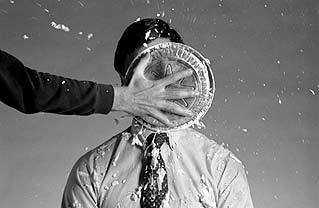
pie-in-face
Done right, this is comedy gold

As part of my work on the low-budget comedy spec, I’ve made an effort to read other comedies to help get a better understanding of how it could be done and hopefully some guidance I could apply to mine.

It’s always been tough for me to read comedy because my sense of humor doesn’t always align with others. Many’s the time I’ve read a script that garners universal praise for being gut-bustingly hilarious, but doesn’t do anything for me.

There is, however, one detail I’ve noticed that keeps popping up:

Unrealistic situations.

Things that seem to happen only for the sake of a joke, and not much else. These often feel forced and inorganic to the plot. Almost as if the writer thought “Hey, wouldn’t it be crazy if ____?”

In theory, potentially a good idea, but in execution – not really.

Some might argue that since it’s comedy, things don’t have to be realistic as long as they’re funny.

I beg to differ. If I don’t think something could actually happen, I will most likely not find it funny.

**side note – this doesn’t necessarily apply to slapstick or absurdist fare, which are two entirely different discussions**

Sure, there are comedies where the entire premise isn’t all that realistic to begin with, but even the humor in those should stem from the situation, rather than being a crazy assortment of wacky gags.

Going for the easy laugh or cheap joke doesn’t take much skill and shows a lack of sincere effort. If a writer does it once, chances are they’ll do it a lot. It also doesn’t offer anything new. Who wants a joke they’ve probably seen or heard a thousand times before?

Looking at comedies that would be considered strong, there are a lot of instances where the joke is an integral part of the scene, rather than feeling like something tacked on.

You’ll hear that the best comedy is the kind that makes you think. I prefer comedy that shows the writer did a lot of the thinking.

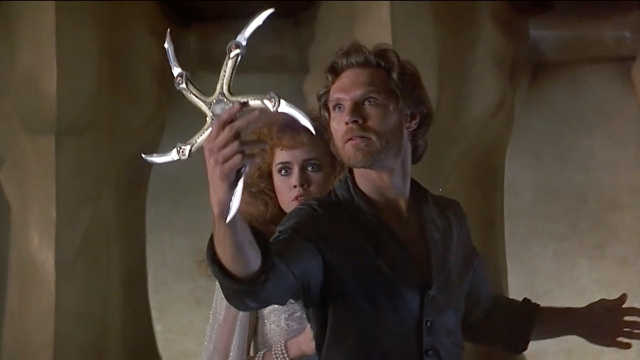
The silver lining of a bad movie

Krull
A definitive shining example (AND a prime candidate for a remake)

Since the screenwriter’s education is ongoing, there’s always something for you to work with or study to get a better grasp and understanding of what constitutes good writing, which can then be applied to your own.

Read scripts. Attend or take part in a table read. Watch movies.

While there are countless examples of exemplary writing and filmmaking to see it done properly and effectively, there are even more examples of crappy writing and lousy filmmaking to see it done poorly and ineffectively.

Nobody starts out with the intention of making a bad movie. What starts out as a great script can easily be messed up along the way to the point that there’s no salvaging it. It happens.

Is watching one waste of time? Not necessarily.

As enjoyable, informative and educational as the good stuff is, the bad stuff is actually just as good, possibly even more so. Because from these cinematic travesties you can learn what not to do with your own scripts. Lessons abound with all the glorious misfires regarding story, characters, and dialogue.

Regrettably, bad acting is a category all by itself and there’s nothing that can be done about it. Do what you can to ignore it (which can border on the impossible, depending on the quality of badness) and focus on the non-tangibles.

It’s especially helpful to work with something from the same genre as your script. See how they did it, then compare it to your own. Can you see why theirs didn’t work? Is it riddled with plotholes you could drive a truck through? Is the dialogue pure on-the-nose? Do the characters come across as unrealistic caricatures?

Look at it as a whole. Does it respect the reader/audience’s intelligence? Is the structure solid? Do you care about what happens to these characters over the course of the story?

Now bring your script into the equation – and be objective! How much of a similarity or difference is there between that story and yours? Did that other material open your eyes to some previously unforeseen flaws and potential problems within your script, so much that it made you realize “this needs work”?

Once you identify these problems, your writer’s mind goes to work, figuring out how to make sure your script doesn’t repeat the mistakes you just read or watched.

It may not be easy to endure having to watch a bad movie just for the educational experience, so just keep reminding yourself “It’s to help me become a better writer”.

Good luck!

Question time! What’s your favorite bad movie? Feel free to list it in the comments.

The good bad of your antagonist

mitchum
Few better examples than this guy

My original goal for February was to complete the second draft of the low-budget comedy. But as always, things didn’t go as planned.

I’d finished the initial edit, but then got hit with a nasty cold that put me out of commission for about a week, followed by all the activity involved with my daughter’s Bat Mitzvah (where she did a fantastic job), so writing-wise, things came to a screeching halt.

But we’re in a new month, so lots of new opportunities abound. Here’s hoping I can work this script into shape by the 31st.

I’d gotten some very helpful notes on it, the most notable of which was “Your antagonist is too nice. They need to be more at odds with the other characters.”

And they were right. Looking at it with fresh eyes, it’s easy to see how that observation rings true. During that read-through edit, I found at least three places where the character’s badness could definitely be ramped up, and expect more will be found over the course of this rewrite.

Sometimes I’ll even surprise myself by having the antagonist do something unexpected (in terms of behavior, not the story), especially if I personally find it very off-putting. But if it works within the context of the story AND further builds on the difference between them and the protagonist, all the better.

The challenge in writing a solid antagonist is really putting the emphasis on the “antagonize” part. What they want is most likely the opposite of what your protagonist wants, and they are determined to get it – possibly at all costs. To them, they’re the hero of the story, and your protagonist is what’s standing in their way.

I’ve always hated when I read a script and the antagonist is a stereotypical cookie-cutter villain who’s bad for no apparent reason, or because the story requires them to be. Why do they want what they want? I know what the hero wants, but what about them? Just because they’re the antagonist doesn’t mean there’s no story behind who they are.

So the next couple of weeks should be pretty interesting. There’s still a lot of work to do on this, but no doubt one of the high points will be the fun of coming up with ways to make my antagonist even more devious.

Because that’s the kind of character she is.