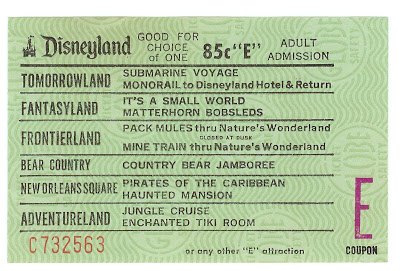
A reference only a select few will get. (85 cents?? Truly a bygone age)
While engaged in a very engaging conversation about screenwriting earlier this week, the person with whom I was conversing with asked the simplest and most straight-forward of questions:
“What do you like to write?”
Without a moment’s hesitation, I proudly stated, “Adventures.”
You can’t even say the word without implying the thrills and excitement it entails. Hands on hips, chest out, shoulders back, and a firmly-set jaw are automatically included.
I’ve enjoyed dabbling in other genres (such as drama and comedy), but nothing really grabs me like thinking up and writing out some sort of heart-pounding, edge-of-your-seat rollercoaster ride of a scene or sequence.
Those really never get old.
They say “Write what you know,” and although I’ve never actually fought monsters, manned a runaway train, or flown a space-faring vessel, years of reading and watching material of that type and nature has taught me an effective way of how to effectively inject adrenaline into what I’m writing.
More than a few readers have commented that my love and appreciation of the material and genre are boldly evident on the page, which is what I’m hoping to accomplish every time.
My mantra has always been “Write something I would want to see”, and my list of future projects is jam-packed with numerous ideas and concepts that neatly fall into that category; each one a variation on the topic of discussion.
If these are the kinds of stories I was meant to write, you’ll get no complaints from me. I get a real kick out of cranking this stuff out. There’s no reason to think this can’t develop into what I build a career on and eventually become known for (he said, his fingers firmly crossed). My scripts. Rewriting someone else’s. Contributing to another. It’s all cool as far as I’m concerned.
Until then, all I can do is keep writing and making my readers feel their pulses quicken as they eagerly turn the page, absolutely spellbound to find out how the hero gets themselves out of this particular pickle, and, more importantly, what happens next.
Strap yourselves in, chums. This is going to be one helluva ride.
Due to both of our busy schedules, my daughter and I go for some quality father-daughter time when we can. Sometimes that means we’ll watch something together.
It might be a movie or a TV show. We’re not picky. No shame in admitting she’s picked up my enjoyment of superhero- and fantasy-based (LOTR, Hobbit, etc) material.
Despite her occasionally sullen and blase teen exterior, V is, at heart, an empathetic and sensitive soul, so no matter what we’re watching, if there’s any kind of hint of emotional resonance in a particular scene, she will feel the full brunt of whatever emotion the film/program is conveying.
Almost any kind of a joke (the sillier the better), and she laughs her head off. Something scary and she hides under the blanket. Something sad and she immediately tears up. Even after years of me saying, “You do know this is just a movie/TV show, right?”, her emotional receptors remain cranked up to 11 (and the teenager reappears with the immediate response, “Will you stop saying that?”)
Looking at these from the writer’s perspective, I can’t help but examine how the writers were able to do that. How did they get to the emotional core of the scene? Jokes and scares aren’t hard to figure out, even though each is pretty subjective, but a good, solid tug at the heartstrings, when done effectively, can be some pretty intense stuff.
A key part is making it relatable. Love. Joy. Heartbreak. Loss. All are universal. Everyone’s experienced them in some form or another. As the writer, you want to convey that emotion so anybody reading or watching your story will not only immediately identify it, but also connect with it on a personal level.
Like this. One of the most effective emotional sequences ever. And not a single word spoken. If you don’t feel anything as a result of watching it, you have no soul.
Even though we may not have gone through the same things as Carl and Ellie, we can relate to a lot, if not all of it.
This isn’t saying that every scene has to be a major tearjerker, but you want to really let us know how the characters are feeling in that particular moment. They’re human, so they feel the exact same things we do. Make us feel how they’re feeling.
Each scene serves three purposes: to advance the story, the characters, and the theme. Let the emotions come through via the best way you envision them enhancing the scene (making sure not to overdo it). It might take a few tries, but the deeper you venture into the emotional level, the easier it’ll get for you to show it, and it’ll also be easier for us to identify it and relate to it.
Originally, this post was going to be about the multiple changing of protagonists in PSYCHO (which is another great potential future topic), but the more I read about the film and thought about the impact it’s had since being released way back in 1960, it triggered a totally different train of thought.
Every once in a while, when a classic film is brought up in some context or another, the phrase “That could never get made today” will get thrown in. After the recent death of Gene Wilder, his talent was lauded via the mention of several of his most well-known roles. Willy Wonka. The Waco Kid. Victor Frankenstein (“That’s Fronken-steen.”). His performances were vital parts of each film, which no doubt contributed to making them “classics”.
But, as always, it starts with the script. (Incidentally, I don’t think Wilder gets enough credit for co-writing YOUNG FRANKENSTEIN.)
Examining the stories being told, each one has something truly unique about it, and then some. The writer (and subsequently the filmmaker) wasn’t afraid to take a chance and try something completely new and different. Sadly, the studios today aren’t as open to it. Better to play it safe then take too big a chance, which is why we’re seeing so many remakes and re-imaginings. Of course, that doesn’t always work out either (e.g. 2015’s PAN, the recent BEN-HUR remake).
While there are always original and innovative scripts floating around, it’s a lot of time, effort and money to make a film. The only recent original film I can think of is SWISS ARMY MAN, which I admit I haven’t seen yet.
Who hasn’t read a “truly original” script or about one getting a lot of attention, but a lot of the time the writer will go on to work on other projects while the script that started the whole thing gathers dust?
The best exception to this that I know of is Travis Beacham’s spec A KILLING ON CARNIVAL ROW, which drew a lot of heat when it sold in 2005, then continued to garner praise while it languished in development for years before ultimately becoming an upcoming series on Amazon – at last check, anyway.
Budgets are getting higher, and the gap continues to grow between microbudget features and mega-budget tentpoles. It’s getting harder for original material to get noticed, let alone something that screams out “NEW!” It also doesn’t help that the chances decrease if the script isn’t based on pre-existing material. This could be why today you’re more likely to see an original film that’s a low-budget independent, probably written by the filmmaker themselves.
Before that, your best bet of seeing something groundbreaking would have been at the hands of established filmmakers, only because they had that kind of leverage (and the budget) to get their projects made. An unknown writer doesn’t have that kind of luxury. All we can hope for is to connect with somebody who likes the script (and our writing) so much that they’re actually excited to help us take things beyond the “Sure, I’ll read it” stage.
That’s our objective as writers: to write something that’s not only compelling and involving, but so eye-openingly original that the reader is compelled to the point that they need to see this as a movie. Doable, but definitely not easy.
Homework time! Part one – find a script you really consider a game-changer for the same genre as yours and give it a read. Can you identify what made it so unique? What really stands out for you? Plot? Story? Characters? A little of everything? Another option is if that script has been produced, then watch the film and follow along with the script. Are they the same? Totally different? Do you think the changes add or take away from the script?
Part two – without blatantly copying the style of that script, work on applying a similar originality to yours. Did reading that script inspire ways for you to make yours really stand out?
Don’t be afraid to take chances. Strive to offer up something we’ve never seen before. The results might surprise you, too.
-Special offer just for you!
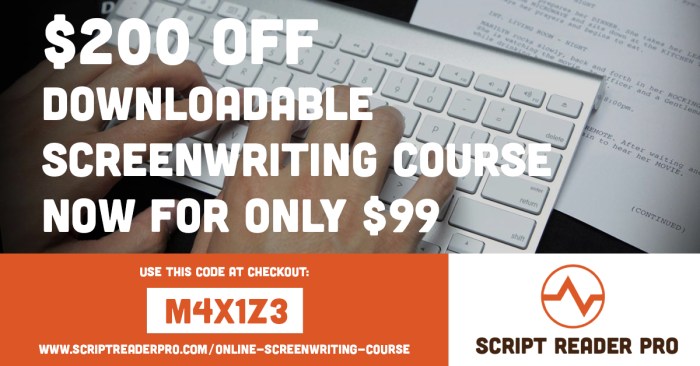
The fine folks at Script Reader Pro are running a discount for Maximum Z readers on their downloadable screenwriting course Script Hackr.
Forget all the confusing and vague “fluff” found in most screenwriting courses, coverage and books. Script Hackr will skyrocket your screenwriting skills by utilizing rarely talked about hacks and hands-on practical exercises to de-mystify theory.
The course retails at $299, but you can get it for just $99 by using the coupon code M4X1Z3 at checkout.
You can check out more details on the course here:
You know that bucket is mentioned a few pages earlier
Writers put onto paper how they visualize the events of the story.
Your get an idea of how you want things to look, maybe even a picture-perfect image, so you put those details onto the page, which is fine.
But sometimes the writer feels the need to include as much detail as they can. “To really paint a picture with words,” they might say. But it’s easy to get carried away. Some writers see this as a golden opportunity to really flex their literary muscles, so they go all out.
A big write-up about the contents of a room. Or identifying specifics about the clothing a character is wearing. That sort of thing.
While that kind of colorful minutiae might work in a novel, many see it as a negative when it comes to screenplays (opinions may vary, but this appears to be the general consensus).
There’s only one reason the writing should be that specific: if the item in question plays a part in the story. Is it vitally important that we notice it? If the answer is “no”, then all it’s doing is taking up valuable real estate on the page.
When the writer makes a point of identifying a particular item, then we should expect it to make a return appearance later on. Set up, pay off, remember? It’s better to have a reader think “Aha! So that’s what that was for,” rather than “Huh? What was that for?” or “Why was that in there?”
By drawing our attention towards something that is more of an issue for the set designer or wardrobe department, it slows down the story’s momentum and makes for some unsatisfying reading.
Tell us the things we need to know, rather than the things you think would be nice to know.
As long as we’re emphasizing Qs today…(Yes, it’s a terrible joke. But that’s how we operate around here.)
Today is all about query letters.
I read about other writers who’ve gotten reads, representation, options and even production. There must have been something quite special about those letters (and scripts) to get those machines in motion.
There are also a select number of writers who’ve never had to use a query letter. Bully for them, I say. But I’ve never fallen into that category, so I’m firmly planted in the “those who send” group, which is still fine.
Taking a look at the somewhat limited results of my past efforts and reading about others’ experience makes me wonder in a “big picture” way about the nature and concept of the query letters themselves.
Are they worth the effort?
Naturally, if something happens as a result, of course they are. But even that appears to be a needle-in-a-haystack kind of scenario.
(Incidentally, any tales of query success are more than welcome in the comments section.)
There are so many factors to take into account, including but not limited to:
-who you’re sending to
-what kind of material they want
-they’re intrigued enough to want to read the script
-your script is a good match (or at least close enough) to what they want
-they think your writing’s strong enough
-they think they can make something happen with your script
Several years ago, an agent who’d struck out on their own (along with a sole assistant) told me that their office received approximately 75-100 queries a week. From around the world. Some were good, most were awful. A significant part of each morning was spent sorting through them. As you’d imagine, finding one, possibly two, that clicked seemed to be the norm.
Remember, this was a two-person operation. If they were getting that many, imagine how many the mega-agencies were getting, and still are. Possibly in the thousands.
The chances of success are minuscule, and grow smaller with each progressive step. Those not exactly in the know are more likely to think they’re the exception, but those of us who’ve been down this road before know better.
This isn’t to say that queries never work, but the odds definitely appear to be not in our favor. Luck and timing seem to also play significant parts. Maybe the person you’ve sent to just happens to be looking for a script exactly like yours. I’ve heard it does happen; just not very often.
But the dedicated, persistent and determined among us, including yours truly, will keep at it.
Even though my success rate hasn’t been the best, I’ll continue to do the research, find potential recipients, craft what I believe is a solid query, and send it out.
All that’s left is to wait, hope for the best, and keep busy working on other scripts, each of which will probably also have its own respective query letter get sent out sometime in the near future.



 Maximum Z