Bulletin board mode activated!

bulletin board
Always room for one more announcement

Today is all about promoting other folks’ projects. All I get out of it is enjoying helping out some good people.

-Filmmaker and friend of the blog Scotty Cornfield is getting ready to shoot his short Goodbye, NOLA later this year. A crowdfunding campaign will be launching very, very soon. Until then, check out the website or the Facebook page for updates.

-Previous blog interviewee Michele Wallerstein will be teaching a one-day workshop called Find and Keep and AGENT! on Saturday, May 7th in Studio City, CA. She also just launched her online course Moving Your Writing Career Forward.

-Previous blog interviewee Barri Evins will be hosting her Big Ideas Tiki Bar Seminar the weekend of June 10-12 in Los Angeles. Barri’s seminars also include 6 months’ worth of individual mentorship. Expert screenwriting advice, 6 months of help, AND a tiki bar? How could you pass this up?

The Great American Pitchfest is taking place May 20-22 in Burbank. Use code Z15 to get 15% off any package EXCEPT the Writing Partner or Scriptfest ones. But hurry – the code’s only good until May 1st, and the organizers tell me it’s filling up fast. This is a great opportunity to network and hone your pitching skills. I went last year and got a lot out of both.

-I’m a huge fan of the Comedy Film Nerds podcast, and co-host Chris Mancini has launched a Kickstarter campaign for his graphic novel Long Ago and Far Away. As of this posting, they’re getting close to hitting the goal. If you’re a fan of comics and supporting original works, feel free to donate if you can to help get them there.

Got your own project coming up that you’d like to promote? Drop me a line.
The tech guys are on it…

Having some weird technical issues with the site, so you may or may not be seeing this.

Hoping to get things back up and running ASAP.

We appreciate your patience.

Best seat in the house

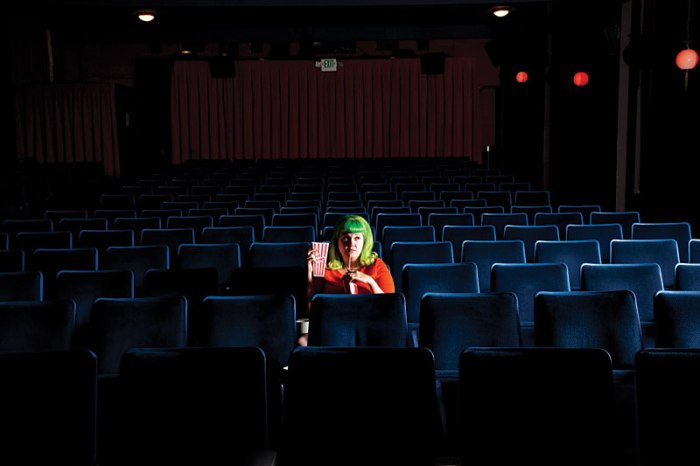
alone in theatre
The next person who comes in will sit directly in front of me. Guaranteed.

I recently had the opportunity to revisit the outline for my pulpy adventure story after having not looked at it in several months, and wanted to see what was needed in order to get me a little closer to being able to start on pages.

Time was limited, so I was only able to get through the first half. It was a pleasant surprise to discover that a lot of it still held up, plus an added bonus of some small inspirations resulting in tweaks that strengthened a few of the subplots and tied a few them together in a better way.

And of course, some of these new developments were a total change from how I’d always imagined them. This happens a lot for me.

But what was really the most positive experience out of this was how easy it was to “see” the story play out. It was as if I was in a private theatre, watching my imagination come to life on the big screen, complete with surround-sound. It definitely reinforced the kind of story I’m trying to tell.

When you’re putting your story together, or writing it, or even just reading it, how easy is it for you to visualize it? Do you “see” it as if you’re watching it in movie form? Is it a smooth transition from coming up with the idea to putting it on the page so it reads how you originally imagined it?

And therein lies part of the challenge. It’s just not an easy task, or at least isn’t for a lot of writers. It takes time to find the right words.

You might know what you want to say, but can’t find the exact way to say it, so you tinker around with it, trying and trying until something takes hold. Or maybe after writing it down, actually seeing it on the page makes you realize “this might not have been the best way to do it,” so you jump back in to come up with something new.

Sometimes I even go so far as to narrate aloud while acting out what’s happening for that particular part of the story (or as much as I can while sitting at my desk), which really helps, despite how silly it might look to somebody else.

As writers, the gears of our imaginations are always turning. Always. You could be doing something totally ordinary or mundane, and then, like a bolt from the blue, come up with a solution so perfect and now-obvious that you can’t understand why you didn’t realize it before.

So you work and work, making your writing better to the point that anybody reading your story will eventually be able to “see” it the way you want them to.


A few points about plot points

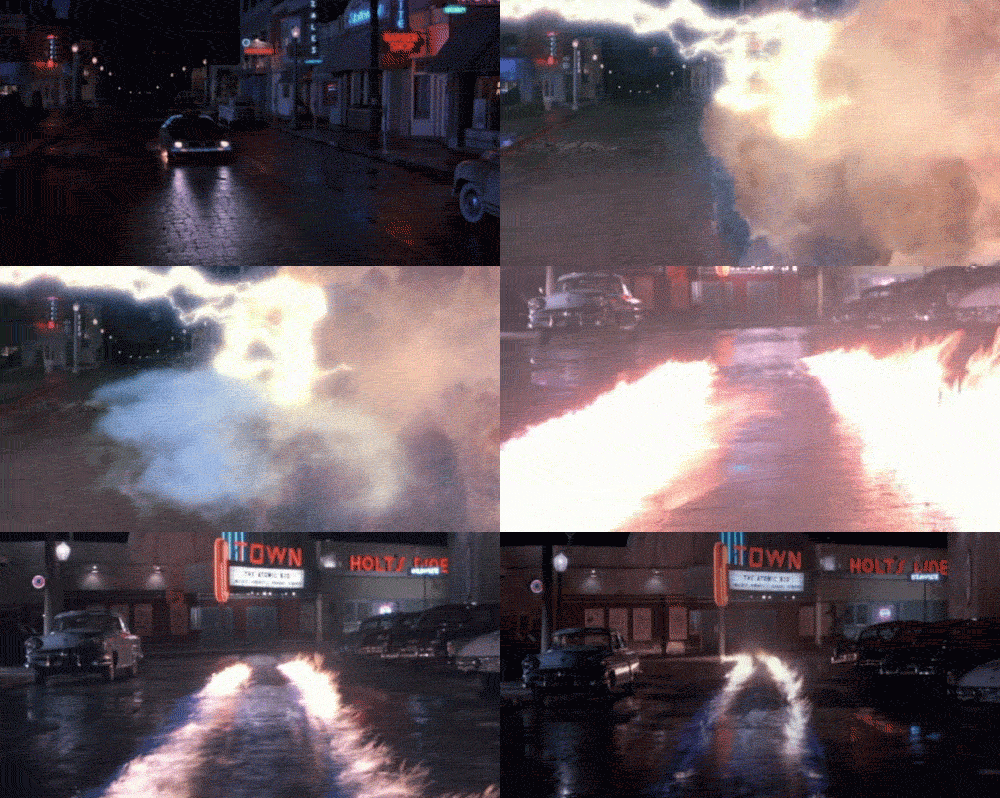
delorean

Time for a quick refresher course, chums.

Today’s topic: plot points. What they are and what they represent.

I’ve always seen plot points as pivotal moments in the story; events that change the situation for your protagonist, usually in a negative manner, and ask/reiterate the central question (Will your hero achieve their goal?).

Having solid plot points also helps establish your story’s structure. Without it, all you’ve got is a big convoluted mess, and who wants to read that?

Although this uses a 110-page script as an example, plot points don’t have to happen exactly at those pages. A few more or less is totally acceptable. I’ve also opted to use fairly recognizable examples to emphasize each plot point.

Pencils ready? Let’s begin.

Page 3 – statement of theme. What’s the overall message of your story? The theme should also be incorporated in some fashion into each scene throughout the course of the story. (“No McFly in the history of Hill Valley has ever amounted to anything!” “Yeah, well, history’s gonna change.”)

Page 10 – inciting incident. The event that shakes up you protagonist’s world, and asks the central question of the story. (Will Indy get the Ark before the Nazis?)

Page 17 – a twist to further complicate things for the protagonist. (“Alderaan? I can’t go with you to Alderaan!”)

End of Act One (page 25-30) – Your protagonist leaves behind their old world and enters a new one to achieve their goal. Also repeats the central question. (Marty arrives in 1955)

Page 45 – another twist to complicate things for the protagonist (Indy saves Marion, destroys her bar. “I’m your goddamned partner!”)

Midpoint/Point of No Return (page 55-60) – your protagonist becomes fully committed to achieving their goal (Brody decides to go after the shark after his son barely survives the latest attack)

Page 75 – yet another twist to really complicate things for your protagonist (Vader kills Ben as Luke & Co escape)

End of Act Two (page 90) – All is lost. Your protagonist is totally screwed with no apparent way out. Makes it seem like the answer to your central question is “no”. (The Nazis get the Ark).

Climax (page 95-100) – final showdown between your protagonist and antagonist. (Rebels attack the Death Star. Marty must hit the wire when the lightning hits. Nazis open the Ark. The shark attacks the Orca, eats Quint.)

Resolution (page 100-105) – Aftermath of the climax. Central question gets answered. (Rebels victorious. Marty returns to 1985. Brody & Hooper survive. Indy delivers the Ark.)

Denouement (page 105-110) – How your protagonist’s world is now different from what it used to be (but not necessarily better). (Marty’s family is successful. The Ark gets crated and goes into a warehouse. Luke & Han hailed as heroes. Brody doesn’t hate the water anymore.)

So there you have it. Do the plot points of your story match up with these? Just something to think about. And feel free to watch the movies represented here (or one of your own personal favorites, or one similar to yours) to see all those plot points in action.

It just might be some of the most fun homework you’ll ever have.

Here’s to the thrill of running ourselves ragged


cheers
Clink!

It’s the home stretch of the last week of November, and hopefully you’ve made some excellent progress on your designated writing project. Let’s go with the theory that you made the sincere effort to write every single day.

Pretty nice, isn’t it?

Are you further along than you expected? About the same? Not as much as you’d hoped? Doesn’t matter. You found the time to write and maintained that pattern of producing something on a regular basis.

Even if real life got in the way and maybe you had to skip a day here and there (it happens), isn’t it great to know that you made this commitment to yourself and kept it?

Maybe you had a really lousy day, and think “I really don’t feel like writing today” (which also happens), but then reconsider and realize “No. I said I’m going to do this, and I’m going to do it.” So you sit your ass down and pound away on the keyboard. For how long is irrelevant.

Your total output might just be a couple of lines or a couple of pages, but your progress is right there for you to read. Maybe you tell yourself you’ll do more tomorrow.

Admit it. You like this. Otherwise you wouldn’t be knocking yourself out doing it.

This can be addictive. While some may follow the Dorothy Parker school of thought (hate writing, love having written), others actually enjoy the whole process and want to continue doing so, constantly striving to improve both in quality and output.

I tend to go back and forth, but mostly it’s the latter.

So even though the month is wrapping up, that doesn’t mean you have to slow down on your writing. You’ve gotten into the habit of being a productive writer. Make the effort to continue doing so in the coming months, and that will quickly extend into years.