Ask a Decidedly Ingenious Script Consultant!

Ryan Dixon

The final installment in a series of interviews with script readers and consultants who would be worth your while to work with if you want to get your script in shape. Today’s spotlight is on Ryan Dixon.

Ryan Dixon is a writer, producer and the founder of Tartan Valley Ventures,  a Los Angeles-based creative development consulting firm that works with writers, producers and financiers. As a screenwriter, Dixon has written projects for studios including Disney, Amazon, Universal and WWE Films. Dixon has also worked in film/TV creative development at such companies as Paramount, MGM/UA, IMAX,  Good in a Room, The New York Times and Tribune Media.

1. What’s the last thing you read/watched that you thought was incredibly well-written?

EX MACHINA’s screenplay was masterful. It reminded me of a sci-fi version of those great meta-thriller plays of the 1970s, like DEATHTRAP and SLEUTH. P.T. Anderson did an extraordinary job with INHERENT VICE. His adaptation added a layer of depth and Los Angeles historicity that was missing in Pynchon’s fun, but flawed and rather juvenile novel.

2. How’d you get your start reading scripts?

As a movie-obsessed child, I used to buy shooting scripts at the late and belated Suncoast: The Movie Store. In college at Carnegie Mellon’s School of Drama, reading scripts was part of the curriculum. My first job in Hollywood was interning for Tom Cruise’s former company CW Productions, so from that point on, I’ve been reading and covering scripts professionally in one form or another.

3. Is recognizing good writing something you think can be taught or learned?

I think it’s a matter of taste. Of course, one must have a certain degree of training and skill in order to fully recognize and appreciate any craft. A classically trained musician or a fine arts scholar is better able to pinpoint the minutiae of Beethoven or Picasso. At the same time, taste is a separate sort of knowledge and instinct. A layman can find beauty if they’re a person who can digest and appreciates art for art’s sake. Nickelback’s members are studied musicians, Lisa Frank is a trained artist, and both are wildly successful in their fields. Study can hone and illuminate the elements of a craft but that can only take you so far.

4. What are the components of a good script?

The basic elements (structure, character, theme) must be superiorly executed. Next, there should be something special in the piece. Even if it’s basic genre fare, the script should include elements that make the reader sit up and say, “Wow! I haven’t seen that before.”

5. What are some of the most common mistakes you see?

From young writers it’s always basic mistakes: mechanics, too much dialogue and/or scene direction. Sadly, these mistakes are also the easiest to avoid. What they reveal is that that writer hasn’t bothered to learn the fundamentals. This is fascinating because I can’t think of any other vocation where a similar incident would occur. If one were serious about learning to cook, a cookbook would be the first purchase. If you wanted to scuba dive, you’d take lessons before jumping head first into the ocean. While all the fundamentals are usually outstanding in the work of veteran writers, there is often a lack of courage and conviction in terms of content, as if they’re afraid to try something different for fear of being tossed out of another development meeting. If you are going to make the huge time commitment needed to write a spec script, swing for the fences. The creative dilution process can come later, once the script’s been optioned.

6. What story tropes are you just tired of seeing?

One is when characters (particularly female characters) are described solely on their looks. It tells you nothing about who a character is and often times a bit too much about the writer’s psyche.

Another is the oversaturation of beautiful people playing everyday characters. Even if you look at a movie from as recently as the 90’s, a man could be a regular guy with full chest and back hair and a woman could do a nude scene with a soft, everyday body. In contemporary films, everyone is sculpted, plucked and dyed to perfection. In this renewed Golden Age of Television, character actors are able to once again shine and it really strengthens the storylines and characters (Breaking Bad and Mad Men are obvious examples).

My wife is a screenwriter as well (and very opinionated to boot), so for better or worse, this is a constant discussion and analysis in our household. A big one for her is that men can have high-risk jobs and a strong drive, but if it’s a woman is in the same position, she needs a tragedy or a backstory. GRAVITY most recently did this—George Clooney is an astronaut because of his skill but Sandra Bullock is an astronaut because her kid died.

7. What are the 3 most important rules every writer should know?

-The believability of characters is often more dependent upon the execution of other elements in the script (e.g., plot, theme, dialogue) than anything else. A trap writers (myself included) often fall into is to confuse “believable” with “realistic.” Thus the ever-present tendency to write characters who are mill workers, teachers, office drones, etc. While there’s nothing wrong with this if that’s what your script dictates, it’s also important to remember that some of the most believable characters in cinematic history were also some of the most unrealistic: E.T., Yoda, Kermit the Frog, Mickey Mouse, Bugs Bunny, etc. They’re believable not because you could see them walking down the street, but because the creators of those characters did an amazing job of creating the world in which they existed.

-Master the art of writing a “skimmable” script. We all dream of studio execs, producers, agents, etc sitting down in a quiet space and focusing fully on our script, but the truth is that they are often read in a rush during limited time frames. This is why it’s important to craft your script in a way that a decision maker can easily understand it if they are forced to skim it. You want your script to FEEL like a movie. That means, a reader should be able to zip through it in about 90 minutes. If a first time reader can’t do that, they won’t be able to envision you script as a movie no matter its other strengths.

-This is stolen but golden: “Amateurs sit and wait for inspiration, the rest of us just get up and go to work.” (Stephen King, a favorite author, from ON WRITING). Lightning doesn’t just strike and no one will just hand you anything in Hollywood. Nothing comes easy in writing and you have to work yourself to the bone to get success. I track my time using my iPhone timer and a writer’s log. I make sure to always get in 6 to 8 hours of writing a day. If I’m blocked, I take a brainstorming walk. I’m not perfect. I can procrastinate with the best of them and it took a few years to build to that point. But like any exercise, it works if you keep working at it and pushing yourself.

8. Have you ever read a script that was an absolute, without-a-doubt “recommend”? If so, could you give the logline?

Elizabethtown by Cameron Crowe. I read the script while it was in development and was never so moved or in awe of a piece of screenwriting. In the end however, the final lesson I gained from the experience was that great scripts don’t always make great movies. For whatever reason, the alchemy needed to successfully transform material from page to screen failed. This specific incident was doubly disappointing since the writer directed the piece himself and has shown time and again that he’s an immensely talented director.

9. How do you feel about screenwriting contests? Worth it or not?

There are only a handful of contests that will have an impact on your career if you are a top finisher. I’m hesitant to state that all the others aren’t worth it if only because placing high can be a great confidence boost to any young writer (if they have the money to spend). But if you are cash-strapped, go for the big guns and ignore the others.

10. How can people get in touch with you to find out more about the services you provide?

Go to my website for Tartan Valley Creative Ventures.

11. Readers of this blog are more than familiar with my love/appreciation of pie. What’s your favorite kind?

Boston Cream. As a writer and eater, I like synergy and mixing genres. There’s no pie that does this better.

Ask a Getting-Down-to-Brass-Tacks Script Consultant!

OLYMPUS DIGITAL CAMERA

The latest in a series of interviews with script readers and consultants who would be worth your while to work with if you want to get your script in shape. Today’s spotlight is on writer-consultant-contest reader Jim Sarantinos.

Jim Sarantinos is the Editor-in-Chief of Creative Screenwriting Magazine, and writer of Gideon’s Way, a highly popular and acclaimed screenwriting blog which he started in 2009. He’s guest blogged for MovieBytes and other sites, and placed in various high-profile screenwriting contests including Scriptapalooza, Fade In, and most recently, Happy Writers with a TV sitcom pilot.

Jim has also read for various screenwriting contests and is currently developing several film and TV projects.

1. What’s the last thing you read/watched that you thought was incredibly well-written?

I’d have to say Nightcrawler, and I’m still mad it wasn’t recognized at the Oscars. TV-wise, I just watched my first episode of The Americans. Riveting stuff.

2. How’d you get your start reading scripts?

Going through film school, it was considered vital to our training; perhaps even more important than watching films themselves. I decided to consult because I was getting too many random scripts flooding my inbox demanding/requesting I read them and provide feedback within 24 hours.

3. Is recognizing good writing something you think can be taught or learned?

You can teach the basic building blocks of screenwriting, but recognizing good writing is learned from experience, intuition and taste.

4. What are the components of a good script?

Style and character. I love deeply flawed characters that straddle good and evil simultaneously. There’s so much scope for them to grow and interesting places to take them. I also love worlds I’m not familiar with; not necessarily fantasy or supernatural. A wonderful story can be set in an abattoir, a funeral home or a country club.

5. What are some of the most common mistakes you see?

Lack of story focus. Know exactly what you want to say before you start writing. Sure there is some discovery during writing, but know your theme and central message early on.

6. What story tropes are you just tired of seeing?

Car chases, explosions, shootouts. Give me a cop disarming a criminal solely with his/her mind and wit any day. You can only paper over the story cracks with CGI for so long.

7. What are the 3 most important rules every writer should know?

-Know yourself.

-Know your story.

-Know the audience.

8. Have you ever read a script that was an absolute, without-a-doubt “recommend”? If so, could you give the logline?

I can’t give you a logline, but I recently read a contained thriller about a heist gone wrong. Two-thirds of the movie was set in an office where the hostages and criminals were barricaded in. It was so vivid and real, which made it easy to visualize it.

9. How do you feel about screenwriting contests? Worth it or not?

They’re a double edged sword for me. I’ve heard of success stories which have launched careers and also stories of writers winning major contests and not getting anywhere. There are also too many cash cow contests with dubious readers. If you enter a contest, go big or go home. Preferably enter one that gives notes, so you know the reader has actually read your script. Practice due diligence.

10. How can people get in touch with you to find out more about the services you provide?

My blog Gideon’s Way is at www.gideonsway.wordpress.com and Script Firm Consultancy is at www.scriptfirm.wordpress.com

11. Readers of this blog are more than familiar with my love/appreciation of pie.

What’s your favorite kind? Humble. Preferably organic, sugar and gluten free.

Ask a Produced-and-In-pre-production Script Consultant!

rob tobin

The latest in a series of interviews with script readers and consultants who would be worth your while to work with if you want to get your script in shape. Today’s spotlight is on writer-author-lecturer Rob Tobin. 

Rob is a produced, award-winning screenwriter, published novelist, former motion picture development executive, author of the screenwriting books “The Screenwriting Formula” and “How to Write High Structure, High Concept Movies,” as well as several screenwriting CDs. He’s been a frequent guest lecturer on screenwriting at film festivals and writing conferences around the world.

*April 2015 update – Rob is currently working on a multi-book adaptation project and is not available for story notes, but can fit in one additional script polish or rewrite assignment.

1. What’s the last thing you read/watched that you thought was incredibly well written?

My wife and I just saw “The Normal Heart,” which blew me away. Brilliantly written, acted and directed. Most importantly, the title wasn’t the only thing that had heart, something most films no longer have. Even a film like “The Fault in Our Stars,” a film with tremendous heart, that I loved. I’d much rather see a film or read a script like that than a brilliantly written script with no heart.

2. How’d you get your start reading scripts?

I’m originally Canadian, and came to USC in L.A. to get my M.A. in screenwriting and become a working screenwriter. My background was as a novelist. Everyone at USC told me I should intern at a film company. I did, and started reading scripts as part of my internship. Lots of them. Years later as a development exec, I stopped counting at 5,000 script scripts read and covered. In that process, I wrote two screenwriting books, starred in a couple of screenwriting DVDs, then people started flying me around to lecture on screenwriting – Canada, New England, the South of France.

3. Is recognizing good writing something you think can be taught or learned?

Definitely something you can be taught. Screenwriting has structure, elements, rules, all of which you can learn. Of course some people are going to be better at it than others. In addition, there is the other part of being a script consultant, and that’s helping the writer find ways to improve her or his script. That can also be taught, but there’s a much bigger talent component to that.

4. What are the components of a good script?

I actually wrote a book about the seven essential elements of a well-written screenplay, but to be honest, as I mentioned, one of the biggest aspects of a well-written script is heart. Yes, you can write a brilliant script about crime, sex, war, and so on. Bond movies are great, but I still think that heart is what makes a script special. Something like “The Normal Heart” or “Good Will Hunting”, or even comedies like “Big” or “Tootsie” have heart. High concept is also important but as I said in another recent interview, a high concept piece of crap is still a piece of crap. A low concept work of brilliance is still a work of brilliance. There are techniques and elements, of course, but I love that old saying about not writing because you want to say something, but because you have something to say. Say something worth saying, and say it with heart. If I had only one piece of advice to give, that would be it.

5. What are some of the most common mistakes you see?

Mistakes in a script are almost always structural, because almost everything emerges from structure. Dialogue, characterization, theme, it all emerges from structure. If you don’t understand structure, you’re in trouble. When I work with clients, the first thing I do with problem scripts is talk to the writer about structure. The mistakes and solutions are almost always located there.

6. What story tropes are you just tired of seeing?

Easy killing. Doesn’t matter whether it’s a cop who easily kills a bad guy, or an action star killing hordes of bad guys, easily, without remorse, and without ever getting shot him or herself. Killing as a relatively trivial thing is the worst trope of all in my opinion, and it can’t go away fast enough.

7. What are the 3 most important rules every writer should know?

-Write only if you enjoy writing, because the chances of making a living at it are extremely remote.

-Learn your craft.

-Never submit a first draft of anything.

8. Have you ever read a script that was an absolute, without a doubt “recommend”? If so, could you give the logline?

Thank You for Smoking.” It came to me when I was a director of development. Out of thousands and thousands of scripts I read, I recommended 34, despite the fact that I worked for major producers who were getting the best scripts from the best agencies, but that was it: 34 out of over 5,000 scripts, all from the best agencies in the business. “Wag the Dog” and “Dangerous Minds” are some of the scripts I recommended. Every other script, the ones I didn’t recommend, had structural problems.

9. How do you feel about screenwriting contests? Worth it or not?

Yes, if they’re the right ones. I always tell beginning writers to never submit their first, second, third or even fourth scripts to the industry itself – producers, agents, etc., but rather to contests, especially contests that give feedback. That way if their first few scripts are subpar, they’re not going to be branded by industry people as subpar writers. And the feedback from the contests can help them figure out what their weaknesses are.

10. How can people get in touch with you to find out more about the services you provide?

Email me at scripts90@gmail.com. I don’t do coverage anymore, but I do story notes, polishes, rewrites, and adaptations.

11. Readers of this blog are more than familiar with my love/appreciation of pie. What’s your favorite kind?

Apple pie with ice cream.

Ask an Up-through-the-ranks Script Consultant!

Bill Pace

The latest in a series of interviews with script readers and consultants who would be worth your while to work with if you want to get your script in shape. Today’s spotlight is on William Pace.

William Pace received a Masters of Fine Arts in Film Production from New York University’s acclaimed Graduate Film & TV program where he wrote and directed “Echo Canyon,” an award-winning short film that was televised nationally on the USA Network.

His script CHARMING BILLY was a finalist for the Sundance Institute’s prestigious Screenwriting Lab. William also directed the award-winning feature film of the script, which premiered at the AFI/Los Angeles International Film Festival, whereupon a lead VARIETY review proclaimed his “notable cinematic and storytelling craft.” CHARMING BILLY was then distributed by a division of Miramax and broadcast on the Independent Film Channel.

William teaches filmmaking and screenwriting at The New School in New York City, where he serves as its Screenwriting Certificate Director. He is also a screenplay consultant who’s worked with such authors as Douglas Blackmon in adapting his Pulitzer Prize-winning book SLAVERY BY ANOTHER NAME, and many others whose scripts have gone on to success, from making the influential Black List, winning competitions at Slamdance, obtaining mangers & agents and being produced & distributed.

William’s current position is Faculty Associate of Digital Media Production at Seton Hall University.

And — believe it or not — he’s actually listed in Warren Allen Smith‘s book CELEBRITIES IN HELL.

1. What’s the last thing you read/watched that you thought was incredibly well-written?

There are a lot of good movies that are out right now, but I’m going to go to left field and say THE GOOD WIFE.

It’s TV, and not even one of the “hot” shows that’s popular to tout, but this is a damn well-written show with rich characters who the writers aren’t afraid to have do the wrong thing, and sometimes for the wrong reasons. The journey Julianna Margulies’s character has gone on is almost as transformative as Walter White’s in BREAKING BAD. Different arena, different stakes, but almost every bit as cynical and sometimes almost as dark.

That’s what leaps out at me first thing, but to include a film…

BIRDMAN. But it’s really hard to separate the filming of that movie from its script, as they are seamlessly enmeshed and were designed that way from the start – even though it’s supposed to look like there are no cuts in the film, the editors were actually brought in before shooting begin to help design where the cuts could most effectively be digitally “erased”. That kind of “writing” and planning, along with the audaciousness of the film’s story & thematic concepts, really spoke to me as something on a higher level.

2. How’d you get your start reading scripts?

When I was a film student at NYU’s Grad program (during the — cough-cough — Paleolithic period), the only scripts around to read were hardcopies, and you had to either know someone in the business to get a hold of one or buy one of the badly Xeroxed copies from the guy in Union Square selling them from his folding card table. It wasn’t until I started teaching and the internet came into wide existence that I began to really read a lot of scripts. Once I could download them, I started devouring them. I especially loved reading early drafts of produced scripts because you could see more of the process that went into crafting the final film by noticing what had changed from its initial drafts. I mean, how else would you know that the scene in INDIANA JONES & THE KINGDOM OF THE CRYSTAL SKULL (ugh) where Indy seals himself in a refrigerator to escape a nuclear blast was originally the concept for how Marty McFly traveled in time!?

3. Is recognizing good writing something you think can be taught or learned?

Absolutely it can be taught. And teaching how to recognize good writing is a hell of a lot easier than teaching how to write “good”.

4. What are the components of a good script?

Oh man… how many pages can I go on here? Okay, I’ll try to be a good screenwriter and shorten it into a condensed version: As much as we teachers and analysts can go on about strong characters, good technique, use of genre, theme, etc. – and they are really, really important — I think that if you have a bad story idea, the rest doesn’t matter.

Not one… little… bit.

Now, what makes a good story? For that I would need lots of writing room to expound upon, but for now let me say that I’ve become a big believer in the logline, the one sentence “pitch” for your script – if you can’t create a compelling logline about your script’s story idea, then nothing else is really going to matter. If you can’t, people might read the script and you say, “Oh, I really like the protagonist,” or its imagery or nuance or its tone/mood/feel, blah-blah-blah…” But they won’t spend money and buy it if the story isn’t there.

I’m not saying you have to write what used to be call high-concept scripts – even if you’re writing a kitchen sink kind of realistic drama, the story should still have sufficient and clear conflict and stakes and that can create an interesting logline.

Once you have the story, then everything has to be in the right balance and proportion and wrap up with a resonating theme to be a really good script. But start with a compelling good story and we can work on all of the rest.

5. What are some of the most common mistakes you see?

• The “I’ve seen other movies get away with this kind of crap so I can too” kind of approach. To stand out in a highly competitive field, your script needs to be better than what you see in the movies. It needs to be fresh and cliché-free.

• Protagonists who are not active, whose goals and actions do not make the story happen. Instead, the story happens to them, not because of them, which significantly lowers our interest in both them and what happens to them.

• “It’s just a script, so the writing don’t have to be good.” Just because it’s going to be a movie does not free you from the work of knowing your writing craft and presenting a grammatically correct and enticing read.

6. What story tropes are you just tired of seeing?

Hmmm… can I put superhero stories here? Growing up I loved comic books and I still enjoy a great superhero movie now and then, but really, do we need the entire Marvel universe brought to life and each one getting its own movie? And zombies. Getting tired of them. Love THE WALKING DEAD to death (although it constantly breaks my heart) and I thought that both ZOMBIELAND and WARM BODIES were fun takes on the genre, but enough now. Let TWD ride it for as long as that show works, but that should be it. But those are genres more than tropes. When I think of tropes, I think of clichés, and any screenwriter using a tired old cliché is just shooting themself in the foot. If you feel you simply can’t avoid one, then you have to put a fresh, unique spin on it. SCREAM still stands as one of the best scripts ever to take clichés and use them while at the same time standing them on their head. Great, smart writing.

7. What are the 3 most important rules every writer should know?

Instead of rules, I’ll state qualities: Passion, Dedication & Persistence.

You need all three or you can forget it. If you’re in screenwriting just so you can “cash in on all that big money,” you’re doomed for the start. Most writers never see anything happen with their first half-dozen — and often even more — screenplays. If you can’t look at that fact and honestly say, “I can deal with that,” then you will fail. It takes time to get better at your craft, develop your writing voice and find avenues to get your work seen and appreciated.

“What about talent?,” you ask. Yes, that is required, but too many writers value talent above the three qualities I stated because they want to believe that if they have true talent they’ll write something so great they can skip all the hard work it takes to succeed. If you think that, then you might as well play the PowerBall — your odds might even be better.

8. Have you ever read a script that was an absolute, without-a-doubt “recommend”? If so, could you give the logline?

I’ve read a couple, but the one I’m happiest about was JUG FACE, written by Chad Kinkle, an alumnus of The New School (where I teach). Before JUG FACE, Chad had written several very good, interesting and highly intriguing scripts, but with this one everything just came together in that special way that makes the story, characters and words leap off the page. And it wasn’t just me that that thought so, as he not only won the Grand Prize at Slamdance’s Screenwriting Contest, he was able to parlay that into getting the film produced with him directing it. It came out in 2013 and was named by many critics as one of the best indie horror films of the year.

Now, the logline – but first, you have to understand that it is a horror film and a particularly disturbing one at that… which should be quickly evident: “A young woman, pregnant with her brother’s child, fights to not be sacrificed by her clan to the entity they worship lurking within in a backwoods pit.” Yeah… I warned you. But despite such a potentially off-putting premise, the writing was so strong that it won several awards and got made.

9. How do you feel about screenwriting contests? Worth it or not?

Absolutely worth it, as Chad’s story directly above should make abundantly clear. And even if you don’t win the grand prize and get to make your film, if you place well in a contest you get to use that as a calling card to help bring attention to your work. Another student of mine made the Black List and had her script sold, moved to LA, now has an agent and a manager, and is working in the industry.

10. How can people can get in touch with you to find out more about the services you provide?

Because of my position at Seton Hall University, I don’t have as much time for consulting – especially during the school year. Writers are still welcome to contact me during the summer at bill@wmrpace.com.

11. Readers of this blog are more than familiar with my love/appreciation of pie. What’s your favorite kind?

My lifetime favorite is pumpkin pie. I don’t care what time of year it is – it can be stifling hot in the dead of summer, and I will still want a slice of pumpkin pie. The vanilla bean ice cream melting on top will help deal with the heat. And to be even more specific, I have to admit that both my wife and I have developed an incredible love for Whole Foods’ pumpkin pies. There’s something about the combo of spices and the “heft” of their pie’s consistency that I have not found anywhere else. I know it is probably heretical to proclaim a love for a store-made pie, but forbidden loves are often the strongest.

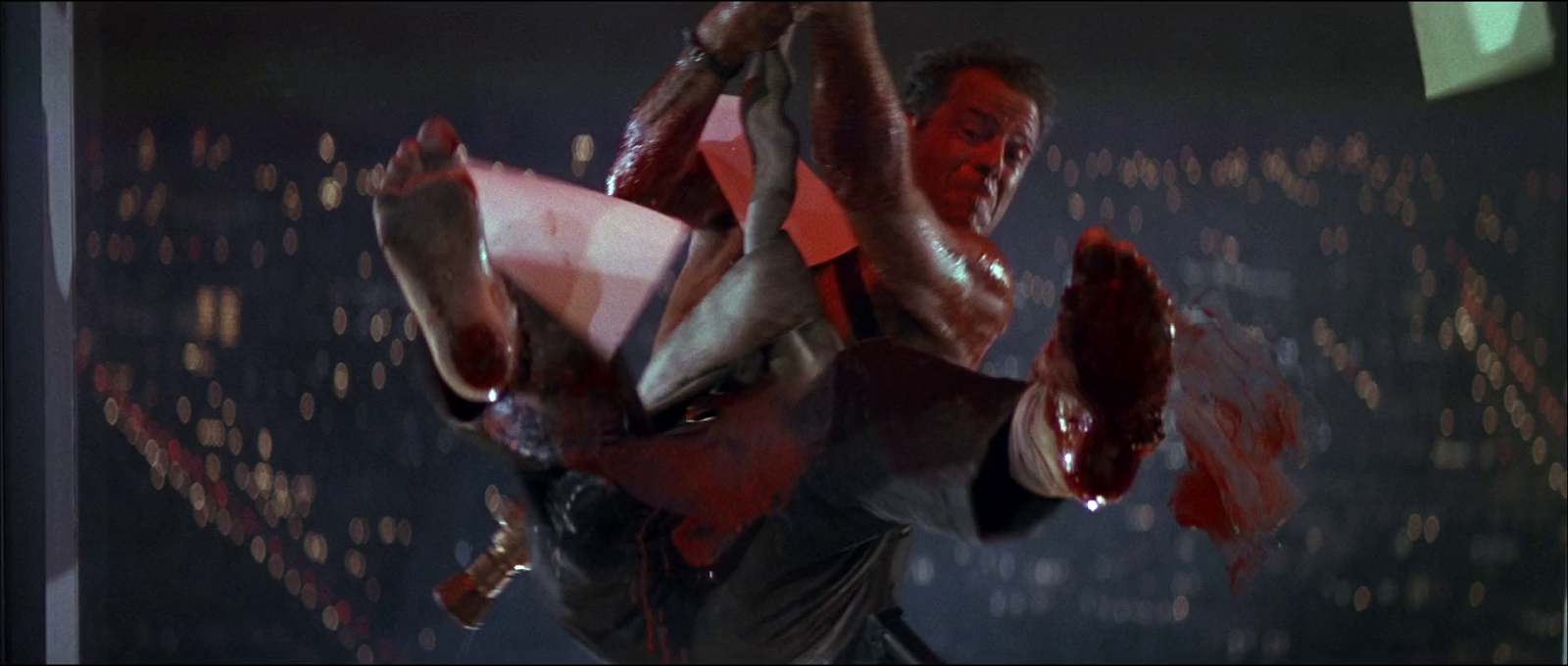
Unstoppable force, say hi to immovable object

There is something in this man's way
There is something in this man’s way

Pop quiz time!

Apart from advancing the story, theme and character development, what is the one key component every scene should contain?

Okay. Pencils down.

A big ol’ piece of pie to everybody who said “conflict”. Without it, your script’s on a one-way trip to Boringtown.

I recently became involved in a discussion with a starting-out writer who asked about the best way to describe how a sequence in his script could play out. After looking at the source material (based on true events), I said if he only writes what happens, there won’t be any drama to it. It needs conflict.

“Conflict how?” he asked.

That’s what it come down to, isn’t it? A lot of newer writers hear “conflict”, and they immediately think two characters are supposed to be arguing. Sometimes that might apply, but it’s not necessarily what it means.

Conflict is two opposing forces going up against each other, and those two forces could be anything (within the limits of your story, of course). Most of the time, one side will be your character and the other will be something or someone standing in their way of achieving their goal, be it immediate or overall.

Which would you rather watch? A story where everything goes just fine for the main character, or one where they’re always dealing with some kind of problem?

One of the great things about conflict is that it can come in any shape or form.

“What if a character opens a window?” was the follow-up question. “Where’s the conflict there?”

There isn’t any. If you’re reading a script and get to a scene that only involves a person opening a window, you’d think “What purpose does this serve?” and tell the writer to cut it.

The conflict would be if it won’t open. There’s a story there. Your curiosity is piqued. Questions are raised. Why won’t it open? Why do they want it open? What are they willing to do to get it open? What’ll happen after they get it open?

Conflict helps move the story forward. Part of our jobs as writers is to come up with new, original and imaginative ways to portray that conflict. The way I have the character open that window is probably totally different than how you would.

Even the central question of your story shows conflict: Will the main character achieve their goal?

While you work on your latest draft, take the time to examine each scene, even the ones only a line or two long. Is there conflict of some sort?

If there is, great. If not, you need to get some in there.