Active, not reactive – OR – C’mon, do something!

Never has a call to action been more necessary

As you work your way through your latest draft, among the numerous questions to keep in mind is “Is my main character the one driving things forward?”

It’s a common complaint: a protagonist who is too passive. How do you make sure they aren’t?

Start with this: Do they make things happen or just react to them?

Your story is about this character going through some ordeal as they try to achieve their goal. Are they taking the steps needed and doing what they have to in order to do that?

Their normal routine has most likely been drastically altered. How are they reacting to all these changes while trying to get things back to normal?

How does the character factor into each scene? Are they having some kind of impact? Does the outcome of each scene depend on them? Does what they do here get them closer to reaching their goal?

A scene can be about them even if they’re not part of it. Maybe it’s the other characters’ reactions or the ramifications of what they’ve done.

You don’t want a main character who just sits around, waiting for things to happen. Get them out there and throw them right into the thick of it.
Wanted: wonder, fun & excitement

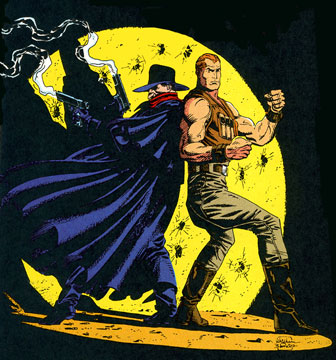
Seeking this kind of vibe

This was parent-teacher conference week, so my after-school parenting schedule was shaken up a bit. As a result, not as much time to work on the mystery spec rewrite.

So in an attempt to make the most of my limited time, and without my laptop with me, I opted to tinker with the outline for the monster spec.

Like any good writer, I had my ever-present notebook and story notes with me. Seriously.  I keep them in my bag for just such a situation.

The first act is really coming together, with most of the focus now on working out the details of the gaps between the plot points of Act Two. And as happened before, I’m having a blast.

At its heart, this story is a pure pulp adventure, which is exactly the mood I’m going for. Grab you from page one and not let go as it gains momentum from there on, building and building until finally culminating in a jaw-droppingly amazing, can’t-believe-I-just-saw-that finale.

Simply put, my objective is to create a simple-yet-solid story with three-dimensional characters, using the spectacle aspect as support that keeps things interesting.

Similar to how it was with the western, I’m a huge fan of the genre and know what I as a member of the audience would want to see. I’m not looking to reinvent the wheel here; just tell a fun story. Hopefully my appreciation and knowledge of this kind of material will come through on the page.

What it really boils down to is the more I can make this a smart and exciting thrill ride, the better.

As I work out the story details, I’m keeping this in mind: If there was a free-of-plot-details trailer for this, you’d be overwhelmingly compelled to want to see it.  (Sort of what they’ve done for GODZILLA and GUARDIANS OF THE GALAXY.)

The second half is all uphill

The first and last time I do a race like that. Maybe.

A few weeks ago, I did a half-marathon that was easily the hardest I’d ever done. The distance wasn’t the hard part – it was that most of it involved going up and down a small mountain. Radical inclines, steep dropoffs right next to the path, the whole shebang.

Sure, some of it was extremely daunting, and sometimes I had to walk, but I was determined to keep pushing until I crossed the finish line (2:22:26, which wasn’t too bad, especially taking that whole mountain aspect into consideration).

The whole time during that first half, as I was working my way up, there were two thoughts that kept me going:

1. Even though this is harder than I expected, I want to keep going and do the best I can
2. Once the halfway point is reached, it’s literally all downhill from here

While the first thought can easily be applied to writing a script, the second one – not so much.

There’s a reason the midpoint of a script is sometimes referred to as The Point of No Return. Not only is your protagonist now fully committed to achieving their goal, but so are you.

While their situation becomes more daunting and their goal more unreachable, it might feel just as insurmountable to you.  But, as I once again utilize the running analogy, your diligent training and extensive preparation have made you ready to take this on.

You know what has to happen between here and the end. The stakes are raised, and only you can ensure a satisfying finish. All you can do is dig deep, draw on your reserve strength and keep pushing yourself until you’re done.

Make sure you pace yourself and take your time. Rushing can only hurt you, so stay focused.  It may seem like the end will never arrive, but you’ll get there before you know it.

What’s great about finishing a race is you get a medal, and most likely the desire to do better next time. Finish a script and you’ve got a finished draft and hopefully the desire to make it better.

The story behind the story

Figure out how it works before you start, or things could get messy
Step 1: Figure out how it all works

A slightly altered holiday work schedule has resulted in more hours on the air, which is always nice, but less time cranking out pages, which isn’t.

So I make the most of the handful of minutes between reports with the always-reliable working on an outline. This time – the monster script.

Despite knowing the general playing-out of the story, there was something that wasn’t clicking. Most of the items on my mental checklist had been checked off.

Most. Not all.  What was missing?

It took the constant back-and-forth between the opening sequences of the two previous outlines to make me realize what it was: I’d never fully established what happened before the story started.

Not knowing how everything came about was preventing me from moving forward. I had to create this world before I could write about it.

Think of the opening crawl in STAR WARS (“It is a period of civil war. Rebel spaceships, etc. etc…”). It establishes what we need to know. Without it, we’d be too busy trying to figure things out.

Using that as an example, I worked out my own version of the opening crawl. It won’t be in the actual script, but it’s a pretty solid foundation for setting things up – a better realization of how this world works, what the antagonist wants and how that can be accomplished, the challenges the protagonist faces, just to name a few.

The work on this is far from being over, but developing this really helped. Some important blanks have been filled in and I’ve got a firmer grasp of how the story works.

Time now to start the latest version of the outline and see how it goes.

-Regarding the recent release of this year’s Black List. There appear to be a handful that sound pretty good, but the rest don’t really do much for me.

No doubt they’re all extremely well-written (why else would they be on the list?), but a majority don’t have that “Read me!” vibe. It probably doesn’t help that the writers are not the ones providing the loglines. I suspect that would make quite a difference.

Seeking the feng shui-ness of your script

A place for everything, and everything in its place

Got some great notes for my western spec. Some of the suggestions involve significant moments I hadn’t considered – now I have to figure out where these should take place. A daunting task indeed, but also not too challenging.

It’s one thing to plot out a story, but knowing how to do it effectively is a little more complicated.

You can’t just throw stuff in there and hope it sticks. Information has to be doled out appropriately so it not only fleshes out the characters, strengthens and advances the story and the plot, and most importantly, keeps the reader/audience interested.

If you’ve put together a solid outline (as you should before moving on to pages), all the help you need is right there in front of you. Take a look at how your story develops. Do things happen the way you want them to, and do they happen when you want them to?

As you work your way forward, are you seeing potential opportunities for where something could be added or possibly changed? Would that scene from way back near the beginning work better somewhere later on?

Once you find somewhere that scene could go, is it a good fit within the flow of how the story’s developing? Does it keep that forward momentum going while providing us with some kind of necessary information?

Take the time to figure these kinds of things out. It may be frustrating now, but once you work your way through it, you’ll have a better script and wonder what it was you were so worried about.