Ask a Script Consultant who’s also a Working Writer!

mark sanderson

The latest in a series of interviews with script readers and consultants who would be worth your while to work with if you want to get your script in shape.

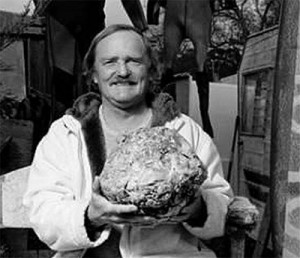
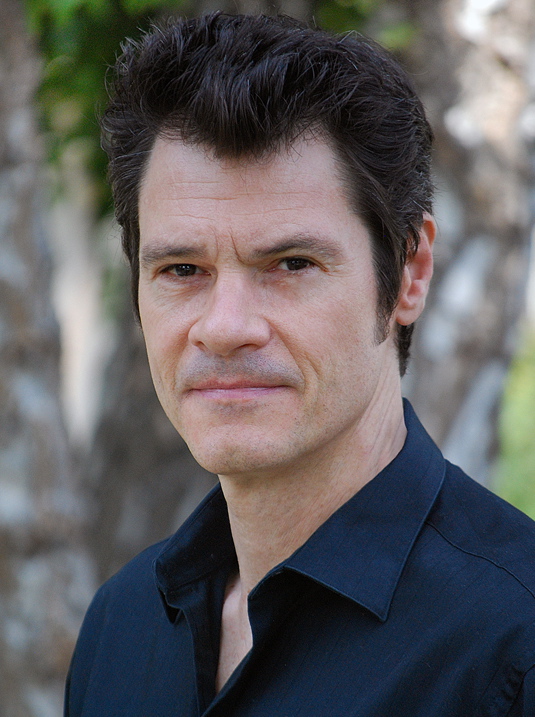
Mark Sanderson (aka @scriptcat) is a Los Angeles based screenwriter, script consultant, and sometimes actor blessed to be living his childhood dream of making movies with a spec sale and a dozen screenplay assignments that have produced seven films. Mark’s long association with award winning Hollywood filmmakers dates back to his first produced screenplay and has since worked with Academy Award® winning producers, veteran directors, and Academy Award®, Emmy®, and Golden Globe® acting nominees. He offers script consultation services on his website at www.fiveoclockblue.net and also offers advice on his screenwriting blog MY BLANK PAGE. Look for his upcoming book A Screenwriter’s Journey to Success coming out later this year on Amazon.

1. What’s the last thing you read/watched that you thought was incredibly well-written?

I don’t have much time to spend watching a lot of TV or movies, but the best writing these days is on television in my opinion. I manage to catch an episode here and there of shows, but don’t really spend a lot of time watching many series. When I watch movies, I tend to be really picky and very few films out there today don’t really draw me in—so I go for the classics. On television, I really thought the limited series Sherlock was excellent writing, Mr. Selfridge too, and I got hooked into the The Following for a while and that was good serialized writing. I’m just getting into the old pulpy Doc Savage novels from the 1930s and the writing is great and so visually ahead of its time. I read that Hollywood is planning on making a Doc Savage movie and if done right, could spawn a series of new films.

2. How’d you get your start reading scripts?

Well, I’ve had a professional screenwriting career for the past fifteen years and during the last few years I decided to open my consulting business on the side.  I’m always reading scripts even if I’m not consulting on them. I have a small group of writer friends and we trade our scripts back and forth for feedback.

3. Is recognizing good writing something you think can be taught or learned?

I believe it comes from years of learning and studying the craft of screenwriting. When writers build a strong foundation of experience reading scripts, studying structure, character, writing scripts, executing notes and mastering their craft—this is when they can finally give experienced and critical feedback if a script is good writing or not. It also is vital to know the language of cinema. I’m aware that some consulting sites farm out the reads to “readers” and one never knows who is actually reading the script or their experience level when giving notes.

4. What are the components of a good script?

It starts with a compelling story and something that you can clearly see grew from the writer’s passion for the material. Too many times I read scripts that are trying to chase after Hollywood’s big budget blockbusters and they fall short because the writing is boring, clichéd and trying to emulate something that has already been created. The scripts read like a rehash and not something original. A good script showcases the writer’s unique voice and the best of their talents. It has interesting characters that we care about and written in a fluid, efficient way that includes only what is necessary to keep the story moving forward. A good script also has a rock solid structure and a series of reveals, surprises, setups and pay offs that keep us captivated to read until the end or sit through the film until the lights come up in the theater.

5. What are some of the most common mistakes you see?

I’m shocked that many screenwriters still have no respect for the professional format of a screenplay. They believe the reader will look past the format and typos issues to see their genius idea and buy it for that alone. A script lives or dies by a thousand small details and considering the volume of scripts that bounce around Hollywood every year, the industry has no patience for unprofessionalism. Other common mistakes I see happen when screenwriters do not work from a solid outline or treatment before they jump into pages. Approximately three quarters of your work usually goes into the story even before you type FADE IN. Other mistakes come from overwriting and micromanaging the scenes. Aspirants need to learn what to put in a script—and equally as important what to leave out. I tell writers: “Stay the hell out of the way of the story.” Many are so eager to put their fingerprints all over the pages and that’s just ego. The best writing is when the screenwriter is almost is invisible on the page and the script reads as if you’re watching the film. I also find too many mistakes with structure and the story happening too late or not enough story to facilitate 100 pages. The set up in the first act many times is way too long. Hopefully these writers learn from their mistakes and focus on becoming better screenwriters by creating stories they are passionate about rather than chasing fame and fortune.

6. What story tropes are you just tired of seeing?

One big one that I can’t stand is the use of “Deus ex Machinaor using a contrived way at the end where a character or action saves the day. It shows lazy writing and ends the story on a weak beat leaving the reader unfulfilled. Another one is the “fall” or “twisted ankle” of a character escaping that is usually followed by the line, “Go on without me!” Another one I’m tired of seeing is the “I hate my job, my boss and do nothing but complain” routine.

7. What are the 3 most important rules every writer should know?

1. Disrespect the craft at your own peril. You will never be bigger than your craft because screenwriting is an ongoing learning experience.

2. You must become a collaborator and ultimate team player because if you grimace at their notes, they will brand you as “difficult” and not work with you again.

3. You may have to write five, six or seven specs over a period of years to even get one optioned or maybe sold if you’re lucky. But if you’re impatient and looking for fame and fortune, you’re in the wrong business.

8. Have you ever read a script that was an absolute, without-a-doubt “recommend”? If so, could you give the logline?

Well, I don’t give “recommends” because I’m not reading for a producer, but I do tell writers if they were successful in the execution of their idea. Screenwriting is all about the execution. Good ideas are a dime a dozen in Hollywood—they’re everywhere and it’s the execution of a script that’s vital to its final success. Yes, I did read a few scripts during the last year that were superb and written by experienced filmmakers—so that helped. I can’t give out the loglines as I have a non-disclose agreement with my clients, so I’m not allowed to discuss the elements of their projects with anyone.

9. How do you feel about screenwriting contests? Worth it or not?

Yes, many of the top contests are worth entering as a chance to “make some noise” and get noticed. Back in the day, I entered a spec in the Nicholl Fellowship and it ended up in the top twenty scripts out of thousands worldwide. They picked the top eight that year for the fellowship, but since I had placed in the next dozen, agents and mangers were willing to give it a read. Eventually it found a producer who championed the script and it was produced, played in film festivals worldwide, premiered on TV and distributed globally. But, be careful and read the fine print of the contest you are entering as some stake claim to your script if you win. Do your homework on the various contests and make sure you are putting out your best material that will properly represent your talent and ability. If it’s not ready, go ahead and miss the deadline because there is always next year.

10. How can people get in touch with you to find out more about the services you provide?

Screenwriters can find more information about my consulting services on my website at: www.fiveoclockblue.net. I’m also on Twitter: @scriptcat

11. Readers of this blog are more than familiar with my love/appreciation of pie. What’s your favorite kind?

Oh that’s an easy one…definitely a tie between boysenberry and cherry. I could eat both with ice cream as a “last meal” and die a happy man. Apple pie comes in a close third, but all pie should be heated.

Ask a Nicholl-winning Script Reader!

1465249_10202485687454053_1139689699_n

The first in a series of interviews with some script readers who would be worth your while to work with if you want to get your script in shape.

Today’s spotlight on: Doug Davidson!

Not only is Doug Davidson a Nicholl Fellow, but his script LETTER QUEST has the distinction of being the only animation script to ever achieve that honor.

1. What’s the last thing you read/watched that you thought was incredibly well-written?

DAWN OF THE PLANET OF THE APES. The most compelling character to hit the movies in a while is an ape. Caesar is a textbook protagonist. An extraordinary individual doing extraordinary things under extraordinary pressure. When you can end a movie by zooming in on the lead character’s face, and not have it feel cheesy, you know you’ve done something right.

2. How’d you get your start reading scripts?

I started in a screenwriting group, a large group that lasted several years. Early on, we agreed on always giving each other formal written feedback, because if you don’t have to write your feedback down, then you don’t think nearly as hard about it. When you put your feedback in paragraph form, you realize you have to make sense, you have to be consistent and you have to justify what you say. It gave me the discipline to write constructive, reasoned feedback instead of just tossing out opinions.

3. Is recognizing good writing something you think can be taught or learned?

Recognizing perfect writing is easy and intuitive. Anyone can do it. Recognizing the potential in a promising script that isn’t quite working yet, that takes more experience. And it takes a writer’s mentality. You need to study the craft for years. There are rules that are easy to memorize, but how to apply them, that’s much more difficult. Blindly applying the rules doesn’t lead to good writing, or good feedback.

4. What are the components of a good script?

The craft has to be there, and then there has to something else, a plus one. It could be funny comedy. It could be insight. It could be a new idea. That’s the “talent” part. You might think it’s this “plus one” that’s missing from most scripts, but I find the opposite to be true a lot of the time. Often a script has this amazing unique element, but the nuts and bolts of the story just aren’t in place yet. That’s when making the extra effort to put all the craft elements together really pays off.

5. What are some of the most common mistakes you see?

One of the most common mistakes I see is writers thinking a plot point (or character trait or thematic element) is clear on the page when in actuality it’s really not. At least not clear enough. It happens all the time, even to seasoned writers. That’s why feedback is so important. It’s not about saying your vision is wrong. It’s about saying your vision isn’t quite visible. Yet. The trick is to make sure everyone can see it.

6. What story tropes are you just tired of seeing?

Just about any story idea could work with the right execution. That said, I’ve come across a surprising number of scripts about screenwriters writing screenplays. Autobiography finds its way into most scripts, but it really helps to disguise it just a little.

7. What are the 3 most important rules every writer should know?

(1) Don’t (2) Give (3) Up.

8. Have you ever read a script that was an absolute, without-a-doubt “recommend”? If so, could you give the logline?

Nothing is absolute, but I’ve read more than a dozen really excellent unproduced scripts that I would recommend. I won’t go into the loglines here, but they’ve spanned just about every genre. I love to stay in the loop with the scripts I’ve read, especially the great ones. Several are optioned, several have placed very well in major contests and two have well known actors attached. Many of the writers of these scripts have secured representation as well. It requires some grit, but first-rate work will eventually get you places in this industry.

9. How do you feel about screenwriting contests? Worth it or not?

Screenwriting contests are absolutely worth it. It’s not the only path to success or a guarantee of success, but I know a fair amount of writers who have benefited greatly from contest placements. If you get an opportunity to read for a contest, I recommend that too. I’ve done it and learned a lot from the experience.

10. How can people get in touch with you to find out more about the services you provide?

My website is www.fourstarfeedback.com. I have a screenwriting blog there based on my experiences in the industry (and the numerous mistakes I’ve made). I’m also happy to answer specific questions via the email listed on my site.

11. Readers of this blog are more than familiar with my love/appreciation of pie. What’s your favorite kind?

I love pie too! I like to bake my own key lime pies. They’re pretty easy to do. I also love coconut custard, blueberry and anything with peanut butter. But my favorite would have to be . . . pecan. A great pecan pie has a sludgy quality – an intensely sweet sludge – balanced by a nutty crunch. Thanks for thinking of me, Paul! We’ll have to get together sometime for some coffee, and pie.

Deliberately avoiding referencing that song

A great mantra, but a little tired of hearing it over and over
A great concept in terms of editing, but a little tired of hearing it over and over

As I work my way through the hack-n-slash editing phase of the western, it’s getting easier and easier to cut something and not worry about if I’ve made the right decision.

Whole scenes, parts of scenes and lines of dialogue are wiped from existence, all with a positive result. Tighter scene(s), better flow of story, all creating a stronger efficiency of words.

Added bonus – script is already 5 pages shorter, and still have Act 3 to go.

(Counter to all of this cutting, placeholders have been identified as potential chances to add in a few lines for some character development.)

Re-reading this script has also made me realize how much I overwrite, especially with dialogue. I try to avoid extra verbage, but don’t see that’s what’s happened until long afterward. By then, it seems more like padding, so out it goes.

A lot of writers are hesitant to cut material or make drastic edits. They just can’t bring themselves around to killing their darlings, because they figure everything is just right the way it is.

Nope.

As much as you like that scene or dialogue, you have to be as objective as possible about your own work. Is it absolutely vital to the story and advance it in the best way possible? If you took it out, would it make any difference whatsoever, or at least have some kind of impact on the story?

I’d venture probably not.

Don’t be afraid to put that red pen to work and cut away! The pain of having to do so is minimal at best and lasts all of a microsecond or two. It’s more than likely that the next time you read through what you’re working on now, you won’t even notice its absence, probably not remember it ever being there and hopefully think “Wow, this draft seems a lot better.”

Here’s what you need to know

Not THAT kind of exposition

As the rewrite/polish of the mystery-comedy continues, it suddenly hit me that while I knew the backstory of what came before, somebody reading it for the first time would have no idea what was going on, or at least how we got here.

A little exposition was in order.

But among the many problems with writing exposition is when it’s out-and-out obvious.

“You mean your brother John, who went through a terrible divorce, ran off to join the circus and became a cross-dressing serial killer?”

Sometimes it’s done very effectively, but unfortunately, a lot of the time it isn’t, resulting in a blast of information crammed into one scene.

No thanks.

Rather than go down that road, I’m exploring the potential of doling out the details over several scenes. A sentence or two casually placed here and there so as to not draw attention to itself, all for the purpose of helping you learn where everything is coming from and how we got here.

It’s a work in progress, so we’ll see how it goes.

Building up to what it all comes down to

What he's holding represents what's at stake. Think about it.
What he’s holding represents what’s at stake. Hint: It’s not a rock

Time now for a very, very important question every writer needs to face:

Do you know how your story ends?

You come up with an idea, then proceeded to develop, shape, and organize all the stuff that happens in the middle, which eventually has led us to the where we find ourselves now: the big payoff. What the whole thing’s been about.

Everything your characters have been doing have been leading up to this. In theory, your first two acts have been about the protagonist’s world undergoing some drastic changes, how they dealt with it and now it looks like the bad guy’s going to win.

Which brings us to the grand finale that is Act Three, where our hero must somehow find a way to overcome these seemingly insurmountable odds, defeat the antagonist and hopefully come out of the experience a different person than the one they were way back when we first met them.

That being said, there’s still more to it.

-Your protagonist has a physical goal (what they want) and an emotional one (what they need). They can achieve both, just one or neither. Which applies to yours, and have you effectively steered the action to ensure that result? Can we see the changes they’ve undergone?

-Working with a subplot or three? If they haven’t wrapped up by now, better make sure to do it soon. Do you really want the reader to wonder “Hey! What happened to the part about ____?”

-Even a supporting character needs an arc to complete. Have you given each of them enough attention throughout the story to make this happen, and does their story wrap up in a convincingly believable way?

One of the most valuable lessons I’ve learned about putting a story together is that the central question (“Will the hero achieve their goal?”) is raised with the inciting incident around page 10, and each subsequent plot point raises it again, albeit with the stakes a little higher each time.

What happens in Act Three is where you show us how the central question is answered.

-And now, the much-heralded return of Movie of the Moment! This time, a way overdue look at GODZILLA (2014).

Wow. Everything PACIFIC RIM should have been. Instead of non-stop giant monster action, we get only glimpses as the focus is directed at the human aspect of the story. A much more effective approach.

While it’s not hard to suspend disbelief when it comes to a movie about giant monsters rampaging/duking it out in the downtown area of the city where I live, perhaps the most amazing piece of cinematic fiction (as observed by both K and myself) was in the background of one scene where a garage sign read “All-day parking $15”.

Now that’s make-believe.