I knew I’d forget to remember

Hmm. I don't remember buying string, either
Hmm. I don’t remember buying string, either

Yesterday I came up with a great subject for today’s post. It was going to be fantastic. Poignant. Relatable. Very informative. You would have loved it.

I figured there was no way I could not remember something this incredible.

And of course, just a few hours later, I totally forgot what it was. I can rack my brains all I want, but it ain’t gonna work. Maybe it’ll pop up again someday, but for now, it’s gone forever.

Jump to last evening. I did a little more work on the first quarter of Act Two of the monster spec, so I’m still up to that page 45 twist.

With my next objective now getting to the all-important Point of No Return (where your protagonist becomes fully committed to achieving their goal), the ideas for scenes between those two plot points starting popping into my head.

And I had no intention of letting them get away.

Lesson learned from earlier in the day, I immediately wrote some down, with more likely to be added later.

I probably won’t even use that many of them, but it’s still better to be able to pick and choose from a wide variety of readily-available options than to curse my lack of foresightedness and have nothing to work with.

Since we’re all creative types around here, we know full well that inspiration can hit anytime and anyplace, which is great. But are we prepared to capture it when it does?

Bet you’ll think “Oh, I’ll definitely remember.”

Please don’t, especially if it’s an idea worth keeping.

Pen and notepad in your briefcase or backpack, an app for dictating on your phone, an extra line on that document on your computer, whatever method works for you.

Taking those extra seconds to save an idea now can potentially prevent you from seemingly endless frustration in the future.

Let’s keep things simple, shall we?

This series was anything but easy to follow
Talk about confusing. This series was anything but easy to follow

A nice writing sprint for the monster spec outline resulted in getting to the page 45 plot point, which was great. But what it made it especially satisfying was realizing how to get there in the equivalent of a short, straight line.

No overly complicated story details. No sudden heading off in a totally different direction. Just THIS leading right into THAT, doing exactly what was intended.

One of the most important parts of presenting a story is that everything you need to know has been properly set up, and that it all flows smoothly from one scene to the next.

While you’re still in the plotting-everything-out stage, ask yourself “Is this easy to follow?” A lot of writers will defend their material as such, but that doesn’t necessarily mean it is.

This thing is practically a part of you. You’ve labored over it for what feels like forever, and you know the story inside and out.

We don’t, which means there’s a good chance someone reading it for the first time might not pick up on everything, which isn’t our fault.

Maybe you’ve thrown too much information at us, or just have too much going on that it’s hard to keep track of everything.

It happens, but it’s not the crisis you think it is. Don’t see it as laboring your way through yet another rewrite; it’s actually another chance to make your script better.

Think streamlined.

Strive to avoid unwanted bloat and confusion by constantly checking and re-checking that your story elements make sense, fit where they should and play an important part in telling the story.
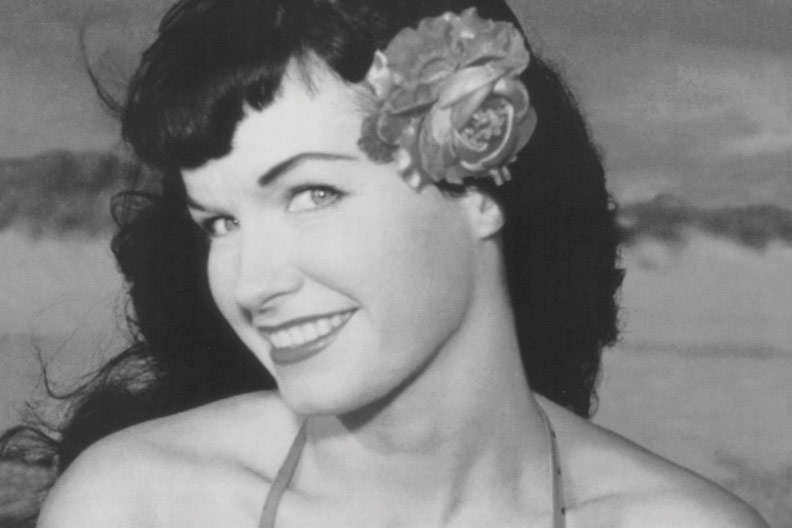
Introduce your character with character

BETTIE, mid 20s. Don't let her all-American looks fool you. Trouble goes out of its way to avoid HER.
BETTIE, mid 20s. Don’t let her all-American looks fool you. Trouble goes out of its way to avoid HER.

When we, the reader, first meet an important character in your script, how do you describe them? What are the important details?

A lot of the time, the emphasis is on their physical traits – “tall”, “imposing”, “blonde”, “handsome”, “drop-dead gorgeous”, etc.

Or maybe it’s a simple adjective or two – “bubbly”, “funny”, “a nice guy” and so on.

These are okay, but you have to admit they’re kind of dull, which makes it more challenging for us to be interested in wanting to follow their story.

So how do you fix this? Time to ramp up that creativeness and really focus on what kind of person this character is, rather than what they look like. Unless a physical description is a key character trait, don’t worry about it.

One of the most memorable intros I ever read described the best friend of the teenaged protagonist – “James Dean cool at 15.” That’s it. Pretty effective, and in only five words.

Doesn’t this give you a better idea of what this character is like than say, “cool and aloof?”?  This is the kind of writing that catches our eye AND makes an impression.

A former co-worker of mine used to describe a very talkative friend as “If you asked him what time it was, he’d tell you how to build a watch.” See how it goes beyond the good-but-simplistic “chatty know-it-all”?

Cliched as it sounds, we really are painting pictures with words – not just for the story, but the characters in it. You’re already crafting a unique and original story, so why not develop a unique and original way to tell us about the characters in it?

This isn’t saying you should always strive to be clever and witty about it, but at least try for something different. This is just a small part of showing off your writing skills.

Take a look at how you introduce the characters in your latest draft. Does it really tell us what you want us to know about them? If not, how could you rewrite it so it does?

I seek rewatchability

Never gets old. Never.

It goes without saying that any screenwriter is a movie buff. We have to be. It’s our love of movies that got us into this in the first place.

We’ve all got our favorites. Countless genres are spanned. Writers, directors or performers we can usually rely on for solid, quality work. Who hasn’t claimed to have seen a particular movie “over a hundred times”?

So what is it about them that makes us have no problem with watching them over and over, as opposed to seeing something once and being done with it, or maybe even abandoning ship around the halfway point?

A favorite film motivates repeat viewings. You’re enjoying the whole experience so much that when it’s over, you’re already looking forward to seeing it again.

Consider the films in your home collection. What is it about them that made you go so far as to want to own them?

For as much as I talk about STAR WARS, RAIDERS OF THE LOST ARK and BACK TO THE FUTURE, all of which I could watch over and over, I’m also perfectly content with something that doesn’t involve special effects, like TO KILL A MOCKINGBIRD, THE MAGNIFICENT SEVEN or SOME LIKE IT HOT.

What do all of these have in common? For me, it all boils down to fantastic storytelling with well-crafted three-dimensional characters, both of which also motivate and inspire me to be a better writer.

Which is what it all comes down to. The writing, which starts with us.

Not only are we striving to create a story, but we want to make them so amazing that they’re practically irresistible not only to the people who make the movies, but the movie-going public.

While working on that latest project, we imagine what the finished product would look like on the big screen and hope the audience is having such a blast watching it that they’ll want to come back for more.

But imagining is one thing. Actually making it compelling and involving is another.

We must continuously write, rewrite, hone and polish each individual piece of work to make it as involving and engaging as possible.

Not sure if yours is? Ask somebody. Writing group, trusted colleague, paid analyst. Doesn’t matter. Always be striving for greatness, my friends.

Our work is definitely cut out for us.  It’s hard enough to write a good script. It’s even harder to write one people want to continuously return to.

This, rather than that


It's going to take a while to find the right path
It’s going to take a while to find the right path

The past several days have been all about revamping the story/outline of the monster spec. The percentage of what’s being eliminated from previous versions continues to grow on a daily basis.

A lot of what’s left still needs to be fixed, or at least changed. As much as I love the original ideas, they just weren’t working.

Part of the problem was my stubbornness to consider alternatives, and the frustration over trying to force the creativeness wasn’t helping either.

As has happened before, I had to ignore what I wanted, and concentrate on what worked for the story.  This had to be slow, calculated and meticulous, but I had one slight advantage this time around.

Remember that whole ‘previous draft’ thing? Turns out a lot of the contents are becoming just what I need by applying “What if…?” or “How about…?”

(Yet another example of why you should hold onto your previous drafts – they’re a treasure trove of of potential material)

These questions are proving to be more than adequate in creating foundations for developing new material. By taking a slightly different approach, new and previously unconsidered alternatives are making themselves known.

It has definitely yielded some positive results, including a drastic reconfiguring of the antagonist – originally conceived one way, but after finally accepting that changes were necessary and much tinkering, now fits into the story a lot better, and also provides for stronger conflict with the protagonist.

Don’t be afraid to consider new ways or different approaches to what you already have. While you may think it’s perfect the way it is, chances are it could probably use some reworking.