From the archives: One happy fanboy

We’re preparing to take Ms V back for her final final year of school. Felt like the appropriate time to re-post this post from way, way back in May 2011 – when she was 8. This was a truly memorable experience, and I still have the shirt.

Enjoy.

There was no work done on the rewrite at all yesterday because I got to do something I honestly never I thought I’d get to: visit Skywalker Ranch.

If the name sounds unfamiliar, it’s the compound in Marin County (the one north of San Francisco) where George Lucas had set up Industrial Light & Magic after the success of STAR WARS.  ILM has since moved to the Presidio in SF, but Skywalker Sound and a lot of the administrative offices are still there.

A mom of another student at V’s school works at Skywalker Sound.  In fact, she won an Oscar earlier this year for Best Sound Editing for INCEPTION (her and two other guys).  One of the silent auction prizes at our school’s spring fundraiser was a private tour of the grounds.  Since there was no way we could afford that (I think it went for something like $275), I ran into her about six weeks ago at a school function.  I casually mentioned missing out on the opportunity to take part in the tour, to which she said she’d see if she could arrange something.

A few weeks later, I got an email saying that if we could be there during her lunch hour, she’d be happy to show us around.  Deal.

Our dilemma now was whether or not to bring V, because that would mean taking her out of school early.  My first reaction was it would be worth it, but the more we discussed it, we decided that this wasn’t an amusement park-type environment, but more an actual production facility, which your typical 8-year-old would probably find boring.

But I had heard they had a gift shop, so we’d get her something.

The Ranch is way out there on Lucas Valley Road, and it’s quite easy to drive right past it if you’re not looking for it. No signage; no big-ass Star Wars logo anywhere.  Just a nondescript driveway off a quiet country road.

You get through the gate and up to the security guard booth.  While the guard was contacting our friend, I couldn’t help but notice the EMT-type patch at the top of her sleeve.  Like a fire department logo, except with an X-Wing Fighter in the middle.  Cool.

We got our map and directions where to go, then drove ahead.

My first reaction was “It’s a lot smaller than I expected.”  And it is.  It’s not the sprawling estate I thought it would be.  Everything was a lot closer than the map indicated.

We passed the ball field, then the horse corral, the organic garden on the other side of the road, and then pulled into the Tech Building parking lot.  Our friend was waiting for us and took us inside.  The first thing you’ll notice is the abundance of movie posters for US films but in foreign languages.  They’re all over the place.

If you’re into sound or audio production, you’d feel as if you’d died and gone to heaven.  There are studios of varying size throughout the whole building, each equipped with sound boards that would seem more appropriate for the Starship Enterprise.  What was also cool was that the larger ones had a theatre-like design, so each room got the maximum results for what was being worked on.  We also got to see one of the humongous rooms that they would record orchestras in, complete with adjustable walls so you can actually tune the sound of the room.

Our friend is currently working on the sound for COWBOYS & ALIENS, but she didn’t show us any footage.  The movie comes out in July, and all of the post-production will be done up until just a few weeks before the release.  We found that very strange, expecting there to be more lead time between wrapping it up and the release, but apparently that’s become common practice for most studio films these days.

Although we were only in it for a few minutes, the screening room was simply incredible. About 300 or so seats with a nice big screen.  Apparently they were setting up for some kind of demonstration later in the day, but we got to see a short snippet of a scene from RAIDERS OF THE LOST ARK in black and white, but with only the dialogue sound.  No music, no effects; just “throw me the idol, I throw you the whip.”  It sounded strange to hear it like we were on the set.

Then we stopped in the Foley Room, where traditional sound effects can be created. Walking on certain types of surfaces, dropping, smashing or manipulating something to get a particular sound.  Very similar to how they did sound effects for old-time radio.

We were then asked if we wanted to see the main building, which is the one in the photo above. Very Victorian-era architecture, reminiscent of a New England beach house. In some of the cabinets just off the main door are the only proof that George Lucas is connected.  On display are some lightsaber handles (I’m fairly certain they’re the originals), the fertility idol from the opening sequence in RAIDERS, the Crystal Skull, an AT-AT model from EMPIRE, Indy’s hat and whip (also originals, I assume) and what I thought was incredibly cool – Charlie Chaplin’s cane and derby.  I’m pretty sure Lucas could afford to buy them.

Our first stop was the library, which is two floors, with a wooden spiral staircase and a gigantic stained glass window in the middle of the ceiling.  No matter what department you work in, you can come here and do research on whatever you’re working on to get the utmost in accuracy.  I asked if George’s office was in the building.  It is, but I thought it would have been presumptuous to ask if we could see if he was there.

I asked if the gift shop was here, but it was in another building.  We zipped over to another building.  The gift shop is a whole lot smaller than I expected.  We got a t-shirt for V, one of those EMT-style shirts for me (Millenium Falcon in the logo – nice!) and a pair of lightsaber chopsticks (Luke green and Darth Maul red, which also have magnets in the bottom for the complete double-bladed effect).

Our friend had to get back to work, so we thanked her and headed home.  On the drive back, K asked what I thought about what we had just done.  I said I was really glad we did it.  I also confessed that I couldn’t help but think I’d love to go back someday when they’re working on a film that I wrote.

That would be quite awesome.
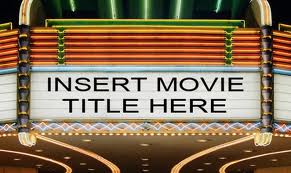
From the archives: Because ‘Journal of the Whills’ just doesn’t cut it*

How DOES it look on a marquee?

As part of the ongoing rewrite of the animated fantasy-comedy, there have been more than a few suggestions to come up with a title of stronger significance and impact. While I struggle with that latest wrinkle, here’s a post from waaaay back in February of 2013 about the same situation with an earlier script. I eventually did come up with one, and am confident I can do the same this time around.

In the meantime, enjoy this blast from the past.

*the original title George Lucas had for STAR WARS. Not as good, right?

After reading countless spec titles in places such as The Black List and Done Deal Pro, I’ve come to the conclusion that my script really needs to undergo a name change.

DREAMSHIP

It sort of just…sits there, when instead it should be grabbing your attention and making you think, “Cool! I’ve gotta see this!”

Examples: BACK TO THE FUTURE. CHINATOWN. DIE HARD. See what I mean? Solid. Succinct. To the point.

I may go back to the original title – THE AMAZING DREAMSHIP ADVENTURE. It feels like it does a better job of conveying what the story’s about and what kind of ride you’re in for, but I wouldn’t put it past me to try and tweak it a little more.

It was also suggested that since this is more of a family-oriented kind of story, I should go the HARRY POTTER route and include the main character’s name. I’m not sure how I feel about that.

Having a good, strong title is key because it and the logline create the first impression. Do an effective job with that and you’ve got their attention. Just make sure the script/story can hold onto it.

The possibility of successfully navigating an asteroid field is approximately 3,720 to 1

During a recent break from the writing, I saw a few posts on social media celebrating the 43rd(!) anniversary of the release of THE EMPIRE STRIKES BACK.

I was around for that. Proudly so.

I decided to give it another watch, mostly for nostalgia’s sake.

Even though I’ve seen it numerous times, this time felt a little different. I found myself watching it from a writer’s point of view.*

It made for a very different experience, involving continuously making mental notes and asking questions.

“How did this look on the page?”

“Wow, that dialogue gets right to the point without being on-the-nose”

“What an incredibly tight scene”

“Pay attention to how the characters are shown changing over the course of the story”

Just seeing how smooth the story flows, how tight the whole thing is, and how all the subplots are laid out really struck a chord for me.

THIS is how I want my scripts to come across.

I’ve already said that this current draft of my sci-fi adventure is all about getting pages written and holding off on editing/revising until it’s complete. That still applies.

But when I do get to that point, I’m already anticipating looking at each scene and trying to figure out what changes could be made to achieve that same level of tightness, structure, and efficiency.

And it’s just a coincidence about my script being a similar genre; this approach would help no matter what I was working on.

This is all just further proof that a writer’s education never truly stops, watching well-written films can benefit your own writing process, and that there’s always an opportunity to learn how to improve your writing.

*Full acknowledgment to credited writers Leigh Brackett, Lawrence Kasdan and George Lucas*

Q & A with Tim Schildberger of Write LA

Tim Schildberger is an experienced writer, script coach, and co-founder/Head Judge of Write LA – an annual screenwriting competition that gives writers a chance to get read by managers, and hear their winning script read by professional actors in LA (and posted on YouTube). He cares far too much about helping writers improve their craft and get access to the industry. Tim is an expat Australian, a former TV journalist, writer on the globally popular soap opera NEIGHBOURS, newspaper columnist, creator of a comedy/reality series for the Travel Channel called LAWRENCE OF AMERICA, and one of the key members of the original BORAT team. He has stories.

In his spare time, Tim is a husband, parent, tennis player, road tripper, and he and his family foster kittens. Seriously. Twitter: @write_la Instagram: @writela

What was the last thing you read or watched you considered exceptionally well-written?

I hate to be a cliche, but THE CROWN – sets the bar very high. Peter Morgan is a genius. His ability to tell story with and without words, and build tension in scenes that on the page might appear boring, is remarkable. THE QUEEN’S GAMBIT had similar skill, attaching us to an unconventional character quickly and effectively.  Feature films – I loved PALM SPRINGS – structurally, and characters/dialogue, and who doesn’t love a woman solving the problems using education and intellect!

How’d you get your start in the industry?

I was 22, living in Australia (where I’m from), working as a trainee TV News Producer. I had applied to newsrooms, and I’d called up various TV series, asking if they needed a writer. It was a simpler time. A nightly soap opera, NEIGHBOURS, let me do a writing submission, which they liked – and said they’d get back to me. In the meantime I got the job in TV news.

One day, six months later,  I got a call in the newsroom, it was NEIGHBOURS, asking if I’d like to write an episode. I said yes, obviously. They mailed me the scene breakdowns, I typed my script on a typewriter, and ten days later mailed it back. All after working a full day in the newsroom. I did that 5 more times before it all got far too overwhelming. I was the youngest writer they’d ever had, and that experience made it clear to me that writing, in all its forms, was my future.

What was the inspiration for creating the Write LA competition?

We wanted to create a competition we’d want to enter. I’ve been writing for a long time – and I’ve entered competitions large and small. I’ve won a few, placed in a bunch, and it became clear that many of the writing comps out there don’t really do much when it comes to attracting attention, gaining industry access, or launching careers. And pretty much none put any kind of focus on helping writers improve their command of craft. So our goal was to build a competition that somehow combined both goals – to help with the craft, and to help with the access.

What makes Write LA unique compared to other screenwriting competitions?

Two things I think separate us. First, we are a competition run by actual writers. So we are able to deliver a certain degree of respect and admiration for the act of actually finishing a script and entering it – that many competitions lack. We know how it all feels.

Second, we stand proudly in front of the competition. Everyone knows I’m the co-founder and Head Judge. When you email a question, it comes to me. I do an enormous amount of reading, and I’m supervising every aspect of the competition. We try hard not to be a faceless comp where sometimes it can feel like you’re sending your script into a void, and then hoping something emerges. It matters to us that the entrants feel ’seen’.

A big concern for writers entering a screenwriting competition is the quality/experience level of its readers. How does Write LA address that?

I hear that. And I’ve experienced it first hand. A script will make the Nicholl semifinals, and won’t make it out of the first round somewhere else. And then you get ‘feedback’ that feels like it was written by someone who never actually read the script, they just strung a few buzzwords together.

So to address that – I’m heavily involved in the reading process. I’ve handpicked our small team, I do a ton of reading personally, and I set pretty clear parameters when it comes to what I’m looking for when it comes to command of craft. Every script that makes it into our top 15 semi finalists will have been read by at least three different people, including me.

We give every script, whatever the genre, or whether it’s a TV pilot or feature, full respect and attention. And all the additional feedback (offered at an extra fee), is done by me personally. So there is a consistency of the feedback, and a name attached to it (mine). I’m not interested in telling anyone what I would do, I’m focused entirely on maximizing the opportunities presented by the writer and doing my best to empower them to bring the most out of their idea, and their skills. 

What do you consider the components of a good script?

Gosh – this isn’t easy to answer quickly, but I’ll try. For me, a good script needs fleshed out characters, who face clear challenges – no matter how big or small. Because no matter how detailed the world, or ‘big’ the story, if we don’t care about the characters, it’s all a waste of time.

Also, an understanding of the audience experience is awesome. A writer who is aware of audience expectations, and is able to manipulate those expectations is exciting. And finally, a clear sense of where the story is heading. Not a lot of extra clutter. Just a solid story, competently and confidently told.

What are some of the most common screenwriting mistakes you see?

Misuse of Scene Description is HUGE. Using it to reveal character details an audience couldn’t possibly know. Using it to show off a writer’s literary command – with all sorts of flowery descriptions that waste time, rather than establish ‘mood’.

Not writing an outline. I’m confident I can pick within 5 pages if a writer has an outline, and a firm idea of who this story is about, and where it is going. And taking too long to dive into story. Spending page after page building a complicated world, and then finally starting some sort of story – is a big mistake. Even STAR WARS had a brief title explanation, and then we were into Darth Vader storming Leia’s ship. The rest we figure out as we go.

Lastly, I have to add too many spelling errors. A sloppy script does not inspire confidence.

What story tropes are you just tired of seeing?

A character waking up, turning off their alarm, and getting into the shower as the first thing we see. Happens WAY more often than you would expect, and is not only dull, but unwise. What viewer who sits in a darkened movie theatre wants to see a feature film start that way?

I’m also not a fan of drawn out action sequences. It’s great that you see the car chase in your head, but all a reader cares about is ‘does someone important die?’

Oh, and a shot of ‘overdue bills’ on the kitchen table. Anything but that please. I see a lot of stereotypes with the characters too – which usually tells me a writer is basing a character on another character they’ve seen in a movie or on TV – rather than an actual, flawed, complex human being.

What are some key rules/guidelines every writer should know?

What you are doing is more about hard work than flashes of inspiration. It’s less about talent than it is about grind.

Accept that re-writing is inevitable. Your first draft will not be a work of art. It’s a starting point.

Learn to receive notes as comments on the words on a page, not a personal attack, or a statement on your writing ability.

Characters are more important than story nowadays. Put the extra effort into figuring out who they are, and their emotional journey through your story.

What you are doing is brave, and awesome, and you should feel very proud of yourself every time you finish anything. Every time. Plenty of people talk about writing something. You went and did it. That’s huge and should never be ignored.

There is no work of art in the history of human beings that has ever been loved by 100% of the people. Accept that your work will not be universally loved – because humans are humans.

Details matter. Every scene matters. Every line of dialogue matters. Everything you do is conveying a message to an audience. Understand and embrace that.

Have you ever read a script where you thought “This writer really gets it”? If so, what were the reasons why?

I read many scripts like that! I read hundreds of scripts a year, so I regularly find writers who are very skilled. As for reasons, I would say the absolute, clear number one is making me feel something. I’m not alone in this. I tell anyone who’ll listen if you can make a reader feel a genuine human emotion, that is FAR more important and impactful than any set piece, world, intricate story or cute scene description. It isn’t even close.

Also, it’s fun to read scripts by writers who think about the audience, and work hard to provide us with a rich, enjoyable experience. I know the expression “write what you know” is popular. My version is “write what you know, but make it accessible to strangers.”

And while I’m here, let me add that writing what you know really refers to your emotional experience and authenticity. Not your time in middle school. If you can dig into your emotional space, which is uniquely yours, and share that on the page – that authenticity connects you with a reader/audience, and goes a long way to establishing what the industry likes to call your “voice”. I’d like to say it was easy to do. It’s not. But it’s important.

Readers of this blog are more than familiar with my love/appreciation of pie. What’s your favorite kind?

I have to say I’m a big fan of custard. There’s a custard tart in my homeland Australia – a mini pie – which is very much my favorite. But as that doesn’t really exist here – I’m going to say I like banana cream, apple, peach, and I’m a big fan of all the cobblers and crumbles too. I don’t think I’d refuse any pie that came my way.

Q &A with David Schwartz

David Schwartz is a freelance screenwriter and script consultant. Prior to being a script consultant, he took a few screenwriting courses in college along with other film courses. After college, he continued working on his first feature and started submitting his scripts to a variety of screenwriting contests. In fact, his first feature made it as a quarterfinalist in the 2019 Bluecat Screenwriting Competition. He’s written several scripts, mainly short films, and is focusing on helping writers with their scripts!

What was the last thing you read or watched you considered exceptionally well-written?

In my spare time, I’ve been watching a variety of things, but as for shows that have been well-written, I’d say WandaVision and Bridgerton. I thought I wouldn’t like those types of shows because I’m not much of a comic book fan and had never heard of Bridgerton, but I find both shows enjoyable to binge. I’m usually someone who likes musicals, so this might sound a bit cheesy, but I’m really enjoying Zoey’s Extraordinary Playlist! It’s got humor, heart, and great songs that tell a story and moves the plot forward. At first I thought the concept sounded corny, but seven minutes into the pilot, I was hooked and became totally obsessed. I sometimes get emotional during that show. Oh, and I also like The Mandalorian.

How’d you get your start in the industry?

I started when I first took a screenwriting course in college. At first, I thought it was going to be a real challenge. Prior to taking the course, I had no idea how much work it takes to write a script. But after completing the course, I actually found screenwriting very enjoyable and took a few more courses to develop my craft. In fact, I’m still working on a script I started writing during one of my courses. After college, I continued working on my script and started submitting it to contests and paying for some feedback. After receiving feedback from professionals in the industry, I was inspired to start my own script consulting business.

Is recognizing good writing something you think can be taught or learned?

I think it’s a mix of both. When I look at a script, I can tell the writer’s experience based on their writing. For example, if someone has dialogue that’s flat or very on-the-nose, I can tell they’re just starting out. But then again, lots of writers, even professionals, tend to sometimes have some on-the-nose dialogue in their writing. When it comes to writing, I see myself as both student and teacher so it could go either way. When I read a script, my feedback is based on both what I’ve learned in my screenwriting courses and the feedback I’ve received on my own scripts.

What do you consider the components of a good script?

A good script in my opinion is a solidly structured story. If you don’t have a structured story from start to end, the reader tends to lose interest early on. I’ve noticed this in more than a few scripts I’ve read, but it can be easily fixed. Before anyone starts writing, I’d suggest having a beat sheet so the writer has a blueprint of their script from beginning to end. Another component of a good script is conflict. Every scene, whether it’s big or small, has to have conflict. And finally, character development is extremely important. I love seeing characters develop from start to end, and that’s what makes movies great.

What are some of the most common screenwriting mistakes you see?

The most common mistake I see is sometimes the writers will start their script with the inciting incident at the very beginning and continue on from there. The problem with this approach is I don’t get a sense of who the protagonist is as a person. I don’t necessarily have a reason to root for them to achieve their goal over the course of the film. That’s why I strongly recommend writers have a beat sheet before they jump into writing their script. It’s going to make things so much easier for the reader and the script is going to be a smooth read. (If you want to know more, I’ve written a blogpost about it.)

What story tropes are you just tired of seeing?

I’m kind of tired of seeing love triangle plotlines. If I wanted to watch a love triangle plotline, I’ll just rewatch Friends. I also hate it when two people are having a conversation in the car and the driver takes their eyes off the road and continues talking with the passenger for 30 seconds or longer. Seriously, it irks me a bit.

What are some key rules/guidelines every writer should know?

Don’t be boring.

Every scene must have conflict and serve a purpose. Additionally, each scene needs to drive the plot forward.

If you have writer’s block, keep writing and come back to it later.

It’s okay to take a break every now and then. Sometimes it’s best to rest after 2 hours of writing nonstop.

Don’t be afraid to ask for help.

Have you ever read a script where you thought “This writer really gets it”? If so, what were the reasons why?

I remember reading a script a while ago where it was a bit hard for me to provide critical feedback on their script because it was so well-structured. I was in awe of their script and in fact, made a few minor suggestions to them in the feedback. A few months later, they posted in one of the Facebook screenwriting groups that their script made it to the quarter-finals in a screenwriting contest.

How do you feel about screenwriting contests? Worth it or not?

It depends on the contest. Some contests, like Bluecat for example, have a reasonable price and the feedback is free. The best part is writers can resubmit their scripts twice, which is nice. But not all feedback is free, and you have to pay an extra fee to get feedback on your script. Plus, depending on where you’re submitting, the contests can be very competitive. As a script consultant, my goal is to help writers develop their craft before they start submitting their work to the professionals in the industry.

How can people find out more about you and the services you provide? 

Check out my website: www.davidschwartzconsulting.com. I’m also on Instagram: davidschwartzconsulting

Readers of this blog are more than familiar with my love/appreciation of pie. What’s your favorite kind?

I’m going to go with apple pie. Mmm…apple.