Q & A with Lisa Gomez

IMG_4867

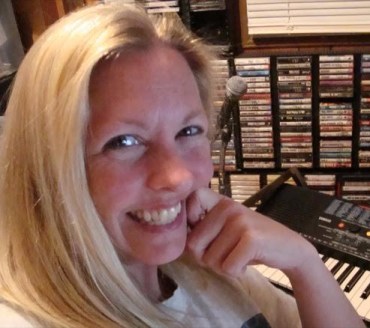
Lisa Gomez is a Los Angeles-based screenwriter, novelist, songwriter and a professional story analyst for The Black List. They write screenplays, songs and novels with their twin sister. Together, the twin siblings have placed in the Top 50 of the Academy Nicholl Fellowships in Screenwriting and are represented by Empirical Evidence.

The twins are working on 3 original pilots; a 30-minute dark comedy involving an asexual lead character, a biopic drama pilot in the vein of THE QUEEN’S GAMBIT and a female-driven SHERLOCKian-inspired pilot. Lisa is currently obsessed with Marvel, Disneyland, matcha, and reading as many books and comic books as they possibly can.

What was the last thing you read/watched you considered to be extremely well-written (any medium)?

The pilot of BARRY. It has everything that makes a story compelling and unique. Professional screenwriters have always given aspiring screenwriters these three bits of advice when setting up a character and a world: 1) Start the story with your main character doing something interesting.  2) Show the main character’s day to day, show the audience what a typical day in the life of this main character looks like. 3) Show the audience the main character’s problem. Well, in a whopping 30 minutes, this show delivers all of this and sets up the promise for more.

[Spoilers for the pilot of Barry ahead]. The very first moment of the show shows Barry walk into a hotel room, holding a gun while the camera mostly focuses on the dead body that’s lying on a bed with a bullet through his head. Immediately, this sets up the main character doing something interesting… okay, so, he’s a killer. Possibly a hitman. Whoa, that’s interesting. Then, it shows Barry’s day-to-day. We see him fly home on an airplane, get annoyed at a fellow passenger that opens a window to let the light in (a subtle but effective metaphor), then he plays video games, alone, and takes a shower, alone. Immediately, we get it. This is one lonely and depressed dude that gets no fulfillment from killing.

So, within the first five minutes (and theoretically the first five pages of a screenplay), Barry sets up the main character doing something interesting (killing someone), shows the main character’s typical day to day (he flies home after a hit, he’s alone, bored and does nothing substantial besides killing) and sets up what his problem is (that he’s depressed and gets no fulfillment from his job). It’s a pitch-perfect setup to a show. One could argue that the set-up is traditional and therefore cliché. But because this is a unique character and the premise is so bizarre, Bill Hader and Alec Berg made this setup interesting and makes the audience clamoring for more. And this is all just the first five minutes… if you haven’t seen this show, please do. It’s a masterclass in writing.

One of your job titles is story analyst. What does that job entail, and what are your responsibilities?

A story analyst is essentially someone who gives script coverage for studios, production companies and agencies. In other words, someone who receives a script and has to write notes on that script, on what’s working and what’s not working with the script, if I would pass, consider or recommend the script for the agency/studio/company. I have to read the script in its entirety, write a synopsis of the script, write a logline, describe the main characters and then write comments on why I would pass or recommend the script. Occasionally, in my notes, I offer solutions to story problems.

How’d you get your start doing that?

This is a fun story. My sister actually found an internship listing for a script coverage reader for a literary agency on entertainmentcareers.net. I applied and got the job. I did that for about a year. Then, as luck would have it, a Nicholl fellow walked into my retail job and I recognized him because he spoke at one of the classes that I took at UCLA Extension. We got to talking and he said he could refer me to a low-paying but highly regarded script coverage job. I applied, had to do test notes on a script and then got that job.

Once I started getting more and more experience, I had screenwriting friends I’d met in various networking events in LA refer me to different script coverage jobs. Every friend I met through networking was an aspiring screenwriter that eventually got a job in the entertainment industry and either reached out to me about the script coverage job or I would ask if they knew about any script coverage jobs. This is truthfully the first time I finally understood the importance of networking in this city.

When you’re reading a script, what about it indicates to you that “this writer really gets it (or doesn’t get it)”?

First and foremost, the grammar. I know, that seems like such an obvious answer but it’s true. You would not believe how many scripts I read that have beyond atrocious spelling and grammar. Sometimes the ends of sentences don’t have periods. I wish I was joking.

Secondly, clarity. What do I mean by that? Clarity is probably the easiest and the hardest aspect of writing a great screenplay. Easy because once you put on the page exactly what you want the reader to know, you’re done. Hard because putting exactly what you mean on the page is very very difficult. This is why script coverage or having someone read your script is helpful. It can point out the areas that the writer thinks makes sense but in reality, it doesn’t and it only makes sense to the writer.

Clarity, for me, means a few things. One, that the writing makes sense. For example, if you’re writing an action scene, please write description that is easy to follow and easy to read. The worst thing you can do for a script reader is make them read lines of description a few times in order to understand what’s going on. We get bored and frustrated.

Secondly, that the character’s arcs, story and plot is clear. It sounds simple, but again, most scripts don’t have this. I think it’s because the writer knows the story so well that the writer forgets to put in important and obvious things. For example, I was doing coverage on this script where the main character was queer. It was a very interesting main character, but I didn’t understand why this character’s queerness affected their journey because every character that interacted with this character loved and relished their identity. The writer then told me “Oh, because this story takes place in 2010.” BAM! I now understand the context of the story. But that date was nowhere in the script. It could be little details like that that can make a script clear or unclear.

What do you consider the components of a good script?

Clarity/conciseness. No one wants to read a script that doesn’t make sense, or rambles on too long. Make it sweet and to the point. And make it fun and interesting to read.

An interesting main character that has an interesting and relatable problem. So many scripts I read don’t have this in its entirety. Especially the relatable part. The main character might have an interesting problem, but it’s something that literally no one on this earth can relate to.

When the main character has a goal that’s actually attainable, but also difficult. This is something I don’t see all the time. What’s really important is that your main character has the skills to defeat their problem/the antagonist but it’s still difficult. A great example of this not happening is Star Wars: The Rise of Skywalker. Sure, you know that Rey is strong, but you don’t know specifically how Rey will be able to defeat Palpatine. This makes the story boring because the audience can’t participate in her journey in how she can do that. She just defeats Palpatine. It’s not set up how she can. It just happens. This is story suicide.

The script is great if it has something to say. What is your theme? What is your unique point of view on the world? Not only that, but what is your unique point of view on a specific theme? For example, everyone writes about redemption, but what are you trying to specifically say about redemption? Are you saying it’s not possible (Barry), that it is possible, but a very hard road (Bojack Horseman), or are you saying that it is possible (Star Wars: Return of the Jedi)?

Interesting situations/scenes. If you have a scene where two people argue, that can be boring. If you have a scene with two people arguing in the middle of a mall, that instantly makes it more interesting.

Great dialogue. If you have dialogue I’ve heard before, that makes me cringe. If you have dialogue specific to the character and only that character can say it, it makes me happy.

What are some of the most common screenwriting mistakes you see?

The way screenwriters describe women as beautiful, sexy, or simply defined by their looks. It’s disgusting, objectifying and just plain terrible. It’s 2020. Women have always been complex. It’s time to write us as such.

Too much description. Description writing is very hard, but please don’t have paragraphs and paragraphs of description. Try to write what only needs to be in the script but as simply and concisely as possible.

Cliché dialogue. A lot of the scripts I read have the following lines: “It’s too late!” “You really don’t get it, do you?” “Hi, my name is [blank].” “So, are you new around here?” It’s exhausting. We get it. You’ve seen a lot of movies. Please prove it by not giving us these lines that we’ve all heard a million times. Sometimes it’s inevitable. You have to. But please try to the least you possibly can.

What story tropes are you just tired of seeing?

One-dimensional women. I promise you, women are human beings that have ambitions and feelings that don’t revolve around men.

What are some key rules/guidelines every writer should know?

Write from the heart.

Write with something to say.

Get your first draft out as quickly as possible.

Even if you don’t like outlining, do it.

Read screenplays. They’ll help you write screenplays.

Live life.

Enjoy the process of writing.

Show your writing to people who will give you honest feedback.

Have a clear structure in your story.

Pitch your show/movie idea to your friends. If they don’t like it, either fix what’s wrong with the premise or think of another idea.

Screenwriting contests. Worth it or not?

Yes. Contests are great for deadlines and keeping yourself accountable. Because, if you’re paying that submission fee, you want to submit the best work that you have. However, don’t make your entire screenwriting identity about contests. I did and that got me nowhere. Use them for deadlines and don’t think about them after you submit. Just write the next script.

Follow-up: You’ve placed in the top 50 of the Nicholl. What was the script about, and what happened for you and/or the script as a result?

The Academy Nicholl Fellowships in Screenwriting are amazing. I’ve had friends become Nicholl Fellows and I’ve had friends in the top 50. We all have similar experiences.

That script was co-written with my writing partner, my twin sister. It’s a biopic about the nine weeks that Vincent van Gogh spent with fellow artist and rival Paul Gauguin. What started off as a friendly rivalry between them ended with Vincent cutting his ear off. It was my sister’s and I’s first screenplay… and it was the first draft. When we were announced in the top 50, we got about a dozen e-mails from huge agencies… I’m talking, CAA, WME, Anonymous Content, you name it… we sent them our script and then… crickets. I believe this script wasn’t ready and I also don’t think we sent them out to the agents and managers that would respond to our type of script anyway.

Here’s my biggest piece of advice if you place highly in a reputable script contest: contact the managers and agents you want to or agents that represent writers that write similar scripts to you. If my sister and I did that, I think we would have been represented by now.

How can people find out more about you and the services you provide?

Due to an ever-expanding list of projects, I’ve had to suspend my script consulting services.

Readers of this blog are more than familiar with my love/appreciation of pie. What’s your favorite kind?

Aye, there’s the rub. Unfortunately, I have a gluten and lactose intolerance, so I can’t have pie unless it’s gluten-free and dairy-free. I know, it’s a sad existence. However, if I could have any pie, I personally love apple pie. Maybe because when my stomach could handle those pesky ingredients, I would always love getting apple pies from McDonald’s during my youth and that taste just brings back good, happy childhood memories.

apple pie

Q & A with Marlene Sharp

Marlene.Sharp.Halloween.2019

Marlene Sharp is a creative and business-savvy entertainment multi-hyphenate who originally hails from New Orleans but is now a (San Fernando) Valley girl. Firmly ensconced in LA life, she currently serves as the Head of IP Strategy and Acquisitions for Rainshine Entertainment and its dedicated animation divisions Kinsane (kids and family focus) and Raijin Studios (animation for teens and grown-ups).

Formerly, as Producer, TV Series, at Sega of America, Marlene worked on much more than the Teen Choice Award-nominated Cartoon Network series SONIC BOOM. For example, her Hedgehog duties took her to the heights of nerd-dom as an official San Diego Comic-Con 2017 panelist.

 As a freelance journalist, Marlene concentrates on pop culture for buzz-worthy fan destinations, such as DOGTV, ToonBarn.comGeekified.net, and CultureSonar.com. As a short film auteur, she has snagged recognition at the Kids First! Film Festival, the Canine Film Festival, the San Luis Obispo Film Festival, and many more.

Marlene is the proud winner of 2019 LA Shorts International Film Fest Script Competition (an Oscar and BAFTA-qualifying fest), at which her backdoor sitcom pilot received a staged reading by The Groundlings. And as a human being, she loves dogs. For proof of the aforementioned, please see her website www.pinkpoodleproductions.com.

What’s the last thing you read or watched that you thought was incredibly well-written?

I love Shia LaBeouf’s screenplay for his autobiographical film Honey Boy. The storytelling is clever! 

Podcasts are a relatively new obsession of mine, and there are a few standout wordsmiths. American Scandal (Lindsay Graham); Broken: Jeffrey Epstein (Adam Davidson, Julie K. Brown); Gangster Capitalism (Andrew Jenks); and Hitman (Jasmyn Morris) immediately come to mind.

How’d you get your start in the industry?

My start in the biz was almost my end in the biz. I was bitten during pre-K and subsequently began serious research on kids in show business. Sesame Street was the inspiration. It seemed like a neat place to be, and I wanted in. During grade school, I devoured library books about stage moms and such, and then told my mother that I needed an acting agent. She said ‘no’ and encouraged me to play with my Barbies instead, which I did in earnest. She continued tough love at every turn and for many years. When I declared a Drama/Communications major in college, though, it was time for the Sharp family to face the music . . . and drama! 

Is recognizing good writing something you think can be taught or learned?

If one is industrious enough, then one could self-teach. For today’s inquisitive, budding writer, there are so many resources (many are free or low cost): books, eBooks, seminars, writers’ groups, classes, online classes, podcasts, YouTube videos. Perhaps the best resource, though, is actual content consumption, especially in the genres that one loves best. 

What do you consider the components of a good script?

Relatable characters and story, clever dialogue, and an unexpected plot turn or two are elements of my favorite scripts. Good non-sequiturs also tickle me!

What are some of the most common screenwriting mistakes you see?

Spelling and grammar errors abound. They’re everywhere!

What story tropes are you just tired of seeing?

I’m really tired of the deus ex machina that recur in garden-variety superhero/fantasy movies, such as the uber hero or uber anti-hero – with his/her signature moves – who appears at the eleventh hour. In my opinion, Joker is groundbreaking (and therefore entertaining), because it discards the usual cliches.

What are some key rules/guidelines every writer should know? 

1) Spell check

2) Proofread

3) Patience, and lots of it.

Have you ever read a spec script that was an absolute, without-a-doubt “recommend”? If so, what were the reasons why?

Yes! A spec script for The Simpsons by my friend Adam Kosloff. The premise is absurd and hilarious. Adam and his writing partner nail Bart’s character; he becomes a grilled cheese celebrity chef. The humor is magical, laugh-out-loud funny. I’ll never forget it.

How do you feel about screenwriting contests? Worth it or not?

Definitely worth it! Such cost-effective personal marketing! Highly recommend!

How can people find out more about you and the services you provide?

1) My business website: www.pinkpoodleproductions.com

2) My script and bible doctoring services: www.wefixyourscript.com 

3) My CV: www.linkedin.com/in/marlenesharp

4) A few of my credits: www.imdb.me/marlenesharp

Readers of this blog are more than familiar with my love/appreciation of pie. What’s your favorite kind?

A solid tie between pumpkin and chocolate!

pumpkin pie 2chocolate pie

All that on a single piece of (digital) paper?

bad 1st impression
It can only go downhill from here

You only get one chance to make a good first impression. And that also applies to a screenplay. If your first page doesn’t make us want to keep going, why should we? Chances are the rest of it is exactly the same.

The first page is your golden opportunity to start strong straight out of the gate. Show us from the absolute get-go you know what you’re doing. A lot of the time, I’ll know by the end of the first page what kind of ride I should be expecting.

Just a few items to take into consideration.

-First and foremost, how’s the writing? No doubt you think it’s fine, but face it. You’re biased. You want a total stranger to find it fault-free, so look at it like one. Is it easy to follow and understand? Does it flow smoothly? When I read it, do I get a clear mental image of what you’re describing? Does it show, not tell?

-Is there a lot of white space? Are your sentences brief and to the point, or do they drone on and on with too many words?

-Do you point the reader in the right direction and let them figure things out, or at least get the point across via subtext, or do think it’s necessary to explain everything, including what a character is thinking or feeling? Yes, that happens on the first page.

-If your protagonist is introduced here, are they described in the way you want me to visualize them for the next 90-110 pages? Does a notable physical characteristic play a part in the story? Are they behaving in such a way that it establishes the proper starting point for their arc? Are they doing something that endears them to us, making us care about them?

-If your protagonist ISN’T on the first page, does it do a good job in setting up the world in which the story takes place? Do the characters introduced here play any kind of role later on in the story?

-Are there any mistakes regarding spelling or punctuation? Are you absolutely sure about that? SPELLCHECK IS NOT YOUR FRIEND. A team does not loose a game, nor do I think they should of won either. Two glaring errors that your software will not recognize. But a reader will.

-Does it properly set up the genre? If it’s a comedy, should I be prepared to have my sides ache from laughing too hard? If it’s a horror, should I make sure the lights are on, even if it’s 12 noon? If it’s a drama, should I have a box of tissues within arm’s reach to dry the expected river of tears?

-Do your characters sound like people saying actual things, or are they spouting nothing but exposition and overused cliches?

Not sure about any of these? Read it over with as critical an eye as you can muster, or get help from somebody within your network of savvy writing colleagues. DO NOT go to somebody who doesn’t know screenwriting.

Think I’m being overly critical? Ask any professional consultant or reader, and I bet 99 out of 100 will say they know exactly what kind of read they’re in for by the end of the first page. And number 100 might also agree.

Then again, there’s also the possibility that the first page could be brilliant and it stays that way until FADE OUT.

Or the wheels could fall off anywhere between page 2 and the end.

Your mission, and you should choose to accept it, is to make that first page as irresistible as you can, grab us tight, and not let go. Make us want to keep going. Then do the same for page 2, then page 3, page 4, etc.  Make us totally forget what page we’re on.

Take a look at the first page of your latest draft. Does it do what you and the story need it to?

-Didja notice the spiffy new look? Had to make some behind-the-scenes changes, and this is the result.

Proofreading Q&A panel – part 1

Tammy Gross
Tammy Gross
bill.and.puppy.girl.cropped (1)
Bill Donovan and friend (Bill’s the less hairy one)

When you read a script, it’s not just about “Do I find this story interesting?” or ” Why should I care about these characters?”. There’s also “Does it look like a professional script?”

That’s where proofreading comes in handy.

This week offers up a 2-part panel discussion with professional proofreaders Tammy Gross of proofmyspec.com and Bill Donovan of screenwritingcommunity.net to discuss proofreading and its connection with screenwriting.

Enjoy.

How exactly does one proofread a screenplay? What are some of the things you’re looking for?

Tammy Gross (TG): That’s a loaded question! For me it boils down to what I call “the language of screenplay.” Spec screenplays need to be streamlined, devoid of technical distractions and written in a cinematic style that transports the reader to the theater.

And, of course, it’s my job to fix all the “errors.” In context, misspellings and bad grammar are often intentional and work better than perfect grammar and spelling conventions. However, you gotta know the rules to break them. And there are many ways to format some things, though the best is always whatever is clearest, most economical, and relevant to the story.

My job is to make a screenplay easy, fast, and fun to read – and up to professional standards. So I look for anything that gets in the way of that.

Bill Donovan (BD): My service is a bit of a hybrid. I give some story and screenplay structure notes as well as proofread and copy edit. The proofreading/copy editing part covers:

— Typographical errors
— Spelling errors
— Grammatical errors
— Punctuation errors
— Capitalization errors
— Verb tense errors
— Sentence structure and clarity problems
— Basic formatting mistakes
— Cramming in too many words
— “Saying” when you need to show

What’s the difference between editing and proofreading?

TG: When it comes to screenplays, it usually is a matter of time and thoroughness. Proofreading should be the last step before submitting a screenplay to anyone for consideration. In a perfect world, a screenwriter will go through various phases of self-editing. Once it’s polished, it should probably receive a copy edit to have fresh eyes to catch all the formatting, consistency, and text issues. After it’s been cleaned up and the story is solid, it’s time for proofreading. And the depth of proof-editing depends on the writer’s level of proficiency.

I take it a couple steps further than most. First, I create a style sheet to ensure that preferences are observed and maintained throughout. I also work very hard to help the screenwriter understand the edits I’ve made so they can grow in their craft. I’ve seen writers improve from script to script as a result. Some have gone from disaster to master.

BD: There are key differences. Proofreading, strictly defined, is a bit more limited. It involves fixing actual errors, such as typos, missing words, missing punctuation or wrongly-placed punctuation, capitalization errors and other outright mistakes. Copy editing covers all of those mistakes and also addresses larger issues of clarity, such as fixing a sentence or paragraph which may be grammatically correct but is vague.

I have great difficulty leaving a badly-written sentence or paragraph alone even when it might be okay in strict proofreading terms. Since I make my changes in colored type, I figure that the writer can go in and change it back if he/she prefers his or her own phrasing.

For example, some of my clients write much of their scene description in partial sentences. That’s fine if you can do it well. However, most of the writers who come to me do not write partial sentences well. The meaning is clear to them because they know what they mean. However, if it’s not clear to the reader, I fix it or give the writer a note suggesting that he or she fix it.

A lot of writers might say “I can do just as good a job proofreading it myself.” Your response?

TG: In nine years I’ve read only one screenplay that was error-free, including shorts. The biggest mistake even the most experienced writers make is assuming that because they understand some mechanics, they have a full grasp of format. While everyone claims there are no “rules”, there really are guidelines that are basically rules. Very few writers can keep up with the latest standards the way I and other professionals (hopefully) do.

My favorite trick for self-editing is to simply read backward from bottom to top. But it won’t catch everything. Most quality scripts go through many revisions and rewrites. It’s bound to pick up some introduced errors along the way that you become blind to.

BD: If you’re very good at English language usage, and if you’re an experienced editor, and if you walk away from it for a while, and if you then focus on every word and every bit of punctuation for all possible mistakes from overall clarity down to missing commas, yes, you can.

But will you? For example: I’ve sent out email blasts for my proofreading service about 15 times in the past 15 months. Three times, recipients have written back, gleefully and snidely, “Ha-ha! I found a typo in your email blast.” They were right. How could I make such a mistake, in a blast advertising proofreading, when I have thousands of pages of experience as a proofreader and copy editor? I know exactly how: The mind tends to gloss over the tiniest little details of that which you have written yourself, and you become both tired of reading it and eager to get it out.

What are some common mistakes you usually see?

TG: I have a very long, and boring list of words and format issues I plan to turn into a book once I can figure out how to make it fun and simple to reference. The usual suspects: its/it’s, your/you’re, there/their/they’re, lie/lay. A baffling but common one is “draw” instead of “drawer.” Possibly the biggest peeve and most common issue is passive voice.

There’s also a zeitgeist in the editing world. One year something like “clinch” vs. “clench” needs fixing in every script (or manuscript) I read, then the next year everyone is misspelling or misusing “rifle” vs. “riffle.” It’s weird.

Also, some things in spec writing evolve, so things that were “mistakes” five years ago are perfectly normal or even preferred today. I work hard to keep up on the current trends and roll with the changes, but I’ll probably never accept “how r u” for spoken dialogue.

BD: This is the short answer. I maintain a document on common mistakes screenwriters make. It’s 14 pages of paragraphs and explanations. These are not in order of frequency, but are some of the most common:

1. The “Their, they’re, there” and possessives sort of grammar mistakes.

2. Missing commas. Commas are sneaky little creatures, always slipping away from your text where it needs one.

3. The worst, and surprisingly common, is the “Show, don’t say” mistake. John Vorhaus, author of The Comic Toolbox, summed it up perfectly:

“You could tell by his face he was thinking of Paris.”

But, of course, you can’t tell by his face what he’s thinking of. He could just as easily be thinking about a juicy cheeseburger.

4. Specifying shots. In film school, they used to say that you learn to write by directing and you learn to direct by editing. You don’t learn to direct by writing, so the decision on shots should be left to the director 95% of the time. Even when a closeup is required in order to provide closeup information, it can be done without saying “CLOSEUP” or “CU”. I don’t tell writers not to specify a closeup, but another way to do it is a separate paragraph describing the content of the closeup. The director will get the idea.

5. Run-together sentences. Even grammatically-correct compound sentences can be bad choices when they gloss over the action. They forego the opportunity to emphasize great moments. One way to “direct the director” without specifying shots is to write a separate paragraph for each camera setup.

For example:

“Jack kisses Jill and they walk off into the sunset.”

Better:

“Jack kisses Jill. Their lips lock, long and loving.”

“They break the kiss. Grasping hands, they turn, and walk off into the sunset.”

New writers tend to rush through both the blocking of scenes and the emotions of the moment. In contrast, a recent client of mine, a produced director and stage director, wrote a comedy screenplay so precisely that many of his descriptions were delivered with punch lines in visual jokes. It was marvelous to read.

6. Writing in present participle rather than present tense. A screenplay is action taking place NOW. Sometimes, present participle (“Jack is standing”) is unavoidable because it’s needed for clarity. However, if Jack pulls out a gun and then pulls the trigger, then “Jack shoots,” not “Jack is shooting.”

7. Incorrect use of ellipses.

8. Incorrect parentheticals. If a character does something before speaking or after speaking, it doesn’t belong in the parenthetical; it belongs in the scene description.

9. Failure to do research. When laws, government regulations, and historical events are mentioned, they should be correct. I’ve seen two screenplays in which the writers had significant plot turns saying that under HIPAA, they couldn’t get their own medical records because they were company secrets. It’s the other way around.

My list has quite a few more. Again, the “common mistakes” reference I’ve created is 14 pages long and growing.

Do you have a “most memorable” example of writing that was in severe need of proofing?

TG: My very first client almost scared me off from doing this. I put my website up in the middle of the night and a guy in Australia emailed me almost immediately. He sent me a Word file filled with something more like ideas or musings about some stuff in outer space. No formatting. No story. I don’t think there were even any characters or dialogue. Fortunately, my second client wasn’t high after a long walkabout (that I know of) and let me cut my teeth on a good script in Final Draft (my favorite, though I work in every program under the sun).

BD: Yes, and no. I just turn back the “most memorable” with notes suggesting to the writer what should be done before hiring me to proofread the work. For example, I recently sent back a feature script that was 195 pages with the suggestion that it be cut to 115.

Part 2 will post on Friday

Required: a second pair of eyes

reader
It’s “should’ve”, not “should of”, and I don’t think I’ve ever seen a participle that dangled this much

I’ve been doing a lot of script notes the past few weeks, and most of them haven’t been early drafts. These are long-in-development projects, and I can really see how the writers have poured heart, soul, blood, sweat and tears into their efforts.

These scripts shows tremendous skill applied to the usual fronts – story, characters, plot development, etc.

But there are two categories that sometimes get overlooked:

Spelling and punctuation.

And yes, each does count.

I’m quite a stickler for both, and have had more than a few writers thank me for pointing out such items as a missing comma, or how a character has nothing to “lose”, not “loose”.

I would imagine that after having read through your own script countless times, reading fatigue can set in, and you might overlook things you might ordinarily not. It happens.

The solution: get yourself a solid proofreader. Preferably someone who knows scripts. You’d think that would be a given, but there are some writers out there who don’t take that path. Do so at your own risk.

I recently read a draft that was riddled with misspelled words and poorly-written sentences. When I pointed this out to the writer, they were surprised because they’d used a proofreader who was a writer, but not a screenwriter. I believe that to be the wrong approach on several levels. (And the fact that the spelling and punctuation were still bad after their proofing makes me seriously question their qualifications to begin with.)

After you’ve read a lot of scripts and written more than a few of your own, you develop an eye for it. But your own skills can only take you so far, hence the potential need for a proofreader.

Some might claim “My writing’s fine. I don’t need a proofreader!” I’m not saying everybody does, but what’s the harm? I read scripts from writers of very high quality, but they’re still human and sometimes they make mistakes too.

Wouldn’t you feel better about your script if somebody whose skills you trusted took a look at it? It’s very possible they might spot something you missed.

“But where/how do I find such a generous person willing to give up their precious time in order to help me out?” Once again, let’s refer to that all-powerful word: networking.

There’s absolutely nothing wrong with paying for a proofreading service. Some people swear by it. But you also can’t go wrong in asking someone within your circle of trusted colleagues; preferably someone who knows what they’re talking about.

So whenever you think your script is ready, put together a list of writers of skill within your own personal network. Five is a good number. Politely ask each one if, time permitting, they’d be willing to take a look at your script. And definitely make sure to offer to return the favor. If they say yes, great. If they turn you down, thank them, say “maybe next time” and seek out another name.

While all the elements of storytelling play a vital role in writing a script, never underestimate the importance of making sure a word is spelled correctly or a sentence is properly written. Because people will notice when they aren’t.