Ask a Nicholl-winning Script Reader!

1465249_10202485687454053_1139689699_n

The first in a series of interviews with some script readers who would be worth your while to work with if you want to get your script in shape.

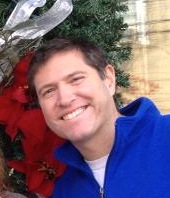
Today’s spotlight on: Doug Davidson!

Not only is Doug Davidson a Nicholl Fellow, but his script LETTER QUEST has the distinction of being the only animation script to ever achieve that honor.

1. What’s the last thing you read/watched that you thought was incredibly well-written?

DAWN OF THE PLANET OF THE APES. The most compelling character to hit the movies in a while is an ape. Caesar is a textbook protagonist. An extraordinary individual doing extraordinary things under extraordinary pressure. When you can end a movie by zooming in on the lead character’s face, and not have it feel cheesy, you know you’ve done something right.

2. How’d you get your start reading scripts?

I started in a screenwriting group, a large group that lasted several years. Early on, we agreed on always giving each other formal written feedback, because if you don’t have to write your feedback down, then you don’t think nearly as hard about it. When you put your feedback in paragraph form, you realize you have to make sense, you have to be consistent and you have to justify what you say. It gave me the discipline to write constructive, reasoned feedback instead of just tossing out opinions.

3. Is recognizing good writing something you think can be taught or learned?

Recognizing perfect writing is easy and intuitive. Anyone can do it. Recognizing the potential in a promising script that isn’t quite working yet, that takes more experience. And it takes a writer’s mentality. You need to study the craft for years. There are rules that are easy to memorize, but how to apply them, that’s much more difficult. Blindly applying the rules doesn’t lead to good writing, or good feedback.

4. What are the components of a good script?

The craft has to be there, and then there has to something else, a plus one. It could be funny comedy. It could be insight. It could be a new idea. That’s the “talent” part. You might think it’s this “plus one” that’s missing from most scripts, but I find the opposite to be true a lot of the time. Often a script has this amazing unique element, but the nuts and bolts of the story just aren’t in place yet. That’s when making the extra effort to put all the craft elements together really pays off.

5. What are some of the most common mistakes you see?

One of the most common mistakes I see is writers thinking a plot point (or character trait or thematic element) is clear on the page when in actuality it’s really not. At least not clear enough. It happens all the time, even to seasoned writers. That’s why feedback is so important. It’s not about saying your vision is wrong. It’s about saying your vision isn’t quite visible. Yet. The trick is to make sure everyone can see it.

6. What story tropes are you just tired of seeing?

Just about any story idea could work with the right execution. That said, I’ve come across a surprising number of scripts about screenwriters writing screenplays. Autobiography finds its way into most scripts, but it really helps to disguise it just a little.

7. What are the 3 most important rules every writer should know?

(1) Don’t (2) Give (3) Up.

8. Have you ever read a script that was an absolute, without-a-doubt “recommend”? If so, could you give the logline?

Nothing is absolute, but I’ve read more than a dozen really excellent unproduced scripts that I would recommend. I won’t go into the loglines here, but they’ve spanned just about every genre. I love to stay in the loop with the scripts I’ve read, especially the great ones. Several are optioned, several have placed very well in major contests and two have well known actors attached. Many of the writers of these scripts have secured representation as well. It requires some grit, but first-rate work will eventually get you places in this industry.

9. How do you feel about screenwriting contests? Worth it or not?

Screenwriting contests are absolutely worth it. It’s not the only path to success or a guarantee of success, but I know a fair amount of writers who have benefited greatly from contest placements. If you get an opportunity to read for a contest, I recommend that too. I’ve done it and learned a lot from the experience.

10. How can people get in touch with you to find out more about the services you provide?

My website is www.fourstarfeedback.com. I have a screenwriting blog there based on my experiences in the industry (and the numerous mistakes I’ve made). I’m also happy to answer specific questions via the email listed on my site.

11. Readers of this blog are more than familiar with my love/appreciation of pie. What’s your favorite kind?

I love pie too! I like to bake my own key lime pies. They’re pretty easy to do. I also love coconut custard, blueberry and anything with peanut butter. But my favorite would have to be . . . pecan. A great pecan pie has a sludgy quality – an intensely sweet sludge – balanced by a nutty crunch. Thanks for thinking of me, Paul! We’ll have to get together sometime for some coffee, and pie.

Random thoughts, general musings, that sort of thing

Nothing to do with today's post. I just love their chemistry.
Nothing to do with today’s post. I just love their chemistry.

-My western failed to make it through the first round of Scriptapalooza, which makes me 0 for 4 so far this year. I’m not counting the top 20 percent ranking for the Nicholl; that’s like getting Honorable Mention. At this point, I’ve pretty much written off its chances for Austin.

My problem was overconfidence in the script. I thought it was solid enough, but apparently not. It’s not the first time this has happened to me, but I’ll be more careful about it in the future.

I still believe in this script, which is why I’ve been so gung-ho about rewriting it. The past two weeks have been all about making it better. After completing the latest round of edits, it’s now 8 pages shorter, and still some further fine-tuning to do, which hopefully won’t add more than 2-3.

-Never realized how much my characters repeat things in dialogue. “I need you go to the store.” “The store? Why?” Must be the influence of listening to so much old-time radio. Cutting all of those probably amounted to at least half a page.

-I cut at least 5(!) separate situations where the Wilhelm Scream could be used.

-Had a great lunch-chat with one of my working writer pals yesterday. While he was very supportive and encouraging, he also reminded me of the almost insurmountable task of a new, unproven writer breaking in with a high-budget script.

“Your chances improve when you offer something that won’t cost a lot to make. A lot more people can get something made for under $5 million, rather than $50 million, let alone $100-200 million.”

As it should have, it got me thinking. Do I have any stories like that? It took the bike ride home and digging through some old flash drives to discover I did. Maybe about 5 or 6, all of them just a logline and not much else.

It’s a start.

-Movie of the Moment: GUARDIANS OF THE GALAXY (2014). Loved it. Great story, great characters (and their development). Maybe my only complaint was the bombardment of exposition in the first 20 minutes. Other than that, a lot of fun.

Biggest pleasant surprise: Dave Bautista as Drax.

Biggest almost-catastrophe: Adam Sandler as a potential voice for Rocket. Somebody thought this was a good idea?

It’s really impressive how much of an effort Marvel puts into their stories and characters. I sincerely hope DC and Warner Brothers can take a lesson from this.

A little depth perception on my part

I can see so much clearer now!

There’s no way to say this without sounding smug, so I’ll just come out and say it.

I think my writing has reached a new level.

I say this not out of ego, but from a sort of realization that stems from a discussion I had with a trusted colleague last week.

He’d read my western and had lots of praise for it, which is always nice. What he thought it was lacking was more depth to the characters. As it reads now, there’s a lot on the surface, but he recommended going deeper to get a better idea about who they are and why they do the things they do.

In some ways, I thought I already had a somewhat firm grasp on how to do this, but the more I thought about it, the more I realized that what he said really rang true.

While I may be adept at putting the basics of a story together and making it entertaining to read, I still need to work on further developing the characters, or at least more than I do now.

Like I told him, it’s a little intimidating to look at the work as a whole and think “I have to fix this. But how?”

So the rewrite is underway, albeit with a little more attention being paid to..well, everything. Which is as it should be.

I’ve always been a staunch believer in the idea that you should write scripts for movies you would want to see. I was already excited for this one, but now that I feel like I have a stronger grasp of how to be a better writer combined with the actual process of making it better (he said with fingers firmly crossed), the anticipation levels are shooting through the roof.

-Also got this from another set of notes: “It’s clear you have a sense of fun…One weird deficiency I see from a lot of amateur screenwriters is that they forget it’s their job to be entertaining.  You get that, and it’s very welcome.”

Nice.

Fall back. Regroup. Hit ’em again.

Disappointed? Sure. Defeated? Never.
Disappointed? Sure. Disillusioned? A little. Defeated? Never.

Oh, what a week this has been.

The first round of the Nicholl Fellowship competition is complete. The quarterfinalists have been named, as well as those who placed in the top 10, 15 and 20 percent of all entries.

Regrettably, my western fell into the latter-most category. In some ways, that’s not too bad. Obviously not was I was hoping for, but at least worth noting.

It goes without saying that while there may still be hope for the script in the handful of other contests I entered this year, it’s also safe to say I should probably expect similar results.

But here’s the silver lining to all of this. I sent the script out, thinking it was ready. Since then, I’ve received lots of great feedback about how it could be improved – tighten this, work on that, etc. – and more is on the way.

This script was pretty good before. With a little more work, it could be fantastic.

I’ll be dividing my time between that and the rewrite of the mystery-comedy spec, of which I will definitely seek out professional feedback (Lesson learned here – after I think a script is good to go, I’ll spring for 1-2 sets of pro analysis. Definitely worth it.)

The silver lining to all of this: there’s no reason I couldn’t have two scripts ready to go for next year. Three if I really push myself with the pulpy adventure spec, but that might be overreaching.

Movie of the Moment – YOUNG FRANKENSTEIN (1974) One of K’s favorites, so we watched it as a family. V liked some of the jokes in the beginning, but her interest waned as it went on.

As for me, still holds up as one of the best comedies ever. Smart, funny and a cornucopia of quotable dialogue.

Here’s what you need to know

Not THAT kind of exposition

As the rewrite/polish of the mystery-comedy continues, it suddenly hit me that while I knew the backstory of what came before, somebody reading it for the first time would have no idea what was going on, or at least how we got here.

A little exposition was in order.

But among the many problems with writing exposition is when it’s out-and-out obvious.

“You mean your brother John, who went through a terrible divorce, ran off to join the circus and became a cross-dressing serial killer?”

Sometimes it’s done very effectively, but unfortunately, a lot of the time it isn’t, resulting in a blast of information crammed into one scene.

No thanks.

Rather than go down that road, I’m exploring the potential of doling out the details over several scenes. A sentence or two casually placed here and there so as to not draw attention to itself, all for the purpose of helping you learn where everything is coming from and how we got here.

It’s a work in progress, so we’ll see how it goes.