Working well within my wheelhouse

Hang on. This is going to be quite a ride.

Hard as this may be to believe, but I’m actually surprised at my progress with the outline for the pulpy adventure spec.

It’s coming along much faster than I expected, and the more I work on it, the more I see things that can be tweaked/adjusted/modified so as to improve on the overall story. I’m definitely not saying it’s easy; just easier than it used to be.

Having previous drafts to work with has been a significant plus, and once I fully embraced the notion of “anything can change”, it just took off from there.

But the biggest boon to this whole thing has simply been the pure enjoyment of working on it.

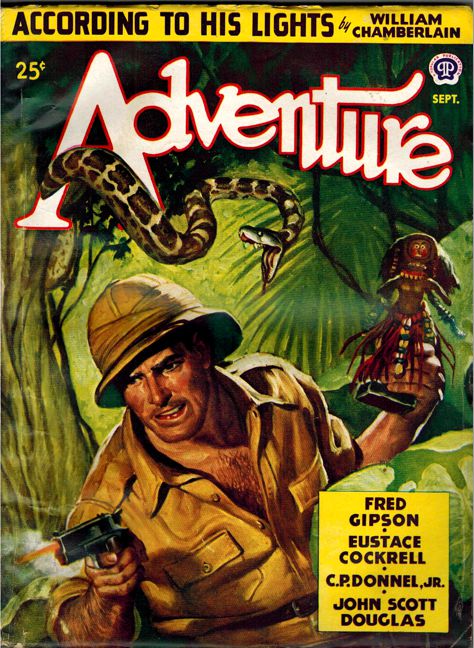
I don’t make any attempt to hide my love and appreciation of the pulp style of writing, so when I work on these kinds of stories, I make a sincere effort to really put it on the page.

The swashbuckling-ness of the fantasy. The rootin’-tootin’-ness of the western. And now the spectacle and wonder of science fiction.

I really do live for this stuff. One of my mantras since the beginning has been “Write something I would want to see,” and all of these definitely fall into that category.

Some may argue that writing material like this is counter-productive to getting a career going. “Nobody’s going to take a chance on something like this from an unknown writer!”, that sort of thing. If all I end up getting out of this is a solid writing sample, that’s fine by me.

Is it wrong to think somebody could read it and say “There’s no way I could get this made, but I really like the writing. Would you be open to working on ____?”? Hopefully not.

I’m taking my time with this, and in no rush to finish. All the work I’ve done on previous scripts is paying off in terms of knowing what to do, figuring stuff out and making the story (and the eventual script) better.

I’ve said it many times before: I am having an absolute blast writing this story, and hopefully those who read the end result will too.

Ask a Significantly Astute Script Consultant!

Laurie Ashbourne

The latest in a series of interviews with script readers and consultants who would be worth your while to work with if you want to get your script in shape. Today’s spotlight is on writer-producer-consultant Laurie Ashbourne.

After seeing Who Framed Roger Rabbit in an old theater in Philly, Laurie knew that she had to be a part of that process.  Within 6 months she was in Disney Feature Animation‘s new studio in Florida working on a Roger Rabbit short and The Little Mermaid, and stayed on through the production of Lilo and Stitch. Leaving that cocoon to create and own her work, she quickly segued to live action and documentaries as a writer, producer and script supervisor.

With four features she wrote as work-for-hires in production, a dozen ghost- writing films and pilots in development, an independent animated feature in pre- production, an original story she wrote (10-31) was recently announced on the fast-track to production with acclaimed producers Eli Roth and Roger Birnbaum and a bio-pic she wrote is in early stages with Bohemia Group Originals.

Laurie is also longstanding story analyst for the likes of Amazon Studios Feature Films and Austin Film Festival.
In addition, she oversees several projects in development via her company, LA Story Studio. Her documentary work continues as well, as a producer for iconic director Robert Greenwald’s Brave New Films banner where she just co-
produced, SUPPRESSED – the fight to vote (2020), and RACIALLY CHARGED (2021), featuring two-time Oscar winner, Mahershala Ali.

1. What’s the last thing you read/watched that you thought was incredibly well-written?

I recently read a screenplay for a competition that was amazing. It was so well-paced and had such a perfect economy of words, twists and great characters – I wish I could share it with you, but I have no doubt that sooner than later everyone will have a chance to see it on screen.

For watching, the film LITTLE BOY. About 4 years ago the casting director asked my son to read for the part, so I was sent the script. It was such an emotional story that read really well, even though it broke some traditional pet peeves of mine, I completely overlooked them because I was so engrossed in the story. My son ended up sending in a video read because I was on a job in Virginia AND he had just lost his 2 front teeth so we knew the read wouldn’t go over at its best. Regardless, we went to see it (and I have to say the boy they had for the lead did a great job). I immediately could see where they had to change some things but it mostly stayed true to the script. I enjoyed the film and it was completely emotional, but I could definitely see how it read better than it played.

2. How’d you get your start reading scripts?

My first job in the industry was with Walt Disney Feature Animation, and as a department head I was in on a project from development through to final reels. But I didn’t start reading them professionally until I left the company to work in independent film, over ten years ago.

3. Is recognizing good writing something you think can be taught or learned?

The tenements of the craft can be taught easily but if a sense of story isn’t there then those ‘guidelines’ become hard and fast rules that can overlook a good story and what it needs to be brought up to industry standards. Learning story is possible, but it’s not for everyone, those that it is for can’t let it go. I’ll use my son as an example again. He will watch a movie until he knows it by heart and then pick apart the structure and characters, all by his own will. He said to me the other day, “When a movie does well, they automatically make a number two, and they do it quickly, and when that doesn’t do well they spend more time working out number three. Number twos always stink.” He’s 10, so I think it’s safe to say that a sense of story is ingrained in his psyche with no teaching other than immersing himself in something he enjoys.

4. What are the components of a good script?

Characters with an emotional want that comes across as genuine – in this case it’s the difference between a homeless person holding up a sign that says “will work for food” and one that holds up a sign that says “hungry, broke please give”. The audience is much more likely to attach themselves to a character who is willing to do what it takes to survive – the character that is willing to work for his food.

Craft contains a lot of things that get a bad name as hard and fast rules, and it’s true that if you are trying to break in you have to look like you are willing to adhere to industry standards, truth is your craft demonstrates mastery of cinematic story SOME formatting issues can be overlooked. So at the top of the mastery of cinematic language is, giving the actors something interesting to do that advances the plot and peels back the layers of their character. This does not mean writing verbose prose; that is not cinematic. Cinematic is thinking like a director in your mind, but conveying that action in words that do not include camera direction.

5. What are some of the most common mistakes you see?

-Misuse and abuse of parentheticals and exclamation points

-Typos and poor formatting

-A misunderstanding of scene headings in content and purpose

-A great idea poorly executed, usually in character and pacing

-A poor balance of dialogue and action (which is usually because of way too much dialogue)

6. What story tropes are you just tired of seeing?

It seems to be cyclical; every year there is more of one than another, so I guess that falls into chasing trends. Right now, there seems to be a lot of smaller character pieces, which is good for independent film, but with specs that are trying to break in (rather than going out and producing the indie on your own), it’s really difficult to get behind a moody character wandering the town or country instead of facing an uncomfortable truth. So it goes back to the homeless analogy – why do I care about this person, and please make it interesting without a having a diary in voiceover.

I admit it’s a bit of a catch-22, it’s also very difficult for an unknown to break in with a tentpole, but there is a happy medium where there are just enough elements to give the audience and producers something worth the investment of time and money.

7. What are the 3 most important rules every writer should know?

-Your material will not resonate with everyone, but if it’s not resonating with anyone, it’s time to analyze those notes you thought were shit.

-Write because you have to get a story out of your system, not because you want to strike it rich or win a contest.

-Let the audience (or reader) get to know your character through the action we see them take on screen, not via a laundry list of their traits.

8. Have you ever read a script that was an absolute, without-a-doubt “recommend”? If so, could you give the logline?

Sure. I’ve had the pleasurable honor to move a lot of scripts forward and nothing makes me happier than to see writers I worked with or read be working in the industry. Frankly, most scripts that come to me don’t have a logline, and I craft one for the coverage – most contest scripts don’t come with loglines. Loglines when done well are a craft unto themselves and contests are won on these concepts, but a great logline does not make a great script. This goes back to one of my top three: Most great ideas fall short on execution and again, I really think that comes down to sense of story. I personally write a logline before (during and after) I write a script. Writing it out at the start helps shape your outline. But just as the outline will change as you write, the logline should too, by becoming tighter.

I recently read a logline on LA Screenwriter called The Muffin Men – it was really brilliant. But who knows if the script is?

9. How do you feel about screenwriting contests? Worth it or not?

Yes, but do your homework. There are more scams than legitimate career changers. It’s worth it to get your script in top-level shape and submit to the top-tier contests (which there are less than 10) the odds are tougher due to the number of submissions but if you seriously want to advance your career, there’s no use in wasting money on the Podunk USA’s screenplay competition.

10. How can people get in touch with you to find out more about the services you provide?

My company at LA Story Studio, my blog 1st 10 pages, or via Stage 32 – https://www.stage32.com/LAstory.

11. Readers of this blog are more than familiar with my love/appreciation of pie. What’s your favorite kind?

I’m not much for desserts, but I like apple if it’s fresh and not overly gooey, or key lime. When I was a kid I was all about Tastykake cherry pie.
The name’s Piphany. E. Piphany

If it weren't for that whole possible electrocution thing, I'd write in the tub too.
If it weren’t for that whole possible electrocution thing, I’d write in the tub too.

Progress on the first draft of the low-budget comedy spec has been slow but steady; averaging about 2-3 pages a day. It’s a smart move to accept the fact that the first draft of anything you write is going to suck, because it always does. And this one’s no different. Several cogs within this machine in drastic need of retooling have been identified.

So there I am, working on a scene, having the ongoing internal discussion of “Is this the funniest way to do this bit?” The scene as originally conceived is pretty straightforward, but the comedy part still needs something. A line of dialogue just won’t cut it. While I’m quite adept at witty conversation in person, putting it on the page is an entirely different animal.

Overall, it felt like things were slowing down and becoming tougher to work through.

No matter how hard you look, sometimes you can’t find the answer you seek because you don’t realize it’s just staring you in the face.

There was a scene much earlier in the script where, for no reason in particular, I used a joke of a particular nature just for the hell of it. Some might consider it a dumb joke, but I’m still in first draft mode, so it might not stick around for very long.

But there was something about it that really stuck with me. I thought it was pretty funny, and the more I thought about it, the more it seemed like exactly something I would come up with.

And there it was. The floodgates had opened, and my much-needed solution came gushing forth. These jokes would work perfectly throughout the whole thing.

Added bonus – it’s the kind of comedy I’ve known and loved my entire life. I’d been trying to write this in a way or style that’s not exactly me, whereas this rediscovered approach is practically spot-on. Coming up with these kinds of jokes is almost second nature. Hopefully I can successfully transition them onto the page.

But now I was presented with a new problem: stop here (around pg 48) and start over, or hammer my way forward?

Tempting as it was to start over, I’m opting to keep going forward (and start implementing the new jokes), mostly so I can just get this draft finished. The sooner I get to the end, the sooner I can start on the rewrite.

As I said, progress continues to be slow and steady, but it’s still progress.

-One week to the Great American Pitch Fest, so you still have time to register. Use code MaximumZ20 at checkout for a whopping 20 percent off!

The sound I needed to hear

Oh so worth it
Oh so worth it

It’s been a very long time since I felt my heart beating that fast.

It was the weekly meeting of the writing group, where volunteers offered up ten pages of their material for a read-through and critiquing. The time was right to take the low-budget comedy out for its first road test.

Despite my confidence in my own writing ability, anxiety was coursing through me. What if they didn’t like it? What if my attempts at jokes fell flat? Worst of all – what if they thought it wasn’t funny? These meetings are held at a small cafe, so the strongest drink in the house was coffee, so I couldn’t rely on a stiff drink to steady my nerves.

To make things that much more nerve-wracking, the moderator (who knows and likes my writing) had me going last. This may have been deliberate on his part.

We worked our way through the other three sets of pages, and then finally it was my turn.

I took a deep breath, stood up, and began distributing pages (complete with assigned parts), explaining the concept behind the story. Upon reflection, the chuckles and comments of “Oh, that’s good” and “I like it” were harbingers of what was to come.

Even so, I had to force myself to take deep breaths and calm down as the read-through commenced.

Also working in my favor: the person portraying the main character was spot-on.

They got to the first joke.

And they laughed.

To say I felt a sense of relief is a severe understatement, but it was exactly the reaction I was hoping for.

The read-through continued, with laughs in the places they were supposed to be. As expected, some jokes hit better than others, but it wasn’t that much of an issue.

A few minutes later, it was over, and we transitioned to the feedback stage.

Overall, it was very positive. Comments were made about what worked, what needed work, and potential changes. Some of the suggestions had merit and worth considering, but for the most part (and keeping in mind that a few members of the group are not the greatest writers – based on reading their work), I smiled, nodded and thanked each person for their thoughts.

Once again proving it’s all subjective, one person said my character descriptions were “too much” and maybe “too flashy”, but the person sitting to my left interjected and heartily disagreed, saying “a lot of the writing in other scripts is just dry and kind of dull, but this really pops off the page and paints a great mental picture.” A few nods around the table supported the latter position. If your work sparks contrasting opinions, then it must have something going for it.

The evening came to a close, and I left, feeling just the slightest bit triumphant.

For now, I’m still working my way through the first draft, and a lot of the jokes probably need a ton of work, but at least I can say I got past this first hurdle.

Should be interesting to see how things go from here.

-Shameless self-promotion! The Great American Pitch Fest is only two weeks away, so there’s still time to register. Save yourself a nice chunk of change by using the code MaximumZ20 to get 20 percent off. I’ll be there, and hope to see you too.

This train is picking up speed

What an incredibly appropriate image

My, but things seem to be happening all around me, and at quite a rapid pace at that.

-It took a lot less time than expected to complete the latest rewrite of the western, so the waiting-for-notes game begins once again. This draft is two pages longer than the previous one, but with a lot more character development in play.

As always, I’m distracting myself from worrying about it by working on the low-budget comedy. Churning out 2-3 pages a day is a pretty good objective. Slow, steady and all that.

Meanwhile, the hard part continues to be making sure the jokes are funny, or at least come across that way.

-Over the past few weeks, it feels like there are more and more announcements from friends and acquaintances about positive developments in their careers. While I can’t say the same has happened for myself (yet), it definitely feels like something big is coming. Potentially soon. Call it a gut feeling. I plan on holding onto that sensation for as long as possible.

In the meantime, I keep writing (and rewriting).

–Tuesday’s interview with ScriptFest co-founder Signe Olynyk was, as expected, well-received. What I wasn’t expecting was that she would show her appreciation by setting up a special code for 20 percent off registration. The final cost minus one-fifth of itself. Very generous of her to offer up such an opportunity, wouldn’t you say?

Just enter the code MaximumZ20 at the checkout page, and watch the magic happen.

Even yours truly couldn’t resist and signed up. Yep. I’m going, and quite psyched about it, with the planning and strategy-building now underway. If you see me, feel free to say hi. I’ll be the tall guy in the glasses.

Any suggestions where a guy can grab some quality pie in Burbank?

-If you’re into film, TV, music and/or writing, and in the LA area, and are looking for an informative way to spend a Saturday afternoon, then I strongly suggest you check out the Three Cities Festival on May 23rd. Use the code TCFMAX to get 25 percent off the ticket price (which was pretty affordable to begin with, and this makes it that much more so). The number of available tickets is rapidly shrinking, so take advantage of this while you can.

-Hope you get lots of writing done this weekend, and Happy Mother’s Day to all you moms out there.