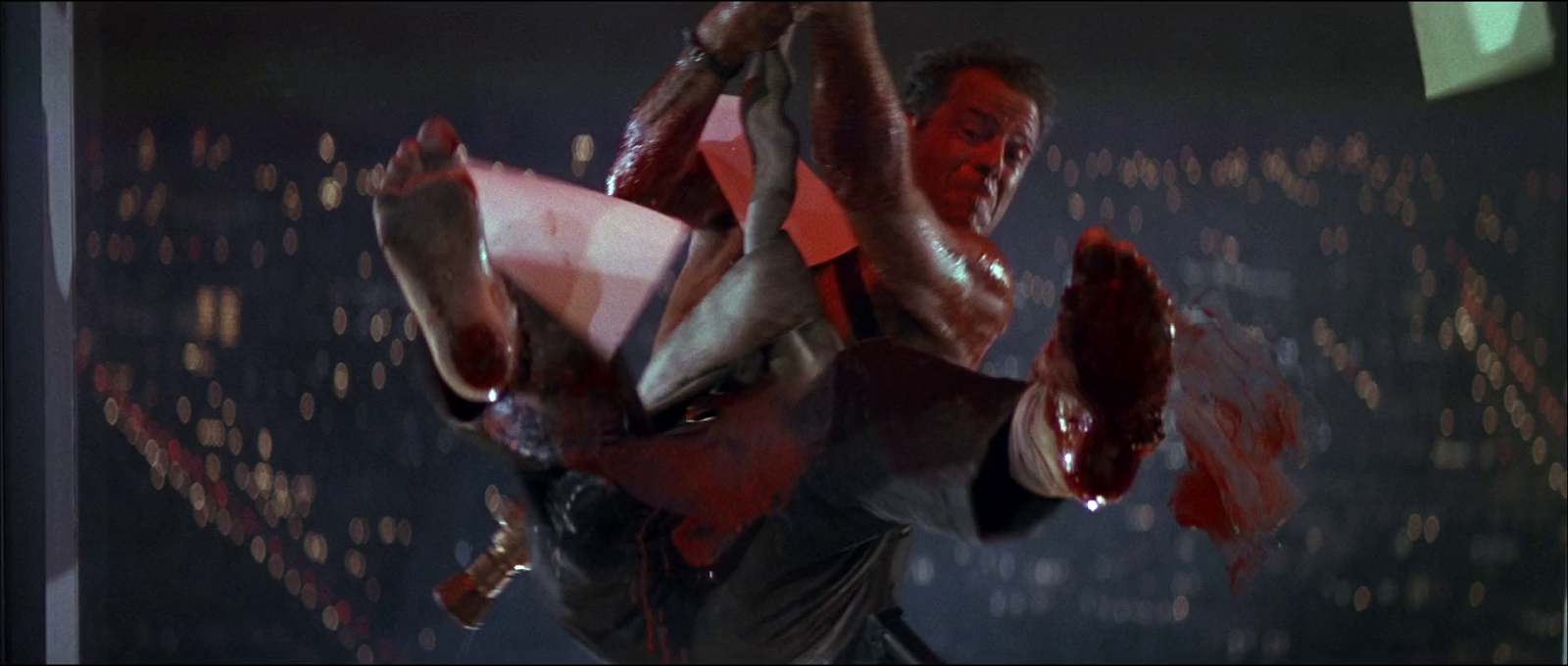
The name’s Piphany. E. Piphany

If it weren't for that whole possible electrocution thing, I'd write in the tub too.
If it weren’t for that whole possible electrocution thing, I’d write in the tub too.

Progress on the first draft of the low-budget comedy spec has been slow but steady; averaging about 2-3 pages a day. It’s a smart move to accept the fact that the first draft of anything you write is going to suck, because it always does. And this one’s no different. Several cogs within this machine in drastic need of retooling have been identified.

So there I am, working on a scene, having the ongoing internal discussion of “Is this the funniest way to do this bit?” The scene as originally conceived is pretty straightforward, but the comedy part still needs something. A line of dialogue just won’t cut it. While I’m quite adept at witty conversation in person, putting it on the page is an entirely different animal.

Overall, it felt like things were slowing down and becoming tougher to work through.

No matter how hard you look, sometimes you can’t find the answer you seek because you don’t realize it’s just staring you in the face.

There was a scene much earlier in the script where, for no reason in particular, I used a joke of a particular nature just for the hell of it. Some might consider it a dumb joke, but I’m still in first draft mode, so it might not stick around for very long.

But there was something about it that really stuck with me. I thought it was pretty funny, and the more I thought about it, the more it seemed like exactly something I would come up with.

And there it was. The floodgates had opened, and my much-needed solution came gushing forth. These jokes would work perfectly throughout the whole thing.

Added bonus – it’s the kind of comedy I’ve known and loved my entire life. I’d been trying to write this in a way or style that’s not exactly me, whereas this rediscovered approach is practically spot-on. Coming up with these kinds of jokes is almost second nature. Hopefully I can successfully transition them onto the page.

But now I was presented with a new problem: stop here (around pg 48) and start over, or hammer my way forward?

Tempting as it was to start over, I’m opting to keep going forward (and start implementing the new jokes), mostly so I can just get this draft finished. The sooner I get to the end, the sooner I can start on the rewrite.

As I said, progress continues to be slow and steady, but it’s still progress.

-One week to the Great American Pitch Fest, so you still have time to register. Use code MaximumZ20 at checkout for a whopping 20 percent off!

Ask a Most Excellent Script Consultant!

Wayne McLean

The latest in a series of interviews with script readers and consultants who would be worth your while to work with if you want to get your script in shape. Today’s spotlight is on Wayne McLean of Wayne’s Movie World.

-update on May 4, 2018 – Wayne passed away on April 30th from congestive heart failure. He provided me with some great notes for my western, and enjoyed getting my updates regarding its progress. He was very savvy when it came to writing advice, extremely generous with offering it, and overall just a very nice guy.

1. What’s the last thing you read/watched that you thought was incredibly well-written?

The Imitation Game, Nightcrawler, Whiplash.

2. How’d you get your start reading scripts?

I fell into it by accident. I was in a writers’ group. One of the guys was produced and went to Toronto for a pitchfest. He brought back 95 or 100 scripts. I read them all and called each writer to give input. No charge. After about 90 phone calls I said, “I can do this.” My 25-year career in broadcasting really helped. That was about 10 years ago.

3. Is recognizing good writing something you think can be taught or learned?

I work with writers and their scripts to provide the focus necessary to perfect the skills required for the CRAFT of screenwriting in relation to their scripts. Then, through a careful process, the writers and I work together to develop their talents to enable them to become proficient in the ART of screenwriting.

4. What are the components of a good script?

Amazing writing with a unique point of view. Compelling, riveting characters. Crackling dialogue. Powerful subtext on all levels. Scenes and situations that are fresh. Marketable.

5. What are some of the most common mistakes you see?

Clichés. Sending out a script that isn’t ready for the market.

6. What story tropes are you just tired of seeing?

Characters waking up from a dream. Fragmented concepts. Two-dimensional characters.

7. What are the 3 most important rules every writer should know?

I don’t ascribe to the idea of ‘rules’. I prefer to see a writer following guidelines and principles. The script must be entertaining, entertaining and entertaining.

8. Have you ever read a script that was an absolute, without-a-doubt “recommend”? If so, could you give the logline?

I cannot disclose loglines. All materials submitted are confidential and conform to my rules of privacy. I do have some clients with million dollar concepts.

9. How do you feel about screenwriting contests? Worth it or not?

If a writer can afford it, enter as many contests as possible. Use them as an opportunity to develop writing skills and ask if there is input available from the judges.

10. How can people get in touch with you to find out more about the services you provide?

(See note above. Wayne’s website & email have been shut down.)

Check out my website waynesmovieworld.com or email me at wayne@waynesmovieworld.com.

11. Readers of this blog are more than familiar with my love/appreciation of pie. What’s your favorite kind?

Pumpkin.

Ask a No-Mincing-Words Script Consultant!

Glenn Benest

The latest in a series of interviews with script readers and consultants who would be worth your while to work with if you want to get your script in shape. Today’s spotlight is on Glenn Benest.

1. What’s the last thing you read/watched that you thought was incredibly well-written?

I loved Nightcrawler – an incredible script starring Jake Gyllenhaal.

2. How’d you get your start reading scripts?

I’ve been a professional screenwriter for many years as well as a teacher of screenwriting. I liked to teach because it got me out of my house and around people, sharing the thing that I loved.

3. Is recognizing good writing something you think can be taught or learned?

Yes, once you understand the craft of screenwriting, it becomes clear what constitutes a great script. You can learn this craft like any other. I teach many techniques for writing better dialogue, creating believable characters, scene development, etc.

4. What are the components of a good script?

First of all, a strong structure, then well developed characters who go through believable changes in a story, witty, terse dialogue and scenes that have strong conflict.

5. What are some of the most common mistakes you see?

Formatting that is incorrect, scenes that don’t end strongly, a poor sense of structure and protagonists that don’t engage us emotionally.

6. What story tropes are you just tired of seeing?

I don’t know what this means.

7. What are the 3 most important rules every writer should know?

The connection between the reader and the protagonist has to be deeply emotional, the story has to have a strong beginning, middle and end and the dialogue has to be witty and engaging.

8. Have you ever read a script that was an absolute, without-a-doubt “recommend”? If so, could you give the logline?

I’ve helped launch six films in my screenwriting workshops, including “Scream” and “Event Horizon.” They didn’t begin as “winners” but promising concepts that we developed until they were great. I don’t just read and recommend scripts, I help develop them from beginning to end and don’t let a script go out until it’s ready.

9. How do you feel about screenwriting contests? Worth it or not?

Worth it. Anything that can get you attention is beneficial.

10. How can people get in touch with you to find out more about the services you provide?

Go to my website at www.glennbenest.com or email me at gbenest@pacbell.net.

11. Readers of this blog are more than familiar with my love/appreciation of pie. What’s your favorite kind?

Pecan with vanilla ice cream on top.

That moment of clarity

Don't you love when these show up?
Don’t you love when these show up?

I’ve always said that with each draft of every script I work on, my writing gets a little bit better. Definitely a “learn as you go” scenario.

If you looked at my earlier work, you’d probably say it was pretty basic. Very straightforward. Average. With the later stuff, you’d see improvement. Better, but still some room to grow.

Among the helpful comments I received regarding the previous draft of my western was “give us more flair in the prose…make the details a bit more colorful.”

This can be a trap a lot of writers fall into. You want your writing to be vivid and descriptive, but it’s easy to overdo it and before you know it, the storytelling overshadows your actual story.

Since I started the rewrite, I’ve been doing my best to maintain an equal balance of both so the story is told in an entertaining way and easy for a reader to visualize what’s happening. If they feel like they’re actually there, experiencing it along with the characters, then I’m doing a good job.

Working on an action sequence earlier this week, I was struggling to come up with the best way to describe the events as they played out. Ordinary words weren’t cutting it, and the ever-present thesaurus wasn’t offering much help either. I knew what I wanted to say, but couldn’t come up with the right way to say it.

You can describe how something happens, but is it strong enough to hold somebody’s attention? Is there a “more colorful” way to say it? How could you add “more flair”?

If I were reading this, what would make me want to keep going? What would compel me to want to know what happens next?

Since this is, at its heart, my take on a pulp story, I decided to embrace that aspect and run with it. I mean really run. Let loose and color those words in the perfect shade of purple.

To say it made a difference is putting it mildly.

Words and descriptions that refused to make themselves known before were sprouting up left and right. This was exactly how I imagined the sequence and exactly how it should be written.

A key point to remember in all of this is that this is what works for me. Your writing and your style are totally your own, and only you can find the best way to do it.

I won’t say that everything from here on in for me will be as easy or productive, but it’s definitely a change for the better, and I for one am looking forward to seeing the end result.


Unstoppable force, say hi to immovable object

There is something in this man's way
There is something in this man’s way

Pop quiz time!

Apart from advancing the story, theme and character development, what is the one key component every scene should contain?

Okay. Pencils down.

A big ol’ piece of pie to everybody who said “conflict”. Without it, your script’s on a one-way trip to Boringtown.

I recently became involved in a discussion with a starting-out writer who asked about the best way to describe how a sequence in his script could play out. After looking at the source material (based on true events), I said if he only writes what happens, there won’t be any drama to it. It needs conflict.

“Conflict how?” he asked.

That’s what it come down to, isn’t it? A lot of newer writers hear “conflict”, and they immediately think two characters are supposed to be arguing. Sometimes that might apply, but it’s not necessarily what it means.

Conflict is two opposing forces going up against each other, and those two forces could be anything (within the limits of your story, of course). Most of the time, one side will be your character and the other will be something or someone standing in their way of achieving their goal, be it immediate or overall.

Which would you rather watch? A story where everything goes just fine for the main character, or one where they’re always dealing with some kind of problem?

One of the great things about conflict is that it can come in any shape or form.

“What if a character opens a window?” was the follow-up question. “Where’s the conflict there?”

There isn’t any. If you’re reading a script and get to a scene that only involves a person opening a window, you’d think “What purpose does this serve?” and tell the writer to cut it.

The conflict would be if it won’t open. There’s a story there. Your curiosity is piqued. Questions are raised. Why won’t it open? Why do they want it open? What are they willing to do to get it open? What’ll happen after they get it open?

Conflict helps move the story forward. Part of our jobs as writers is to come up with new, original and imaginative ways to portray that conflict. The way I have the character open that window is probably totally different than how you would.

Even the central question of your story shows conflict: Will the main character achieve their goal?

While you work on your latest draft, take the time to examine each scene, even the ones only a line or two long. Is there conflict of some sort?

If there is, great. If not, you need to get some in there.