Q & A with Paul W. Cooper

Paul7

Paul W. Cooper has been a working freelance television and motion picture screenwriter for more than thirty years. With over 60 television credits and one feature film, his awards include three Emmys, the Humanitas Prize, Writers Guild Award and the Kairos Prize.

He wrote the critically acclaimed film ONCE UPON A TIME…WHEN WE WERE COLORED winning Best Picture honors at the Movie Guide Awards. His television credits include MURDER, SHE WROTE, HIGHWAY TO HEAVEN, LITTLE HOUSE ON THE PRAIRIE and THE WALTONS. He served as Story Editor on Oprah Winfrey’s dramatic series BREWSTER PLACE, and has instructed Film and Television Writing at Pepperdine University.

Paul has written 21 ABC and CBS AFTERSCHOOL SPECIALS dealing with subject matter exploring every significant social issue including incest, alcoholism, physical abuse, homosexuality and racism. A number of these projects won Emmys as Best Television Specials for their significant social and dramatic impact.

Paul has written a number of films for cable television, which have appeared on Showtime, Disney, the Animal Planet and Family Channels. He wrote THE MALDONADO MIRACLE for Showtime, produced and directed by Salma Hayek. It earned 5 Emmy nominations and won the Writers’ Guild Award. His film for the Hallmark Channel, THE NOTE was the highest rated Hallmark movie of 2007 and 3rd highest rated of all time.

What’s the last thing you read or watched that you thought was incredibly well-written?

BEASTS OF THE SOUTHERN WILD. Visually stunning. I ached for the characters.

Two of my favorite genres to write in are straight drama and crime. There are two screenplays I constantly refer to so I’m certain the last material I read are one or both of these screenplays. The first is TERMS OF ENDEARMENT by James L. Brooks. It’s the only screenplay that actually brought me to tears while reading. The second is the crime drama SEA OF LOVE by Richard Price.

Here’s my practice. After I’ve written ten pages, I will pick up my dog-eared and worn copy of SEA OF LOVE. I’ll read ten pages (any ten) then come back to the last ten pages I wrote. Now I find myself re-writing those pages with a different tempo. I’ll knock out words from the dialogue to give it a more staccato and street feel. My shoot-outs become more cinematic because now I’m trying to write UP to Richard Price’s standard. And the more I do that, the better writer I become.

When I write a drama-charged relationship story, I use Terms of Endearment the same way. Again, I’m always trying to write UP to the standards of the masters. So those are two works I refer to constantly and believe are incredibly well-written.

Were you always a writer, or was it something you eventually discovered you had a knack for?

I learned I had a knack for writing when, in the 8th grade, the class was assigned to write a short story. Once I started, I couldn’t stop and the world of fiction opened up before me. From that time on I wrote stories, plays, songs and poetry. But I never considered pursuing writing as a career. I was eminently practical and got my degree in business administration.

How’d you get your start in the industry?

There was a war raging in Vietnam when I graduated college. Rather than being drafted, I joined the Air Force, attended Officer Training School, then pilot training. I was a pilot in the Strategic Air Command for six years. I got assignments all over the world including three tours of the war zone and came back registering 61 combat sorties. As a crewmember in SAC, I was also required to sit alert for seven day periods. The Strategic Air Command was our first line of offense in the event of a nuclear war. So we had to be ready. And that meant living in an underground alert facility (mole hole) for those seven-day tours. There’s not a lot to do while waiting for the horn to go off. Guys played poker, shot pool or watched TV.

One night I was watching an episode of MEDICAL CENTER and thought “I can do that”. So I went to my little bombproof room, took out a spiral notebook and started writing. I had never seen a film or television script and had no idea about formatting. So I wrote my story like a play, drowning it in terms like cut to, fade out, dissolve etc. When finished I was optimistically excited and immediately began writing another episode. Then I branched out and wrote for other series popular at the time; MARCUS WELBY, THE WALTONS, SANFORD AND SON, MCMILLAN AND WIFE, and others. Now, none of these scripts was very good, but that didn’t matter. What mattered was I was writing stories, creating characters, giving those characters words to speak. And I loved the sensation, the power I had over these fictional “people” and their lives.

After a year or so of writing television “scripts” I thought it was time for the entertainment world to be exposed to my heretofore undiscovered talent. I wrote to the Writers Guild of America and they sent me a packet of useful information, including a list of agents. So I began firing my material off to agents who would summarily return fire with a politely worded rejection letter and my envelope unopened. Dissolve to a year later when I met my future wife, an Air Force nurse. On a blind date, I discovered she had lived next door to the sister of Earl Hamner, Jr., creator of THE WALTONS. What do you know, I had written two Waltons episodes. Through that connection I contacted Earl and he graciously agreed to read my scripts. I sent them and a week later, he called me and said I should be in Hollywood writing for television. So off to Hollywood I went, Earl became my mentor who put me in touch with an agent, and I was on my way.

Sad to say, my story only reinforces the notion that you have to know someone in the business in order to get into the business.

What do you consider the components of a good script?

People ask, what is or are the most important elements of a screenplay. Some will say character. Others say story. But the answer is – structure. You may have the most beloved character since Hoke (DRIVING MISS DAISY) and an absolute jaw-dropping story (THE RIGHT STUFF), but unless the pieces are stacked properly, the whole construct collapses.

What are some of the most common screenwriting mistakes you see?

The thing I see most often is that a story is derivative. Nothing new. All the same old plowed ground. And this, of course, makes stories predictable. I believe it was William Goldman who said, “Always give the audience what they want, but in a way they didn’t expect.” If it’s true there is no story new under the sun, then at least get us to the desired ending by way of a different road.

Too many words, not enough story. I will often tell a student, “You have a 105-page script here but it only contains 65 pages of story.”

My pet peeves are typos, misspellings and grammatical errors. There’s no excuse for these infractions. They label the writer careless at best and illiterate at worst and create an unfavorable impression for the reader.

Other mistakes are what I call re-hash and deadwood. Never tell the reader what he already knows. And omit anything that doesn’t relate to the premise. Keep the story ever moving forward.

What story tropes are you just tired of seeing?

I’m not a fan of superheroes. It always comes down to the hero battling with an equally powerful villain in an epic cinematic struggle only possible with CGI. Yes, it’s visually impactful, but for me, cartoonish. No matter what the bad guy throws at the hero, he/she
always recovers and comes back for more. After ten minutes of lightning bolts being hurled and mushroom clouds rising over the city, I’m bored.

What are some key rules/guidelines every writer should know? 

-Determine what your premise is. This is found by asking who your hero is and what does he/she want, need or desire. You should be able to state your premise in ten words or less. The premise of Romeo and Juliet is Romeo desires Juliet (boy wants girl). Indy wants to find the Lost Ark of the Covenant. Rocky needs to go the distance. The premise is your searchlight that must always be in view as you write the story. If it disappears, you’ve taken a wrong turn.

-Be aware of the third question — why do we care? We must be endeared to the hero (or despise the villain) and the hero’s goal must be worthy and important. The implication is obvious. If we’re not emotionally attached to the hero, we won’t care what happens. And if his goal isn’t both worthy and important, we won’t care if he attains it.

-Until the premise is revealed, the story is pointless. In other words, until the audience knows what the hero WANTS, the story has nowhere to go. Example: In Raiders of the Lost Ark, we open with Indy in an Amazon jungle cave stealing some artifact. He barely
escapes with his life and manages to return to his work as a professor at Chicago University. Now what does any of that have to do with the Lost Ark? Nothing. Indy has stated no particular goal so the story is nowhere. But then… he learns of the existence of
the Ark and decides to find it before the Nazis get hold of it. Now the premise becomes, Indy WANTS the Ark. And everything he does from that point on is aimed at achieving his goal. I like to see the premise revealed within the first 20 pages.

-Love is a process. You can’t just put two people together in a story and tell us they’re in love. We may believe it but we won’t feel it. You MUST give us the scenes showing us the behavior that causes one person to fall in love with another. What is it in her that he needs? What does he have that makes her desire him? And it can’t be only physical attraction. We know that people in bars can be physically attracted, fall into bed and the next morning regret it and never see each other again. That’s lust, not love.

-Once the hero has attained his goal… THE STORY IS OVER. Think of it this way. You’re watching a film full of danger and intrigue keeping you on the edge of your seat as the hero hurtles ever onward toward his worthy and important goal. The drama builds. Tension is unbearable. Then, in the exciting climax, the battle between good and evil is waged and the hero wins (or loses as in a tragedy). At that moment, all of the dramatic tension that was built is released like air out of a balloon. At this point, the audience is ready to rise and file out of the theater. THE STORY IS OVER. A common mistake these days is for a writer to keep going with the story even though there is no more tension to be derived. Yes, you often have to spend time to tie up loose ends but this must be done
quickly so you can get out and fade out.

-Think about what the audience is seeing onscreen. I often read a scene wherein two people are at a restaurant. They order. The waitress leaves. The two people converse for about thirty seconds and the waitress returns with their chateaubriand.

-Think of a script as a document of information. Something happens. And that something is first registered in the brain, right? We see and hear the event. Now if that information stops in the brain (intellect), then you’ve failed as a writer. Once it registers in the intellect, then it must go further into the heart or the gut. Those are the places emotion comes from.

-Character development occurs when we create the scenes that show the character behaving in the manner we want him identified with. Don’t tell us Joe is wonderful, he’d give his shirt off his back. Give us the scene where Joe gives the shirt off his back or “Saves the Cat.” Don’t tell us Sam is so evil he’d stick a knife in his grandma’s back. Give us the scene where Sam not only stabs his grandma in the back, but then twists the knife. Those scenes hit straight at the heart and gut.

You’ve written for both TV and film. How does writing for one medium compare to the other?

No difference unless you’re writing for a series. Then you have time (page count) considerations. I’ve written a number of movies for cable television and every one I wrote as though writing a feature film

Have you ever read a spec script that was an absolute, without-a-doubt “recommend”? If so, what were the reasons why?

Yes. And the reasons are hard to explain. First, it followed all of the requirements listed above concerning proper mechanics, economy, etc., but beyond that it grabbed my interest on page 2 and never let me go. It had complication, conflict and invention. It gave me the satisfying ending I wanted but in a way that was unexpected.

How can people find out more about you and the services you provide?

Go to my website at www.PaulCooperScreenwriting.com or my IMDb site: http://www.imdb.me/paulw.cooper

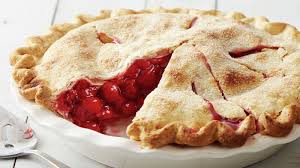
Readers of this blog are more than familiar with my love/appreciation of pie. What’s your favorite kind?

Coconut cream. The best I ever found was in a little diner/pie shop in Williams, Arizona. My wife and I always stop there on our trips between California and Oklahoma.

coconut cream

Q & A with Ellexia Nguyen of The Script Joint

Ellexia N_photo_xyz

Ellexia Nguyen is the founder of The Script Joint, an award-wining script coverage and editing company. Industry-wise, she started out as an apprentice film editor for producer Roger Corman’s company, Concord-New Horizons, and later as an assistant for Paramount Pictures’ Worldwide Feature Film Publicity.

After completing UCLA’s Professional Screenwriting Program for graduates, she launched her own business. Her company later won the 2016 award for “Script Consultants of the Year” and “Best Screenplay Editing Services”— which is showcased on the U.S. Business News website.

Ellexia works mainly as a script doctor/ghostwriter/story consultant on feature film scripts, TV pilots, TV series bibles, and novels. Some of her clients include directors, attorneys, CEOs of multimedia companies, indie producers, A-list producers, repped writers and some of Amazon’s best-selling authors.

Through her story consulting, editing and rewriting services, a handful of her clients, even new writers, successfully reached their goals by leaps and bounds, landing book deals, development deals, and multi-picture deals—some with major studios and streaming companies such as Netflix. Most notably, one of the feature film scripts that she script doctored for a client got picked up by Creative Artists Agency.

What’s the last thing you read or watched that you thought was incredibly well-written?

The Act, a gripping crime drama series on HULU. I was pulled into the story within minutes of watching the first episode at one of the TV Academy screenings. It’s an eerie dramatization of the true story about the murder of Dee Dee Blanchard, a single mom who suffered from MSP (Munchausen Syndrome by Proxy). For those unfamiliar with MSP, it’s a psychological disorder where the caretaker, usually the mom, makes up illnesses or does things to induce illnesses in the child under her care. It was a well-told story, and beautifully shot in a way to allow the audience to see and feel what the lead characters were going through.

How’d you get your start in the industry?

Some years ago, I was reading an article in a magazine about director Martin Scorsese and it talked briefly about how he had worked with producer Roger Corman.

After doing some research, I learned that Roger Corman’s company, Concorde-New
Horizons, was known for being an informal hands-on film school. After college, I reached out to the company and got an apprentice film editor position. That’s where I first came into contact with industry scripts and dailies. Over time, I became more interested in screenwriting.

Is recognizing good writing something you think can be taught or learned?

Yes, if you have a patient script consultant or mentor who is willing to point out to you what makes good writing or not. To recognize good writing, you also have to know how to recognize not-so-good writing. As a script doctor/consultant, I’ve worked with clients who had little screenwriting and novel book writing background. But over a few months, after giving them proper guidance and extensive story feedback, they were able to dramatically improve their writing and storytelling skills.

As a result, even some new screenwriters and novelists were able to get book and development deals from the drafts we worked on. So, yes, it can be taught – if the person you’re teaching has the desire, drive and determination to learn.

What do you consider the components of a good script?

A well-constructed story. Everything has to work together seamlessly such as the cast of characters, dialogue, and the story stakes. For example, a car can have the best engine, but it’s not going to take you where you want to be if you have flat tires. In screenwriting terms, that would be like having a good story premise, but characters that can’t drive the story forward due to poor dialogue.

Everything counts in a script.

It must have good dialogue because dialogue creates plot. The scenes must be succinctly narrated, moving your story along in a meaningful and visually engaging manner. You want the reader to be able to easily follow and understand your characters and their struggles. Also, the script should be well-paced and filled with a good amount of conflict and story stakes. Secondary characters should also interact with the main characters without appearing contrived. Lastly, the script should have entertainment value.

What are some of the most common screenwriting mistakes you see?

Having too many secondary characters in the story that end up robbing screen time from the protagonist and antagonist. They’re usually secondary characters that interrupt the story and do random things to each other. This often happens in underdeveloped comedies.

In a time-travel story premise, a common mistake is flooding the script with countless arbitrary “time jump” scenes—chaotically jetting back and forth between the past and present. This makes it impossible for the reader to become emotionally invested in any of the characters or their journey.

In sci-fi, it’s not sticking to the rules of the writer’s own created reality and letting characters do things that contradict the rules of the writer’s created reality.

In action, thrillers, and horrors, a common mistake is having an anti-climactic showdown between the hero and the villain. For example, the hero effortlessly defeats the villain, which takes the thrill and momentum out of the fight.

What story tropes are you just tired of seeing?

Like I mentioned earlier, sci-fi stories where the characters have to travel back in time to face something or do something to correct the past in order to save the future. Often times, there are so many time jump scenes such that they interrupt the narrative drive of the story.

What are some key rules/guidelines every writer should know?

-Write visually engaging scene descriptions, but don’t over- or under-describe.

-Give the protagonist clear goals and something to fear. What do they need to overcome to achieve those goals?

-Make sure there’s a good amount of tension and conflict in the story.

-Reward the audience for following your story by making the ending satisfying.

-Let your characters speak in subtexts, but try not to be too vague or ambiguous. Script readers aren’t mind readers.

-Have realistic expectations. Don’t expect film investors to shell out millions of dollars to turn your script into a movie if you’re unwilling to invest the time and effort to get your script polished. Show them why your script – and not your competitor’s – is seriously worth the investment.

Have you ever read a spec script that was an absolute, without-a-doubt “recommend”? If so, what were the reasons why?

Yes, the story unfolded like a movie within minutes. Strong presentation of theme. I was easily able to picture the characters, who seamlessly worked together to serve the plot. Scenes were written in a way to allow me to really see and feel what each of the characters was going through.

How do you feel about screenwriting contests? Worth it or not?

It’s one of the ways to test out your script before pitching it to producers. It’s also a way to get discovered by literary managers looking for fresh talent. But be selective and don’t blindly submit to countless contests. Not all of them offer you the same exposure or “prizes” if you win.

How can people find out more about you and the services you provide?

They can visit www.TheScriptJoint.com, follow us on Twitter at @The ScriptJoint, or connect with me on Facebook – https://www.facebook.com/thescriptjoint

Readers of this blog are more than familiar with my love/appreciation of pie. What’s your favorite kind?

Old-fashioned apple.

apple pie

Same destination, different route

hot fuzz

Even though I got some great notes back on the previous draft of my sci-fi adventure spec, one aspect of the script had always bothered me.

As much as I loved the opening sequence, it still felt out of place.

Its primary goal for existing was to establish and set up several plot elements and story details. It does that, but something just didn’t feel right.

Would the story still work if I took it out? Sure, but finding new ways to present all the relevant info would require some major rewriting and revising. Time-consuming (to a point), but necessary.

But that got the gears turning…

The more I thought about it, the more the idea appealed to me. Trust me, it killed me to even just consider killing all those darlings, but doing so would definitely force me to find new and original ways to tell this story.

Added bonus – a new opening would also enable me to do a better job of establishing the protagonist AND set the tone of the story.

So out all those pages went, with an ever-expanding list of all sorts of new ideas regarding How To Do It currently in development.

A writer may know what they want to happen in their script, but sometimes it doesn’t work out that way. The characters might unexpectedly guide you in a different direction, or maybe you realize what the story really needs is to take a sharp turn off to the side, or you decide that this is the perfect opportunity to go in a totally opposite direction.

Nothing is set in stone. You’re the ultimate creator. Everything that happens is under your control, and you can do with it what you will.

Something not working for you? Change it. Give yourself options.

Follow-up to that – go with options that still work within the context of the story and characters. Your characters still want the same thing they did before, but now you’ve drastically altered how they get there.

It’s a savvy writer who eagerly anticipates taking on the task of devising these kinds of changes. And once they’re all implemented, you’ll barely remember how it used to be because EVERYTHING WORKS SO MUCH BETTER NOW.

Suggestion – no matter how or when you come up with a new idea, WRITE IT DOWN. IMMEDIATELY. Even if you’re in the middle of working on the same script. Everybody says “Oh, I’ll remember that later.”

You won’t.

Do whatever you have to in order to preserve it.

*Apologies for a lack of post last week. I had some kind of bug that put me out of commission for a few days; didn’t even have the strength to compose a “sorry, no post this week” post.


Some tasty tidbits to tide you over

vintage-buffet-1
Go ahead and dig in! More than enough to go around!

Maximum Z HQ is in a transitional phase, geographically speaking, so all attention and efforts are focused on that for the next two weeks.

As a result, no new posts until at least the end of the month.

In the meantime, here are some classic posts from years past.

Enjoy.

All that on a single piece of (digital) paper?

The good bad of your antagonist

Introduce your character with character

The twiddling of thumbs is strictly prohibited

Characters are people!

Work those writing muscles!

I see what you did there, Mr. Kasdan

Respect your reader/audience

That’s not the question you should be asking

Hey! Long time no (preferred form of communication)

Seeking that which lies within

Kristen-Bell-Laughing-to-Crying

I won’t say the tough part of this rewrite is over, because it’s not. Well, part of it is. Sort of. Still working my way through Act 3 of the current draft, along with taking care of some minor story developments that have popped up as a result of changes along the way. Seriously hoping to wrap things up in the next week or so. Depends on how all of this goes.

But there’s one thing that’s been weighing heavily on my mind as I crank out the pages and start planning for the next draft. As good and solid as the action parts are, I also want to make sure the characters’ emotional arcs are just as effective.

Every character needs an internal and external goal. While the latter has never given me much of a problem, the former can sometimes be a bit trickier. Sure, there’s the protagonist and antagonist, which really drives the main storyline, but what happens with the supporting characters is just as important.

I’ve always been impressed with seeing how other writers incorporate little details or necessary information about the characters into the story that really help flesh them out AND add to the story. That’s what I’m seeking to do here. It’s also helpful to approach it with the mindset of “how to convey this information without it seeming too expository or on-the-nose?”.

As a writer, you want your characters to come across as realistically as possible, and by offering up some details about them – especially the why they do the things they do, it can help us better relate to them, and also make us wonder if they’ll be able to achieve their goals. When the story’s over, will we have seen how they changed from when they first showed up?

I’ve given myself the homework of watching films of a similar nature to get a better grasp on how to work these sorts of developments into the story. Going over the pages I already have has shown the foundations for each character are more or less in place, and will require digging a little deeper to really put them on full display.

While I’m glad I was able to produce this draft relatively quickly, I’m equally as eager to get started on the next one, taking care of everything it’ll require. That’s becoming a long list, but I’m feeling pretty confident about being able to effectively handle every item on it.