Getting a feel for the tactile experience

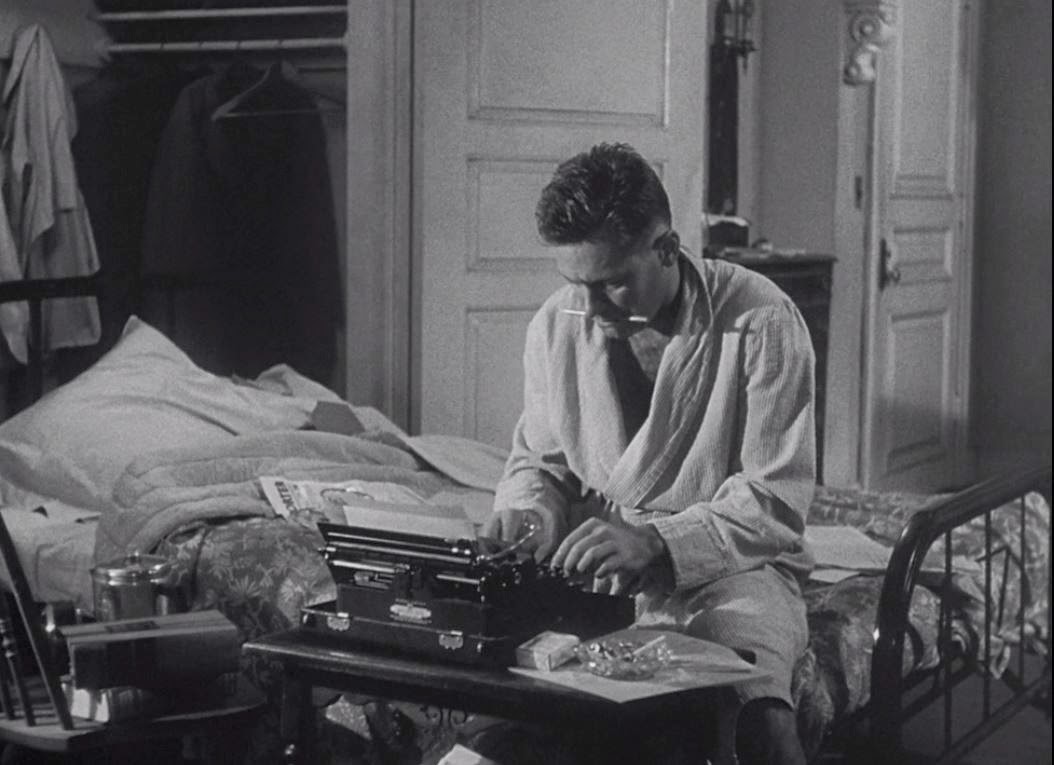
That's not ink. It's writer's blood (or at least it sure feels that way).
That’s not ink. It’s writer’s blood (or at least it sure feels that way).

The early drafts of my western spec all clocked in at 132 pages. “Way too long!” I was told.

Tips and suggestions on how to tighten things up were provided and implemented. 126 pages. “Still too long! Cut more!” they demanded.

Sleeves were rolled up. Knuckles were cracked. The pounding of computer keys continued. 122. “Keep going!” was the response.

I slaved, toiled and labored until I couldn’t take it any more. 117. “Almost there!”

Feeling rather drained, I took the most effective step of all: I printed out those 117 pages, armed myself with the almighty red pen and got to work.

For some inexplicable reason, when I edit a script on paper, it’s much more effective than working with a digital copy. Lines of text I’d always ignored would suddenly pop as something to cut, modify or move around.

I’ll scribble out an alternative line of dialogue. Try out an impromptu reorganizing of the scene. Cross something out, then change my mind and write ‘keep’ over it. Use my finger to literally block out a line to figure out if the scene still works without it.

Just the other day I cut out half the dialogue in a scene with no significant impact. Would I have been able to do that if I wasn’t working with actual pages? Hard to say, but I’m inclined to believe “probably not.”

As I worked my way through the script, I found more and more opportunities to cut or edit. Of these 117 pages, there’s at least one red mark on just about every page, which includes the plentiful use of red lines through words and/or sentences, and lots of circles and arrows (as in “move THIS to HERE”).

Exhausting as it was, the red pen portion of the process is now complete.

Unfortunately, I won’t be able to digitally apply these edits for a couple of days. The US is currently in the middle of a big holiday weekend, which means extra work shifts for me. Love the holiday overtime, but it’s also less writing time.

I’m not concerned. It’ll happen soon, and I’m looking forward to seeing what the new page total will end up being, as well as the subsequent responses.

It goes without saying that “Yes!” would be ideal.

Finding the positive in a negative


Converting something acidic to tasty and refreshing requires a little bit of knowing how
Converting potentially acidic to tastily refreshing requires a little bit of knowing how

Notes on both my western and mystery-comedy specs have been flowing in steadily from friends and trusted colleagues over the past couple of months, and the results have certainly been a mixed bag of opinions.

The general message is “Love the concept, solid structure, but ____, ____ and ____ needs work.” The individual comments, of course, are much more assorted. Happily, none are of the “This sucks! Do the world a favor and give up writing!” nature.

Show the same material to half a dozen people, and you’ll end up with half a dozen different reactions. And as you would expect, each one is helpful in its own way, especially if it includes something you may not necessarily agree with.

But here’s where it gets even better – take all of those notes and use the ones that you think make the most sense. Apply them to your script. Does it immediately read better?

Now let’s take it a step further, but this time with those comments you don’t agree with. What is about them that doesn’t work for you? Give ’em another look. Maybe there’s something in there worth using.

I got some great notes on the western, and one of the suggestions was cutting or at least shortening some sequences in Act Two. Of course, my initial reaction was “Not a chance!”

But this was defeating the whole purpose of getting notes – to make the script better. And me being so obstinate about it wasn’t helping.

So I read it again, this time with a more open mind. Would this work? Would it accomplish what I needed it to? The suggestion started to make sense. I’d already cut 12 pages out of this thing, so there was no reason I couldn’t trim a few scenes down. It wouldn’t hurt the story, and could actually improve it in terms of moving things along.

You get notes to help point out what’s wrong with your script, or at least what needs to be fixed. You can use them however you want, but to totally disregard them isn’t doing you any favors.

You’d be tired, too.

Allowing myself the luxury of a 5-minute nap between projects

What an exhausting week this has been.

-My “Ask a Script Reader/Consultant” series is going strong, with no signs of letting up. What I originally planned as a handful of interviews is now poised to run until at least the end of the year, possibly into January. There are a lot of quality readers and consultants to choose from out there, all of whom really know their stuff. If you think your script is good enough as it is right now, you should seriously consider getting some professional feedback from any of these folks to help make it even better.

-Had a great face-to-face meeting with another writer in which we talked shop, exchanged feedback on each other’s scripts and just had a nice time. It’s one thing to connect with somebody on social media or an online forum, but when you factor in the human element, it just makes it that much more a pleasurable experience.

-The feedback this writer gave me was about my western. He used to do coverage, so his notes were significantly better than mine. He had some very nice things to say about the script, and some great suggestions about how to improve it. Luckily for me, a lot of them were relatively easy fixes.

Working with these notes, I just completed a major edit, which resulted in shortening it by 4 pages to 122. That’s 4 pages less than the previous draft, and 10 pages less than the draft that went out to all those contests earlier this year. There will be at least 1-2 more edits, in which I’m hoping to cut even more.

-Because of all this other stuff, progress on the low-budget comedy has slowed a bit. The latest obstacle is the fleshing out of some of the subplots. While the main storyline is kinda/sorta solid, it’s those supporting ones that still need some work.

The next step may be focusing on developing each one subplot individually, then work out how it connects/relates to the others. This puzzle keeps getting more complicated all the time. I was hoping to have a first draft done by the end of the year, which is still possible, but it’s more important to me to have a nice, solid outline first.

-Got some great notes from a few people about the mystery-comedy. Still needs work, but just about everybody raved about its potential and how much they like the concept, which is always nice to hear.

-Looking for help with loglines? Check out this book from Doug King.

-A friend gave K some Meyer lemons, which naturally resulted in making a lemon meringue pie. I considered sharing some with my co-workers, but decided it was just too tasty to leave the house. When your child asks if the last piece can be saved so it can be part of her breakfast the next day, you must be doing something right.

-I haven’t been able to do any half-marathons since last year, but we got a dog a few months ago, so 2-3 times a week, I run the 3 miles to pick her up, then both of us do the run back. Doing these along with my occasional longer weekend runs has resulted in about 10 pounds dropped since Labor Day. Hoping to get back into doing some races next year, but the dog stays home.

-Oh, and there was this. 5 years in the making and no sign of letting up. Thanks for all the support, and I hope you’ve enjoyed the ride as much as I have.

If you’re new around here, welcome! Feel free to take a look around, ask questions, comment on something, what have you.

Can’t wait to see what happens next week.

Have you no imagination?

"You'd have turned down Gone With The Wind." "No, that was me. I said, "Who wants to see a Civil War picture?""
“You’d have turned down Gone With The Wind.” “No, that was me. I said, “Who wants to see a Civil War picture?””

It’s still an uphill climb with a few gaps here and there, but the overall story for the low-budget comedy is coming together.

I’m making a point of not rushing through it and being extra careful – almost to the point of meticulous – about how all the pieces interconnect.  The more I work on it, the more the phrase “French farce” comes to mind, so lots of interweaving storylines, the intersecting of character paths, and the ramifications of each character’s actions on the others. At least that’s my interpretation.

A challenge, to say the least, but it’s been a fun ride so far.

A last-minute surprise factor was this response to the logline on an online forum:  “It’s so straightforward now it’s hard to believe you could sustain interest through 100 pages.”

I’d like to thank that person for throwing down the gauntlet in making me work even harder than I already was. Never underestimate the motivational power of “Oh yeah? Just you wait and see what I can do.”

But back to the bigger issue. Statements like these always make me wonder about the person who says/writes them.

I never cared for the “I don’t see how this could be a story” line of reasoning.  That tells me you lack vision and creativity. Just because you think it won’t work doesn’t mean it won’t. Nobody thought GUARDIANS OF THE GALAXY would do well and look what happened.

Side note – My western received a handful of reader responses along the lines of “This isn’t factually or historically accurate, so I just couldn’t get into it.” They’re entitled to their opinions, but I feel bad about their inability to just sit back and enjoy an old-fashioned ripping yarn. Although one person was gracious enough to admit at the end of their comments “It would be better if you just ignore everything I’ve just said.” Consider it done.

Always remember the sage advice of William Goldman: Nobody knows anything.

I’m all for encouraging other writers. If your idea interests or excites me, I’ll tell you. If it doesn’t, I’ll explain why not and make suggestions of potential fixes. The last thing I want to do is discourage you or give you a lecture, and you sure as hell don’t want to hear one.

My criteria is pretty simple: If I read somebody’s logline or hear their story pitch and can instantly imagine the potential within that story, and more importantly, if it sounds like something I would want to see, then they’ve succeeded and gotten over the first hurdle.

Of course, having the actual script live up to or possibly even surpass expectations is another thing.


Constructive criticism – a force for good

If I can't hear you, then it's not true
If I can’t hear you, then it must not be true

If you met someone who does the same thing you do, but has been doing it longer and with more success, wouldn’t you ask them for advice on how you could get to their level, and more importantly, heed that advice?

While I’m not a professional writer (yet), others, mostly on the newer side, will ask me for feedback on their script.  If I have the time, I’ll do it, and offer up what guidance and suggestions I can.

My notes are sent with the reminder that these are just my opinions to do with as they see fit. Fortunately, most of the responses have been positive and appreciative.

But once in a while, somebody will disagree with what I’ve said or totally ignore it. That’s their choice. They came to me seeking help, and I guess didn’t like what I had to say.

I once asked somebody what kind of material it was, and the answer was long-winded and very academic. While they were droning on, I couldn’t help but think “If they tried to pitch this to a producer, that meeting would probably be over right about now.”

Asking another writer for their logline, I got what sounded more like the short paragraph you’d see on the back of a novel. I tried a few different approaches, each time hoping to point them in the right direction as well as coax out some of the creativity they claimed to have. No such luck. After offering up what you do and don’t want to have in a logline, the response was a curt “Got it. Thanks.”  Can’t say I didn’t try.

Part of me wonders if my advice would be taken more seriously if I charged for it.

You came to me for help, remember? Just because you don’t like the answer doesn’t mean it’s not true.

I’m not trying to be mean. Quite the opposite. There are hard truths about this business that some people just refuse to acknowledge. All of us who came before you learned them the hard way, and if you want to make it, then you’re going to have to do the same.