What’s wrong with PG-13?

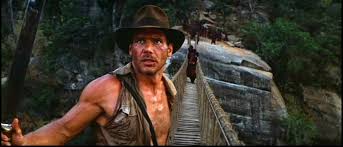
One of the two movies which resulted in the creation of this rating

In recent discussions with other writers, I’d be asked what I was currently working on. I’d mention the western and mystery specs, and give a thumbnail description for each.

Among the responses I’ve come to expect is usually the follow-up question:  “Who’s your target audience for that?”

Everybody.

While what I write would probably be too much for very small children, there’s no reason it couldn’t be enjoyed by anyone between 8 and 108, as the saying goes.

In addition to all the usual criteria, I want to make sure the story is interesting enough so it would appeal to a wide spectrum of viewers, as well as keeping the content dead-center on that fine line between “not enough” and “too much.”

One writer sent back his notes on the western. He had some very good comments, but some of them seemed to be through a DJANGO UNCHAINED filter (which he also admitted being influenced by). It was suggested I go for a more intense level of violence in some scenes.

Which would be fine if I were writing something that was a hard ‘R’, but this isn’t.

I’m just more of the family-friendly sort, and there’s absolutely nothing wrong with doing that kind of material. (FROZEN has earned $350.7 million so far. Not too shabby, with the sing-along version ready to be unleashed.)

Although I want my stories to be fun and exciting, it’s also important to me they respect the audience’s intelligence, no matter what age they are, while also being fairly easy to follow.

I appreciate it when a movie does that, and hope to keep the practice going.

Caught in the ripple effect

It starts a chain reaction you just can't stop
A chain reaction you just can’t stop

When I work on pages, I make a point of adhering to the story as it’s written in the outline. There may be some slight alterations here and there, but that’s not an uncommon thing.

At the moment I’m in the middle of a sequence, that, according to the outline, was all planned out. No problems.

Little did I realize that over the course of the pages before this, all of those slight alterations would drastically change the circumstances surrounding my protagonist’s situation in that sequence.

Without knowing it, I had made things much harder not only for him, which is how it should be, but also for myself, which isn’t exactly the greatest of news.  Most of the details now had to be thrown away.

And because I’m such a glutton for punishment, this sequence was slowly becoming way too similar to one from about 20 pages before it. How I didn’t see this while outlining I’ll never know.

So it’s not necessarily back to square one, but I’ve got some work to do. Looking at this from the silver lining perspective, this is actually some pretty good stuff:

-My protagonist now faces bigger challenges, which still advance the story, theme and character development.
-I’m forced to come up with better, more creative ways of depicting how things play out.
-Recognizing and handling the domino effect those earlier changes have made and will make on the rest of the story.

Fortunately, we writers are a hearty lot and not easily deterred.  Time, experience and constant rewrites provide us with the determination and intestinal fortitude to work our way through this sort of thing.

The twiddling of thumbs is strictly prohibited

How often have you read a scene with several characters in it, but the focus is only on two of them? Makes you wonder why exactly those others are there, doesn’t it?

The last thing you want is to have characters just standing around. Give them something to do!

Each scene has to move the plot forward, and every character, no matter how big or small their role, plays an important part in making that happen.  If there’s no purpose for them to be there, then they don’t need to be there.

Countless opportunities abound for what characters can be doing in addition to exchanging dialogue, thereby avoid the dreaded “talking heads” scenario. The important thing is to keep it relevant to the scene, and not just something random.

Maybe it’s providing (or at least contributing to) the conflict for that scene, or showing the latest development of the main character’s arc.

If you’re not sure what the characters should be doing, try to come up with several alternative versions that reach the same conclusion.

You know what the point of the scene is and what kind characters they are, so take the time to figure out the best way all of you can work together to get the best possible result.

The story behind the story

Figure out how it works before you start, or things could get messy
Step 1: Figure out how it all works

A slightly altered holiday work schedule has resulted in more hours on the air, which is always nice, but less time cranking out pages, which isn’t.

So I make the most of the handful of minutes between reports with the always-reliable working on an outline. This time – the monster script.

Despite knowing the general playing-out of the story, there was something that wasn’t clicking. Most of the items on my mental checklist had been checked off.

Most. Not all.  What was missing?

It took the constant back-and-forth between the opening sequences of the two previous outlines to make me realize what it was: I’d never fully established what happened before the story started.

Not knowing how everything came about was preventing me from moving forward. I had to create this world before I could write about it.

Think of the opening crawl in STAR WARS (“It is a period of civil war. Rebel spaceships, etc. etc…”). It establishes what we need to know. Without it, we’d be too busy trying to figure things out.

Using that as an example, I worked out my own version of the opening crawl. It won’t be in the actual script, but it’s a pretty solid foundation for setting things up – a better realization of how this world works, what the antagonist wants and how that can be accomplished, the challenges the protagonist faces, just to name a few.

The work on this is far from being over, but developing this really helped. Some important blanks have been filled in and I’ve got a firmer grasp of how the story works.

Time now to start the latest version of the outline and see how it goes.

-Regarding the recent release of this year’s Black List. There appear to be a handful that sound pretty good, but the rest don’t really do much for me.

No doubt they’re all extremely well-written (why else would they be on the list?), but a majority don’t have that “Read me!” vibe. It probably doesn’t help that the writers are not the ones providing the loglines. I suspect that would make quite a difference.

Tying it all together

Nothing better than a solid connection of two loose ends
Nothing better than connecting those potential loose ends

Even though I just started this rewrite of the mystery spec, I’m firmly entrenched in the practice of always thinking “What’s the best way to tie this in?” for every scene. It’s something I strive for every time.

No matter how seemingly small or insignificant a part of a scene is, we as writers must be compelled to make sure it all fits not only within the context of the scene, but also within the story as a whole.

Everything should serve a purpose. If it doesn’t, why is it there in the first place?

Think of it as a slight variation on setup and payoff. While those usually apply to the plot (or at least should), tying things together is more of a way to support what happens around the plot. Anything that doesn’t belong is going to be even more noticeable.

It drives me crazy when something happens or is in a scene for no apparent reason. It’s easy to fall in love with your own writing, but don’t put something in because you think it should be there. Have it in there because it has to be.

Taking it in the opposite direction, I’m always impressed to realize after finishing a read (or viewing) how something tied in, but didn’t recognize it at the time. This can be tricky to get a handle on. You don’t want to be obvious about it, but also don’t want to make it too obscure.  It takes practice.

So the next time you’re writing, editing or proofreading, keep in mind to constantly ask yourself “Does this really belong here?”