The good bad of your antagonist

mitchum
Few better examples than this guy

My original goal for February was to complete the second draft of the low-budget comedy. But as always, things didn’t go as planned.

I’d finished the initial edit, but then got hit with a nasty cold that put me out of commission for about a week, followed by all the activity involved with my daughter’s Bat Mitzvah (where she did a fantastic job), so writing-wise, things came to a screeching halt.

But we’re in a new month, so lots of new opportunities abound. Here’s hoping I can work this script into shape by the 31st.

I’d gotten some very helpful notes on it, the most notable of which was “Your antagonist is too nice. They need to be more at odds with the other characters.”

And they were right. Looking at it with fresh eyes, it’s easy to see how that observation rings true. During that read-through edit, I found at least three places where the character’s badness could definitely be ramped up, and expect more will be found over the course of this rewrite.

Sometimes I’ll even surprise myself by having the antagonist do something unexpected (in terms of behavior, not the story), especially if I personally find it very off-putting. But if it works within the context of the story AND further builds on the difference between them and the protagonist, all the better.

The challenge in writing a solid antagonist is really putting the emphasis on the “antagonize” part. What they want is most likely the opposite of what your protagonist wants, and they are determined to get it – possibly at all costs. To them, they’re the hero of the story, and your protagonist is what’s standing in their way.

I’ve always hated when I read a script and the antagonist is a stereotypical cookie-cutter villain who’s bad for no apparent reason, or because the story requires them to be. Why do they want what they want? I know what the hero wants, but what about them? Just because they’re the antagonist doesn’t mean there’s no story behind who they are.

So the next couple of weeks should be pretty interesting. There’s still a lot of work to do on this, but no doubt one of the high points will be the fun of coming up with ways to make my antagonist even more devious.

Because that’s the kind of character she is.

The great exchanging of 2 cents

team vs wall
Sometimes you’re doing the lifting or pulling up, and sometimes you’re the one to whom it’s being done

One of the greatest benefits I’ve found from developing and interacting with my network of fellow writers is the mutual willingness to help out when that help is requested.

Just within the past month, I’ve had three requests for script notes and two for logline feedback. (Although I’ll be the first to admit my timing could use a little improvement. It always takes me longer than I think. But I make a point of doing it. That counts, right?)

And during this same time, I’ve contacted several associates, asking “If you have the time, what do you think of this?”

The advantage of this kind of arrangement cannot be understressed. While I’ve gotten a lot out of using professional feedback, I’ve also been extremely fortunate to have received some very insightful and helpful comments from other writers. I couldn’t even begin to tell you how much their suggestions have contributed to the improvement of my scripts and loglines.

Since politeness actually does count (and people will remember it, or the lack thereof), I make sure to send them a thank-you note, which includes “More than happy to return the favor.” Which I am. I enjoy reading and commenting on other people’s stuff. And I’ve yet to have one person say my notes weren’t helpful. To my face, anyway.

One of those written-in-stone tenets of screenwriting is “It’s not what you know, it’s who you know.” While this primarily applies to people working in the industry, it can also work for those of us trying to break in.

Take a look at your own personal network. How many of them would you be willing to contact and ask for a little help? And how willing would you be to help them if they came to you? Being helpful and supportive goes a long way for both parties.

Working in a timely manner

train conductors
“Now that’s something you don’t see every day, Chauncey.” “What’s that, Edgar?” “A writer setting a schedule and sticking to it.”

Following the lead of some of my writing colleagues, I’m making more of an effort to establish a sense of order and structure when it comes to my writing and all things connected with it.

It used to be “Write when you can!,” which in a way it still is, but more layers and categories have been added to the mix.

-First and foremost, the setting aside of at least an hour a day to work on one of my own projects continues, be it outlining, writing, editing, rewriting, or polishing. This remains the primary objective.

-Networking. While connecting with people is easy, maintaining those relationships takes effort, and can quickly become time-consuming. As much as I enjoy conversing (albeit online) with people, I try to keep it to a minimum – unless it’s relevant to the project of the moment.

-Related to that is the reading and note-giving for other writers, especially those who were equally as generous with their time to do the same for me. I may not always be on schedule about it (something I’m trying to improve), but I make a point of getting it done.

-Career-building. This mostly involves researching potential recipients for pitching and queries, which means diving head-first into the scavenger hunt that is IMDB Pro. While most of the time the contact info is accurate, sometimes it’s out of date (people move on), or there’s no contact info whatsoever, or the person or company in question hasn’t existed for years.

*True story – researching an agent, I’d discovered they’d apparently died several years before but the email was still in operation. I opted not to query them.

-Overall stayin’ organized. I’ve started jotting down each day’s objectives and “must do’s” in a little notebook, and checking off items as they are accomplished. It’s been very helpful in making me stay focused on what needs to get done, rather than hoping I remember later on.

All of this is still somewhat early in the process, but so far, so good. That feeling of being in control helps make the whole thing seem a little easier, as well as feeling like stuff is actually getting done.

How about you? What steps are you taking to be more organized with your writing?

If only I were getting paid to be this busy…

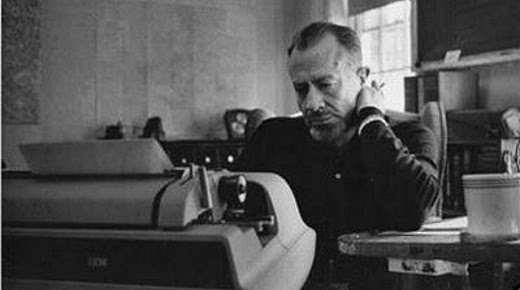
Steinbeck typing
There are worse role models

It’s been a busy couple of days with no sign of letting up, so another shorty today.

-Sorry to say a lot of my time recently has been taken up dealing with technical issues for my email and this blog. Many’s the time I wanted to fling my laptop against the wall due to something not doing what it was supposed to be doing.

-Latest batch of query letters sent. A handful of “send it!” (fingers crossed for that one to the big prodco), a handful of “thanks, but no thanks” and a lot of silence from the rest. Undeterred, I’ve got a few new lists ready to go.

-Got some great suggestions and feedback on my 1-pagers, so rewrites are underway.

-A hearty thanks to those who’ve contacted me about “scripts wanted” listings which are potentially solid matches for some of mine. Follow-ups are in progress.

-Still working on script notes for a few of you. Your patience is greatly appreciated.

-Huge thanks to those offering their support and words of encouragement during some recent times of feeling lousy, confidence-wise. Knowing you’re in my corner means a lot.

-Even though I’ve been super-busy, I’m still doing what I can to do some actual writing, both for my own projects and some outside ones I’m involved with. It’s not always easy, but really making the effort to get something done each day.

Have a great weekend, and hope you get some kickass writing done.

Don’t open that door!

doors

Another busy week around Maximum Z HQ, with a significant part of it involving waiting to hear about the potential future of some of my projects.*

I hate the waiting. It opens the door to allow fear and anxiety to stroll on in.

A friend who’s a director put it very succinctly: It’s all about control. A lot of that stuff is out of your hands now, which makes you nervous about the outcome. You have to redirect your attention to anything and everything for which you can take charge, and do something with it. The sooner the better.

How absolutely true, and it was exactly the reminder I needed.

In my case, that comes down to the work and all things related. It’s easy to forget how many things with which I’m involved. My own stuff (which is a growing category unto itself), giving notes, networking, sending out queries, just to name a few.

Sure, it would be great for everybody to respond quickly, preferably with news of a positive nature, but it doesn’t work that way. These things are known to drag out for excruciatingly long periods of time, and me fretting over it is the last thing I need.

I wouldn’t even be surprised if I get an email in a few months about one of these that I’ll probably have totally forgotten. It’s happened before.

Keeping busy really does help you stay focused and keep the negatives at bay. It might not be easy, but do what you can to slam that door shut, lock it and throw away they key.


*heard back from a producer soon after posting this. They passed on my script, which sucks, but will now re-double my efforts with the other projects.