Good or fast? Pick one.

hurdles
Careful! All too easy to end up flat on your face.

As some of you may recall, earlier this year I had to get a script done in order to send it to somebody who’d requested to read it. Seeing as how I had all of eight pages written, I wanted to finish it and sent it out as soon as possible.

It took a grueling 10-day writing marathon, but somehow I managed to do it. I got a draft written, polished it up and sent it out.

It was quite an experience, and the end result could best be described as…adequate. I’ll be the first to admit the script still needs a ton of work.

My sole objective was simply to get it done to the best of my ability in as short a time as possible. Would I have benefited from more time? Of course, but at the time, it wasn’t an option.

Fast forward to the beginning of November. My goal: have a completed draft of the latest project by the end of the month. Sadly, I wasn’t able to get as much writing done as I’d hoped, so I’m heading into December with a script that’s right at the halfway point and the intention to have the whole thing done by the end of the year.

Sure, I could push myself through that exhausting process of cranking it out just to get it done, but by working with a slightly longer timeframe, I can take it slow and spend more time fine-tuning the script. In theory, this increases the likelihood the end result will be more acceptable and not require as much extensive follow-up (i.e. rewrites).

Would I love to be done with this draft sooner rather than later? Again, of course. But I’m also willing to be patient and focus on a few pages at a time. If that means it takes me until the end of the month/year to have a quality script ready to go, so be it.

Everybody writes at their own pace. Some are extremely prolific, some aren’t. It doesn’t matter how many pages you write. The important thing is that you’re actually writing.

This whole process can seem excruciatingly long at times, and we all want to produce lots and lots of quality work. But it already takes time to learn how to do it properly, let alone effectively. Patience is one of those things that gets easier the more you work on it.

There’s nothing wrong with churning out a draft in record time, but be aware that focusing on quantity rather than quality will definitely be reflected in those pages. I went through this firsthand, and definitely see it as a positive learning experience. I know I can write something quickly, but also know it’ll require a lot of cleanup work.

But given my druthers, I prefer to take my time. It’s less exhausting.

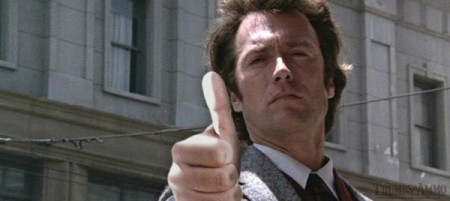
Hopefully not too seldomly heard

callahan
Thanks, Harry! I’m glad you liked it.

So how’s your November writing project coming along?

Mine’s not too bad.

I’m a few scenes into Act 2, and things seem to be progressing smoothly, including coming up with a strong and slightly expository scene at the spur of the moment. Daily page output is fluctuating, but relatively steady; not sure if I’ll have a completed draft by month’s end, but think I’ll at least be mighty close.

This script is actually part of a collaborative effort (more on how that came about another time), so I sent the first ten pages to the other person, just to let them know how it was going.

Their response arrived the following morning.

“Fucking amazing! You are definitely on the right path. Amazing job!”

There was more to it, but I believe that accurately sums it up. They like what I’ve done so far, which in turn buoys my confidence, thereby inspiring me to keep charging ahead. Encouragement combined with enthusiasm is contagious.

Added bonus – several voicemails since then mentioning how they’re been reading those pages a couple of times a day and can’t help but feel a thrilled sense of anticipation about the rest of the script, along with its potential.

No complaints from yours truly about dealing with a case of the warm fuzzies.

A writer always hopes people like what they’ve written. True, not everybody will, but if some positive comments come from another writer whose opinion you value, wouldn’t that give you a little boost?

Who doesn’t appreciate a little vindication for all the hours put into getting to this point? We all know how much effort it takes to write something, let alone something that garners a positive response.

When I’m asked to read something, I’ll be honest with my thoughts on it. I’ll make appropriate suggestions of how it could be improved (which is usually the reason we’re being asked to read in the first place). But if I think it’s good, I won’t hesitate to say so. I will gladly point out what I liked and why I liked it.

Your readers are more than happy to give you positive feedback and words of encouragement, but they won’t do it because they like you or you’re their friend. They will do it because the material you wrote earned it.

And they’ll want you to keep doing it. And you’ll want to too.


A splendid use of a month’s time

pilgrim-marilyn
Most apropos Pilgrim-related photo I could find

Bit of an Election Day shorty today (and for readers in the US – make sure you vote, if you haven’t already).

Count me among the legion of writers using the month of November as a 30-day writing exercise.

My project of choice: first draft of a script that’s been in development for about a year and a half. Looking forward to talking about it more once the draft is complete and some next steps take place; but for now – mum’s the word.

The daily goal of 2-3 pages has again been established. So far, so good, especially working with an outline that’s pretty solid. That really helps.

Working on this reminds me of how much I enjoy the writing process, particularly when it involves my genre of choice (action).

My objective is to be finished, or at least as close to being finished as I can get by the end of the month. Fingers remain, as always, firmly crossed.

I sincerely hope your November is equally as productive.

Avoiding the dreaded unfilmable

flagman
Don’t go this way!

I recently had the pleasure of giving notes on a friend’s script. It was an early draft, so it had some of the usual problems that were easily fixable.

But the one thing that really stood out to me was their use of unfilmables.

“Unfilmables?” some might ask. “What are those?”

I’m glad you asked. Here’s an example:

“EXT. PORCH – DAY

Jane sits on the stained deck chair her father bought for her birthday last year.”

If you saw that onscreen, you know what you’d see?

A woman sitting on a chair.

In other words, HOW DO WE KNOW it was a birthday present from her father? We don’t. How can you let us know? Maybe we see the father giving it to her. Or another character asks about it, and she delivers a one-line explanation.

If there’s an important detail to your story, you need to find a way to include it as part of the story, and preferably in the most organic way possible.

What’s on the page is what we see and hear.

Unless there’s a line of dialogue or some kind of action somewhere in there that reveals these kinds of things, the audience has no way of knowing them.

Here’s another:

“INT. KITCHEN – NIGHT

Kevin washes dishes. He thinks about that time he and his high school girlfriend crashed her mom’s car.”

What’s on the screen? A guy washing dishes.

HOW DO WE KNOW that’s what he’s thinking about?

Maybe we see the accident take place. Or hear Kevin talking about it. Maybe the story involves how the accident leads up to him washing dishes.

In my old writing group, one writer was insistent about leaving these sorts of things in. When pressed on why they were so adamant about not being willing to take them out, they’d launch into a long-winded explanation of why it was necessary to include them.

“So if we were watching this, you’d be there explaining things, rather than working them into the story and showing them on the screen?”

I’m not sure if they got the point.

Hopefully you do.

What’s stopping you?

handyman
The ultimate DIY project (film division)

I had the recent pleasure of connecting with a screenwriter who’s working on a feature script, but is also investigating the logistics of developing a short out of it, which includes them having begun connecting with other writers and filmmakers in their area.

I thought that was a great idea, and tossed out the suggestion that maybe they try to make it themselves, as in “just you”. Especially now that most smartphones can double as camera equipment, and film editing software is easily accessible (if not already installed on your computer).

They’d considered this, adding “But I’m just not tech-savvy”.

But you can learn.

If you’re reading this, you’re more than likely interested in screenwriting and/or filmmaking. When you first started out, it’s probably a dead-on certainty that your early works were awful, right?  Looking at some of my first scripts makes me cringe from how bad they are.

But we kept at it, learning and improving along the way. How does your most recent effort compare to that first one? Worlds apart, I’d imagine. You try something, you make mistakes, you learn from those mistakes, and try again.

There’s no reason you couldn’t apply the same logic to making your own short. Sure, there’s a lot more to it than simply pointing your phone and hitting ‘record’, but you gotta start somewhere.

Give it a go and write yourself a short script. Nothing fancy (but do try to make it a good sample of the genre). Anywhere from one to five minutes, spread out over one, possibly two scenes. Two characters, three at best. Try to keep it limited to one location.

Now look at it from the filmmaker’s perspective. Could you feasibly make this yourself? Like how a first draft of a script reads, the end result will not be pretty. At first, you’ll be thrilled at having done it. Then reality sets in and the flaws become that much more obvious.

But you will have done it. A short film, written and produced by YOU.

What you do with it now is up to you. Hopefully, you’ll embrace the learning experience and know what not to do the next time around.

My friend mentioned that once the short got made, which it sounds like they are very intent on making happen one way or another, plans are already being discussed about next steps, which included posting it on YouTube and/or submitting it to some film festivals.

Even though our conversation was solely via email, there was a certain tone to their words that indicated they were quite psyched about jumping into this new venture. I wished them the best of luck and asked to be kept updated as to their progress.

I think they’re off to a pretty good start.