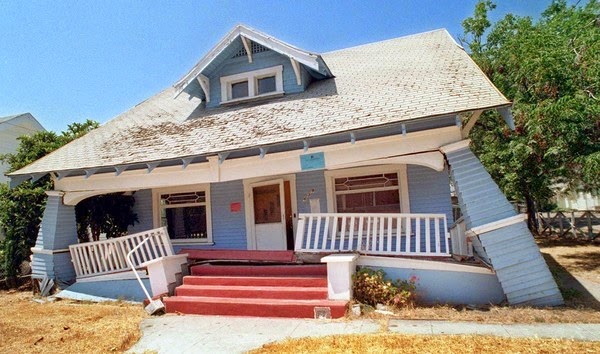
First, you build a solid foundation…

foundation
And this is what could happen if it isn’t

As the daily churning-out of pages continues for my November writing project, I’ve found it extremely helpful that so much time was spent working on the outline.

Only through trial-and-error did I eventually discover that making sure the outline is rock-solid before starting on pages makes a huge difference.

Keep in mind that this is what works for me. You may have an entirely different approach, and that’s totally cool. Actually, I’m curious to hear about some of them. Feel free to discuss in the comments section.

And now, back to the subject at hand…

I see putting together the outline as a gradual building-up process. I start with establishing the main plot points. What are the pivotal moments in this story? Does each one properly fulfill its purpose in the overall context of the story?

Then I fill in the blanks between those plot points. Does it make sense how we get from, say, the inciting incident to the end of the first act? Does each scene do its job in moving the story and characters forward? Are you presenting information we need to know, or setting things up so as to adequately pay them off later? Does each scene appropriately follow the one before and lead into the one after it?

Something important to keep in mind during this part: eliminating unnecessary scenes. You may have a scene you really, really like, but may not be absolutely vital to the story. My recommendation is to either make it vital or get rid of it entirely. The last thing you want is to interrupt the flow of your story for a scene that really doesn’t have to be in there.

Once you’ve got all those blanks filled in, then you move on to expanding each scene – mostly just putting in the necessary elements that reinforce the purpose of the scene. Sometimes I’ll add in a snippet or two of dialogue.

Another very important detail about each scene: get to the point, then get out and into the next one. Once the scene fulfills its purpose, anything after that just slams on the brakes.

Hang in there. You’re almost done. The outline is pretty sturdy, but it could probably use a little more editing, fine-tuning and polishing. When you think it’s honest-and-truly ready, that’s when you make the big jump to pages.

This isn’t to say there won’t be more changes in store once you’re into pages mode, but by putting so much time and effort into your outline, you’ve eliminated a lot of the heavy lifting for when you get there.

Pacing & page numbers

number-line
Looks like there’s a lot going on up ahead

When you start reading a script, you tend to recognize pretty quickly whether or not the writer knows what they’re doing. Their mastery of the craft (or lack thereof) will become soon apparent.

Bad formatting. Misspelled words. Unfilmables. On-the-nose dialogue. Cliches as far as the eye can see. Quite a checklist.

Find one or more of these early on, let alone just on the first page (which does happen), and there’s not much hope of improvement. You’re left with no choice but to force yourself to push forward. Maybe once in a while, you glance up at the upper right corner of the page/screen.

Your shoulders sag. “I’m only up to page ____? This is taking forever!” you exclaim. Making it to the end has suddenly become a question of “if”, rather than “when”.

Now let’s examine the other side, where the writer is in total control.

You encounter writing so sharp and descriptive, you can easily “see” what’s happening. Dialogue that’s not just crisp, it practically crackles. Characters who feel and talk like real people. All of it taking place in original and entertaining situations.

You become so wrapped up that you can’t wait to get to the bottom of the page so you can move on to the next one. And maybe once in a while, you sneak a glance at the upper right corner.

Your eyebrows shoot up. “I’m already at page ____? Wow, this is just zooming by!” you exclaim. You eagerly dive back in, more than ready to continue because you simply can’t wait to see what happens next.

Now here’s the big question for you, the writer:

Of the two experiences listed above, which do you want the reader to have when they read your script?

Do you want them to be bored and see reading your script as a chore that ranks up there with cleaning out the cat’s litterbox or listening to a timeshare presentation?

Or do you want them to be so involved, their attention so riveted to the tale being told in your script, that nothing short of a major crisis or natural disaster could tear them away? (Not to diminish the intensity or significance of major crises or natural disasters, but you get the idea)

It’s tough to be that objective when it comes to reading your own material. You think it’s good (“How could anyone not like it?”), but every reader has their own criteria for what works and what doesn’t. The challenge is crafting together a script so rock-solid that not liking it is not an option. Not sure if yours is? Seek outside opinions. Rewrite with the mindset of “how can I make this better?”.

As screenwriters, our primary goal is to tell an entertaining story. The last thing we want is for someone to be easily distracted by something/anything else when they’re supposed to be reading (and in theory, enjoying) our scripts.

A few words about dialogue

So when your characters speak, does what they say SOUND like something people would actually say, or does it come across as “too movie-like”?

Do they say EXACTLY what they mean?

Dialogue is a very tricky part of screenwriting that takes a lot of practice to make the words being spoken sound totally natural. When we listen to what the characters are saying, you don’t want to make us aware we’re watching a movie.

Too many times we’ll read the characters’ dialogue, and it leaves us totally flat. Maybe it’s pure exposition. Or nothing but cliches. Or exactly what you think they’ll say. There’s no subtext. No implying. Just straight-out “this is what I want to say”.

All of this makes for some boring and, in all honesty, awful reading. And if the dialogue isn’t good, it’s pretty likely the rest of the script isn’t that good either.

(And the less said about parentheticals, the better. In short – DON’T!)

A lot of writers will jot down lines of dialogue because they think that’s what the characters should be saying. But it goes a lot deeper than that. The dialogue is just one way for the character to express themselves. In fact, sometimes the most effective dialogue is where the character doesn’t say a word.

Do the lines read like the writer put a lot of thought into the content or intent of what’s being said? Audiences and readers are smarter than you give them credit for. They will get nuance and innuendo, which are both more effective than just saying the actual words.

How many writers say the lines out loud to see how it sounds? You may think that monologue is nothing short of genius, but in reality it probably makes the reader’s eyes glaze over for how much it rambles. There’s a lot to be said for organizing a table read of your script (where you will quickly learn to identify most problems, let alone having them pointed out to you by the actors).

Going back to one of the earlier questions, does what the characters are saying sound like not only something they would say, but something you would say? There’s a little bit of you/the writer in every character, so you know them better than anybody, which therefore makes you the most likely to know what they would say and how they would say it.

Like with the scene itself, you want the dialogue to deal only with the point of the scene, or at least be integrated into the context of the story. Anything extra is just going to slow things down, and the more unnecessary dialogue you have, the more it’s going to drag. Cut what you don’t need so you’re not wasting anybody’s time. Get in late, get to the point as soon as possible, get out.

There’s no secret formula for writing good dialogue. It just takes time to learn how. Read scripts and watch movies similar to yours. See how they did it, and work on applying the same principles to your material. Use what the characters are saying (and aren’t saying) to help tell the story of your script, with the challenge being keeping the words spoken and unspoken true to both characters and story.

And again – stay away from parentheticals. Please.

Avoiding the dreaded unfilmable

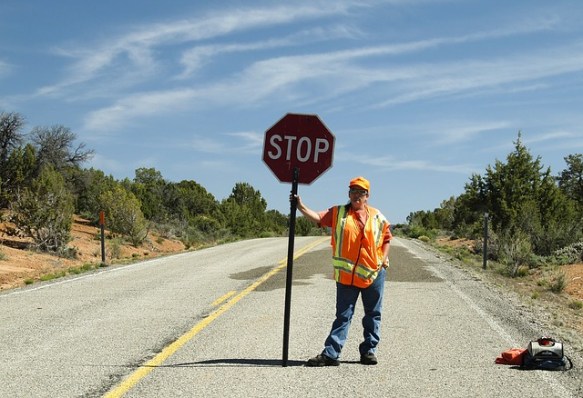
flagman
Don’t go this way!

I recently had the pleasure of giving notes on a friend’s script. It was an early draft, so it had some of the usual problems that were easily fixable.

But the one thing that really stood out to me was their use of unfilmables.

“Unfilmables?” some might ask. “What are those?”

I’m glad you asked. Here’s an example:

“EXT. PORCH – DAY

Jane sits on the stained deck chair her father bought for her birthday last year.”

If you saw that onscreen, you know what you’d see?

A woman sitting on a chair.

In other words, HOW DO WE KNOW it was a birthday present from her father? We don’t. How can you let us know? Maybe we see the father giving it to her. Or another character asks about it, and she delivers a one-line explanation.

If there’s an important detail to your story, you need to find a way to include it as part of the story, and preferably in the most organic way possible.

What’s on the page is what we see and hear.

Unless there’s a line of dialogue or some kind of action somewhere in there that reveals these kinds of things, the audience has no way of knowing them.

Here’s another:

“INT. KITCHEN – NIGHT

Kevin washes dishes. He thinks about that time he and his high school girlfriend crashed her mom’s car.”

What’s on the screen? A guy washing dishes.

HOW DO WE KNOW that’s what he’s thinking about?

Maybe we see the accident take place. Or hear Kevin talking about it. Maybe the story involves how the accident leads up to him washing dishes.

In my old writing group, one writer was insistent about leaving these sorts of things in. When pressed on why they were so adamant about not being willing to take them out, they’d launch into a long-winded explanation of why it was necessary to include them.

“So if we were watching this, you’d be there explaining things, rather than working them into the story and showing them on the screen?”

I’m not sure if they got the point.

Hopefully you do.

Just the push I needed

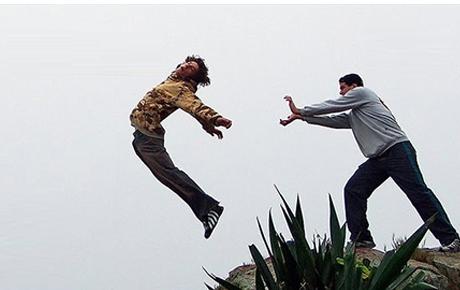
push
What are friends for?

Notes are coming in for the comedy spec, and reactions are pleasantly positive. My always-reliable readers have provided some extremely helpful notes, including an across-the-board opinion about a key plot point.

A lot of what they had to say made some good sense and are really helping solidify the script into something more-than-decent.

While they had nice things to say about the script, each reader threw in an extra little tidbit in the form of comments directed at the script’s writer.

AKA me.

“These two lines of dialogue are an anomaly compared to the rest of it. I know you can do better.”

“Great story, but I’d like to see you dig deeper.”

And these are comments from experienced writers who’ve read some of my other scripts, so they know what I’m capable of. They’re not just saying these things in a casual, generic feedback kind of way, or because they’re trying to be nice. They really mean it, and I take what they say to heart.

I thought the script was okay to begin with, but after getting comments like these, it makes me want to try even harder.

When you’re in the process of putting a script together, you really dedicate yourself to doing a good job, and then try to do better with each subsequent rewrite. It’s how we improve.

But it’s also kind of tough to be able to get yourself past a certain point. You think you’ve done everything you can, but then you get a bit of a supportive nudge and your journey resumes.

It’s quite the confidence booster to know there’s somebody out there rooting for you (especially somebody without a vested interest in you). They want to see you succeed just as much as you do. So you buckle down and throw yourself into making that next draft even better.

End result – you have a stronger script and their belief in you and your abilities is confirmed. Wins all around.

And when the time comes and they ask me for notes on their script, I have a strong suspicion I’ll be able to do the same for them.