Ask a Truly Superlative Script Consultant!

Terri Zinner

The latest in a series of interviews with script readers and consultants who would be worth your while to work with if you want to get your script in shape. Today’s spotlight is on writer-producer-consultant-instructor Terri Zinner of afilmwriter.com.

Terri Zinner has been in story development for over 15 years. She began as a reader for Blue Cat competition and then a reader for Gallagher Literary, who eventually promoted her to SVP of Development.

Terri is also a produced writer and Producer of independent feature films such as EL CAMINOTHE BRIDE FROM OUTER SPACE and other independent projects. Terri worked on the award-winning film MONDAY MORNING.

Terri has provided story consultation on such films as AMERICAN SNIPER, ALBERT NOBBS, KILL YOUR DARLINGS, BREAK THE STAGE, THE HOWLING: REBORN, WHAT MAISIE KNEW, THE BRASS TEAPOT, LOUDER THAN WORDS and more….

Being named as one of the top story consultants in Creative Screenwriting Magazine, Terri is a sought-out story and screenplay analyst. Terri founded the website A FILM WRITER and developed the Screenplay Reader Training. She mentors and trains a team of screenplay readers.

1. What’s the last thing you read/watched that you thought was incredibly well-written?

I had the honor of reading the script AMERICAN SNIPER. It’s one of those rare occasions when you know that this script is something special from the very first page. The script was heart pounding and riveting from the opening through the ending. The story just came to life for me, as if I were actually watching the movie. The writer, Jason Hall, earned a well-deserved nomination for a harrowing script. I’m also always in awe of TV writers, who have a special gift with words. I admit I haven’t had much time for watching TV, but DAMAGES was one of my favorite shows because I thought the writers did a terrific job of creating a complex character in Patty Hewes. She was a fascinating, morally corrupt character to watch, and I found the dialogue to be very powerful. I try to watch a variety of films, but when I watch now, I tend to pay more attention to the structure. In fact, I forced my friend to go to a horror film, EVIL DEAD, just to analyze how the structure worked.

2. How’d you get your start reading scripts?

Like most readers, I began by writing screenplays. I optioned a few, but then I was provided the opportunity to become a reader for Gallagher Literary and a reader for Gordy Hoffman’s Blue Cat competition. I found that my real skills were in deconstructing a screenplay and guiding the writer in the development of their script. I read all I could on developing screenplays, structure, and what makes for a great character. I went from a reader to Sr. VP of Development. It just became a passion that I haven’t overcome. I created my own website AFILMWRITER.COM with the idea of helping writers at an affordable rate. Through word of mouth my business began to grow and expand. I also freelance for other agencies and have produced independent films. I developed a program to help teach and mentor others on how to become an effective professional screenplay reader. I enjoy nothing more than the creative process and mentoring writers in their craft.

3. Is recognizing good writing something you think can be taught or learned?

Like writing, I think being a screenplay reader or story analyst is a craft. It requires a fundamental understanding of the rudiments of structure, plot, tension, character, dialogue, and what makes for a great story.

I actually teach a course for potential readers. It’s an intensive course and the reader is given the opportunity to practice coverage. I’ve seen my readers grow as analysts, but like anything, it requires ongoing learning and understanding the craft, being open to visionary worlds, and having a passion for the craft. It’s not about being punitive or negative, but for me it’s about finding the strengths in the writer’s script and helping the writer build upon those strengths. I do become concerned about people who claim to be professional readers, but know little about the craft. A reader has to have the ability not only to deconstruct what’s on the page, but also to be able to deconstruct what’s not on the page.

4. What are the components of a good script?

There’s so much that goes into writing a great screenplay. It’s a skill to bring those elements together. You can have a terrific idea, but executing that idea is the major challenge. Creating an original concept, or taking a tried and true concept and telling it from a new point of view is one step in crafting good script.

Understanding structure, pace, and how tension and conflict works is pivotal to the craft. Creating deep and complex characters with not only a well-identified external goal, but with inner conflict and struggle is part of writing a great character. Giving characters strong moral choices to make and defining moments can create powerful storytelling. Powerful dialogue can propel a script. Incorporating an emotional theme that’s well assimilated into the script can make for a compelling script.

A writer should be asking questions like this: Is there a ticking clock tension and sufficient tension to sustain the story? Does this tension build? Is there a relationship component to the story? Is there a satisfying ending that involves a hero/foe conflict or confrontation?

A reader knows a great script when they can visualize it as a film in their mind vs. on the page.

For me, the most significant component of a great script is that the script provides an emotional experience, in which not only does the character learn something about life, but so do I.

5. What are some of the most common mistakes you see?

Normally, it’s the lack of the writer having the ability to convey a clear and compelling story. It can be challenging to read a script and not be able to visualize what the writer is attempting to convey. I honestly want to be able to provide constructive notes, but sometimes you run into a script and you’re simply bewildered by what the script is truly about. This commonly occurs when the writer doesn’t stay on task with the goal and the script isn’t goal-focused. The hero may not be proactive. Without a strong structure it’s going to be a long, difficult read for the reader.

For new writers, certainly professional presentation is a common mistake. First impressions are important, but these elements are easily correctable. Writing “ordinary” characters or on the nose dialogue is also more typical with new writers. Some writers tend to over write. They add dialogue when dialogue isn’t necessary and they forget the power of visual storytelling.

6. What story tropes are you just tired of seeing?

I recently wrote a blogpost on this topic. Several scripts involved slacker men playing video games. Script after script, all these immature men are obsessed with video games. Some of the other common tropes for me are lines of dialogue that make me cringe. My most feared line in a script has to be: “You’ll never get away with this.” If I read a comedy, most likely in the first act the character will lose their job, get evicted, and break-up with their significant other. If the character races to the airport at the end of the script to stop the person they love from leaving, it’s not original. I have to admit I’m not fond of the script in which the world is in jeopardy of being blown up. There’s always a way of taking the tried and true, and crafting it to be more refreshing.

7. What are the 3 most important rules every writer should know?

-Learn the craft. Study structure. Understand conflict and tension.

-Understand it’s a creative process. Feedback, coverage, and rewrites are part of the process. It’s not personal.

-Be passionate about what you write.

8. Have you ever read a script that was an absolute, without-a-doubt “recommend”? If so, could you give the logline?

I have been fortunate to read some great scripts ranging from American Sniper to Killing Your Darlings to Albert Nobbs. All were recommends. I’ve read other scripts that I have given a recommend to and they are in development. On the other hand, I have given “consider” to scripts that have also been produced. I’ve watched some of films I’ve recommended and haven’t enjoyed the film as much as the script. “Rating” a script can be somewhat subjective. I’ve given recommends on scripts that others have passed on, and I’ve passed on scripts others have given considers or recommends to. The lesson for writers is that every reader is not always going to love or like your script. That’s okay. You also shouldn’t just rely on one reader. I always encourage getting coverage from more than one professional reader to get a good idea of how readers are reacting to your script. Make sure they know their craft.

9. How do you feel about screenwriting contests? Worth it or not?

There are many screenwriting contests, so I think the writer has to be selective in which ones they enter. It can be an opportunity for writers to get their name out in the community and receive feedback, but it’s also a business and can be costly. A writer has to remember that placing in a contest doesn’t necessarily mean the script will receive a consider or recommend from a professional reader. On the other hand, a great script may not place. Contests are very dependent on the reader you get.

10. How can people get in touch with you to find out more about the services you provide?

I am always open to writers or potential readers. They can contact me at afilmwriter@aol.com or visit my website afilmwriter.com

11. Readers of this blog are more than familiar with my love/appreciation of pie. What’s your favorite kind?

Cinnamon Crumble Apple Pie.

Ask a Most Excellent Script Consultant!

Wayne McLean

The latest in a series of interviews with script readers and consultants who would be worth your while to work with if you want to get your script in shape. Today’s spotlight is on Wayne McLean of Wayne’s Movie World.

-update on May 4, 2018 – Wayne passed away on April 30th from congestive heart failure. He provided me with some great notes for my western, and enjoyed getting my updates regarding its progress. He was very savvy when it came to writing advice, extremely generous with offering it, and overall just a very nice guy.

1. What’s the last thing you read/watched that you thought was incredibly well-written?

The Imitation Game, Nightcrawler, Whiplash.

2. How’d you get your start reading scripts?

I fell into it by accident. I was in a writers’ group. One of the guys was produced and went to Toronto for a pitchfest. He brought back 95 or 100 scripts. I read them all and called each writer to give input. No charge. After about 90 phone calls I said, “I can do this.” My 25-year career in broadcasting really helped. That was about 10 years ago.

3. Is recognizing good writing something you think can be taught or learned?

I work with writers and their scripts to provide the focus necessary to perfect the skills required for the CRAFT of screenwriting in relation to their scripts. Then, through a careful process, the writers and I work together to develop their talents to enable them to become proficient in the ART of screenwriting.

4. What are the components of a good script?

Amazing writing with a unique point of view. Compelling, riveting characters. Crackling dialogue. Powerful subtext on all levels. Scenes and situations that are fresh. Marketable.

5. What are some of the most common mistakes you see?

Clichés. Sending out a script that isn’t ready for the market.

6. What story tropes are you just tired of seeing?

Characters waking up from a dream. Fragmented concepts. Two-dimensional characters.

7. What are the 3 most important rules every writer should know?

I don’t ascribe to the idea of ‘rules’. I prefer to see a writer following guidelines and principles. The script must be entertaining, entertaining and entertaining.

8. Have you ever read a script that was an absolute, without-a-doubt “recommend”? If so, could you give the logline?

I cannot disclose loglines. All materials submitted are confidential and conform to my rules of privacy. I do have some clients with million dollar concepts.

9. How do you feel about screenwriting contests? Worth it or not?

If a writer can afford it, enter as many contests as possible. Use them as an opportunity to develop writing skills and ask if there is input available from the judges.

10. How can people get in touch with you to find out more about the services you provide?

(See note above. Wayne’s website & email have been shut down.)

Check out my website waynesmovieworld.com or email me at wayne@waynesmovieworld.com.

11. Readers of this blog are more than familiar with my love/appreciation of pie. What’s your favorite kind?

Pumpkin.

Ask a Produced-and-In-pre-production Script Consultant!

rob tobin

The latest in a series of interviews with script readers and consultants who would be worth your while to work with if you want to get your script in shape. Today’s spotlight is on writer-author-lecturer Rob Tobin. 

Rob is a produced, award-winning screenwriter, published novelist, former motion picture development executive, author of the screenwriting books “The Screenwriting Formula” and “How to Write High Structure, High Concept Movies,” as well as several screenwriting CDs. He’s been a frequent guest lecturer on screenwriting at film festivals and writing conferences around the world.

*April 2015 update – Rob is currently working on a multi-book adaptation project and is not available for story notes, but can fit in one additional script polish or rewrite assignment.

1. What’s the last thing you read/watched that you thought was incredibly well written?

My wife and I just saw “The Normal Heart,” which blew me away. Brilliantly written, acted and directed. Most importantly, the title wasn’t the only thing that had heart, something most films no longer have. Even a film like “The Fault in Our Stars,” a film with tremendous heart, that I loved. I’d much rather see a film or read a script like that than a brilliantly written script with no heart.

2. How’d you get your start reading scripts?

I’m originally Canadian, and came to USC in L.A. to get my M.A. in screenwriting and become a working screenwriter. My background was as a novelist. Everyone at USC told me I should intern at a film company. I did, and started reading scripts as part of my internship. Lots of them. Years later as a development exec, I stopped counting at 5,000 script scripts read and covered. In that process, I wrote two screenwriting books, starred in a couple of screenwriting DVDs, then people started flying me around to lecture on screenwriting – Canada, New England, the South of France.

3. Is recognizing good writing something you think can be taught or learned?

Definitely something you can be taught. Screenwriting has structure, elements, rules, all of which you can learn. Of course some people are going to be better at it than others. In addition, there is the other part of being a script consultant, and that’s helping the writer find ways to improve her or his script. That can also be taught, but there’s a much bigger talent component to that.

4. What are the components of a good script?

I actually wrote a book about the seven essential elements of a well-written screenplay, but to be honest, as I mentioned, one of the biggest aspects of a well-written script is heart. Yes, you can write a brilliant script about crime, sex, war, and so on. Bond movies are great, but I still think that heart is what makes a script special. Something like “The Normal Heart” or “Good Will Hunting”, or even comedies like “Big” or “Tootsie” have heart. High concept is also important but as I said in another recent interview, a high concept piece of crap is still a piece of crap. A low concept work of brilliance is still a work of brilliance. There are techniques and elements, of course, but I love that old saying about not writing because you want to say something, but because you have something to say. Say something worth saying, and say it with heart. If I had only one piece of advice to give, that would be it.

5. What are some of the most common mistakes you see?

Mistakes in a script are almost always structural, because almost everything emerges from structure. Dialogue, characterization, theme, it all emerges from structure. If you don’t understand structure, you’re in trouble. When I work with clients, the first thing I do with problem scripts is talk to the writer about structure. The mistakes and solutions are almost always located there.

6. What story tropes are you just tired of seeing?

Easy killing. Doesn’t matter whether it’s a cop who easily kills a bad guy, or an action star killing hordes of bad guys, easily, without remorse, and without ever getting shot him or herself. Killing as a relatively trivial thing is the worst trope of all in my opinion, and it can’t go away fast enough.

7. What are the 3 most important rules every writer should know?

-Write only if you enjoy writing, because the chances of making a living at it are extremely remote.

-Learn your craft.

-Never submit a first draft of anything.

8. Have you ever read a script that was an absolute, without a doubt “recommend”? If so, could you give the logline?

Thank You for Smoking.” It came to me when I was a director of development. Out of thousands and thousands of scripts I read, I recommended 34, despite the fact that I worked for major producers who were getting the best scripts from the best agencies, but that was it: 34 out of over 5,000 scripts, all from the best agencies in the business. “Wag the Dog” and “Dangerous Minds” are some of the scripts I recommended. Every other script, the ones I didn’t recommend, had structural problems.

9. How do you feel about screenwriting contests? Worth it or not?

Yes, if they’re the right ones. I always tell beginning writers to never submit their first, second, third or even fourth scripts to the industry itself – producers, agents, etc., but rather to contests, especially contests that give feedback. That way if their first few scripts are subpar, they’re not going to be branded by industry people as subpar writers. And the feedback from the contests can help them figure out what their weaknesses are.

10. How can people get in touch with you to find out more about the services you provide?

Email me at scripts90@gmail.com. I don’t do coverage anymore, but I do story notes, polishes, rewrites, and adaptations.

11. Readers of this blog are more than familiar with my love/appreciation of pie. What’s your favorite kind?

Apple pie with ice cream.

Ask a Smilin’ Networking Machine Script Consultant!

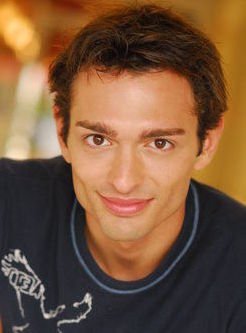
Joey Tuccio

The latest in a series of interviews with script readers and consultants who would be worth your while to work with if you want to get your script in shape. Today’s spotlight is on Joey Tuccio of Roadmap Writers.

1. What’s the last thing you read/watched that you thought was incredibly well-written?

I was going to try to be fancy and say NIGHTCRAWLER or GONE GIRL but I really, really like the series BROAD CITY. Though I’m sure some of it is improvised, I get really inspired by writers that create their own content, which is exactly what these two girls did. And now they have their own show.

2. How’d you get your start reading scripts?

I used to read for a ton of production companies to get my foot in the door. Suggestion to all aspiring writers: INTERN!

3. Is recognizing good writing something you think can be taught or learned?

You can be taught for sure.

4. What are the components of a good script?

Good question. There are so many variables, but it really comes down to characterization. Without that, the script has no heart and no connecting tissue. It all comes back to the character, which doesn’t necessarily mean the protagonist has to be the most complex character in the world. It just means the protagonist should be relatable, even if it connects with us in a dark way.

5. What are some of the most common mistakes you see?

Writers who think they’re ready before they are and jump in way too early. I’m an Italian New Yorker so I understand impatience, but you’ll spend more time trying to get traction if you rush. Take the craft seriously. An executive once said to me that most writers write as a hobby whether they know it or not. Don’t be that writer. An executive can smell it a mile away.

6. What story tropes are you just tired of seeing?

Female characters that are just used as visual trophies. When a dad character calls his son “son”. When a writer clearly gets bored halfway through their script and starts to incorporate bizarre twists to make it seem more engaging.

7. What are the 3 most important rules every writer should know?

-Keep it simple. Have a throughline and stay on that track.

-Make sure you relate to the characters. Don’t write something just because you think an audience will love it. YOU have to love it.

-Make sure you proofread your work and have other people do so before you show anybody. Executives will pass if there are too many typos.

8. Have you ever read a script that was an absolute, without-a-doubt “recommend”?  If so, could you give the logline?

Yes, but it’s a client’s, so I can’t say what it is, but I can say it was a low budget psychological contained horror that got him signed almost instantly.

9. How do you feel about screenwriting contests? Worth it or not?

There are 2 billion screenwriting contests out there. See what the prizes are and who the judges are. See who’s willing to attach their name to a contest before submitting. Too many times writers submit to contests just for the ego boost of placing, and nearly all the time it doesn’t mean anything besides just that. If you’re a writer, then you’re a business owner in your own right. Be a businessperson and be smart with the steps you take.

10. How can people get in touch with you to find out more about the services you provide?

Email me at joey@roadmapwriters.com.

11. Readers of this blog are more than familiar with my love/appreciation of pie. What’s your favorite kind?

Pecan pie with vanilla ice cream!