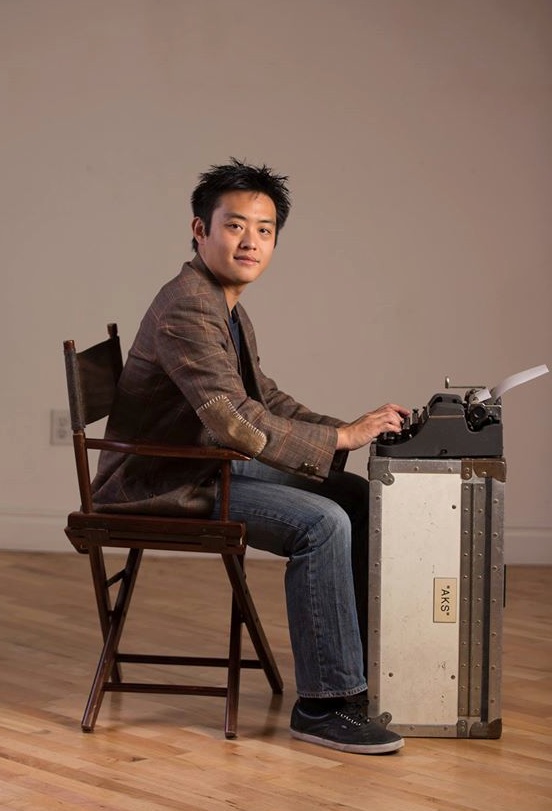
Ask an International Multi-Hyphenate Script Consultant!

Danny Stack

The latest in a series of interviews with script readers and consultants who would be worth your while to work with if you want to get your script in shape. Today’s spotlight is on writer-director-editor-analyst-contest organizer Danny Stack of Scriptwriting in the UK.

Danny Stack is a screenwriter whose TV writing credits include the revamped Thunderbirds Are Go! and the BBC’s flagship soap EastEnders, amongst others. He also writes and directs, and is currently in post-production on his live-action children’s feature film Who Killed Nelson Nutmeg? Danny has many years experience as a story analyst for a number of film companies, such as Working Title, Pathe Films, Miramax (Harvey Weinstein era) and the UK Film Council, to name but a few. He was development script editor for the British film The Man Inside, and he script edited the Irish-language feature film Kings.

1.What’s the last thing you read/watched that you thought was incredibly well-written?

The Knick by Jack Amiel and Michael Begler. It’s a TV period drama about The Knickerbocker hospital around the turn of the 20th century. The drama is very character-driven but extremely engaging. Steven Soderbergh’s direction is also very distinctive and interesting, adding to the immersive milieu of the show.

2. How’d you get your start reading scripts?

I was a commissioning assistant in the Channel 4 comedy department. A large part of my job was logging all the spec sitcom scripts. I farmed them out to a handful of readers but started reading and writing my own reports, too, and really enjoyed it. Once I left Channel 4, I approached film companies asking to read scripts for them. I did a few sample reports, and went from there!

3. Is recognizing good writing something you think can be taught or learned?

Learning to recognize good writing should sharpen your existing storytelling instincts. For example, I didn’t know anything about inciting incidents or three-act structure when I was green and keen, but when I read my first screenwriting book, those terms made complete sense to my natural instincts about story in the first place.

4. What are the components of a good script?

An original idea, interesting characters, good dialogue, unpredictable plot, a solid structure, humour.

5. What are some of the most common mistakes you see?

Long set-ups or unnecessary introductions of characters, or indulging in backstory. Over-written scene description. Plain or over-familiar dialogue. Similarly plain or over-familiar characterization. Female characters being treated or written poorly.

6. What story tropes are you just tired of seeing?

Advanced aliens who are unaware of, or can’t comprehend, human emotion. ‘One last job’ crime set-ups. The straight-talking, overweight female friend often seen in comedies.

7. What are the 3 most important rules every writer should know?

These aren’t rules, more things writers should be aware of:

-The first ten pages of your script are vital in making a good impression.

-It’s extremely unlikely you’ll get your first script made.

-Structure is your friend, not something to be railed against.

8. Have you ever read a script that was an absolute, without-a-doubt “recommend”? If so, could you give the logline?

I think I’ve only given around half a dozen RECOMMENDS (out of literally thousands of scripts!). One of those RECOMMENDS had this logline:

“An adulterous husband’s life falls apart when his job comes under threat while his wife gets involved with a pyramid money making scheme to alleviate her boredom and frustrations.” This might not sound MUST READ but the writing was sharp, funny and inventive, and deftly managed an ensemble cast. After I recommended it, the exec read it, liked it, invited the writers in, and helped them find an agent.

9. How do you feel about screenwriting contests? Worth it or not?

I actually help organize a screenwriting contest in the UK. It’s called the Red Planet Prize which is a scheme to find new TV writers. It’s about helping and mentoring writers rather than just announcing a winner and then nothing. Plus, it’s free to enter. I’m very proud of setting it all up, and it’s helped kickstart a few careers, most notably with Robert Thorogood and his BBC series Death in Paradise. So yes, screenwriting contests are worth it, but don’t be sucked in by every single one; weigh up the pros and cons (is there a entry fee? Do I get feedback? Is the prize any good? etc.), and roll the dice!

10. How can people get in touch with you to find out more about the services you provide?

On my website dannystack.com

11. Readers of this blog are more than familiar with my love/appreciation of pie. What’s your favorite kind?

I have an annual Pie Night with my friends where we cook 5-6 varieties, and then choose a favourite. Last year’s special was a traditional steak & ale pie, delicious! I’m quite partial to a hearty fish pie, too. And lemon meringue pie for dessert. You’re not going to make me choose one, are you? NO FAIR.

Ask a PAGE Silver-Winning Script Consultant!

Derek Ladd

The latest in a series of interviews with script readers and consultants who would be worth your while to work with if you want to get your script in shape. Today’s spotlight is on consultant Derek Ladd. His script Nina NANO was a Silver Prize Winner in the 2013 Page International Screenwriting Competition.

Award-winning screenwriter Derek Ladd started telling stories as a kid and never stopped. He lives in Portland, Oregon where he spends as much time writing as he does shaking off the rain (which is pretty much all the time).

1. What’s the last thing you read/watched that you thought was incredibly well-written?

The last exceptional script I read belongs to Matt Tolbert, a client of mine. I can’t go into specifics but it’s an historical screenplay about the Nordic Vikings. It’s refreshing to work on a script that pulls me in on page one and doesn’t let go. All of the elements (pacing, plot, characters) came together to create an immersive reading experience. As for movies, the last one I saw that featured great writing was DALLAS BUYER’S CLUB. This is a movie that nails the writing on all levels: the visuals, the dialogue, the subtext, all of it. Another surprisingly good movie I loved is an indie foreign film (horror comedy genre) set in Ireland called GRABBERS.

2. How’d you get your start reading scripts?

When I started my script consulting service, one of my early clients wanted to produce a movie. I’d written a couple dozen short stories and a few novels by this time and this client had read some of my work. And since a screenplay is the first element one needs to make a movie, she recruited me to write one. The only obstacle was that I had no idea how to write a script. So I bought two books on the subject and they didn’t help: each book contradicted the other. Then I bought one of those fancy bound scripts at Barnes & Noble – ADAPTATION (Charlie Kaufman, based on Susan Orlean’s book). Of course, it was more of a transcript so it didn’t help much either. I finally gave in to the fact that I would need to attend a class, and in Portland, Oregon the master of screenwriting was Cynthia Whitcomb. I took both of her classes, read her books and picked it up pretty quickly. My first script was an adaptation of my novel WITHOUT WINGS. From there I started reading scripts written by my classmates so I could give them feedback. The writers I worked with were so pleased I started doing it professionally. To date, over a dozen of my clients have won or placed in a variety of screenwriting contests.

3. Is recognizing good writing something you think can be taught or learned?

I would say ‘Yes’ to both questions simply because one has to know how to recognize good writing in order write good material. While writing novels I found inspiration in everyone from Heinrich Boll, Truman Capote, Norman Mailer, Kurt Vonnegut and David Sedaris to William F. Nolan, Anne Rice and Stephen King. If an aspiring screenwriter thinks GIGLI or SHOWGIRLS is a great screenplay, trying to write a great script will be damn near impossible. If, however, the same screenwriter dives into work by Michael Mann, the Coen brothers, Joss Whedon, or Luc Besson (to name a few), or any brilliantly written script (JAWS, FARGO, THE MATRIX, HAROLD AND MAUDE, SERENITY, THE SILENCE OF THE LAMBS), that writer will strive to achieve the same level of success in their own work. Excellent writing that makes you laugh and cry and get goosebumps has more power to teach aspiring writers than any classroom instruction ever could.

4. What are the components of a good script?

The Seduction Element: I watched a good DVD lecture featuring Michael Hauge a while back called ‘Grabbing The Reader In The First 10 Pages’. Mr. Hauge opened the lecture by explaining that part of the title is a misnomer: he said that ‘grabbing’ is too forceful a word and that what a writer should aim to do is seduce the reader. That’s at the top of my list. Seduce me with your words. Make it impossible for me to put it down: make me laugh, make me anxious and/or make me curious in the first five to ten pages. If you can evoke a strong emotion in the reader as soon as possible and keep it flowing that reader will be yours to the end. A famous writer (don’t ask me who) once said, “The first sentence should make you want to read the second. The second sentence should make you want to read the third…”

Strong characterization: A fleshed-out, intriguing character has the power to lead the reader anywhere. If a script starts out with three pages that describe the inside of a barn or a ton of details to set up what’s to come, I’ll put it down, or throw it at you if you’re close enough. The writer may have created the most awesome outpost on an alien planet anyone has ever dreamed up, or constructed the greatest plot ever conceived in the history of the written word, but without a solid character to invest in it won’t matter. For me, strong characterization is the whole shebang: a memorable introduction, sharp, believable dialogue, behavior that’s consistent with how the character would act in a given situation, etc. If the character has an arc (not required in some genres, but strongly recommended) it should be begin and end at the proper times – no rushing and no shuffling. Steady as she goes…

Originality: Is this a script I’ve read a hundred times before, or will it surprise me? I’m not saying it has to be about a group of purple, basketball-shaped alien opera singers from the planet Snergle. When I say ‘original,’ I’m referring to the unique spin a writer puts on the material. As an example, a good detective story populated with adults is okay, while a detective story populated with high school kids (like the film BRICK) is original and stands out. No need to reinvent the wheel; popular genres are popular for a reason. Just find a way to spin them and surprise the reader.

5. What are some of the most common mistakes you see?

Everyone’s guilty of typos and grammatical errors (myself included), so it’s a given that any editor/consultant will find them. Aside from that, one common technical mistake I see involves scenes that spill over into other locations without new scene headings. Drives me crazy. I also see a lot of scene headings written improperly, missing words, character name inconsistencies and factual errors (names of objects, cities, states, countries or famous people misspelled). To a lesser degree, I see action lines that are jumbled: a character enters, pulls a gun, fires. Then it’s noted that the light is flickering overhead. Oh, and the guy in plain sight by the pool table (who was never mentioned before) fires back. It’s like when someone tells a joke and stops in the middle to say, “I forgot to mention, the guy riding the donkey is a priest.” It’s distracting. Unless you’re writing a narrow-to-wide shot, set the scene: describe who’s there and what they’re doing then describe the action. Otherwise it feels clunky and awkward.

6. What story tropes are you just tired of seeing?

The expression “I get it” is everywhere now. I don’t know where it came from. Maybe it’s like the cicadas that surface every 17 years or whatever and it’ll disappear soon. Here’s an example: “Hey, getting hit in the crotch with an umbrella ticked you off. I get it.” The biggest users of “I get it” are the writers for SUPERNATURAL, CRIMINAL MINDS, and SONS OF ANARCHY, all great shows that would be even greater if they’d stop using “I get it” six times per episode. It’s superfluous. Think about it: if one character describes what another is feeling, is it necessary to cap it off with “I get it.”? No. It isn’t. So please stop it. A visual trope, as it were, is the weird technique where the action goes into slow motion then speeds up again. I think the movie 300 started that whole thing. Hopefully a better movie will come along to put an end to it soon.

7. What are the 3 most important rules every writer should know?

The following answers are based on the assumption that the writer has developed a unique concept and story that he/she is passionate about. My answers further assume that the fundamentals of story, characterization, plot, dialogue, writer’s voice, pacing, style and overall balance (60% action, 40% dialogue) have been carefully considered throughout the writing process.

-The first 5-10 pages are life and death for a writer. As an editor/consultant, I get paid to analyze a writer’s work. Studio script readers, on the other hand, get paid to say ‘No’ to conserve a producer’s valuable time and an investor’s money. So unless you give the reader a solid reason to say ‘Yes’, your script is headed for the recycling bin. Set the hook as soon as possible and set it deep. Make that studio reader take your script into the bathroom (to read).

-Unless you’ve written a character-based indie script, structure is critical. Do your own structure analysis to see where you land: inciting incident by around page 12, plot point one by the 1/4 mark, strong midpoint by the 1/2 mark, plot point two by the 3/4 mark and the climax in the last 10-15 pages. You’re allowed a brief end-cap/denouement of 1-3 pages and then FADE OUT.

-Formatting DOES matter, especially for a spec script. Know the average length for comedies, thrillers, horrors, dramas, etc. Turning in anything under 90 pages or anything over 120 is a longshot. Know that formatting varies between different genres and how to use these varied techniques to your advantage. Barb Doyon’s book Extreme Screenwriting has an excellent chapter on formatting and how to use it to enhance a spec script.

8. Have you ever read a script that was an absolute, without-a-doubt “recommend”? If so, could you give the logline?

I’ve read a few scripts over the years I would strongly recommend, which is probably right in line with the industry percentage of one half of one percent. I don’t have loglines to share, but the clients whose scripts I would recommend include Chanrithy Him (WHEN BROKEN GLASS FLOATS), Santa Sierra (spec episode of THE GOOD WIFE), Bill Johnston (REQUITED), Erin McNamara (BORU), Mike McGeever (SMILERS) and Dorothy St. Louis (EL CUBANO). Others can be found at ProofEdge.com on the Testimonials page.

9. How do you feel about screenwriting contests? Worth it or not?

It really depends on the contest. My advice is to do some research, comb the web and read message boards. Moviebytes has a lot of info on contests and how contestants rate them. Find a contest that’s a good fit for your work. Some contests aren’t as open to traditional Hollywood blockbuster-type scripts (Zoetrope), while others offer a range of categories to accommodate all writers (PAGE Awards). If it’s a sizeable, reputable contest (PAGE Awards, StoryPros, Nicholl, among many others) I strongly recommend using it as a measuring stick to see where you stand as a writer. A writer shouldn’t get too bummed if his/her script doesn’t make it past the first round – a script can do poorly in one contest and win another, it happens all the time. Many contests offer notes for an additional fee, which can be quite helpful if done by a professional. Keep in mind that, while winning is the goal, simply making the Finals can attract studio attention, and doing so looks good on a resume when querying agents and producers. Winning or even placing in a contest can make the difference between an exceptional, unknown writer and an exceptional, discovered writer.

10. How can people get in touch with you to find out more about the services you provide?

Check out my website www.deladd.com, or email me at derek@deladd.com.

11. Readers of this blog are more than familiar with my love/appreciation of pie. What’s your favorite kind?

Apple, hands down. My mom always made the best apple pie when I was growing up. The way she makes it, the apples aren’t too sweet and they’re not overcooked and mushy. A couple of years ago I made a butter crust from a simple recipe I acquired as a sous chef. The combination of her perfect filling and my crust (which melts in your mouth) is pretty spectacular.

Ask a Guy Who Takes Comedy Very Seriously!

Steve Kaplan

The latest in a series of interviews with script readers and consultants who would be worth your while to work with if you want to get your script in shape. Today focuses on writing comedy, so the spotlight is on Steve Kaplan, who runs the Comedy Intensive course.

1. What would you call a good example of some great comedy writing in recent TV or film?

It’s sometimes difficult to separate great comic writing from great comic performances. That being said, I think the best comedy writing on television occurs, day in and day out, on THE DAILY SHOW and THE COLBERT REPORT. Both shows are able to combine sharp satire with great comic characters, and in the case of THE DAILY SHOW, much of the comedy benefits from the relationship between Jon Stewart’s somewhat befuddled and beleaguered news anchor and his crew of inspiringly loony correspondents.

Much has been written about the death of the sitcom, but Network TV still offers the great work from THE SIMPSONS (25 years, and still going strong) and MODERN FAMILY’s writing staff, while cable is a treasure trove of niche delights, from sketch shows like INSIDE AMY SCHUMER to episodics like LOUIE, VEEP, GETTING ON, and EPISODES. I’m also looking forward to the BREAKING BAD prequel, BETTER CALL SAUL.

The comedy feature record is spottier. Big hits like DUMB AND DUMBER TO and THE HANGOVER 3 may have made a lot of money, but for me, my favorite comedy of 2014 was THE GRAND BUDAPEST HOTEL — funny, lovely, odd, stylish, a little sad, touching and in the end, really about something. (As of this writing, I still haven’t seen THE INTERVIEW, but I’m really looking forward to it. The trailer made me laugh out loud, it provoked North Korea into a mammoth cyber-attack on Sony—what’s not to like?)

Film comedies I’ve enjoyed from the past few years include SILVER LININGS PLAYBOOK, AMERICAN HUSTLE, MOONRISE KINGDOM, THE TRIP and THE TRIP TO ITALY, THIS IS THE END, NEBRASKA, WARM BODIES, THE WAY WAY BACK, TED —exactly the way I like my comedies. Some were silly and looney, but looking over the list, most were funny, lovely, odd, stylish, a little sad, touching and in the end, really about something. What can I say. You might like vanilla; I like chocolate. In the end, it’s subjective.

2. What’s your comedy background?

As a kid, I was awkward and kind of odd—I was drawn to comedy because I noted that in comedy movies, the funny guys were awkward and kind of odd, but sometimes got the girl! That was good enough for me!

In college, I studied acting and directing. After college, I was given an opportunity to start an Off-Off Broadway theatre. I convinced my two partners that we should start a theatre that was completely devoted to comedy. Manhattan Punch Line helped launch the careers of actors like Nathan Lane and Oliver Platt, and writers like Michael Patrick King, Peter Tolan and David Crane. While at the Punch Line, I taught classes and worked with and directed sketch groups. I began to wonder why something that was incredibly funny on Thursday night would get no laughs on Sunday. Why sometimes the funniest performance of a play was at its very first table read? What was going on here? That’s when I started seriously exploring the art and the science—some would even call it the physics—of comedy.

At the time, I was teaching an improv class. Without telling the actors, I started experimenting with them—devising improv games to get at the core of comedy: how it works, why it works, what’s going on when it stops working, and what the hell can you do about it?

These experiments led to the discovery of a series of techniques, which in turn led to a forty-week Master Class in comedy. When I moved to LA, I it was suggested to me that I gear my course to writers. “You could be the Robert McKee of comedy!” was how Derek Christopher (who produces the annual Story Expo in LA) put it. That led to teaching comedy around the globe, and working with companies like DreamWorks Animation, Disney Animation, Screen Australia and Film Victoria, working as a consultant with writers and producers, publishing my book, The Hidden Tools of Comedy, and ultimately, being interviewed by you.

3. Who are some of your comedic inspirations/role models? What is it about them in particular that appeals to you?

That’s a hard question to answer. I’m a fan of great comedy, and the list of great comedy writers performers and creators could go on and on. There are parts of careers that inspired me—early to mid Woody Allen, late George Carlin, some Mel Brooks, Bob Hope in the ROAD movies, Steve Martin in ROXANNE and L.A. STORY and BOWFINGER, Monty Python, FAWLTY TOWERS, THE MARY TYLER MOORES SHOW, SEINFELD, Lily Tomlin, THE BOB NEWHART SHOW, ALL IN THE FAMILY, Richard Pryor, Chris Rock, Louie C.K., Lenny Bruce, Sarah Silverman, Tom Lehrer (okay, and Allan Sherman), George Burns, Bill Irwin, Judd Apatow, BROADCAST NEWS and AS GOOD AS IT GETS. I’m sure I’m leaving out twenty that after this is posted, I’ll hit myself on the forehead, shouting, “How could I forget _________?!!?”

What they all have in common, in some fashion, is an immediacy, honesty (in some cases, a ferocious honesty), an ability to see a slightly off-centered view of the world, and then share it so we see it as well. They all made me laugh, and most had the ability to touch the heart, to make you care and still be funny!

4. Do you think someone can be taught to be funny, or is it something that just comes naturally?

Groucho Marx once said “you can’t teach funny.” But the Marx Brothers were a terrible, just terrible, act when their mother Minnie first pushed them out on stage. But working eight shows a day in vaudeville, picking up hints and tips from the other performers, they honed their act into one of the greatest comedy teams of all time. But it wasn’t ‘natural’; it was through apprenticeship, observation, and yes, being taught by other performers.

While you can’t teach someone to be more talented, you can teach someone to act and write to the best of their ability.  And just like you can teach drama, you can certainly teach comedy. Yes, comedy can be taught.

5. What would you recommend for a writer who wants to develop or sharpen their comedy-writing skills?

What can writers do to sharpen their skills? Hang around with other funny people.

There are two great ways to do that. One would be to join an improv group or take improv classes. Since much of comedy is character-based, the best way to get inside a character’s head is to be one. Even if you’re not interested in being a performer or stand-up, the comic skills you’ll pick up are invaluable when writing material, whether it’s long form or short form, or just a set-up and punch line.

The second piece of advice would be to form or join a writers’ group. Once you’ve written your material, it’s imperative to hear the material read out loud in front of even a small group of friends and colleagues. It’s basic to comedy: the interaction between script/performer and audience. You’ve got to hear how those golden pearls play when read by humans to humans. You’re not looking for hours of rehearsal and polished performances, but just an intelligent read can tell you what’s alive and kicking in your script, and what’s dead as a doornail, only you don’t know it yet. So, in a nutshell: Funny people get funnier when in the company of other funny people.

6. Are there any comedy cliches you consider overused? Which ones are you just tired of seeing?

I’ve really tried to think of some that I hope never to see again, but I kept coming up with exceptions to the rule. Spit-takes are overdone, yet I still laugh when Desi or Danny does one. Getting kicked in the balls is another, yet there’s a beat in MONSTERS, INC. when Billy Crystal’s one-eyed character lands hard on his privates, and I’m sorry, it’s only a cartoon, but it’s funny. At least I thought so. I guess the difference is a meme or bit done by rote, and one enhanced by a great character or performance.

The things I am tired of seeing are scripts overloaded with weak, puerile jokes; scripts in which every character is a wise-cracker or failed stand-up comedian.

7. What’s the funniest joke you’ve ever read or heard from a non-professional ?

Hmmm. . . my six-year old niece once asked me, “Did you hear about the peanut walking alone in the park at night? It was a salted.” I thought that was pretty funny.

8. How can people contact you to find out more about your services?

My website is www.KaplanComedy.com, and my email address is Steve@KaplanComedy.com. In addition, you can follow me on Twitter at @skcomedy or on Facebook at Facebook.com/KaplanComedy. In addition to presenting one and two day workshops in the US and abroad, I’m also available for script consultations, whether on full-feature scripts, pilots, webisodes or treatments.

9. Readers of this blog are more than familiar with my love/appreciation of pie. What’s your favorite kind?

Man, that’s a tough question. I love Boston Cream Pie and apple pie a la mode, but if I’m on a desert island, and can only have one slice, I’ll go with pumpkin pie—ice cream on the side!

Ask a Fount-of-Knowledge Script Consultant!

Matt Lazarus

*note – Matt passed away in July 2020

The latest in a series of interviews with script readers and consultants who would be worth your while to work with if you want to get your script in shape. Today’s spotlight is on Matt Lazarus of The Story Coach.

Matt Lazarus has worked in the industry since 2003. He started in development with jobs at Untitled Entertainment, CAA, and Platinum Studios (Cowboys and Aliens). He joined the WGA in 2007 by selling a horror script to RKO, and he sold a movie to Cartoon Network in 2011. Matt’s story coaching was designed to be affordable, regular, and useful, and he excels at breaking advanced concepts into simpler processes and exercises.

1. What’s the last thing you read/watched that you thought was incredibly well-written?

SHORT TERM 12, a thoughtful, sad drama about a foster home for displaced youth and the human condition. I saw the trailer and it hooked me. The world, performances and characters are all on point. It’s a great example of a drama, and of wringing the most entertainment and potential out of a simple concept.

2. How’d you get your start reading scripts?

I moved to Los Angeles in 2003, and I got my first assistant job after working really hard at an unpaid internship. I wanted to be a writer, and I talked about it way too much. Anyway, I got good at reading scripts and it always provided me an entry to meeting lit agents and executives who wanted to ask follow up questions on material. I’ve been a freelance reader for some studios for years, and there was a time I was even unironically working on a book on how to cover (most of it made it onto my blog). I’ve been a sporadically working WGA writer since 2007, but the financial security of coverage has always given me something to fall back on.

3. Is recognizing good writing something you think can be taught or learned?

Good writing is hard to define. You want it to be accessible: a mediocre scifi appeals to scifi fans, a great one appeals to everyone. You want it to be engaging: no one goes to the movies to not be affected. You want it to help your career. It’s great to sell a script, but if a script doesn’t sell but gets me in a room with someone who can hire me for my next job, I’ll take it.

Anything can be learned. Not everyone who studies piano will become Glen Gould, but they will get somewhat better at piano. I was pretty cineliterate when I moved to LA, and my years in the development trenches helped me marry my base of knowledge to a working understanding of how the industry works and what the powers that be tend to look for.

4. What are the components of a good script?

“Good” is a hard term to define, a semantic minefield. The components of a good script are the same as the bad ones: they both have the same main four (character names, dialogue, sluglines,descriptions), they both take up the same amount of space.

The difference is harder to measure. We see a thousand faces a day, but only a few make us stop and say wow. We hear new songs on the radio every day, few of them will become our favorite. Most would agree that a good writer can do more in the same space than a bad writer, but the ways in which they are better will always and should always be argued over.

5. What are some of the most common mistakes you see?

The most common is writing a script without a premise. I use something called the premise test. It breaks things down to what’s simple. It’s not the only way to look at scripts, but it’s as good as any, better than most:

“An <ADJECTIVE> <ARCHETYPE> must <GOAL> or else <STAKES>. He does this by <DOING> and (optionally) learns <THEME>.

This seems simple, but the doing is the real meat of the movie. If a naive accountant must raise 100k or his daughter dies, different doings give you very different movies (for example, he could win a surf contest, kill a vampire lord, or invent a time machine and go back to 1979). If you can’t explain what’s interesting about your script in 50 words, you’re unlikely to improve things by writing out 100 boring pages.

Writing is a lot like being a chef. Both are creative forms that have structural limits and immense room for interpretation. Tastes are subjective, but a good chef can anticipate the audience and when he serves something he should have a rough sense of why the average patron might find it delicious.

Most writers write without a real sense of the audience. We’re writing to entertain, to deliver a satisfying emotional experience to the audience. If a writer isn’t writing with a sense of empathy for the audience, the end result is likely to be disappointing.

6. What story tropes are you just tired of seeing?

-Scripts about Hollywood power brokers written by people who haven’t met Hollywood power brokers.

-TV pilots that spend their entire length explaining how we got to the premise without every showing what’s fun or interesting about the premise (see #5). There won’t be a second episode. What are you saving it for?

-Comedies that aren’t funny. I recommend taking an improv class and reading the UCB Handbook.

7. What are the 3 most important rules every writer should know?

The word “rules” needs to die. It always starts a fight. People have an unending appettite for hearing that they can write, but any suggestion of how one might approach writing is generally taken as a suggestion of how one ought to write, and then an unproductive argument ensues. Here are three general principals:

-Entertain. You should know exactly what feeling you want to create in your audience.

-Use unity. Once you’ve set up your script, you want everything to feel connected, organic, and like a ramification of what’s come before. Bad scripts keep inventing random stuff throughout the second act, and it leads to a script that feels arbitrary.

-Be specific. A lot of writers will write in variables, keeping things loose (my character is either an architect or a deli owner… I haven’t decided which) because they think it will prevent them from getting lost or stuck in the later stages. This never works. Imagination thrives on immediacy and specifics. It’s better to commit to an idea and follow it to its conclusion. Even if you went in a wrong direction, the specifics you generate add value to your story. If you keep things vague, you’re building on sand and it’s hard to move the story forward when things exist in a vacuum.

8. Have you ever read a script that was an absolute, without-a-doubt “recommend”? If so, could you give the logline?

In 2003 I read a really funny script called Underdogs. I couldn’t stop reading it or quoting the dialogue. It ended up turning into DODGEBALL starring Vince Vaughan. The movie is really funny, the script is funnier.

9. How do you feel about screenwriting contests? Worth it or not?

It depends on the contest. When I was at big companies, execs would usually read the top Nicholl scripts out of a morbid curiosity, but other big script contests (Scriptapalooza comes to mind) would try to get executives to read their top three, and the execs were lukewarm. For instance, a lot of people are selling off the Black List right now. It’s useful now, but might not be in three years.

10. How can people get in touch with you to find out more about the services you provide?

Matt passed away in July 2020, and his site thestorycoach.net has since been taken down.

11. Readers of this blog are more than familiar with my love/appreciation of pie. What’s your favorite kind?

Humble pie. If you’re serious about writing, you’ll be served it more times can be counted. Alternately, strawberry rhubarb. I’m from Vermont, and it reminds me of a childhood garden.

Ask a Keenly Analytical Script Consultant!

Dimitri Davis

The latest in a series of interviews with script readers and consultants who would be worth your while to work with if you want to get your script in shape. Today’s spotlight is on Dimitri Davis of ScreenwritingU.com.

1. What’s the last thing you read/watched that you thought was incredibly well-written?


G.B.F. wins on best/most recent. So many laughs, such excellent pacing and quality characterization. One of the best high school movies I’ve ever seen.

2. How’d you get your start reading scripts?


Being the assistant at ScreenwritingU. Back when they were in the business of pitching reality TV, I read a lot of scripts, and then for research and preparing class materials, I read a lot more scripts, and whenever projects were in the works, I’d read more scripts.

 Between that and the classes and interviews I was reviewing all the time, it eventually dovetailed into professional-level coverage.

3. Is recognizing good writing something you think can be taught or learned?


Of course it can. Learning the techniques of good writing and plenty about the industry/marketing makes it fairly clear when writing is good or bad.

 Which has the side effect of making you talk at TV and movies, and inform your viewing companions what’s going to happen or how that was a pretty mediocre choice in scene, dialogue, etc.

4. What are the components of a good script?


A good script or a great script? A ton goes into it, but great scripts have great concepts, are page-turners, solid actor-bait, and leave you walking away feeling amazed (and/or punched). Beyond that, it depends on the particular story/genre/etc.

5. What are some of the most common mistakes you see?


The most common and worst mistakes I see are:

– Script/story focuses on the least interesting elements of the concept.

– Characters are underwhelming/underdeveloped, and thus make for mediocre dialogue & action choices (and fail to attract quality actors).

-Script/story fails to exploit great opportunities for drama/conflict/humor again and again, whether the opportunities arise from the characters, setting, plot or concept.

6. What story tropes are you just tired of seeing?


Obligatory sex scenes and throw-away romances. How excited do you think an actor is to see a thin-as-paper relationship in their scenes? How much do you think the audience will care when there’s no poignancy or quality drama behind the relationship?

So boring.

7. What are the 3 most important rules every writer should know?


There’s really only one rule, which should inform all of your screenwriting decisions: Don’t waste anyone’s time.

You waste your own time by sending out a script that isn’t awesome, or is cliche or tired. You waste people’s time by sending Comedy scripts to Horror production companies. You waste everyone’s time when your quick pitches are several paragraphs of details and aren’t laden with hooks. You waste your writing time when you embark on a script without figuring out a great concept, great characters, and a great story first. You waste everyone’s time when you make your tiny Indie script have million-dollar action sequences.

And so on and so forth. Hollywood has no attention span or respect for time-wasting. Your life has a limited amount of time. Why waste it?

8. Have you ever read a script that was an absolute, without-a-doubt “recommend”? If so, could you give the logline?


Yes and no, because such things are confidential. But of the few RECOMMENDS I have read, they all had great concepts and stories, and very good writing.

9. How do you feel about screenwriting contests? Worth it or not?

It depends on the contest and the script. If the script isn’t ready, it’s typically a waste of money and time (getting anything less than winner or finalist for anything but the Nicholl is a waste).

If the contest doesn’t yield some really tangible benefit, like great prize money, or industry contacts and referrals, or career prestige, then it’s a waste of time and money. You could be working on selling scripts and getting writing assignments instead of entering contests.

But there are contests that do those things, and you should definitely enter them with great scripts if you don’t have any industry contacts yet, or are working on elevating your career. Go for the great options out there.

10. How can people get in touch with you to find out more about the services you provide?


My coverage services are generally for ScreenwritingU alumni currently, but you can email me at dimitri@screenwritingu.com.

11. Readers of this blog are more than familiar with my love/appreciation of pie. What’s your favorite kind?


Pie-flavored.