Ask One of the Great Brains Behind the GAPF!

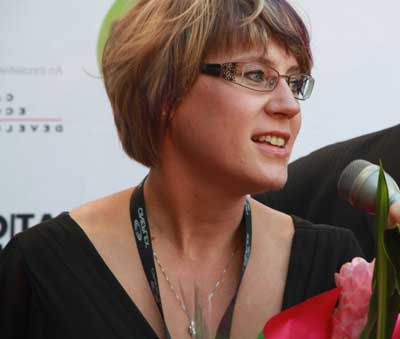
Signe Olynyk

The latest in a series of interviews with script readers and consultants who would be worth your while to work with if you want to get your script in shape. Today’s spotlight is especially significant for writers ready to pitch their material, as it features an interview with ScriptFest/Pitchfest co-founder Signe Olynyk.

Signe Olynyk is a writer/producer, as well as the co-founder of ScriptFest and www.pitchfest.com, which includes the Great American PitchFest, the Great British PitchFest, and the Great Canadian PitchFest.  She is also the co-founder of the Ultimate Logline Contest, and Your Career In A Day industry workshops. She lives in Canada, and runs the highly regarded Sooke Writers Retreat from a secluded, oceanfront home, where dozens of select writers join her each year for their personal writing retreats. In addition, Signe has written and produced a number of television pilots, series, documentaries, and feature films, and works in the industry. She has professional credits on more than 120 productions, including her two latest feature films, Below Zero and Breakdown Lane. Her work has been seen around the world on the CBC, Discovery Channel, Scream Channel, Fox, the BBC, and various others.

1. What’s the last thing you read/watched that you thought was incredibly well-written?

Great first question. There are so many. The ‘smartest’ movies I can think of right now include Christopher Nolan’s The Prestige, and The Disappearance of Alice Creed, which was incredibly smart and well written. These two films were dramatic thrillers, but I actually feel that comedy is some of the most difficult to write – it has to be smart and well-written, and generally, a brilliant mind must be behind a comedy to successfully pull it off. Creating original characters, situations, and dialogue that makes us laugh, and that we haven’t seen before, is an incredible feat.

2. How’d you get your start reading scripts?

I got my start reading scripts by writing scripts. For years, I was writing and sharing my work with others in my writing groups. At the time, I didn’t understand the value in reading, but the group I joined took turns reading a screenplay each week for a film that had been recently produced. Reluctantly, I started to read other screenplays. I just wanted to create new material and share script notes by reading each other’s screenplays, not spend my time reading the screenplays for movies that had already been produced. I thought it was going to be a waste of time when I could just watch the films. But that was when my world changed.

When you read scripts, you learn a rhythm and start to see the style in which a writer puts their words on the page. You see how evocative language and onomatopoetic words like ‘sizzle’ and ‘slap’, make your script come alive visually on the page, and in your mind’s eye. When you read other scripts, you discover and absorb lessons that you automatically start applying to your own work. And you are a better writer because of it, thanks to the work of other writers. It’s invaluable to your own development as a writer.

3. Is recognizing good writing something you think can be taught or learned?

Physical limitations are an interesting thing. I love to play soccer, but I know I’m not the best player on the field. My coach can make me run drills, and practice for hours, but my skill level is only going to get me so far compared to others, because there are others who are simply more skilled and talented than I am.

Writing is the same way. Same with math, with physics, with music, art, or sports, or anything really. Someone’s physical brain or body has developed in such a way that they are stronger at a certain skill than someone else.

What really matters is attitude and perseverance. Good writing can be taught or learned, but there has to be a certain level of natural ability and talent in the first place. And then there has to be a passion behind whatever skill you have to really drive success at anything.

As an aside, I have been very frustrated by some of the ramblings of some who like to criticize consultants and say that ‘those who can’t, teach’. What a hugely unfair, offensive and dismissive thing to say. I am the founder of the annual screenwriting conference ScriptFest, which is held each year in Los Angeles. We have had hundreds of speakers teach at the conference, and they are educated, brilliant, and generous people who give back to the community and help writers become better at what they do. Since when did we decide it was okay to criticize teachers? It is not an easy task, and great teachers are a huge gift to those of us who are still learning – which is all of us, isn’t it?

Yes, teaching can be taught. I’m incredibly grateful to all of those who have mentored me in my life. It is the moral obligation of each and every single one of us to share what we have learned with others, so that we can all learn from one another.

4. What are the components of a good script?

I want to see characters I care about in situations I haven’t seen before overcoming outrageous obstacles in the singular pursuit of their goals. I want to feel something, and root for them to achieve their goals. I want to go on a ride with them, and experience an emotional journey as they give everything they have towards reaching their goals, being beaten down and nearly defeated as they pursue an eventual triumph. That doesn’t mean a character must always reach their goal – and by triumph, I mean they’ve learned something meaningful that has changed them forever, for better or worse.

5. What are some of the most common mistakes you see?

Many writers write characters and stories they think people want to see, hear, or read. They cling to stereotypes, which does nothing to create originality or anything of interest to an audience. Finding your own voice as a writer is something that develops the more you write, because your confidence grows as you do.

I also see many writers fall in love with their first script or book, then spend years and years rewriting and tweaking it, and doing rewrite after rewrite. If you want to be a professional writer, you must generate new work. This is important not only because you are creating a body of work, but because you get better with everything you write.

6. What story tropes are you just tired of seeing?

Cats leaping out at people in horror stories. The guy who develops a cough, dying part-way through the story. Girlfriends who go after the girl their boyfriend cheated on them with – how stupid is that? Go after the ass who cheated on you! I want to see characters pushed as far as they can in directions and towards goals I haven’t seen before, and making decisions that are real for that character and that people can relate to. I want to see characters overcome their obstacles by making choices that only they would make. Story comes from your characters. Make your character’s reactions realistic for who they are, and have them respond in ways that only they would. Just as each of us has our own backstories, and these experiences shape who we are, our characters need to be developed the same way. Then you create characters and situations that are as real as each of us.

7. What are the 3 most important rules every writer should know?

-First, don’t miss out on your life because you feel a need to be writing or working all of the time to create success. You must have a life in order to be a great writer. Every experience you have helps to shape you, and you need those experiences to shape your characters and their worlds.

-Second, take care of your health. Watch your posture and get a good chair to support your back. Go on long walks so your characters can speak to you, and you’ll be amazed how ideas will come to you when you’re least expecting it.

-Third, go to every event you can and constantly educate yourself on your craft. You never know who you will meet, or what you will learn that will inspire you, enlighten your work, and help you to create your best work.

8. Have you ever read a script that was an absolute, without-a-doubt “recommend”? If so, could you give the logline?

I’m still seeking that script. I find lots of screenplays that are ‘recommends’, sure. But even then, rarely do you find any script that doesn’t need work, or still has tweaking or ideas, characters, or dialogue that need to be finessed a bit more. There are tons of loglines I read that make me smile and that I get super excited about, and keep visualizing the various scenes, and putting my producer hat on to think about logistics. Although I can’t give a logline exactly, what I can tell you is that they all have certain things in common:

  *TITLE: The title of the script captures the full essence of the story. We know what it is about, just from the title, and the theme of the story is also hinted at. JAWS. UNBROKEN. WILD. UP.

  *CHARACTER: They have a protagonist who is interesting to me, relatable, but who is someone I haven’t seen before. They pursue goals in a way that only they can do, and their backstories make their actions real and believable.

  *PURSUIT OF A CLEAR, IMPOSSIBLE GOAL: They have a goal that seems impossible, and the journey of following this character as they pursue that goal becomes irresistible to me. I must watch them pursue their goal.

  *OBSTACLES: They overcome increasingly serious obstacles in pursuit of their goal. The stakes get more serious as the story progresses.

  *NEMESIS: they have a formidable foe. A Goliath for every David. Goliath keeps putting obstacles in David’s way

  *LESSON LEARNED: the character is different by the end of the story than who they were at the beginning. By going on this journey with them, I am also changed in some way. It is the magical, emotional moment in a movie when your character becomes who they were meant to be, regardless of whether their goal is achieved or not.

9. How do you feel about screenwriting contests? Worth it or not?

Anytime you have an opportunity to get your work in front of someone who can make a difference to your career is worthwhile. It’s always a bit of a crapshoot whether your work will resonate with a particular judge. However, a lot of industry people find scripts by judging contests, and really, it’s a matter of the right script finding the right producer at the right time. If that’s the situation, then it behooves any writer – especially without an agent – to get their work out there and in front of as many eyeballs as possible.

Writers may also want to really examine the prizes. What is the real opportunity? Is it just to win a cash prize? Or is it industry exposure? What is more meaningful?

10. How can people get in touch with you to find out more about the services you provide?

I would encourage writers to check out ScriptFest and the Great American PitchFest. It’s an annual, 3-day conference with more than 40 classes, panels, and workshops offered. Writers who’ve written a book or screenplay can pitch it to more than 120 agents, managers and production companies. Visit www.scriptfest.com to learn more.

11. Readers of this blog are more than familiar with my love/appreciation of pie. What’s your favorite kind?

That’s like asking my favorite ice cream! So many kinds, so many flavors! Lemon meringue, pumpkin, butter pecan, coconut cream, banana cream, apple with cheddar…If I have to choose only one kind, I would probably say blueberry-rhubarb. I like the sweet with the tart (kind of like my favorite movies).


Ask a Getting-Down-to-Brass-Tacks Script Consultant!

OLYMPUS DIGITAL CAMERA

The latest in a series of interviews with script readers and consultants who would be worth your while to work with if you want to get your script in shape. Today’s spotlight is on writer-consultant-contest reader Jim Sarantinos.

Jim Sarantinos is the Editor-in-Chief of Creative Screenwriting Magazine, and writer of Gideon’s Way, a highly popular and acclaimed screenwriting blog which he started in 2009. He’s guest blogged for MovieBytes and other sites, and placed in various high-profile screenwriting contests including Scriptapalooza, Fade In, and most recently, Happy Writers with a TV sitcom pilot.

Jim has also read for various screenwriting contests and is currently developing several film and TV projects.

1. What’s the last thing you read/watched that you thought was incredibly well-written?

I’d have to say Nightcrawler, and I’m still mad it wasn’t recognized at the Oscars. TV-wise, I just watched my first episode of The Americans. Riveting stuff.

2. How’d you get your start reading scripts?

Going through film school, it was considered vital to our training; perhaps even more important than watching films themselves. I decided to consult because I was getting too many random scripts flooding my inbox demanding/requesting I read them and provide feedback within 24 hours.

3. Is recognizing good writing something you think can be taught or learned?

You can teach the basic building blocks of screenwriting, but recognizing good writing is learned from experience, intuition and taste.

4. What are the components of a good script?

Style and character. I love deeply flawed characters that straddle good and evil simultaneously. There’s so much scope for them to grow and interesting places to take them. I also love worlds I’m not familiar with; not necessarily fantasy or supernatural. A wonderful story can be set in an abattoir, a funeral home or a country club.

5. What are some of the most common mistakes you see?

Lack of story focus. Know exactly what you want to say before you start writing. Sure there is some discovery during writing, but know your theme and central message early on.

6. What story tropes are you just tired of seeing?

Car chases, explosions, shootouts. Give me a cop disarming a criminal solely with his/her mind and wit any day. You can only paper over the story cracks with CGI for so long.

7. What are the 3 most important rules every writer should know?

-Know yourself.

-Know your story.

-Know the audience.

8. Have you ever read a script that was an absolute, without-a-doubt “recommend”? If so, could you give the logline?

I can’t give you a logline, but I recently read a contained thriller about a heist gone wrong. Two-thirds of the movie was set in an office where the hostages and criminals were barricaded in. It was so vivid and real, which made it easy to visualize it.

9. How do you feel about screenwriting contests? Worth it or not?

They’re a double edged sword for me. I’ve heard of success stories which have launched careers and also stories of writers winning major contests and not getting anywhere. There are also too many cash cow contests with dubious readers. If you enter a contest, go big or go home. Preferably enter one that gives notes, so you know the reader has actually read your script. Practice due diligence.

10. How can people get in touch with you to find out more about the services you provide?

My blog Gideon’s Way is at www.gideonsway.wordpress.com and Script Firm Consultancy is at www.scriptfirm.wordpress.com

11. Readers of this blog are more than familiar with my love/appreciation of pie.

What’s your favorite kind? Humble. Preferably organic, sugar and gluten free.

Ask a Master of the Ultimate Editing Tool Script Consultant!

Erin Whittemore

The latest in a series of interviews with script readers and consultants who would be worth your while to work with if you want to get your script in shape. Today’s spotlight is on agency reader-turned-consultant Erin Whittemore of Red Pen Script Consulting.

“I have a B.A. in film and screenwriting from the University of Michigan, and am also the proud recipient of the Hopwood Award in screenwriting that boasts such alumni as Arthur Miller and Lawrence Kasdan. After graduating, I relocated to Los Angeles, where I worked for United Talent Agency as a freelance script reader. Two of my own scripts have been produced as short films and premiered at film festivals.”

1. What was the last thing that you read/watched that you thought was incredibly well‐written?

I loved Nightcrawler and The Lego Movie as scripts. Nightcrawler’s story was really lean and mean and practically seamless, and The Lego Movie was not only a great narrative in itself, but was also incredibly cheeky and self‐aware at the same time. In terms of TV, Marvel’s Agent Carter put other network shows to shame. In my humble opinion, of course.

2. How did you get started reading scripts?

After spending two arduous years as a pre‐med undergraduate, I finally became so miserable that I switched to film and never looked back. I learned to do coverage through screenwriting courses, and was lucky enough that UTA was hiring part-timers after I graduated. Full disclosure: I did know somebody in the story department, but even then I almost didn’t get the job due to the amount of competition for the position. It all comes down to your “test coverage.” (When an agency gives you a sample script to cover.) If you’re aiming for reading professionally, make sure you have your own sample coverage ready to go as well, preferably showcasing two different genres.

Eventually, though, I needed a better‐paying and more stable job, but I wanted to continue reading scripts as well. Having been a part of “the system” I knew it could take up to three months for writers to get any feedback on their submissions, which is kind of agonizing, especially if the writer ends up getting rejected. I figured, why not give writers a chance to see what a professional script reader would say about their material before sending it out to agencies and production companies? Thus, Red Pen was born!

3. Is recognizing good writing something you think can be taught or learned?

I believe if you’re willing to be taught, you can learn. You have to watch a lot of movies and read a lot of scripts, and you have to learn to think critically about what you ingest. It’s not enough to say “I like this” or “I don’t like this,” you have to think about why. If it doesn’t come naturally to you, you have to ask questions like “why does this work” or “why doesn’t this work?” and “how could I make it work?” Some people naturally think this way, others have to train themselves to make it a habit.

4. What are the components of a good script?

A good script generally has an intriguing premise, strong characters, and an original and compelling execution. As a script reader, I look at character, story, theme, dialogue, visuals, and tone to determine what areas need work. In general, a great script knows exactly what it is and what it’s trying to achieve

5. What are some of the most common mistakes you see?

-Unlikable, uninteresting characters that do uninteresting things. This doesn’t mean your protagonist can’t be an unlikable character, but they must be at least be interesting and do interesting things. (See There Will Be Blood, Nightcrawler.)

-Exposition in dialogue. The golden rule of screenwriting is “SHOW, DON’T TELL.” A little exposition is usually necessary, but too often I see writers trying to cram entire backstories or plot elaborations into a talking scene. Firstly, we only need to know what’s relevant at the time, part of the fun of watching a story unfold is piecing things together. Secondly, remember, it’s a movie. It’s much more dramatic and emotionally immediate to watch a sequence about something important than to hear a character talk about it.

-Inconsistent tone. Is your script Silence of the Lambs or Fargo? Guardians of the Galaxy or Interstellar? 12 Years A Slave or Django Unchained? When a script yo‐yo’s back and forth between tones, or spends the first half of the movie a comedy only to turn serious drama it can be very confusing for the audience and takes us out of the story. Know what tone you want your script to have and stick with it.

-No structure. A story is more than just a series of events, it’s a series of events that influence each other. If you’ve ever had a friend who is terrible at telling stories, they most likely sound something like this: “So Jack and Jill fall down this hill. No, wait, sorry, first they go up this hill. Then Jack falls down. And then Jill falls down. And then they get married.” As opposed to someone who might say, “Jack and Jill grew up together as next door neighbors and they hated each other. They were mean and played pranks on one another until Jill left for school. Jill married an orthodontist, but got divorced soon afterward because life became too predictable for her. Jack had a string of girlfriends but nothing ever seemed to stick, especially since none of them seemed to appreciate his sense of humor. Having both moved back to their hometown at a low ebb in life, one day Jack spotted Jill on top of a hill while walking his dog in the park. Jack smacked Jill in the back of the head with a snowball. Jill yelped, slipped, and tumbled headfirst down the hill. Alarmed, Jack rushed to her aid only to slip and fall, himself. The two ended up in adjacent hospital beds and wouldn’t speak to each other, until they both started laughing. Soon after, they fell in love, and have been married for 35 years.” In other words, remember that each beat of your story should make sense and be relevant in the larger context.

-It’s a movie not a book. Give us just enough flavor text so we get the atmosphere and the characters, but don’t go overboard. I should be able to read your script in the same amount of time it would take to watch the movie, if not less. Don’t bog the reader down in unnecessary description. That doesn’t mean what you write can’t be poetic and evocative, but just remember to keep it lean and mean. If you’re lucky, the type of person reading your material will give it their full attention, but this is not often the case.

6. What story tropes are you just tired of seeing?

Okay, first a disclaimer: most stories are tropes in one way or another. There’s an adage in Hollywood that goes “give me the same thing, only different!” What that basically boils down to is, “give me something I can latch onto, but surprise me!” It’s okay if you have an “everyman protagonist” (The Lego Movie) or if your story is about a rag‐tag bunch of people in space (Guardians of the Galaxy, or alternatively, Star Wars) – what really matters is the execution, or what you do with those characters and set‐ups. That’s where the originality comes in. That being said, here are a few that leap to mind:

-Women with no agency! Or alternatively, women who are portrayed with agency only to have it stripped from them at important points in the story by male counterparts.

– Actually, on that note: stereotyping certain genders, races, or sexual orientations into negative tropes like “the magical ethnic minority” or “token black person” or “exceptionally shallow and flamboyant gay best friend” at all. For a comprehensive list, Google “gender/racial/ethic/gay/transgender/bisexual tropes in media.”

-“You were really working for the bad guys all along.”

-Gritty for the sake of gritty, not because it actually works or makes sense.

-Teen love triangles.

-The ex (Marine, Army, Navy, etc.) whose family or significant other is kidnapped or killed, and must rescue them/seek vengeance. (Sorry, but I’ve read this script a hundred times)

-Scripts that are mostly music‐video segments strung together without much story.

-Manic Pixie Dream Girls

-Inexplicably bloodthirsty military males

-The scientist who knows everything. Ever.

-The brooding, emotionally unavailable romantic interest with no reason to be brooding or emotionally unavailable.

-The hacker who can hack into anything. Ever. Also, it’s probably a guy who lives in his parents’ basement.

-The magical cure‐all that can bring everybody back to life if they die, so there are no consequences or stakes!

-The love interest because there needs to be a love interest.

-The unnecessary cliffhanger, because it’s an unnecessary trilogy!

7. What are the 3 most important rules every writer should know? 

-Write.

-Rewrite. One of the most common things I hear is “I hate rewriting my material.” Nobody likes taking a chainsaw to their baby, but more often than not it’s a vital part of the creative process. Let’s face it, we’d all like to believe we’re capable of writing a perfect first draft, but in reality turning out something great takes a lot of work and usually a good number of drafts. As a script reader, I see that squeamishness about rewriting get in the way of some good scripts, and that’s a real shame when they could be great scripts. Just “polishing” your material is sort of like watering around a sick plant and expecting it to improve.

-For screenwriters: make every scene worth watching. Almost every scene should a) have some sort of conflict, be it internal or external, b) move the story forward, and c) tell us more about the characters involved.

8. Have you ever read a script that was an absolute, without‐a‐doubt, “recommend?” If so, could you give the logline?

I have actually read several, but most of them were under an NDA, so unfortunately I can’t share any loglines. Sorry.

9. How do you feel about screenwriting contests? Worth it or not?

The Nicholl is definitely worth submitting to, as there is some fairly significant exposure in the industry the farther you make it into the competition. I would also recommend submitting a polished script to the Black List.

10. How can people get in touch with you to find out more about the services you provide?

You can get more information at www.redpenscriptconsulting.com or send me an email at redpenscriptconsulting@gmail.com. I also have LinkedIn, Facebook, and Twitter accounts. If you’re just looking to get your script proofed, though, I would check out my friend’s fantastic service at www.scriptproofed.com

11. Readers of this blog are more than familiar with my love/appreciation of pie. What’s your favorite kind?

Strawberry‐rhubarb is always an instant win with me, but sometimes I like a good old-fashioned apple topped with vanilla ice cream. Am I allowed to have two favorites?

Ask a Most Excellent Script Consultant!

Wayne McLean

The latest in a series of interviews with script readers and consultants who would be worth your while to work with if you want to get your script in shape. Today’s spotlight is on Wayne McLean of Wayne’s Movie World.

-update on May 4, 2018 – Wayne passed away on April 30th from congestive heart failure. He provided me with some great notes for my western, and enjoyed getting my updates regarding its progress. He was very savvy when it came to writing advice, extremely generous with offering it, and overall just a very nice guy.

1. What’s the last thing you read/watched that you thought was incredibly well-written?

The Imitation Game, Nightcrawler, Whiplash.

2. How’d you get your start reading scripts?

I fell into it by accident. I was in a writers’ group. One of the guys was produced and went to Toronto for a pitchfest. He brought back 95 or 100 scripts. I read them all and called each writer to give input. No charge. After about 90 phone calls I said, “I can do this.” My 25-year career in broadcasting really helped. That was about 10 years ago.

3. Is recognizing good writing something you think can be taught or learned?

I work with writers and their scripts to provide the focus necessary to perfect the skills required for the CRAFT of screenwriting in relation to their scripts. Then, through a careful process, the writers and I work together to develop their talents to enable them to become proficient in the ART of screenwriting.

4. What are the components of a good script?

Amazing writing with a unique point of view. Compelling, riveting characters. Crackling dialogue. Powerful subtext on all levels. Scenes and situations that are fresh. Marketable.

5. What are some of the most common mistakes you see?

Clichés. Sending out a script that isn’t ready for the market.

6. What story tropes are you just tired of seeing?

Characters waking up from a dream. Fragmented concepts. Two-dimensional characters.

7. What are the 3 most important rules every writer should know?

I don’t ascribe to the idea of ‘rules’. I prefer to see a writer following guidelines and principles. The script must be entertaining, entertaining and entertaining.

8. Have you ever read a script that was an absolute, without-a-doubt “recommend”? If so, could you give the logline?

I cannot disclose loglines. All materials submitted are confidential and conform to my rules of privacy. I do have some clients with million dollar concepts.

9. How do you feel about screenwriting contests? Worth it or not?

If a writer can afford it, enter as many contests as possible. Use them as an opportunity to develop writing skills and ask if there is input available from the judges.

10. How can people get in touch with you to find out more about the services you provide?

(See note above. Wayne’s website & email have been shut down.)

Check out my website waynesmovieworld.com or email me at wayne@waynesmovieworld.com.

11. Readers of this blog are more than familiar with my love/appreciation of pie. What’s your favorite kind?

Pumpkin.

Ask a Skilled-in-the-Art-of-Deduction Script Consultant!

Staton Rabin

The latest in a series of interviews with script readers and consultants who would be worth your while to work with if you want to get your script in shape. Today’s spotlight is on Staton Rabin of Jump Cut Script Analysis.

Staton Rabin is a screenplay analyst, script marketing consultant, and “pitch coach” for screenwriters at all levels of experience (www.statonrabin.com and www.screenplaymuse.com). A Senior Writer for Scriptmag.com, she’s been a freelance reader for Warner Bros. Pictures, the William Morris Agency, and New Line Cinema, and was a frequent guest lecturer for screenwriting classes at NYU. She’s a reader for the annual Big Break Screenwriting Contest. Staton is also an award-winning, optioned screenwriter and writes YA historical novels for Simon & Schuster (BETSY AND THE EMPEROR, etc.). She evaluates screenplays and books in all genres and can be reached at staton@statonrabin.com

Staton’s screenwriter clients include at least two whose scripts were produced as films, and a number who have won or done well in screenwriting contests.

1. What’s the last thing you read/watched that you thought was incredibly well-written?

Sherlock” from BBC-TV. I confess that recently I wolfed down the entire series in about two days, catching up on all the past episodes of this great show. Clever, witty, poignant when it should be, and visually inventive. As a huge fan of the original Conan Doyle stories (and of Basil Rathbone as Holmes in the old movies and radio shows), I assumed I’d hate any “update” of them, and that no modern version could possibly compare to Rathbone’s. But “Sherlock” is hugely respectful of the original stories, yet finds incredibly smart ways to update them. My January 2015 posting for my monthly blog at scriptmag.com is about what screenwriters can learn from watching it. I am much more of a film person in general than a TV fan– and as a script analyst, my expertise is really in evaluating spec scripts, books, and movie concepts, rather than series television. But I have to admit: some of the best work today is being done for TV, and “Sherlock” is a prime example of that.

2. How’d you get your start reading scripts?

I read many screenplays before I became a script analyst for a living. After graduating from NYU film school, I hunted for a job as a freelance reader for quite a while. In those days, there were a lot of film studio offices in New York but at the time there wasn’t much in the way of “job placement” available to film school graduates (NYU has a great Career Development office now). But one day, when I was still unemployed, I bumped into an old film school classmate on the street. He was working as a freelance reader for Warner Bros. Pictures at the time. He took me upstairs to meet his boss, and in about ten minutes I had my first job. I’ve been a script analyst for over 30 years now, and have worked for many film studios, agents, and writers, so I figure maybe it wasn’t just having “connections” that’s allowed me to stay in this business so long!

3. Is recognizing good writing something you think can be taught or learned?

On some intuitive level, all film audiences have the ability to recognize good writing when they see it. There’s a lot of wisdom in what “the average person” has to say about any movie, in terms of what they generally liked or disliked about it. Audiences also intuitively understand whether a story works from a structural standpoint, especially when seeing movies. But, at the risk of sounding elitist, I don’t think everyone has the capacity to read a screenplay or book, or see a movie, and be able to identify and articulate exactly where the problems are in the material, why, and precisely how to fix them. Certainly, a professional script analyst can get better at the job simply by evaluating thousands of movies and screenplays during the course of a career and helping writers to improve their work. I know that over the years I’ve gotten much faster at “taking the watch apart” and spotting problems in a concept or story– and can do this quickly and accurately even when I’m just hearing a brief pitch instead of reading the script. I also advise them on possible solutions to those problems. So while I think that the ability to recognize good writing– or a good story– is universal, the ability to analyze what makes the watch tick (or “clunk”), and know how to take it apart and fix it, I believe is mostly inborn.

To be a script analyst, one has to have a certain kind of analytical mind– the ability to enjoy the material as entertainment, and at the same time look at it as a mechanical device that may or may not be in need of repair, and know how to find where the problem is and what the right tools are to fix it. And perhaps this analytical, detective-like, detail-oriented, problem-solving approach I take to looking at stories explains why I wanted to grow up to be Sherlock Holmes– and ended up being a script analyst!

One’s innate abilities to analyze a story can certainly be honed and improved through education and experience, but one can only build on what one was born with. You raise an interesting question, because more often I am asked whether writers are born or “made”. And to that question I’d give pretty much the same answer: Education and experience can enhance one’s talents, but talent can’t be taught.

4. What are the components of a good script?

More important than the components– which vary– is how a great script makes a professional reader feel. It’s a writer’s job to make the audience (or reader) feel what he wants them to feel. I think the first job of a script analyst is to look at a script as entertainment and be an audience. Which means that if it’s a great script, with all the right components for that particular story and genre, I will simply enjoy it just as anyone else would, and nothing important goes awry from a writing standpoint that will remind me that I’m a script analyst doing a job. The story will be clear and compelling, with high stakes for the hero. I’ll like the hero, despite his human flaws (and partly because of them). I’ll be rooting for the hero to succeed in his goal but fearful that he will fail, as the story holds me in suspense. I’ll feel strong emotions and identify with the hero. And if I feel all these things, all the way through, I’ll be excited about telling the writer about my findings. If I’m reading the script for a contest or a movie producer, I’ll be excited about handing a report to my boss giving it a “recommend”.

But if a script isn’t working, I will notice this and stop to make mental and actual notes of any problems along the way. If it’s a great script (which is very rare), I’ll note the little problems but will be inclined to “forgive” them, and start rooting for the screenplay– just as audiences root for the hero when watching a movie.

A screenplay should feel like the experience of watching a great movie. In terms of what the components of a great script are, screenplay gurus talk about all the different factors that go into it. And these days, every aspiring screenwriter is already familiar with them. Of course they involve three-act structure, and everything else you’ve read about. So instead of re-stating the obvious, I would tell screenwriters to learn what a workable movie concept is (not necessarily the same as a “logline”, though people often use them interchangeably), to practice by coming up with the concepts for classic films of the past, and to make sure you don’t even think about starting to write your script until you’re certain the concept is working as blueprint for a great movie that can sustain the story conflict for 2 hours. You should spend 80% of your time planning a script, and only about 20% writing it. If you have to rewrite the same script over and over again, something is not working, and it probably goes back to the concept. One should stop the madness and get outside professional advice.

Keeping the plot very simple can help when writing any screenplay—and generally makes for better scripts. Especially if you haven’t broken in yet, don’t try to write a really tricky, complicated plot like “Memento”. Keep your story and your main character’s goal, motive, and conflict very simple, and your characters rich and complex. Make sure your hero has a tangible, external goal (and internal and external obstacles to achieving it) right from the start. Also, read lots and lots of screenplays from financially and critically successful, produced films.

5. What are some of the most common mistakes you see?

The most common problems include a lack of clarity in what’s going on in the story, and withholding too much information from the film audience for much too long. I think many aspiring screenwriters assume that being “subtle” is desirable, and that they should hold back as much information as possible from the audience, and reveal or surprise them with it later. But actually, nothing could be further from the truth. The goal of a screenplay is to get the crucial information out as quickly, clearly, and efficiently as possible, not to be “mysterious”. Audiences should be in doubt (till near the end of the story) about the outcome for the hero, not be kept in the dark about the basic facts of what’s going on in the plot. Even in a murder mystery, there should be one big mystery at a time, not ten. Clarity is the screenwriter’s first mission. Don’t be subtle, fuzzy, or secretive when it comes to what the audience knows. “Surprise endings” are way overrated and few aspiring writers do them correctly anyway.

A lot of writers don’t understand that film is a visual medium, and how to present exposition in the language of movies. The script is often way too subtle in the way information is transmitted to the audience, and we are too often required to read the characters’ minds and “guess” what they’re thinking about. For example, the film audience is probably not going to notice signs or pictures on the wall, or how “neat” an apartment looks (many writers do this to communicate that the apartment’s owner has OCD, or the like). If a character is simply staring into space, we may not know what he’s thinking. Unless a character is actually doing something or interacting with objects in a meaningful way, the audience will not notice anything in a movie. They are not paying attention to the setting or what’s hanging on the wall (unless it’s someone’s head!), nor should the writer rely on the setting to do exposition.

In terms of visual information, only significant plot-advancing, character-illuminating action should be in a movie. Sipping coffee is not action– unless one character spits coffee in the other’s face. Eating “a hearty breakfast” is not action. And if any character in a movie MUST use a cell phone, computer, or other electronic device, the writer is going to have to find a way to make this visual and interesting (“Sherlock” does this very well).

Another problem I see in a lot in scripts lately is the misuse of dreams, flashbacks, and visions as a means of conveying exposition. Avoid them.

6. What story tropes are you just tired of seeing?

There’s no cliché so tired that it can’t be turned into something fresh and new in the right hands. Actually, screenwriters don’t rely nearly enough on tried-and-true dramatic formulas and techniques. You’re not going to come up with an original plot, so don’t even try. Following the proper dramatic twists and turns for your genre is exactly what you should be doing– with some new and original twists on what works. Writers should never make the mistake of thinking that following a formula is the same as formulaic or sloppy, ham-handed writing. Your goal should be to take a familiar and conventional story structure and give it a few new twists and surprises, and great characters of real depth and complexity.

All that said, you can’t go wrong if you avoid the following clichés:

-Blatant references to other movies or famous songs in your own screenplays.

-Flashbacks, dreams, and visions (as stated above).

-Giving characters a disability of some sort as a substitute for finding something unique and quirky about them derived from the pure skill of your writing.

-Trying to show us a character is afraid by indicating in your script that he is peeing in his pants.

-Any script about a writer. If you write about an author whose goal is to pen the Great American Novel or write an Oscar-winning screenplay and strike it rich, it is very difficult to make an audience care about goals like these and the nature of his profession provides few obvious opportunities for visual action unless he’s a reporter in a war zone. For most stories about writers, we are going to have to absolutely love your main character, and know what success means to him beyond the obvious, in order to care about his struggles. And, yes, I saw “Adaptation”, and it was okay.

7. What are the 3 most important rules every writer should know?

-Work harder than anyone else, and work smart.

-Plan your concept and your story before you write your script. Don’t go ahead till you are certain it’s going to work.

-Follow the rules, but know when to break them, keep the plot simple, and write with passion. Be yourself. Don’t try to write “that junk” or “that great movie”. Write something emotionally honest that comes from your gut (even if it’s a comedy). There is no “magic formula” for writing a great script. Each one is unique.

8. Have you ever read a script that was an absolute, without-a-doubt “recommend”? If so, could you give the logline?

I could tell you, but then I’d have to kill you (great example of a cliché never to use in any script!). Kidding aside, it is hardly ever the concept or the logline that makes a great script. A logline (or concept) should and in fact must be dramatically viable: a properly structured formulation that has all the elements of drama (a main character with an urgent and compelling external goal, the character’s action in pursuit of that goal, and the main conflict or obstacle to achieving that goal) and that can sustain the conflict over a two-hour movie. And although it’s great if you have a slam-dunk “high concept” idea, and ideally your concept should have an element of originality, the execution is far more important. You need a reasonably fresh and interesting idea that works as drama or comedy over the course of a 2-hour movie. It does not have to be “really catchy” (though of course that helps), it just has to be interesting enough and workable. Your script, however, has to be truly great, not just “good”.

9. How do you feel about screenwriting contests? Worth it or not?

It depends on the writer’s goals and which contest. These days, there are only a handful of contests for which having been a winner or finalist is really going to impress a film producer. So if that’s your goal, enter Nicholl, Big Break, Austin, Sundance, or one of the other top, prestigious screenwriting contests. If your goal is to get the attention of the industry, then seek out contests that give you “access” and very major publicity in the trades as the prize, instead of ones that only offer money. Of course, many screenwriting contests have entry fees, and this can add up for many writers who have low incomes. So choose your contests wisely.

10. How can people get in touch with you to find out more about the services you provide?

Ah, my favorite question! They can write to me at Cutebunion@aol.com. They can also find some information about my services at my website. I read and evaluate screenplays and books, but also advise writers as a consultant at any stage of their process, from concept to finished script. I can provide advice on pitching and marketing their material, what to put in a query letter, and can suggest some creative and smart ways to approach the process of trying to get a particular movie star “attached” for the lead role—without being a stalker!

I also have a monthly screenwriting column, “Breaking In“, for Script Magazine, which consists of “how to” articles about the craft of screenwriting (mostly for those who already know the basics), and the business of marketing a script.

11. Readers of this blog are more than familiar with my love/appreciation of pie. What’s your favorite kind?

Oops. Spoke too soon. This is my favorite question. Depends on the season. Pumpkin in the fall, key lime and banana cream at other times.