Getting to know you

party
Formal wear and hors d’oeuvres are optional

I can’t stress it enough. A big part of making it as a screenwriter, from both professional and craft points of view, involves networking. I honestly believe that the more writers you get to know, the bigger an impact it will have on your writing (along with your networking skills).

While I’ve always been a big proponent of inviting my fellow creatives for a get-to-know-you coffee or lunch chat, I decided I’d take it one step further and actually host a networking event, primarily geared towards screenwriters in the San Francisco Bay Area and throughout northern California.

I live relatively close to the ocean, and there’s a small-but-charming deli a block from the beach. The owner is a big supporter of the arts, and always seems to be having some kind of event there (live music, poetry readings, stand-up comedy, etc), so I asked about having my event there. He was quite receptive to the idea.

I posted an announcement about it on Facebook, sent out some invites, and hoped people would be interested.

They were.

As you’d expect, several people were very interested in attending, but had previous engagements. A few had last-minute cancellations. Some just couldn’t make it. In the end, 15 of us enjoyed an afternoon of meeting and connecting with other screenwriters. A good time was indeed had by all.

More than a few attendees, especially those I was meeting in person for the first time, asked why I’d decided to do this.

A few reasons:

-I really enjoy networking and getting to know other writers. It’s always great to meet a kindred spirit, and is a pleasant reminder you’re not the only one trying to do this.

-Not being in Los Angeles, there aren’t as many screenwriters around here. For those that are, this seemed like a good way to try and bring a part of the community together.

-Networking and social skills are two of those underrated tools for helping you develop your career, and you should take advantage of being able to work on both whenever you can. From swapping script notes to industry connections, the more people you know, the better your chances of helping yourself out.

-An event like this gives you and others that you meet the opportunity to talk about your work and everything going on with it. One of the writers was just starting out, and I got to hear another writer (with a lot more experience) help them figure out the story they were working on and the most effective way to pitch it.

I was also asked if I’d be doing this sort of thing again. Based on the positive responses, I believe I will. Probably sometime in the spring.

In case you’re wondering, it wasn’t too big an undertaking. If you’re interested in expanding your local network of writers, I heartily recommend looking into it. Pick a date. Find a venue. Get the word out. Be social. Wins all around. Both you and the writers in your neck of the woods will benefit and appreciate it.

Good or fast? Pick one.

hurdles
Careful! All too easy to end up flat on your face.

As some of you may recall, earlier this year I had to get a script done in order to send it to somebody who’d requested to read it. Seeing as how I had all of eight pages written, I wanted to finish it and sent it out as soon as possible.

It took a grueling 10-day writing marathon, but somehow I managed to do it. I got a draft written, polished it up and sent it out.

It was quite an experience, and the end result could best be described as…adequate. I’ll be the first to admit the script still needs a ton of work.

My sole objective was simply to get it done to the best of my ability in as short a time as possible. Would I have benefited from more time? Of course, but at the time, it wasn’t an option.

Fast forward to the beginning of November. My goal: have a completed draft of the latest project by the end of the month. Sadly, I wasn’t able to get as much writing done as I’d hoped, so I’m heading into December with a script that’s right at the halfway point and the intention to have the whole thing done by the end of the year.

Sure, I could push myself through that exhausting process of cranking it out just to get it done, but by working with a slightly longer timeframe, I can take it slow and spend more time fine-tuning the script. In theory, this increases the likelihood the end result will be more acceptable and not require as much extensive follow-up (i.e. rewrites).

Would I love to be done with this draft sooner rather than later? Again, of course. But I’m also willing to be patient and focus on a few pages at a time. If that means it takes me until the end of the month/year to have a quality script ready to go, so be it.

Everybody writes at their own pace. Some are extremely prolific, some aren’t. It doesn’t matter how many pages you write. The important thing is that you’re actually writing.

This whole process can seem excruciatingly long at times, and we all want to produce lots and lots of quality work. But it already takes time to learn how to do it properly, let alone effectively. Patience is one of those things that gets easier the more you work on it.

There’s nothing wrong with churning out a draft in record time, but be aware that focusing on quantity rather than quality will definitely be reflected in those pages. I went through this firsthand, and definitely see it as a positive learning experience. I know I can write something quickly, but also know it’ll require a lot of cleanup work.

But given my druthers, I prefer to take my time. It’s less exhausting.

Cole Porter had it right*


Way back when I was first starting out and learning the basics of writing a script, one of the initial lessons was all about what went into a slugline.

I was told the following:

INT. or EXT. LOCATION – DAY or NIGHT

And that’s it. Pretty straightforward. While the first two are pretty much set in stone, some writers opt to modify the last one a bit. “AFTERNOON” or “EVENING”. Seems alright.

Some, myself included, take it one step further – “LATER” or “MOMENTS LATER”. I’ve encountered a few writers who have issue with these. “How MUCH later?” “How many moments?” Understandable.

All that being said, lately I’ve seen more than a few scripts that have a mix of the standards as listed above, along with an assortment of the totally unexpected. Such as “20 MINUTES LATER” or “SAME”.

Oh, come on. Really?

I’m sure these writers have their reasons for doing this, but to me it says “Rules be damned! I’m doing it my way! No matter how wrong it looks!” Maybe they’re planning on filming it themselves? Even if that’s the case, wouldn’t you want the script to look as professional as possible?

To me, this is just wrong.

I don’t see how they think this can possibly work. If you want to intentionally show the passage of time, then it needs to be SHOWN within the context of the scene. A clock face, Xs on a calendar, a cavalcade of holiday decorations.

The way I understand it, the slugline is all about WHERE and WHEN a scene takes place. It involves setting the scene as part of telling the story, along with what the production crew needs to help show it. I don’t believe the WHEN has to be that specific. But again, it’s all about showing.

I’m very intrigued to see if other writers have seen this, and your thoughts about it. Yes? No? It’s their script, so they can do what they want?

*If you actually understand this, I suspect you’re of a certain age, or at least appreciate certain types of music.


You don’t know me, but can you help me?

the-stranger
Let’s not complicate things with petty details like who I am

So this email arrived yesterday.

“Hi, Paul, Do you know any past or current Executive Producers that might be eager to engage in a new multi-billion dollar franchise that could be as good as “Harry Potter” or “Star Wars”?”

Immediate smartass answer: Well, of course I do, person-I’ve-never-communicated-with-before! I like the cut of your jib, especially with that totally unsolicited request for help! I’ll pass your info along straightaway! Even though I think smoking is a totally unhealthy thing, I’m going to learn how just to be able to literally light cigars with hundred-dollar bills which I’ll be grabbing out of the huge bags o’cash which will no doubt be continuously rolling in once Hollywood gets its mitts on this!

Secondary upon-reflection answer: Do you really think this is the best approach?

Sure, we’ve been connected on a networking site for several years, but as far as I can recall, have had absolutely no interaction during that time. No emails. No comments on a post. Not even a single “Hey, how’s it going?” And then, totally out of the blue, you come to me and ask for help.

I’m more than happy to help somebody out when I can, but it has to be somebody I know, somebody I’ve communicated with, and somebody I think is worth helping. Apart from this nebulous “connection” we have, to me you’re little more than a total stranger.

And you’re not asking for just any kind of help. You have what you proclaim to be “the next big thing”. If I had a dollar for every time I’ve heard or read that about a script/story/idea, I’d be able to fund my own franchise.

It’s great that you have a high opinion of your material, as you should, but keep in mind you might be the only one who does. You can prognosticate all you want, but that’s not going to impact anything. You can’t say something’s going to be a hit because you want it to be.

I’m still a little fuzzy on the details, but I think the title “Executive Producer” depends on the extent of that person’s involvement with the project. Until then, I believe “producer” is the appropriate title. Feel free to enlighten the rest of us in the comment section.

Let’s also discuss the fact that you sent this to me. Me. Why? I’m not exactly Mr Industry Insider. In fact, I’m more likely in the same boat as you; a nobody busting his ass trying to establish a career. Did you know that? Did you do any research, or are you just sending this to as many people as possible, hoping one of them works out?

I never responded to the email in question, simply because I don’t think it’s worth it. I suspect anything short of “Here are those names you asked for” would not be welcome, let alone “This is a really unprofessional email, and here’s why”. As always, I wish them the best of luck.

I’ll admit I’ve made a lot of mistakes over the years, but each one has been a learning experience unto itself. I’ve learned how to network, how to communicate, and how to interact. I know how to seek out help and how to offer it. I’m a firm believer in researching and finding out everything I can about whatever it is I’m working on.

I always strive to be as professional as I can when it comes to this sort of thing. Everybody’s a potential future partner/connection/resource, but I don’t take it for granted.

I’ll treat you with respect provided you do the same.

Hopefully not too seldomly heard

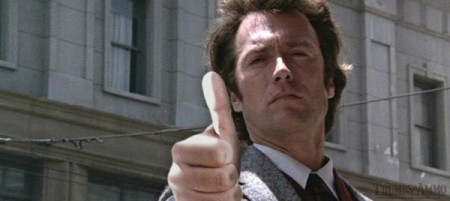
callahan
Thanks, Harry! I’m glad you liked it.

So how’s your November writing project coming along?

Mine’s not too bad.

I’m a few scenes into Act 2, and things seem to be progressing smoothly, including coming up with a strong and slightly expository scene at the spur of the moment. Daily page output is fluctuating, but relatively steady; not sure if I’ll have a completed draft by month’s end, but think I’ll at least be mighty close.

This script is actually part of a collaborative effort (more on how that came about another time), so I sent the first ten pages to the other person, just to let them know how it was going.

Their response arrived the following morning.

“Fucking amazing! You are definitely on the right path. Amazing job!”

There was more to it, but I believe that accurately sums it up. They like what I’ve done so far, which in turn buoys my confidence, thereby inspiring me to keep charging ahead. Encouragement combined with enthusiasm is contagious.

Added bonus – several voicemails since then mentioning how they’re been reading those pages a couple of times a day and can’t help but feel a thrilled sense of anticipation about the rest of the script, along with its potential.

No complaints from yours truly about dealing with a case of the warm fuzzies.

A writer always hopes people like what they’ve written. True, not everybody will, but if some positive comments come from another writer whose opinion you value, wouldn’t that give you a little boost?

Who doesn’t appreciate a little vindication for all the hours put into getting to this point? We all know how much effort it takes to write something, let alone something that garners a positive response.

When I’m asked to read something, I’ll be honest with my thoughts on it. I’ll make appropriate suggestions of how it could be improved (which is usually the reason we’re being asked to read in the first place). But if I think it’s good, I won’t hesitate to say so. I will gladly point out what I liked and why I liked it.

Your readers are more than happy to give you positive feedback and words of encouragement, but they won’t do it because they like you or you’re their friend. They will do it because the material you wrote earned it.

And they’ll want you to keep doing it. And you’ll want to too.