Looking back, planning ahead

champagne-toast
Auld Lang Syne and all that

Well, 2016 is pretty much in the books. I hope it was a good year for you, writing-wise.

Mine was okay.

Among the more noteworthy events:

-I completed the first draft for 3 separate scripts. 2 comedies, 1 sci-fi.

-One of those comedies was written, edited and rewritten/revised over 10 days.

-My western made it to the top 15 percent in the Nicholl and was one of the top 100 in the Emerging Screenwriters competition, but did not advance with PAGE or Austin.

-Several read requests from managers and production companies. Unfortunately, everybody passed with the commonly-used “Just not what I’m looking for.”

-Built up my network of talented writers located all over the world, along with numerous getting-to-know-you in-person chats with those in the immediate geographic vicinity.

-Organized and hosted a very successful and enjoyable networking event for screenwriters. In a deli. A block from the Pacific Ocean.

-Took part in script swaps for somewhere in the neighborhood of 15 scripts.

Not a bad compilation.

As for 2017, the usual objectives:

-Along with the aforementioned rewrites, complete the first draft for at least 2 or 3 new scripts.

-Continue the quest for representation. Already a few potentials on the horizon.

-Based on how my western did in the Big 3 contests, I’m torn between seeking professional feedback for one more polish, or just leaving it as is and trying again next year.

-Continue providing notes and doing script swaps.

-Look into hosting another networking event, probably at a bigger venue.

-More networking and establishing connections with more talented writers.

-More getting-to-know-you in-person chats.

-Watch more movies.

-Read more scripts

-Stay confident. Be patient. Not lose hope, even on the shittiest of days.

-Keep trying to make this work. Eyes on the prize.

And a final note to all you loyal readers – thanks for coming along on this rollercoaster ride of a journey. I hope you’ve enjoyed reading about it as much as I’ve enjoyed writing about it.

All the best from me to you for a very happy and successful 2017. Fingers remain, as always, firmly crossed that this is The Year It Happens.

A label I wear proudly

sturges
We work wherever, whenever, and however we can

I can’t remember exactly where I saw it, but a couple of days ago there was a comment in a screenwriting forum that read something like “All you wannabe dreamers are just wasting your time”.

Oh, how I adore the encouraging words of total strangers.

But in all seriousness, I take issue with that statement. Nothing wannabe about me at all. I’m a total dreamer, through and through, and I don’t see this as wasting my time.

Far from it.

I think up stories and put ’em down on paper, and I really like that I can do that. A lot. (So much to the point that I think I could actually make a living at it. Here’s hoping, anyway.)

Other dreamers express themselves using any form of different methods. They’ll paint, draw, sculpt, compose, act, or sing. And it’s probably correct in assuming they get the same joy out of doing it that I do.

Is everybody good at it? No. Does that mean they shouldn’t even try? Of course not. We do it because we enjoy it.

One consequence about being a dreamer is that there will always be somebody like that anonymous naysayer. You don’t have to listen to them. It’s a lot easier to tear someone down than it is to build them up. That person may have had been bad experiences trying to do the same thing, and if they couldn’t do it, then nobody else can (or so the theory goes).

But you should also be realistic. Not everybody’s going to create The Most Amazing Thing Ever. Don’t let that stop you from trying. Speaking from my own perspective, even though I’ve made some forward progress for both skills and career, it’s taken a long time, with the number of setbacks and disappointments being significantly higher, but despite all that, there’s nothing else I’d rather be doing. Better to put myself through all of that rather than to have given up and not tried at all.

What can I say? It’s the dreamer in me.

So here’s to all of us dreamers. Long may our imaginations and the ability and methods in which we express them reign in an effort to make the world a slightly more enjoyable place.

Oh, and screw the naysayers.

Advice, suggestions, and everything in between

neil-gaiman
“When someone tells you it isn’t working – they’re almost always right. When they tell you how to fix it – they’re almost always wrong.” – Neil Gaiman

Many, many years ago, when I was just starting out in radio, I’d put together a demo tape of some of my on-air material and asked some of the veteran DJs at the station if they’d give it a listen.

One guy had several positive things to say, but also pointed out ways of how I was demonstrating my still-green abilities. He made some suggestions about how to fix that, which would, in theory, help me get better. They did.

The second guy started with “It’s good, but here’s how I would do it.” I honestly don’t remember anything he said after that because I simply didn’t care how he would do it.

There’s a very similar approach to how one gives notes on a screenplay.

When I give notes, I read what’s on the page and offer up my opinions of how it could be potentially be improved (from my perspective). A lot of the time it involves questions like “Why is this happening?” or “How do we know that?”

Or if something doesn’t work, but I understand what the writer’s trying to do, I’ll ask “What if you tried THIS (different approach) that yields the same results?” They may not take that suggestion, but it might trigger something new and unexpected.

I totally get that this is their story, and my only interest is in helping them make it better. By asking questions that only the writer can answer, the responsibility of coming up with and applying any fixes falls squarely on their shoulders.

I also make a point of trying to be objective. I may not be a fan of your story’s genre, but that doesn’t mean I’ll automatically be negative in my notes. What I will do is approach it from a “does it tell a good story populated with interesting characters and situations?” perspective.

And then there are the notes that want to take your story in an entirely new direction. The ones that take it upon themselves to change your story because “that’s not how they would do it.” I’ve gotten quite a few of those.

But what if how you would do it is different than how I would?

Sometimes it’s a suggestion that runs counter to the story you’re trying to tell, or it might have absolutely nothing do with the story at all. I’ve even received the always-appealing “This was great, except for this one small thing I disagree with/don’t like, which ruined the rest of it for me.”

Everybody’s going to have their own opinion, but the one that counts the most is yours. Even if it doesn’t feel that way now, only you know what the script really needs, and you’re going to get all kinds of responses when you seek out feedback.

Some of it will be very helpful and insightful, some definitely won’t be, and in the end it’s really up to you to decide which notes you think provide the most guidance to helping make your script better, which will in turn help you become a better writer.


Busy, busy, busy

Sorry. No post today.

A bit preoccupied with reading scripts, giving notes on some of ’em, working on my own stuff, and setting up a new round of of getting-to-know-you meetings with other writers.

See you on Friday.

Try the direct approach

handshake
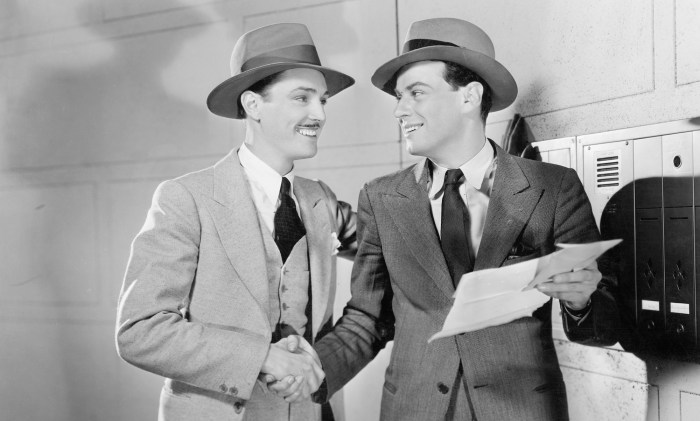
Nice to see you again. Mind if I ask you something?

Sometime last week, I received a very nice compliment via on online forum regarding the quality of the script notes I give. A mutual associate of ours chimed in with the grumbly “Well, he never does it for me.”

To which I responded “Because you never ask.”

I don’t know what this writer’s standard M.O. is for getting notes, but from what I can gather, usually involves them posting “Anybody want to read my stuff?”

There’s nothing wrong with that, but the drawback is you run the risk of getting feedback from somebody with less experience than you, or worse, has no idea what they’re talking about.

This is why networking and establishing relationships with other writers is so important. If someone posted a generic request for a read, I’d be less inclined to respond. Even if I knew the person. I figure they’ll probably get a few other responses, so why bother?

But if someone came to me specifically and said “If you have the time, would you be able to read this?”, I wouldn’t hesitate to say yes. This shows me that they value my experience and opinions, along with respecting that I can’t simply drop everything to accommodate them. They’ll also include an offer to read something of mine, if I’m interested.

Sometimes I’ll get an email asking me for a read, and it might be because of any number of reasons. They’ve read my stuff before and think this new script is similar. They know I have an eye for fill-in-the-blank. All of this could only have come from myself and this other writer having already established a good professional relationship.

While I always encourage writers to get out there and network, it’s also important to build on those connections once you’ve got them. You don’t have to become somebody’s best friend, but being supportive or offering the occasional words of encouragement really go a long way. Plus, people are much more likely to remember that sort of thing, adding to the likelihood they’d be willing to help you out.

More than often I’ve read about another writer’s projects and introduce myself, tell them how I found them (usually via the forums) and of my interest in the script in question, then ask if they’re cool with me taking a look at it. It’s a rare occurrence when someone says no.

Both of you are writers constantly striving to improve, and some good, solid feedback can play a big part in that. And that can be best achieved by getting to know other writers and treating with the same respect you’d expect to be treated with yourself.