Make your fictional people more like real people


purple rose

The rewrite of the horror-comedy is almost complete, which is great, but I already know what’ll require a little more attention for the next draft:

Fleshing out the characters even more.

I’d already made the effort to create backstories for each of them – nothing too extensive, just the relevant details that might come into play during the story.

As they read now, they’re established and definitely distinct individuals. A big part of the next draft is to help make them even more distinct, as well as further develop their respective arcs.

That’s something a writer really needs to be aware of – making the characters feel like an active part of the story. It’s our job to make them come across as actual people – not just caricatures or cliches. We want the reader/audience to be able to relate and connect to them, which then means we care about them and are interested in what happens to them next.

It takes a while to really get the hang of it, but once you’re able to do this, your script is that much stronger for it.

Not sure how to go about it? Plenty of resource material out there to work with. In my case, since this is a horror-comedy, I had the benefit of being able to use successful ones of the past.

The really good ones not only play up both the horror and comedy elements, but the characters are firmly established. We get more insight into who they are AND how what kind of person they are factors into the story.

The writing is so strong that you can see that they’re not just a generic character. The writers are letting you know how there’s more to them than just somebody taking up space.

These films put equal parts attention on the story as well as who these events are happening to, and how they reacted to what was going on. All of those combine to make for a great, solid script.

Which is what I’m aiming for with this one.

Admittedly, the biggest obstacle of this rewrite has just been getting it done. With that finish line fast approaching, the wheels are already turning regarding what it’ll take to raise the next draft to the next level.

Can’t wait to see how it works out.

Q & A with Mitchell Levin

red shirt

*note – Mitchell passed away in November 2021

Mitchell Levin was born in Detroit, Michigan. He received his BFA in Film from Columbia College, Chicago and his MFA in Dramatic Writing from New York University’s Tisch School of the Arts. He began his career as a Story Analyst at 20th Century Fox in Los Angeles, and as a development executive there worked with Arthur Miller on his screen adaptation of THE CRUCIBLE, which starred Daniel Day-Lewis.

Mitchell has worked, at one time or another, for every major Hollywood studio and has taught screenwriting at UCLA Extension. He recently left Steven Spielberg’s DreamWorks after 22 years as senior Story Analyst. There, he worked on films including GLADIATOR, ROAD TO PERDITION, THE RING, CATCH ME IF YOU CAN, THE HELP, BRIDGE OF SPIES, and more.

What’s the last thing you read/watched you considered to be exceptionally well-written?

It was a clip someone posted of a single scene from the TV show PEAKY BLINDERS, which I hadn’t watched but now will. So tense! Two male and one female gangster threatening a nun at an orphanage where a little girl had been abused. Masterfully written, performed and shot. Very still, but very edge of your seat, very heart in your mouth.

How’d you get your start in the industry?

While I was getting my MFA in Dramatic Writing at NYU back in the ‘80’s I did an internship as a reader for a producer named Martin Bregman, who made SERPICO and SCARFACE, among others. They hired me after the internship was over.

You were a Story Analyst at several major studios. What did that job entail and what were your responsibilities?

I started at 20th Century Fox when I moved out here. Not everyone knows this but the major studios are all signatory to the Story Analyst’s Union, which pays quite well, as opposed to freelance reader jobs. The union was very difficult to get into, even back then, and is virtually impossible now. I was then promoted to development executive and set up THE CRUCIBLE. I actually gave notes to Arthur Miller (he implemented all but two!) I told him, in our first meeting with then-president Roger Birnbaum, that we decided to set THE CRUCIBLE in space. Cute, huh?

After three years I realized being a corporate executive was not for me. I worked as a story analyst for every major studio at one time or another, but spent the past 22 years at DreamWorks. My job was to cover submissions, but also to help develop projects by doing in-depth notes from the time we acquired scripts or books to the time they either went into production or into turnaround.

When you’re reading a script, what about it indicates to you “this writer really gets it”?

Clear, coherent writing. Compelling premise and protagonist. Authentic sounding dialogue. Well-choreographed, not too-dense action if it’s an action piece. Clearly defined central conflict. An interesting world or a new spin on a familiar idea. And hopefully, a story behind the story, i.e., a bigger theme.

Follow-up – have you ever read a spec script that was an absolute, without-a-doubt “recommend”? If so, what were the reasons why?

The only script I remember giving a Recommend to was called THE ASSUMPTION OF THE VIRGIN, back around 2002. It wasn’t a spec, it was written by Anthony Minghella, based on a book set in the Renaissance. Sydney Pollack and Benicio del Toro were attached.

Readers shy away from Recommend because it sets off too many alarms. A Double Consider (for script and writer) is sufficient to let the exec know you’re excited. A Recommend is really sticking your neck out, and if the exec doesn’t agree with you, you worry you’ll be in trouble even if you’re told you won’t be.

Is recognizing good writing something you believe can be taught or learned?

To some extent, of course. Then again, it’s also subjective. One person’s cup of tea may be another person’s cup of swill.

What do you consider the components of a good script?

First of all, a great premise, but they are hard to come by. Beyond that, a compelling protagonist (who doesn’t have to be likable if he/she is fascinating), dialogue that pops, a clearly defined conflict, and always, escalating stakes and hopefully a sense of surprise.

What are some key rules/guidelines you think every writer should know?

– Know your logline. Often I get the sense a writer couldn’t tell me their logline if asked; not concisely, anyway. A one or two sentence synopsis of the story that tells me the inciting incident, who the protagonist is, who the antagonist is, what the central conflict is, what the stakes are, and gives me a sense of the possibilities within the story without giving away the ending.

– Leave plenty of white space on the page. Readers hate lots of dense black text. Don’t overwrite. That goes for dialogue and action.

– Don’t introduce too many characters at once that will be hard to keep track of.

– Don’t give character similar names (Jenny, Joanne, James)

– While the reader has to read and synopsize your entire script, the exec may not read past the logline on the coverage, or past the first 15 pages of your script. You have only that brief window to really engage him/her and let them know “what is” – who, what, where and why – and really grab them.

– Very important – Don’t be boring!!

Are they are any cliches or tropes you’re just tired of seeing?

I hate clichés always, and a trope isn’t necessarily a cliché. If by trope you mean a metaphor or archetype, they can always be done well or poorly, whether it’s “cross-cultural romance” or “reluctant hero”. Certain clichés bug me more than others, because they come up so frequently, like: “EMILY, 25, beautiful but doesn’t know it” or when the villain says to the hero “We’re not so different, you and I”. Or villains named DEVLIN because it sounds like DEVIL. Or when a character says “I just threw up in my mouth a little,” which makes me throw up in my mouth a little. It was funny the first time I heard it in a ‘90’s sitcom, but hasn’t been since. Likewise, the word “amazeballs,” which comes up a lot in comedy scripts, but I doubt anyone has ever actually said it in real life.

How can people find out more about you and the services you provide?

Mitchell passed away in November 2021. At the time of this printing, his website scripstrx25.com was still live.

Readers of this blog are more than familiar with my love/appreciation of pie. What’s your favorite kind?

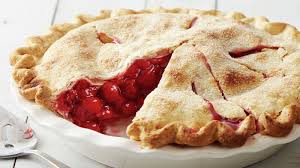
When I was a kid I wasn’t fond of birthday cake and always asked my mom to make me a cherry pie. My tastes are more sophisticated now. Unfortunately, I’ve since been diagnosed with Type 2 diabetes. This surprised me, as I don’t have a weight problem. When I asked my mom about it, she said, “Oh, yeah, I forgot to tell you.” It seems it runs through the whole family on her side, but it skipped her.

cherry pie 2

So the only pie I tend to eat these days is humble pie, usually on those occasions, and there have been many, when I embarrass myself in front of famous people.

Boldly swinging into new territory

george jungle

As the shelter-in-place continues, I hope you and yours are staying safe and healthy.

I also hope you’re managing to be at least somewhat productive during these trying times. When all of this started, my initial thoughts were “Woo-hoo! I’m going to get SO MUCH writing done!”

Yeah, no.

I’m fortunate enough to be able to work from home, but there’s also all that standard around-the-house-type stuff that needs doing, so while Writing Time is a thing, it’s just not as abundant as originally hoped.

Not that I haven’t been making progress.

-Working on the rewrite of the horror-comedy has been a real eye-opener, especially on the comedy side. Looking back at some older scripts, my idea of comedy was mostly slapstick situations and characters making clever comments. With this one, I’m forcing myself to use those less and focus more on developing funny scenarios that work within the context of the story.

-After something like two, two and a half years of jotting down ideas for it, I finally decided to start mapping out the story for an animated concept. It’s still in the early stages, but I managed to nail down the plot points – including an out-of-the-blue idea for one of the main storylines that feels perfect AND really ramps up the conflict.

-Blew the proverbial dust off some notes for an older sci-fi project in need of a rewrite. Some of the comments made quite an impression, so I’ve been squeezing in some work on applying them to the story – along with some significant changes to give it a thorough overhaul. Still some work to go, but it’s a good starting point.

-Honestly, not much attention has been given to the sci-fi adventure, but it’s still on the latest version of the WIP list.

All in all, hoping to have at least two, maybe three of these as ready-to-go drafts by the end of the year.

Another bonus of working on all these newer projects is re-experiencing the joy and excitement of writing. It’s one thing to go back and do the umpteenth draft of the script you’ve been working for a long time, and definitely another to create new pages for an idea that for the most part is just seeing the light of day.

I tolerate the necessity of the former, but fully embrace the thrill and exhilaration of the latter.

Even better – when they’re ready to go, I can contact my stable of savvy readers and be able to start off with “New script. Whattya say?”

Exciting times, chums.

Hope your writing output-during-quarantine is also coming along nicely.

FROM THE MAXIMUM Z COMMUNITY BULLETIN BOARD

The fine folks at Roadmap Writers are offering up some of their master webinar series FOR FREE during the month of May. They include interviews and Q&A’s from TV writers/creators, Hollywood screenwriters, development executives, producers, literary managers, and more.

Click here for all the details.

Q & A with Terry McFadden

TERRY Cool

Terry McFadden came up through the ranks as a playwright having been produced
throughout the United States, the UK and Australia and winning several awards. From there he worked as a script consultant for ARD Television, Radio and Films and Eternity Pictures before starting off on his own. He has had the good fortune of giving studio notes to producers on scripts that got made such as THE GOOD GIRL, CONFESSIONS OF A DANGEROUS MIND and THE TRUTH ABOUT CHARLIE.

As the founder of Story Builders Script Doctor & Writing Services, he has covered, analyzed, given notes and consulted on hundreds of screenplays, TV pilots and story ideas and is dedicated to helping writers find and hone their own unique voice.

What’s the last thing you read or watched you thought was incredibly well-written?

JOKER. Without question. The absolute best script of 2019. From the very first page I loved the writing. Now, a lot of it is because I so identify with the charm and depth, the way it was done, the thematic and stylistic elements hit me right off. Not only was the lead character great and unique but he starts out as a very human but weird guy who has issues—issues that are clearly foreshadowed and then evolved. The story makes clear and piece by piece layers in not only his mental and delusional maladjustments but the idea that the way things turn out, as a result of his upbringing and belief systems and how he sees himself and world, is the only way it can end. This is developed wonderfully.

Screenwriters are taught to look at story, the characters and their arc, the twists, the spins, the reversals, the progressive development and surprises; a solid and rising structure with the catalyst plot points, midpoint, and the rest. All of that was there in JOKER but what kept me turning pages was the way it all weaved back in—supporting and commenting on what is already going on adding dimension. A real fresh slant on how he becomes not only his own hero but also the hero of those in need of such a person. The metaphors, the allegories, the songs, the running symbolic commentary—all snaking back and endorsing what is going on or will be, was both unpredictable, cool, necessary yet not seen coming in that way. Very well done.

How’d you get your start in the industry?

I started as a musician. Eight years old, I’m taking guitar lessons and my Dad tosses me onstage with “Tommy Schaefer’s Country/Polka Band at Jim Thorpe Memorial Park”. Music is a big part of everything I do. Writing is music. I came to formal writing at Penn State, penning funny essays about people and teachers. But it took off in Los Angeles in 1993 or so, when I began to write short scenes and monologues for the theatre. I became a member of Actors Art Theatre in Hollywood and remained there for four and a half years—this is where I really developed my style of writing.

Writing scenes progressed to ten-minute plays, short plays and one acts. The director and founder of the theatre was a real mentor to me and a great means of support. From there I studied at UCLA and AFI, did coverage and analysis for several production companies for a while, continued to write, act and produce plays and scripts. I then went out on my own as a script doctor.

Is recognizing good writing something you think can be taught or learned?

Absolutely – for both. The “craft”, to me, comes first. Learning about story, character development and structure–how to turn an idea into 110 pages of course, is the gig here. So in order for me to recognize it, I had to learn it. I had to discover what structure does, why and how–what makes great story points and all of the rest. When you are reading tons of scripts and attending workshops and seminars by a lot of the great teachers like I have, the recognition of good writing becomes second nature because you’re also seeing bad writing and discovering why.

Writers who want to grow and become better intuitively know they need some help. My job is to provide that while showing them their promise as well. Their promise is what we develop. Writers who are open to and then apply good notes will see right off how it betters the work—this is “being taught”.

What do you consider the components of a good script?

A memorable story, clear and fresh characters and building structure as I mentioned above, but for most of us, that’s a given. Good scripts need to be engaging and surprising too.

Stories that emotionally move you as well as make you feel that you are there. The mark of great writing is a piece that has the reader or audience invested and rooting, one way or the other – eliciting an emotional response. Even though readers may not identify with the situation they will identify with the emotional life of what the character is going through, the actions and the way the characters behave, and this is because of the human experience.

What I consider the most important component of all of this is that the writer tell the story in a fashion that only her or she could—their own unique voice. This is who they are and how they see the world that nobody else does. The first thing I look at when reviewing a script is the description and I ask myself, “is this textbook or is this from a perspective that I’ve never seen before?” A script that has a unique and personal voice to it is already leagues ahead as the writer understands not just story, but “their” story and how to get that across.

What are some of the most common screenwriting mistakes you see?

Lack of prep and what’s worse, thinking that you don’t need it. Okay, great ideas make great stories but only if the idea is turned into a script that encompasses the story and structural elements to evolve, build, grow, sustain and resolve in 110 pages.

Another mistake is writing “pot-boilers”, that is, trying to copy what is out there without having a believably sustaining basis for the human aspect. Without a strong and personal character take, motivation, true want and need, you’re writing purely externals. Externals don’t get it for me. I need to know why.

Another mistake is that Act Two putters out and the scenes begin to get episodic and meandering. Biggest one is protagonist trade-offs: The protagonist, because of lack of drive, stakes, want and need is passive so the action is progressed by secondary characters thus confusing the lines and creating tangential sub-plots that do not correspond with the concept or original goal of the protagonist. I am a big proponent of using an outline. Sure, you could waver from it, but, do so in the context of the story that you are now familiar with—this is true and correct inspiration. Write an outline or treatment and get notes on that first. You’ll save yourself not only time but ego deflation and bouts of self-doubt. All comes down to execution on the page.

What story tropes are you just tired of seeing?

I’d have to say voice-over as it’s so overused. If you’re going to use a narrator, and this goes for all devices and conventions, ask how is this still serving the story yet different, adding, and, could it only come from me? Is the narrator a character? Do they know the ending? Are they commenting in a way that goes against the cliché? Are they oblivious, dumb, judgmental? Are they an active character? Also, mentors who are older and have it somewhat together.

Photos on the wall or mantle showing who the characters were and what they did before we see them. I feel that exposition should be meted out when essential and in story forwarding form in crucial times and scene beats.

Lastly, villains that are too dark and mean. My take is that antagonists and villains are the protagonist in their own story; they’re just at cross-purposes with the hero. If you can show why antagonists do what they do and their reasoning, it’ll be more interesting. Watch the original FRANKENSTEIN bopping and stumbling all over the place, and tell me you don’t feel for him.

What are some key rules/guidelines every writer should know?

Write dialogue that differentiates the character as per who they are, their world, POV and experiences. Dialogue that only they could say.

Make sure it’s your world; your voice; your take—only you could have written this. The hook, the take, the scenario and the point of view could have only come from you. Not just overall conflict but inner scene conflict between the characters needs to be present evolving and resolved in some fashion, especially if they’re on the same side. Individual stakes and progressive character function is vital.

Do not have a character if he or she does not only have a role but also a function. How are they influencing the story and the hero? What happens to turn the story because of them?

Keep us guessing. Great scripts set up surprises, twists and reversals that catch readers off-guard yet make sense as per the foreshowing early on. There is no such thing as “out of the blue” (some comedies and farce exempt) even if you think it is. Everything that happens in Act Three is foreshadowed in some way and credible to this story.

Be open to changes; be open to collaboration; be open to notes that are going to improve the vision overall. Screenwriters are subjective and we need another pair of eyes that are not our own. We need to understand that getting sold, published and produced demands active collaboration. Get notes, shut up or drive a bus. Keep writing. This is a process and you learn as you go. Will you get better at it as you go? Probably. Will you evolve as a writer? Absolutely.

Have you ever read a spec script that was an absolute, without-a-doubt “recommend”? If so, what were the reasons why?

Yes. I reviewed a coming of age drama, a TV pilot, that looks at one night in the lives of several late-teen/early 20’s pizza delivery-service workers, concurrently and from all of their points of view. So different were the characters yet all dealing with their own private teen angst. Phenomenal use of subtext; great devices and conventions that were imaginative, unseen before yet fell right in line with the voice and concept.

This slice of life story very convincingly depicted the trials of young adults searching for love but settling for sex and left me with the feeling of hope and the promise of their journeys to come. Because this pilot opened up so many possibilities for all four of the leads, I felt it could go for many episodes and progress uniquely as well. Great writing.

How do you feel about screenwriting contests? Worth it or not?

Only if you do well. Screenwriting contests can help leverage a career but again, you need to have a good script that is recognized by the contest. Bigger question is how are you going to get your script out there? Contests are simply one road and not for all of us.

How can people find out more about you and the services you provide?

You can check out my website at www.storybuilderswrite.com. I’m also on Twitter at @Storybuilderz and on LinkedIn at  https://www.linkedin.com/in/storybuilders/

I also have a new e-book entitled, “That Sounds Like Me’ – ‘Implementing your Own Unique Voice into Act I of your Screenplay or TV Script’. The book takes a comprehensive approach to the usual refrains on getting your life and slant on the page. By delving into how the writer’s natural voice need influence all aspects of the process, it demonstrates how story tools such as Opening Image; Character Construction; Backstory and Exposition; Hooks; Allegories, Metaphors and Themes work together, complement each other, are part of the same world and why. Go to my website and sign in and I’ll send you the book for free, as a gift to you.

Readers of this blog are more than familiar with my love/appreciation of pie. What’s your favorite kind?

Ha! I’m going to bend the genre here and go with New York Cheesecake – graham cracker crust and bottom.

new_york_cheesecake

Q & A with Paul W. Cooper

Paul7

Paul W. Cooper has been a working freelance television and motion picture screenwriter for more than thirty years. With over 60 television credits and one feature film, his awards include three Emmys, the Humanitas Prize, Writers Guild Award and the Kairos Prize.

He wrote the critically acclaimed film ONCE UPON A TIME…WHEN WE WERE COLORED winning Best Picture honors at the Movie Guide Awards. His television credits include MURDER, SHE WROTE, HIGHWAY TO HEAVEN, LITTLE HOUSE ON THE PRAIRIE and THE WALTONS. He served as Story Editor on Oprah Winfrey’s dramatic series BREWSTER PLACE, and has instructed Film and Television Writing at Pepperdine University.

Paul has written 21 ABC and CBS AFTERSCHOOL SPECIALS dealing with subject matter exploring every significant social issue including incest, alcoholism, physical abuse, homosexuality and racism. A number of these projects won Emmys as Best Television Specials for their significant social and dramatic impact.

Paul has written a number of films for cable television, which have appeared on Showtime, Disney, the Animal Planet and Family Channels. He wrote THE MALDONADO MIRACLE for Showtime, produced and directed by Salma Hayek. It earned 5 Emmy nominations and won the Writers’ Guild Award. His film for the Hallmark Channel, THE NOTE was the highest rated Hallmark movie of 2007 and 3rd highest rated of all time.

What’s the last thing you read or watched that you thought was incredibly well-written?

BEASTS OF THE SOUTHERN WILD. Visually stunning. I ached for the characters.

Two of my favorite genres to write in are straight drama and crime. There are two screenplays I constantly refer to so I’m certain the last material I read are one or both of these screenplays. The first is TERMS OF ENDEARMENT by James L. Brooks. It’s the only screenplay that actually brought me to tears while reading. The second is the crime drama SEA OF LOVE by Richard Price.

Here’s my practice. After I’ve written ten pages, I will pick up my dog-eared and worn copy of SEA OF LOVE. I’ll read ten pages (any ten) then come back to the last ten pages I wrote. Now I find myself re-writing those pages with a different tempo. I’ll knock out words from the dialogue to give it a more staccato and street feel. My shoot-outs become more cinematic because now I’m trying to write UP to Richard Price’s standard. And the more I do that, the better writer I become.

When I write a drama-charged relationship story, I use Terms of Endearment the same way. Again, I’m always trying to write UP to the standards of the masters. So those are two works I refer to constantly and believe are incredibly well-written.

Were you always a writer, or was it something you eventually discovered you had a knack for?

I learned I had a knack for writing when, in the 8th grade, the class was assigned to write a short story. Once I started, I couldn’t stop and the world of fiction opened up before me. From that time on I wrote stories, plays, songs and poetry. But I never considered pursuing writing as a career. I was eminently practical and got my degree in business administration.

How’d you get your start in the industry?

There was a war raging in Vietnam when I graduated college. Rather than being drafted, I joined the Air Force, attended Officer Training School, then pilot training. I was a pilot in the Strategic Air Command for six years. I got assignments all over the world including three tours of the war zone and came back registering 61 combat sorties. As a crewmember in SAC, I was also required to sit alert for seven day periods. The Strategic Air Command was our first line of offense in the event of a nuclear war. So we had to be ready. And that meant living in an underground alert facility (mole hole) for those seven-day tours. There’s not a lot to do while waiting for the horn to go off. Guys played poker, shot pool or watched TV.

One night I was watching an episode of MEDICAL CENTER and thought “I can do that”. So I went to my little bombproof room, took out a spiral notebook and started writing. I had never seen a film or television script and had no idea about formatting. So I wrote my story like a play, drowning it in terms like cut to, fade out, dissolve etc. When finished I was optimistically excited and immediately began writing another episode. Then I branched out and wrote for other series popular at the time; MARCUS WELBY, THE WALTONS, SANFORD AND SON, MCMILLAN AND WIFE, and others. Now, none of these scripts was very good, but that didn’t matter. What mattered was I was writing stories, creating characters, giving those characters words to speak. And I loved the sensation, the power I had over these fictional “people” and their lives.

After a year or so of writing television “scripts” I thought it was time for the entertainment world to be exposed to my heretofore undiscovered talent. I wrote to the Writers Guild of America and they sent me a packet of useful information, including a list of agents. So I began firing my material off to agents who would summarily return fire with a politely worded rejection letter and my envelope unopened. Dissolve to a year later when I met my future wife, an Air Force nurse. On a blind date, I discovered she had lived next door to the sister of Earl Hamner, Jr., creator of THE WALTONS. What do you know, I had written two Waltons episodes. Through that connection I contacted Earl and he graciously agreed to read my scripts. I sent them and a week later, he called me and said I should be in Hollywood writing for television. So off to Hollywood I went, Earl became my mentor who put me in touch with an agent, and I was on my way.

Sad to say, my story only reinforces the notion that you have to know someone in the business in order to get into the business.

What do you consider the components of a good script?

People ask, what is or are the most important elements of a screenplay. Some will say character. Others say story. But the answer is – structure. You may have the most beloved character since Hoke (DRIVING MISS DAISY) and an absolute jaw-dropping story (THE RIGHT STUFF), but unless the pieces are stacked properly, the whole construct collapses.

What are some of the most common screenwriting mistakes you see?

The thing I see most often is that a story is derivative. Nothing new. All the same old plowed ground. And this, of course, makes stories predictable. I believe it was William Goldman who said, “Always give the audience what they want, but in a way they didn’t expect.” If it’s true there is no story new under the sun, then at least get us to the desired ending by way of a different road.

Too many words, not enough story. I will often tell a student, “You have a 105-page script here but it only contains 65 pages of story.”

My pet peeves are typos, misspellings and grammatical errors. There’s no excuse for these infractions. They label the writer careless at best and illiterate at worst and create an unfavorable impression for the reader.

Other mistakes are what I call re-hash and deadwood. Never tell the reader what he already knows. And omit anything that doesn’t relate to the premise. Keep the story ever moving forward.

What story tropes are you just tired of seeing?

I’m not a fan of superheroes. It always comes down to the hero battling with an equally powerful villain in an epic cinematic struggle only possible with CGI. Yes, it’s visually impactful, but for me, cartoonish. No matter what the bad guy throws at the hero, he/she
always recovers and comes back for more. After ten minutes of lightning bolts being hurled and mushroom clouds rising over the city, I’m bored.

What are some key rules/guidelines every writer should know? 

-Determine what your premise is. This is found by asking who your hero is and what does he/she want, need or desire. You should be able to state your premise in ten words or less. The premise of Romeo and Juliet is Romeo desires Juliet (boy wants girl). Indy wants to find the Lost Ark of the Covenant. Rocky needs to go the distance. The premise is your searchlight that must always be in view as you write the story. If it disappears, you’ve taken a wrong turn.

-Be aware of the third question — why do we care? We must be endeared to the hero (or despise the villain) and the hero’s goal must be worthy and important. The implication is obvious. If we’re not emotionally attached to the hero, we won’t care what happens. And if his goal isn’t both worthy and important, we won’t care if he attains it.

-Until the premise is revealed, the story is pointless. In other words, until the audience knows what the hero WANTS, the story has nowhere to go. Example: In Raiders of the Lost Ark, we open with Indy in an Amazon jungle cave stealing some artifact. He barely
escapes with his life and manages to return to his work as a professor at Chicago University. Now what does any of that have to do with the Lost Ark? Nothing. Indy has stated no particular goal so the story is nowhere. But then… he learns of the existence of
the Ark and decides to find it before the Nazis get hold of it. Now the premise becomes, Indy WANTS the Ark. And everything he does from that point on is aimed at achieving his goal. I like to see the premise revealed within the first 20 pages.

-Love is a process. You can’t just put two people together in a story and tell us they’re in love. We may believe it but we won’t feel it. You MUST give us the scenes showing us the behavior that causes one person to fall in love with another. What is it in her that he needs? What does he have that makes her desire him? And it can’t be only physical attraction. We know that people in bars can be physically attracted, fall into bed and the next morning regret it and never see each other again. That’s lust, not love.

-Once the hero has attained his goal… THE STORY IS OVER. Think of it this way. You’re watching a film full of danger and intrigue keeping you on the edge of your seat as the hero hurtles ever onward toward his worthy and important goal. The drama builds. Tension is unbearable. Then, in the exciting climax, the battle between good and evil is waged and the hero wins (or loses as in a tragedy). At that moment, all of the dramatic tension that was built is released like air out of a balloon. At this point, the audience is ready to rise and file out of the theater. THE STORY IS OVER. A common mistake these days is for a writer to keep going with the story even though there is no more tension to be derived. Yes, you often have to spend time to tie up loose ends but this must be done
quickly so you can get out and fade out.

-Think about what the audience is seeing onscreen. I often read a scene wherein two people are at a restaurant. They order. The waitress leaves. The two people converse for about thirty seconds and the waitress returns with their chateaubriand.

-Think of a script as a document of information. Something happens. And that something is first registered in the brain, right? We see and hear the event. Now if that information stops in the brain (intellect), then you’ve failed as a writer. Once it registers in the intellect, then it must go further into the heart or the gut. Those are the places emotion comes from.

-Character development occurs when we create the scenes that show the character behaving in the manner we want him identified with. Don’t tell us Joe is wonderful, he’d give his shirt off his back. Give us the scene where Joe gives the shirt off his back or “Saves the Cat.” Don’t tell us Sam is so evil he’d stick a knife in his grandma’s back. Give us the scene where Sam not only stabs his grandma in the back, but then twists the knife. Those scenes hit straight at the heart and gut.

You’ve written for both TV and film. How does writing for one medium compare to the other?

No difference unless you’re writing for a series. Then you have time (page count) considerations. I’ve written a number of movies for cable television and every one I wrote as though writing a feature film

Have you ever read a spec script that was an absolute, without-a-doubt “recommend”? If so, what were the reasons why?

Yes. And the reasons are hard to explain. First, it followed all of the requirements listed above concerning proper mechanics, economy, etc., but beyond that it grabbed my interest on page 2 and never let me go. It had complication, conflict and invention. It gave me the satisfying ending I wanted but in a way that was unexpected.

How can people find out more about you and the services you provide?

Go to my website at www.PaulCooperScreenwriting.com or my IMDb site: http://www.imdb.me/paulw.cooper

Readers of this blog are more than familiar with my love/appreciation of pie. What’s your favorite kind?

Coconut cream. The best I ever found was in a little diner/pie shop in Williams, Arizona. My wife and I always stop there on our trips between California and Oklahoma.

coconut cream