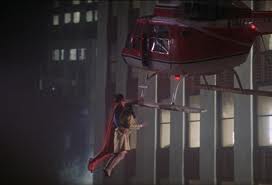
What happened to the action movie?

Often imitated, rarely equaled

A little over a week ago, a friend posted the following question on Facebook – “Is RAIDERS OF THE LOST ARK the best action movie of all time?”

As would be expected, this led to a somewhat lengthy discussion. Several other titles were bandied about (DIE HARD, ALIENS, several John Woo HK films), and was summarized quite succinctly with “The main lesson here is that the 80s were a goldmine for high-quality action films.” (mea culpa – I’m the one who said it).

All I can think of for the 90s are TERMINATOR 2: JUDGMENT DAY and SPEED.

While you’re thinking about those, compare them to some more recent ones, such as:
-THE EXPENDABLES – a nostalgic remembering of the genre itself
-THE EXPENDABLES 2 – silly, over the top parody
-PACIFIC RIM – cool to look at, but that’s about it
-FAST & FURIOUS 6 – haven’t seen it, but I’ve heard nothing but good things about it
-THE LONE RANGER – couldn’t bring myself to see it, but will catch it on home video. Is it as bad as they say?

Now there’s this. Oy. Someday I’ll discuss how much I dislike reboots.

So why do action films from 20-30 years ago still hold up?

Looking at strong examples of the genre, they all have: Original stories. Smart writing. Three-dimensional characters. Action that enhances and supports the story.

If you’re writing an action spec, these should be your goals and objectives. Yes, it’s a lot of fun to blow shit up, but don’t use an explosion or shootout just for the sake of having one. It’s pointless.

Make the action part of the story, not what the story’s about. Use it to move things forward. Ratchet up the tension and create more conflict for your hero.

Need a refresher course in how it’s done? Pick one you’ve always liked, and watch it as a writer. Take notes. See how it all fits together. Then see if any of it can be applied to your story and rewrite accordingly.

If only all learning could be this enjoyable.

The fine art of world-building

Tell us what we need to know about this place
Now that you’ve created it, what do we need to know about it?

One of the primary functions of the first act is to establish the current situation of your protagonist. You, the writer, have to convey to us, the reader/audience, what’s going on around our hero and how they fit into this scenario.

Tell us what we need to know about them, but don’t overwhelm us. Give us the details relevant to the story; anything else is totally unnecessary.

Show us why this character is worth our time and attention. What is it about them we can relate to?  Make us care about them. Pique our interest and curiosity.

This is also your chance to establish the rules of this world you’ve created and how it works. If it’s something other than the world as we know it (i.e. science fiction or fantasy), then you definitely need to explain how things work here. Don’t expect us to know what you’re talking about; just because you know doesn’t mean we’re going to. Keep things simple.

Now that you’ve presented us with our protagonist and the world they live in, SOMETHING HAPPENS around page 10 that drastically changes their everyday routine and gets the story going. It also raises the central question of the story – “Will the protagonist achieve their goal?”

Some may say the protagonist should be the one that makes something happen, which is possible, but it seems more likely this disrupting-of-the-everyday-routine event happens to them, rather than because of them.

What’s great about this next stretch of pages is it offers you the opportunity to show a little more of this world, especially how your protagonist reacts to what’s happened to them as well as how their world responds to it. Explore the consequences and ramifications of how their life is changing as they leave their old situation behind and become more involved with the new one.

By the time we get to the end of the first act, the protagonist is totally immersed in this new world and has to figure their way out/through it. Everything we need to know has been taken care of, so now we can focus on following the story.

Hey kids! Fill in the blanks!

The good news is this will not count towards your final grade
The good news is this will not be on the final, but neatness does count

Since I’m always interested in what other writers are working on, here are some questions I’d really like to see your answers to.

1. MY LATEST PROJECT IS TITLED _______________

2. IT’S A  ______________ (genre)

3. HERE’S THE LOGLINE __________________________________

4. THINK OF IT AS ___________ + __________

Here’s mine:

1. NORTH POLE’S MOST WANTED

2. mystery-comedy

3. A mild-mannered elf uncovers a sinister plot to get rid of Santa, but nobody believes him, somebody’s now trying to kill him, and Christmas is one week away.

4. LA CONFIDENTIAL + RUDOLPH THE RED-NOSED REINDEER

Now you.

The writing sprint: no training necessary

race
It’s not about speed; it’s how you handle the course

Finally, finally got to type in those illustrious words FADE OUT, which brings the first draft of the western spec to a satisfying close.

It’s very tempting to read it and see what needs work, but at this point, I’m opting to let it sit in hibernation while shifting the focus to the rewrite of the mystery-comedy.

While the previous draft is a more solid foundation than I thought, there are still some ideas I’m looking to incorporate.

Rather than jot a few down at a time, or hope inspiration hits every once in a while, I’m opting for a method that’s proven quite helpful in the past: the writing sprint.

Set aside 30 minutes. Just you and a blank page (paper or digital – doesn’t matter, although digital might be easier & faster to work with). Once that timer starts, write out scene ideas as fast as you can.  Don’t stop to think if they’re good or not. Just crank ’em out.

It’s not a bad thing to write what you already have, but maybe you’ll come up with something you never thought of, or suddenly hit on a solution to a problem that’s been bothering you.  Feel free to even take things a totally new direction. For now, there are no bad ideas.

It’s possible you could run out of gas before time runs out, but push yourself to keep going.

Once the 30 minutes is up, take a look at what you’ve got: a ton of (mostly) new material.

Pick and choose what works for you now, but make sure to hold on to the rest. Inspiration could hit from any of them, and you never know what might come in handy later.

So glad I didn’t listen to myself

How I originally intended to start this writing session
How I originally intended to approach this rewrite

Since it really has been years since I last looked at my mystery-comedy spec, and not wanting to be too heavily influenced by what I’d written before, I figured this rewrite would be completely fresh. A clean slate. Blank page from the get-go. A whole new ball of wax.

I sit at my desk, all set to open those floodgates. My notebook’s open to this new set of plot points, ready to be fleshed out. Pandora cranks out the sounds of the Rat Pack and the 50s jazz club scene (appropriate mood music for the story’s setting). A hot cup of joe within reach. Overall, a perfect writing scenario.

So what thought immediately pops into my head?

Yep. I’m gonna check out what I wrote before. But just out of curiosity. It’s not like I’m going to keep the whole story. Besides, it’ll be interesting to see how far my writing’s come since then.

This is also why you should never, ever throw away old material. You never know when you might come back to it.

I open the 1-pager. Okay, I remember this part. Wait. I don’t remember that. Whoa, where did that come from? Wow, this is a lot more detailed than I remember.

Finishing that, I automatically wonder how the script reads. A few scenes stick out in my memory, but most of it is long forgotten.

I’ll just take a look at the first few pages. Promise.

Hmm. Not as bad as I thought. Some of the dialogue is a little too on-the-nose. Too many adverbs. Character descriptions could be better. Some good set-ups I instantly recall how they pay off. This subplot’s a little weak.

A quick glance to the upper right corner to see what page I’m on. 26 already? Hokey smokes, this thing is flying by.

By now I feel almost obligated to finish reading it. 35 minutes later, I did.

The overall consensus: still needs a lot of work, but a much more solid foundation to start with and there are some ideas I’d like to incorporate. It’s kind of reassuring to know I’ve already taken care of a lot of the heavy lifting.

A few days ago, I was concerned this was going to be a real slog, but now – not so much.