*No reason. Just a great song, and fits within the season.*
After surviving a temporary bout of writer’s block and the phenomenon known as Thanksgivukkah, progress is once again slowly moving ahead on the mystery spec. With the time I have available per day, the output of one to three pages continues to move things along.
It’s becoming more and more apparent this draft will not be completed by year’s end, which is perfectly fine. The halfway point seems more likely.
There’s also nothing like rediscovering the satisfaction of letting your internal editor take some much-needed time off and giving free reign to the creative writer. Enjoy it now, and let the editing and analysis wait until the next draft.
But enough about me. How’s YOUR latest project coming along?
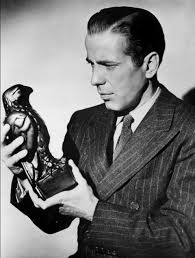
Conditions like this I call “Sam Spade kind of weather”
Call it a benefit of being a creative type.
Even though I may be working on one project, there’s always the strong possibility that ideas connected with another can still pop up. Happens to all of us.
When they do, I do my best to take advantage of it.
Just such a thing happened yesterday morning. As is my usual routine, I was riding my bike to work. (Didja know I leave the house at 4AM? True.) Suffice to say, it was dark.
And foggy. This is San Francisco, where fog is a serious issue. Visibility was limited to fifteen, maybe twenty yards.
So there I am, pedaling along, and I can’t help but notice how delightfully creepy and sinister it all is. Barely-lit slick streets blanketed with dense fog, the hearty blast of the foghorn sounding over by the Golden Gate. Something in my brain switches on.
“This is the perfect setting,” I think to myself, “for the opening of the monster script.”
The fog hung around for about another two miles, giving me lots of time to come up with a mental list of what could happen during that sequence. After I got to work, I wrote some of them down. If only the rest of this was as easy.
Even though this is just a small part of the story, and the actual work on the script may not happen for a couple of months, it was pleasantly unexpected.
We can’t force inspiration, so when you suddenly come up with an idea, let alone one that works, no matter how big or small it is, grab hold with both hands and do not let go.
The details might change, or you might not even use it, but it’s still a small step towards being done that helps make the whole process a little more bearable.
As writers, we’re all on our individual paths. Our journeys towards whatever goal we each have are chock-full of good days, bad days, ups, downs, twists and turns.
Despite knowing this is not an easy thing to do, we soldier on. There are countless obstacles, pitfalls and other hazards to slow us down, test our confidence and push our endurance to the extreme.
The one saving grace as we put ourselves through this sometimes hellish process is we don’t have to do it alone. There are lots of other writers out there struggling with the same problems, but it’s up to each of us to be willing to seek out help from those other writers.
That’s part of the reason why I started this blog. I wanted to write about my writing, and offer up what might be considered helpful advice or a word of encouragement to anybody willing to hear it.
To say this has been a positive and gratifying experience would be an understatement. I’ve been extremely fortunate to connect and establish good working relationships with a lot of talented writers, and hope the trend continues.
It’s great when somebody likes a post or makes a comment, or retweets or favorites the link on Twitter. Even if it’s just somebody checking out the blog for the first time, that’s pretty cool too.
I’m just a guy who likes to write, and is extremely glad to be part of a community of other writers just like me.
So thanks for…well, everything. I hope you’ve enjoyed it so far, and hope you’ll stick around.
Nothing better than connecting those potential loose ends
Even though I just started this rewrite of the mystery spec, I’m firmly entrenched in the practice of always thinking “What’s the best way to tie this in?” for every scene. It’s something I strive for every time.
No matter how seemingly small or insignificant a part of a scene is, we as writers must be compelled to make sure it all fits not only within the context of the scene, but also within the story as a whole.
Everything should serve a purpose. If it doesn’t, why is it there in the first place?
Think of it as a slight variation on setup and payoff. While those usually apply to the plot (or at least should), tying things together is more of a way to support what happens around the plot. Anything that doesn’t belong is going to be even more noticeable.
It drives me crazy when something happens or is in a scene for no apparent reason. It’s easy to fall in love with your own writing, but don’t put something in because you think it should be there. Have it in there because it has to be.
Taking it in the opposite direction, I’m always impressed to realize after finishing a read (or viewing) how something tied in, but didn’t recognize it at the time. This can be tricky to get a handle on. You don’t want to be obvious about it, but also don’t want to make it too obscure. It takes practice.
So the next time you’re writing, editing or proofreading, keep in mind to constantly ask yourself “Does this really belong here?”
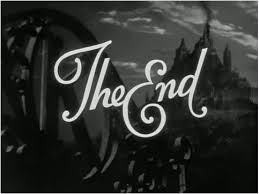
Actually, those words are “Fade Out,” as in The End of The Script, but you get the idea.
You reach that point in your work, type them in, and hit ‘save’. You take a second to sit back and savor the moment – an incomparable feeling of exhilaration.
Which is exactly what’s happened with the latest draft of the western spec now complete (added bonus – slightly ahead of schedule). I’ll allow a few minutes of satisfaction as it heads into the next round of feedback.
As expected, changes had to be made and darlings had to be killed, all based on some suggestions from the previous draft and a little last-minute inspiration. The end result – a stronger story with the characters getting a little more dimension.
At least that’s how I’m reading it.
So rather than be concerned about potential reactions, I’ll be distracting myself by jumping right into work on the mystery spec. If I can maintain my writing regiment of “whenever I can”, I’m hoping to have a first draft done by the end of the year. Fingers, crossed, anyway.
-If you can spare a couple of bucks, please consider donating to this. I’ve never been there and don’t live anywhere near it, but think it’s incredibly important to help small, independent movie theatres stay in business. There are two weeks left, so give if you can.