Embracing my inner Stan

“I used to be embarrassed because I was just a comic book writer while others were building bridges or going on medical careers. Then I realized that entertainment is one of the most important things in people’s lives. I feel if you’re able to entertain, you’re doing a good thing.”

That’s a quote from Stan Lee that has been ringing true a little more often for me lately.

When another writer asks me “What do you write?” or “What do you like to write?”, my go-to answer is “fun, popcorn adventures.”

Serious dramas, character studies, and examination of the human condition just aren’t my thing. If I can give you 100ish minutes of pure escapism, I’m a happy guy.

“Write something you would want to watch” I always tell newer writers. I go to the movies to have fun and enjoy myself, so that’s what I like to write.

I’m a member of an online writing group, and I always felt very self-conscious when I’d submit pages. Other members were PAGE and Nicholl-winning writers, and I’ve got an animated story about a young witch, her talking cat, and the state of New Jersey. Who wouldn’t feel a bit silly about that when other scripts are about dysfunctional families and dissolving marriages?

Interesting side note to that: some readers had a tough time adjusting to the fact that it was an animated story, while others marveled at how fun and creative it was.

I think it was going to Austin that helped me turn the corner on how I viewed the overall picture.

When you get together with a whole lot of other writers, discussing your script is an automatic part of the equation. I was quite proud of how my script had turned out – both as a script and for the competition, and wanted to convey that pride while talking about it. So I did. When somebody would say “What’s your script about?”, I’d smile and tell them without a moment’s hesitation.

It’s safe to say just about every reaction was a positive one. Each person thought it sounded great, plus a few “I’d like to read that”.

My current project is a rewrite of the sci-fi adventure. Similar kind of situation. Scientists. Monsters. Diabolical plots. Typical me kind of stuff. It’s still very rough, but you can see my enthusiasm for it on the page. Why not take it and run with it, head held high, so to speak?

I submitted the first ten pages to the online writing group, pitching it exactly how I wanted to, including the apt descriptor “This is a fun, silly romp.” I wanted the other members to know what kind of story they should be expecting. Hopefully some of them keep that in mind. It’ll be interesting to see what the reactions are.

Like Stan Lee says in his quote, I used to downplay what my scripts were about because I thought people might look down their noses at that sort of thing. But after seeing how others have reacted to my scripts and what I like to write, I realize that a lot of the time people want to hear that sort of thing. They want to be entertained.

There’s just as much of a demand for fun popcorn escapism as there is for serious drama.

I can appreciate the latter, but am much better suited for writing the former.

And in keeping with the spirit of the post – Excelsior!

Your three for ’23

A new year is upon us. One hopefully jam-packed with opportunity and lots of forward momentum for all.

I had the recent pleasure of having lunch with a writing group. As things started to wrap up, one of the members asked the rest of us to list the three writing-related things we hoped to accomplish in 2023.

It was a great idea, and just as great to hear what everybody was setting out to do.

For me, it’s adding two scripts to my catalog, filming the short, and possibly resuming the quest for representation. That last one’s still a maybe, with “Elevate the quality of my writing” a suitable alternative.

So in the same spirit of camaraderie, I pass the question on to you:

What are your three writing-related goals for 2023?

More than that is fine, but three is a good starting point.

No matter what they are, I wish you the best of luck with of all of them.

Go get ’em, chums. I’m rootin’ for ya.

See you next year.

Create (and follow) your own route

As the year starts to wind down, I’ve taken part in a few writer Zoom get-togethers where the participants all discuss how their 2021 went, and what they’re hoping to accomplish next year.

(I’ll go into a little more detail regarding my own plans for 2022 in the next few weeks)

It was great to hear about the wide variety of projects that saw completion, along with the pride each writer took in talking about their work. Also nice – modesty. No pumped-up egos or “bathe in the splendor that is my wonderfulness!”

There were also those who had started something, but for some reason or other, hadn’t been able to finish it. That yielded a lot of sympathy as well as encouragement to get back on their respective horses.

The biggest underlying theme of all the conversations was “This is something I’m passionate about, and I’m going to do what I can to get it done/made.”

Doesn’t matter if it was a script, a short, a film, a webseries, or whatever. Each person had a project (or projects) that they were working on and was excited to be doing so. Results were varied, as were the timelines of progress.

Which is really what a lot of this comes down to. Each writer was working on a project and doing so in the way that worked best for them.

What was also really nice was that nobody was comparing their progress to anybody else’s, which is how it should be. It’s easy to fall into that sort of trap, and doesn’t help with bolstering your own confidence.

Everybody’s path is unique to them, and them alone. What works for you might not work for somebody else, and vice versa. Focus on what you’re doing and don’t worry about the other person.

Seeking an outside opinion? Ask someone you trust for honest and helpful feedback, and don’t feel obligated to take their word as “this is what needs to be done”. This is YOUR project, so trust your gut instincts to lead you in the right direction.

Most of all, do what you can to enjoy the journey. If you’re not enjoying it, the odds are high the material will reflect that, which means the reader/audience won’t enjoy it either. If you’re not passionate about it, why should we be?

We do this because we like/love it, right?

And it’s great seeing people be excited when talking about a project they love, because it makes us want to know more. Maybe we’ll even be invited to offer up our thoughts and comments to help them make it better.

So here’s to you being proud of what you accomplished in 2021, and for more of the same in 2022.

Proofreading Q&A panel – part 2

Tammy Gross
Tammy Gross

bill.and.puppy.girl.cropped (1)
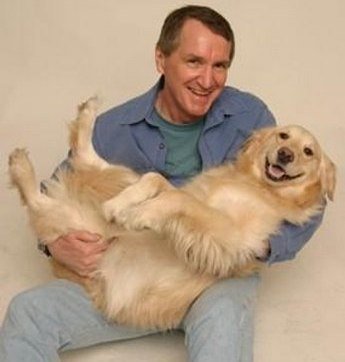
Bill Donovan and friend (friend occupying Bill’s lap)

Here is the second of a two-part panel discussion with professional proofreaders Tammy Gross of proofmyspec.com and Bill Donovan of screenwritingcommunity.net about proofreading and its connection with screenwriting, along with some info about the proofreaders themselves.

Part one can be found here.

When you proofread a screenplay, do you also take on the role of story analyst?

Tammy Gross (TG): Not as a primary service, but yes. Since I’m reading it anyway, I do offer inexpensive add-ons if a writer wants some basic “coverage.” And even with proofreading, there are some story issues which may be addressed during the edit if there’s a problem with consistency and/or continuity.

Before I started my proofreading service, I took a course on story analysis and offered a coverage service. I soon learned how bad formatting and text were too distracting for my left brain. It’s agony for me to look past multiple errors/issues.

Bill Donovan (BD): To a limited degree, yes. However, I put these and other words at the top of every set of notes I give back with the proofread copy:

“These are not the words of an expert script analyst … I strongly hope not to hurt your feelings … To the extent that you find my comments on your story to be wrong-headed, pointless, or insensitive, you are hereby counseled and, with regret for any hurt feelings, encouraged to ignore them.”

What’s your writing background?

TG: The agony of trying to look past typos sent me down an editing path in my 20s. I read a book published through a major publishing house that had multiple errors in the soft-cover version. I sent my corrections to the publisher, and the author contacted me personally to thank me. Ever since, I’ve honed my editing skills.

My life plan was “sing while I’m young and write when I’m old.” I did write a couple of novels in my 20s and managed to have some sort of writing or editing responsibility in every “real” job I ever worked, whether at a church, a bank or Fortune 500 company.

In 2008, while taking a break from singing, I learned about a couple of female pirates. These historical swashbuckling stories fascinated me. I traveled the world researching pirates (including falling victim to real ones in the Bahamas) and learning about writing screenplays. I haven’t looked back.

So far, every script I’ve entered in contests has placed or won. In fact, my first script won the first contest I ever entered. Since then, I’ve realized that my ability to write in “the language of screenplay” was getting me further than better storytellers due to their weaker technical skills.

I’m currently writing an adventure story for a producer who found me because of one of my scripts (which I also turned into a YA book).

BD: -Screenplay contest judge (three contests)
-Screenplay contest executive (11 screenplay contests, 5 scene-writing contests, two logline contests)
-Two of my own screenplays won three first prizes equaling $30,104 in prize money in today’s dollars.
-Former Editor of Creative Screenwriting Magazine
-Author of three e-books for screenwriters to date; a fourth is upcoming
-USC Master of Fine Arts, Screenwriting and Filmmaking
-Copy desk chief at a daily newspaper, the Morristown, N.J., Daily Record
-Copy editor at the Associated Press
-Copy editor at another daily newspaper, The Record, Hackensack, N.J.
-Copy editor for several business-to-business trade publications
-11,200+ published pages and screenplays edited/proofread over the years
-News stories I wrote and/or edited won five national journalism awards.

How’d you get into proofreading?

TG: Totally by accident. I started a screenwriting group where we would table-read 10 pages of each writer’s script. I found myself making lots of corrections on everybody’s pages, and many of them asked me to proofread their entire scripts. It was a little overwhelming, due to also running a thriving music-arranging business at the time, so I put up a website to help me prioritize and charged a low but fair fee.

And it’s good that I did, because after the 2007 writers’ strike, followed by the recession, the spec-writing business boomed while music arranging fizzled.

BD: For an upcoming book, I surveyed and interviewed producers, agents, screenplay readers, directors, contest judges, and contest executives, asking them for their comments on the most common and the worst mistakes they see. Within the screenplay, proofreading and editing mistakes were named both the most common and most disliked by people in the industry.

How can people get in touch with you to find out more about the services you provide?

TG: The order page functions as a quote calculator, or send an email anytime: Proofreader@ProofMySpec.com

BD: Email me at Bill@screenwritingcommunity.net or use this form at my website.

Readers of this blog are more than familiar with my love/appreciation of pie. What’s your favorite kind?

TG: Humble. I should eat more of that and less Key lime.

BD: 1. Great pizza. 2. Pumpkin, my own homemade recipe. 3. Blueberry, Comstock filling, augmented.

Avoiding the dreaded unfilmable

flagman
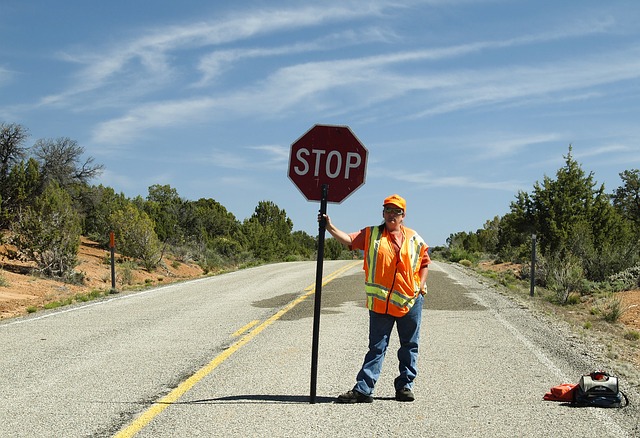
Don’t go this way!

I recently had the pleasure of giving notes on a friend’s script. It was an early draft, so it had some of the usual problems that were easily fixable.

But the one thing that really stood out to me was their use of unfilmables.

“Unfilmables?” some might ask. “What are those?”

I’m glad you asked. Here’s an example:

“EXT. PORCH – DAY

Jane sits on the stained deck chair her father bought for her birthday last year.”

If you saw that onscreen, you know what you’d see?

A woman sitting on a chair.

In other words, HOW DO WE KNOW it was a birthday present from her father? We don’t. How can you let us know? Maybe we see the father giving it to her. Or another character asks about it, and she delivers a one-line explanation.

If there’s an important detail to your story, you need to find a way to include it as part of the story, and preferably in the most organic way possible.

What’s on the page is what we see and hear.

Unless there’s a line of dialogue or some kind of action somewhere in there that reveals these kinds of things, the audience has no way of knowing them.

Here’s another:

“INT. KITCHEN – NIGHT

Kevin washes dishes. He thinks about that time he and his high school girlfriend crashed her mom’s car.”

What’s on the screen? A guy washing dishes.

HOW DO WE KNOW that’s what he’s thinking about?

Maybe we see the accident take place. Or hear Kevin talking about it. Maybe the story involves how the accident leads up to him washing dishes.

In my old writing group, one writer was insistent about leaving these sorts of things in. When pressed on why they were so adamant about not being willing to take them out, they’d launch into a long-winded explanation of why it was necessary to include them.

“So if we were watching this, you’d be there explaining things, rather than working them into the story and showing them on the screen?”

I’m not sure if they got the point.

Hopefully you do.