Ask a Produced-and-In-pre-production Script Consultant!

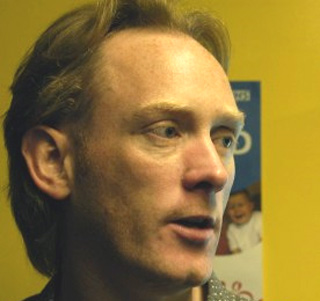
rob tobin

The latest in a series of interviews with script readers and consultants who would be worth your while to work with if you want to get your script in shape. Today’s spotlight is on writer-author-lecturer Rob Tobin. 

Rob is a produced, award-winning screenwriter, published novelist, former motion picture development executive, author of the screenwriting books “The Screenwriting Formula” and “How to Write High Structure, High Concept Movies,” as well as several screenwriting CDs. He’s been a frequent guest lecturer on screenwriting at film festivals and writing conferences around the world.

*April 2015 update – Rob is currently working on a multi-book adaptation project and is not available for story notes, but can fit in one additional script polish or rewrite assignment.

1. What’s the last thing you read/watched that you thought was incredibly well written?

My wife and I just saw “The Normal Heart,” which blew me away. Brilliantly written, acted and directed. Most importantly, the title wasn’t the only thing that had heart, something most films no longer have. Even a film like “The Fault in Our Stars,” a film with tremendous heart, that I loved. I’d much rather see a film or read a script like that than a brilliantly written script with no heart.

2. How’d you get your start reading scripts?

I’m originally Canadian, and came to USC in L.A. to get my M.A. in screenwriting and become a working screenwriter. My background was as a novelist. Everyone at USC told me I should intern at a film company. I did, and started reading scripts as part of my internship. Lots of them. Years later as a development exec, I stopped counting at 5,000 script scripts read and covered. In that process, I wrote two screenwriting books, starred in a couple of screenwriting DVDs, then people started flying me around to lecture on screenwriting – Canada, New England, the South of France.

3. Is recognizing good writing something you think can be taught or learned?

Definitely something you can be taught. Screenwriting has structure, elements, rules, all of which you can learn. Of course some people are going to be better at it than others. In addition, there is the other part of being a script consultant, and that’s helping the writer find ways to improve her or his script. That can also be taught, but there’s a much bigger talent component to that.

4. What are the components of a good script?

I actually wrote a book about the seven essential elements of a well-written screenplay, but to be honest, as I mentioned, one of the biggest aspects of a well-written script is heart. Yes, you can write a brilliant script about crime, sex, war, and so on. Bond movies are great, but I still think that heart is what makes a script special. Something like “The Normal Heart” or “Good Will Hunting”, or even comedies like “Big” or “Tootsie” have heart. High concept is also important but as I said in another recent interview, a high concept piece of crap is still a piece of crap. A low concept work of brilliance is still a work of brilliance. There are techniques and elements, of course, but I love that old saying about not writing because you want to say something, but because you have something to say. Say something worth saying, and say it with heart. If I had only one piece of advice to give, that would be it.

5. What are some of the most common mistakes you see?

Mistakes in a script are almost always structural, because almost everything emerges from structure. Dialogue, characterization, theme, it all emerges from structure. If you don’t understand structure, you’re in trouble. When I work with clients, the first thing I do with problem scripts is talk to the writer about structure. The mistakes and solutions are almost always located there.

6. What story tropes are you just tired of seeing?

Easy killing. Doesn’t matter whether it’s a cop who easily kills a bad guy, or an action star killing hordes of bad guys, easily, without remorse, and without ever getting shot him or herself. Killing as a relatively trivial thing is the worst trope of all in my opinion, and it can’t go away fast enough.

7. What are the 3 most important rules every writer should know?

-Write only if you enjoy writing, because the chances of making a living at it are extremely remote.

-Learn your craft.

-Never submit a first draft of anything.

8. Have you ever read a script that was an absolute, without a doubt “recommend”? If so, could you give the logline?

Thank You for Smoking.” It came to me when I was a director of development. Out of thousands and thousands of scripts I read, I recommended 34, despite the fact that I worked for major producers who were getting the best scripts from the best agencies, but that was it: 34 out of over 5,000 scripts, all from the best agencies in the business. “Wag the Dog” and “Dangerous Minds” are some of the scripts I recommended. Every other script, the ones I didn’t recommend, had structural problems.

9. How do you feel about screenwriting contests? Worth it or not?

Yes, if they’re the right ones. I always tell beginning writers to never submit their first, second, third or even fourth scripts to the industry itself – producers, agents, etc., but rather to contests, especially contests that give feedback. That way if their first few scripts are subpar, they’re not going to be branded by industry people as subpar writers. And the feedback from the contests can help them figure out what their weaknesses are.

10. How can people get in touch with you to find out more about the services you provide?

Email me at scripts90@gmail.com. I don’t do coverage anymore, but I do story notes, polishes, rewrites, and adaptations.

11. Readers of this blog are more than familiar with my love/appreciation of pie. What’s your favorite kind?

Apple pie with ice cream.

Ask an Out-of-this-world Script Consultant!

Brian O'Malley

The latest in a series of interviews with script readers and consultants who would be worth your while to work with if you want to get your script in shape. Today’s spotlight is on Brian O’Malley of Screenplay Readers.

Brian O’Malley (Not an actual astronaut. Yet.) has written, produced, and directed five feature films and countless shorts and music videos, and is a founding partner of Sundance favorite, Brooklyn Reptyle Films and The Double Aught Brewing Concern Film Company. He started his film career reading and covering scripts for legendary B-movie maverick Roger Corman (Little Shop of Horrors, Death Race 2000, Rock and Roll High School), and in 1999 assembled a team of script development experts to launch SCREENPLAY READERS.

1. What’s the last thing you read/watched that you thought was incredibly well-written?

Well-written: Whiplash, Birdman, Raiders of the Lost Ark. Incredibly well-written: Red Harvest by Dashiell Hammett, Pink Floyd’s Dark Side of the Moon, and the In-N-Out Burger menu. All three of these are simple, yet emotionally engaging and easy to understand.

2. How’d you get your start reading scripts?

I interned for Media Artists Group in 1994 and answered phones and provided script coverage, and in 1997 started doing script coverage for Roger Corman (Little Shop of Horrors, Death Race 2000) and Frances Doel at Concord-New Horizons.

3. Is recognizing good writing something you think can be taught or learned?

Recognizing good writing: easy to learn. Good writing: years of hard work and self-immolation.

4. What are the components of a good script?

A “good” script pushes the art of screenwriting forward, allows me to revel in a unique voice, and surprises me, categorically. A “good enough” script is one that you can read without throwing it or your laptop across the room.

5. What are some of the most common mistakes you see?

-Quitting.

-Not writing enough.

-Comparing yourself to the other horses in the race.

-Joining nearly any Satanic coven.

6. What story tropes are you just tired of seeing?

I don’t get tired of tropes. Spaying and neutering them is what I do for a living.

7. What are the 3 most important rules every writer should know?

Every line on every page of your screenplay must emotionally move or engage human beings enough to fork over their hard-earned money for a ticket.

There’s no 2 or 3.

8. Have you ever read a script that was an absolute, without-a-doubt “recommend”? If so, could you give the logline?

No rating I’ve ever given, good or bad, and no script I’ve ever written, and no film I’ve ever made, has ever come without doubts. That being said, here’s a logline: “A doctor crashes on a desert island and has to operate on himself. With coconuts.”

9. How do you feel about screenwriting contests? Worth it or not?

I used to feel contests were okay, but I’ve done a ton of research on a slew of script contests, and have interviewed scores of contest owners and contestants and producers. My takeaway now is that nearly all script contests are just massive money pits for aspiring screenwriters.
Nicholl, Page, Austin — these three might prick up a producer’s ears a little, but most producers and filmmakers I’ve surveyed on this subject said the same thing over and over:
1) Don’t spend money on script contests unless it’s Nicholl, Page, or Austin, and 2) Don’t list any other contests (or how you placed in them) on your resume because producers don’t care about any contests except maybe those three, and know how scammy most script contests are.

10. How can people get in touch with you to find out more about the services you provide?

Screenplayreaders.com

11. Readers of this blog are more than familiar with my love/appreciation of pie. What’s your favorite kind?

Every second spent eating pie is a second that could be spent writing screenplays.

Ask an International Multi-Hyphenate Script Consultant!

Danny Stack

The latest in a series of interviews with script readers and consultants who would be worth your while to work with if you want to get your script in shape. Today’s spotlight is on writer-director-editor-analyst-contest organizer Danny Stack of Scriptwriting in the UK.

Danny Stack is a screenwriter whose TV writing credits include the revamped Thunderbirds Are Go! and the BBC’s flagship soap EastEnders, amongst others. He also writes and directs, and is currently in post-production on his live-action children’s feature film Who Killed Nelson Nutmeg? Danny has many years experience as a story analyst for a number of film companies, such as Working Title, Pathe Films, Miramax (Harvey Weinstein era) and the UK Film Council, to name but a few. He was development script editor for the British film The Man Inside, and he script edited the Irish-language feature film Kings.

1.What’s the last thing you read/watched that you thought was incredibly well-written?

The Knick by Jack Amiel and Michael Begler. It’s a TV period drama about The Knickerbocker hospital around the turn of the 20th century. The drama is very character-driven but extremely engaging. Steven Soderbergh’s direction is also very distinctive and interesting, adding to the immersive milieu of the show.

2. How’d you get your start reading scripts?

I was a commissioning assistant in the Channel 4 comedy department. A large part of my job was logging all the spec sitcom scripts. I farmed them out to a handful of readers but started reading and writing my own reports, too, and really enjoyed it. Once I left Channel 4, I approached film companies asking to read scripts for them. I did a few sample reports, and went from there!

3. Is recognizing good writing something you think can be taught or learned?

Learning to recognize good writing should sharpen your existing storytelling instincts. For example, I didn’t know anything about inciting incidents or three-act structure when I was green and keen, but when I read my first screenwriting book, those terms made complete sense to my natural instincts about story in the first place.

4. What are the components of a good script?

An original idea, interesting characters, good dialogue, unpredictable plot, a solid structure, humour.

5. What are some of the most common mistakes you see?

Long set-ups or unnecessary introductions of characters, or indulging in backstory. Over-written scene description. Plain or over-familiar dialogue. Similarly plain or over-familiar characterization. Female characters being treated or written poorly.

6. What story tropes are you just tired of seeing?

Advanced aliens who are unaware of, or can’t comprehend, human emotion. ‘One last job’ crime set-ups. The straight-talking, overweight female friend often seen in comedies.

7. What are the 3 most important rules every writer should know?

These aren’t rules, more things writers should be aware of:

-The first ten pages of your script are vital in making a good impression.

-It’s extremely unlikely you’ll get your first script made.

-Structure is your friend, not something to be railed against.

8. Have you ever read a script that was an absolute, without-a-doubt “recommend”? If so, could you give the logline?

I think I’ve only given around half a dozen RECOMMENDS (out of literally thousands of scripts!). One of those RECOMMENDS had this logline:

“An adulterous husband’s life falls apart when his job comes under threat while his wife gets involved with a pyramid money making scheme to alleviate her boredom and frustrations.” This might not sound MUST READ but the writing was sharp, funny and inventive, and deftly managed an ensemble cast. After I recommended it, the exec read it, liked it, invited the writers in, and helped them find an agent.

9. How do you feel about screenwriting contests? Worth it or not?

I actually help organize a screenwriting contest in the UK. It’s called the Red Planet Prize which is a scheme to find new TV writers. It’s about helping and mentoring writers rather than just announcing a winner and then nothing. Plus, it’s free to enter. I’m very proud of setting it all up, and it’s helped kickstart a few careers, most notably with Robert Thorogood and his BBC series Death in Paradise. So yes, screenwriting contests are worth it, but don’t be sucked in by every single one; weigh up the pros and cons (is there a entry fee? Do I get feedback? Is the prize any good? etc.), and roll the dice!

10. How can people get in touch with you to find out more about the services you provide?

On my website dannystack.com

11. Readers of this blog are more than familiar with my love/appreciation of pie. What’s your favorite kind?

I have an annual Pie Night with my friends where we cook 5-6 varieties, and then choose a favourite. Last year’s special was a traditional steak & ale pie, delicious! I’m quite partial to a hearty fish pie, too. And lemon meringue pie for dessert. You’re not going to make me choose one, are you? NO FAIR.

Ask a True Veteran Script Consultant!

John Lovett

The latest in a series of interviews with script readers and consultants who would be worth your while to work with if you want to get your script in shape. Today’s spotlight is on John Lovett.

After leaving the military in 1992, John went to work as an associate producer for a small production company that produced movies for Cinemax. In 1996, he started The Hollywood Military Advisor and L & M Productions to provide military technical advice to the motion picture industry and produce military documentaries. THMA contributed to numerous military movies and documentaries including BAND OF BROTHERS, PEARL HARBOR, and several military video games.  Now based in the Pacific Northwest, John teaches screenwriting and creativity at a local college, works with emerging and veteran screenwriters as a career coach, and is heavily involved in the local film making community.  John is also the screenwriter behind two produced films: CATHY MORGAN, a science fiction drama, and TWO WEEKS, a tween comedy.

1. What’s the last thing you read/watched that you thought was incredibly well-written?

Akiva Goldman’s ‘Winter’s Tale’, from the book by Mark Helprin. Regardless of the changes from the book, the movie read and played well. The quality of Goldman’s writing came through in how the actors executed against a fantasy/reality setting.

2. How’d you get your start reading scripts?

I worked for a small production company starting in the early 1990’s and had to learn all the aspects of movie production from lighting to camera work, which included being able to read and evaluate scripts for the producer/owner. Also, I took a script reading class from Pilar Allesandra and independently read for various studios for many years.

3. Is recognizing good writing something you think can be taught or learned?

Yes, but with a caveat that while the characteristics of good writing can be taught and instilled, the skills of recognizing good writing are learned by reading, reading, and reading more. In addition, mentoring by experienced readers and writers helps considerably.

4. What are the components of a good script?

Besides following the rules regarding script appearance; structure, structure, and structure.

5. What are some of the most common mistakes you see?

Mechanically, the most common mistakes are misspellings, word misuse, and grammar errors. And yes, all of that is important to good writing.

Artistically, the most common mistakes are not having a consistent through-line, long-winded exposition, and on-the-nose dialogue.

6. What story tropes are you just tired of seeing?

I look for the heart of a story. If the story is well written, I can look through the genre or internal tropes. To that end, I have seen some B-films that went DTV or direct to Netflix that told effective and emotionally engaging stories whilst the core genre or trope had been significantly overdone. Were I to pick one trope, it would be the ex-GI who witnesses some evil deed and becomes a ‘super soldier’ who knows how to handle every weapon and every karate move.

7. What are the 3 most important rules every writer should know?

-If you are writing, stay off the ‘Angry Birds’ and Facecrack.

-Develop business and writing goals and stick to them. As you write and continue to improve your writing, you will modify and update your goals, but at least have a starting point.

-A writer should also know what life is about. Copying over tired ‘Transformer’ or ‘Twilight’ scripts is not going to lead you to new writing truths. Living a life is. Get out from behind the computer and join the Peace Corps or the Army, travel, get a job scraping boats in Florida. Do something, anything, that is not directly writing but is a life experience.

8. Have you ever read a script that was an absolute, without-a-doubt “recommend”? If so, could you give the logline?

While I was a reader for a small production company specializing in DTV material, I wrote a “recommend” for ‘Dark Secrets’ written by S. Tymon. The logline was “An aspiring young reporter becomes involved with the subject of her investigation; a millionaire businessman who runs an underground SM club and is rumored to be involved in the murder of a fashion model.” For the intended audience, the movie turned out okay.

9. How do you feel about screenwriting contests? Worth it or not?

I don’t participate in screenwriting contests. I figure if you’re going to be a writer, then write and sell your work. Contests are great and you get lots of compliments, mostly. The truth of the matter is that we’re writers because we love to write, but we still need to pay the mortgage, buy diapers, and put food on the table. So, write your material well enough to sell, and not win contests.

10. How can people get in touch with you to find out more about the services you provide?

My email address is twoscriptguys@gmail.com. My site is www.twoscriptguys.com. My Facebook page is Screenwriter John Lovett.

11. Readers of this blog are more than familiar with my love/appreciation of pie. What’s your favorite kind?

Shepherd’s.

Ask an Unequivocally Heavenly Script Consultant!


The latest in a series of interviews with script readers and consultants who would be worth your while to work with if you want to get your script in shape. Today’s spotlight is on Hayley McKenzie, founder of Script Angel.

1. What’s the last thing you read/watched that you thought was incredibly well-written?

In film, I loved Philomena by Steve Coogan and Jeff Pope. I think it’s hard to make intimate stories in the Drama genre that feel like they deserve to be a feature film, but this one really nailed it for me. Also, Locke by Steven Knight – set entirely inside a car. I honestly didn’t think it would be possible to sustain tension with a guy talking on a phone driving a car for 90 minutes. It’s not a thriller, there is no threat to his life, no car-chase. It was a really stunning piece of writing. For TV, it was probably the second season of UK mini-series/serial drama Line of Duty by Jed Mercurio – a thriller that sustained tension and threat following one story over 6 hours of TV. One interview scene was 17 minutes long and you were holding your breath watching it – amazing writing.

2. How’d you get your start reading scripts?

After a Degree in English Literature, I started in film and TV production as a Runner, then 3rd AD. Then I discovered what Script Editors did – combining story analysis and film production – and knew I’d found my perfect role. I got a job as Development Co-Ordinator at BBC Drama where I got to read scripts for Jane Tranter (founder of Bad Wolf, Exec Producer Industry and His Dark Materials) and Pippa Harris (now Executive Producer for Call the Midwife). I was reading all the submissions to the department as well as everything in development and production. They read all my early script reports and really encouraged me to pursue it as a career.

3. Is recognizing good writing something you think can be taught or learned?

The technical analysis side of it can definitely be taught, and certainly improved through study. But I think good script readers are also very empathetic. Like the writer, they need to be able to imagine themselves inside the lives of the characters they’re reading about. Script Editors also need to be empathetic towards the writer themselves. As a Script Editor it’s not just your job to critique the script but to deliver criticism and useful solutions in a way that encourages rather than demoralizes the writer. You can’t not give the tough notes but as a Script Editor you’re working in a long-term development process with the writer so you can’t just tell them what’s crap and then walk away and wash your hands of it. What comes back in the next draft is in part your responsibility.

4. What are the components of a good script?

It’s got to make me feel something – almost anything as long as it’s not bored or confused. It almost doesn’t matter how you do it. If it’s a Drama I want it to make me cry. If it’s a Thriller it should be a tense, exhilarating read, etc. If it’s achieved that, even only in part, then I know there is something there I can work with.

5. What are some of the most common mistakes you see?

A great plot but poor characterizations; characters doing things because you need them to do it to get the plot to the next beat, not because it is what that character would do in that situation. And the reverse of that: great characters but almost nothing happens to them. Most writers have a natural flair for one or the other and the key is helping them strengthen the areas they’re weak in.

6. What story tropes are you just tired of seeing?

The hard-boiled, world-weary cop. It’s particularly a problem in television development because so many of our shows are in the Crime drama. Trying to find new angles on the ‘troubled cop’ is tough!

7. What are the 3 most important rules every writer should know?

1) Don’t be boring.

2) Don’t confuse me. Intrigue is great but utter bewilderment for huge swathes of screen-time will just make the reader ditch the script.

3) Don’t give up.

8. Have you ever read a script that was an absolute, without-a-doubt “recommend”? If so, could you give the logline?

Papadopoulos and Sonswhich was a huge UK indie hit in 2012, outselling GI Joe: Retaliation in some London cinemas! “Following his ruin in the latest banking crisis, a self-made millionaire reluctantly re-unites with his estranged freewheeling brother to re-open the abandoned fish and chip shop they shared in their youth.” I was lucky enough to be brought onboard as Script Editor – such a privilege.

9. How do you feel about screenwriting contests? Worth it or not?

Definitely. Placing in a well-respected contest can really get you noticed. But not all contests are equal. We have a curated round-up on the Script Angel Writers’ Hub of the best UK and US screenwriting contests.

10. How can people get in touch with you to find out more about the services you provide?

They can find out about our one-to-one screenwriter coaching service and we’ve got lots of free articles on developing you screenwriting craft and career on our Writers’ Hub.

11. Readers of this blog are more than familiar with my love/appreciation of pie. What’s your favorite kind?

Treacle tart – which is almost a pie! Yum!