Ask a True Veteran Script Consultant!

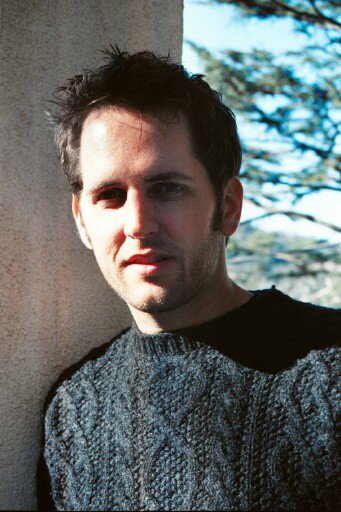
John Lovett

The latest in a series of interviews with script readers and consultants who would be worth your while to work with if you want to get your script in shape. Today’s spotlight is on John Lovett.

After leaving the military in 1992, John went to work as an associate producer for a small production company that produced movies for Cinemax. In 1996, he started The Hollywood Military Advisor and L & M Productions to provide military technical advice to the motion picture industry and produce military documentaries. THMA contributed to numerous military movies and documentaries including BAND OF BROTHERS, PEARL HARBOR, and several military video games.  Now based in the Pacific Northwest, John teaches screenwriting and creativity at a local college, works with emerging and veteran screenwriters as a career coach, and is heavily involved in the local film making community.  John is also the screenwriter behind two produced films: CATHY MORGAN, a science fiction drama, and TWO WEEKS, a tween comedy.

1. What’s the last thing you read/watched that you thought was incredibly well-written?

Akiva Goldman’s ‘Winter’s Tale’, from the book by Mark Helprin. Regardless of the changes from the book, the movie read and played well. The quality of Goldman’s writing came through in how the actors executed against a fantasy/reality setting.

2. How’d you get your start reading scripts?

I worked for a small production company starting in the early 1990’s and had to learn all the aspects of movie production from lighting to camera work, which included being able to read and evaluate scripts for the producer/owner. Also, I took a script reading class from Pilar Allesandra and independently read for various studios for many years.

3. Is recognizing good writing something you think can be taught or learned?

Yes, but with a caveat that while the characteristics of good writing can be taught and instilled, the skills of recognizing good writing are learned by reading, reading, and reading more. In addition, mentoring by experienced readers and writers helps considerably.

4. What are the components of a good script?

Besides following the rules regarding script appearance; structure, structure, and structure.

5. What are some of the most common mistakes you see?

Mechanically, the most common mistakes are misspellings, word misuse, and grammar errors. And yes, all of that is important to good writing.

Artistically, the most common mistakes are not having a consistent through-line, long-winded exposition, and on-the-nose dialogue.

6. What story tropes are you just tired of seeing?

I look for the heart of a story. If the story is well written, I can look through the genre or internal tropes. To that end, I have seen some B-films that went DTV or direct to Netflix that told effective and emotionally engaging stories whilst the core genre or trope had been significantly overdone. Were I to pick one trope, it would be the ex-GI who witnesses some evil deed and becomes a ‘super soldier’ who knows how to handle every weapon and every karate move.

7. What are the 3 most important rules every writer should know?

-If you are writing, stay off the ‘Angry Birds’ and Facecrack.

-Develop business and writing goals and stick to them. As you write and continue to improve your writing, you will modify and update your goals, but at least have a starting point.

-A writer should also know what life is about. Copying over tired ‘Transformer’ or ‘Twilight’ scripts is not going to lead you to new writing truths. Living a life is. Get out from behind the computer and join the Peace Corps or the Army, travel, get a job scraping boats in Florida. Do something, anything, that is not directly writing but is a life experience.

8. Have you ever read a script that was an absolute, without-a-doubt “recommend”? If so, could you give the logline?

While I was a reader for a small production company specializing in DTV material, I wrote a “recommend” for ‘Dark Secrets’ written by S. Tymon. The logline was “An aspiring young reporter becomes involved with the subject of her investigation; a millionaire businessman who runs an underground SM club and is rumored to be involved in the murder of a fashion model.” For the intended audience, the movie turned out okay.

9. How do you feel about screenwriting contests? Worth it or not?

I don’t participate in screenwriting contests. I figure if you’re going to be a writer, then write and sell your work. Contests are great and you get lots of compliments, mostly. The truth of the matter is that we’re writers because we love to write, but we still need to pay the mortgage, buy diapers, and put food on the table. So, write your material well enough to sell, and not win contests.

10. How can people get in touch with you to find out more about the services you provide?

My email address is twoscriptguys@gmail.com. My site is www.twoscriptguys.com. My Facebook page is Screenwriter John Lovett.

11. Readers of this blog are more than familiar with my love/appreciation of pie. What’s your favorite kind?

Shepherd’s.
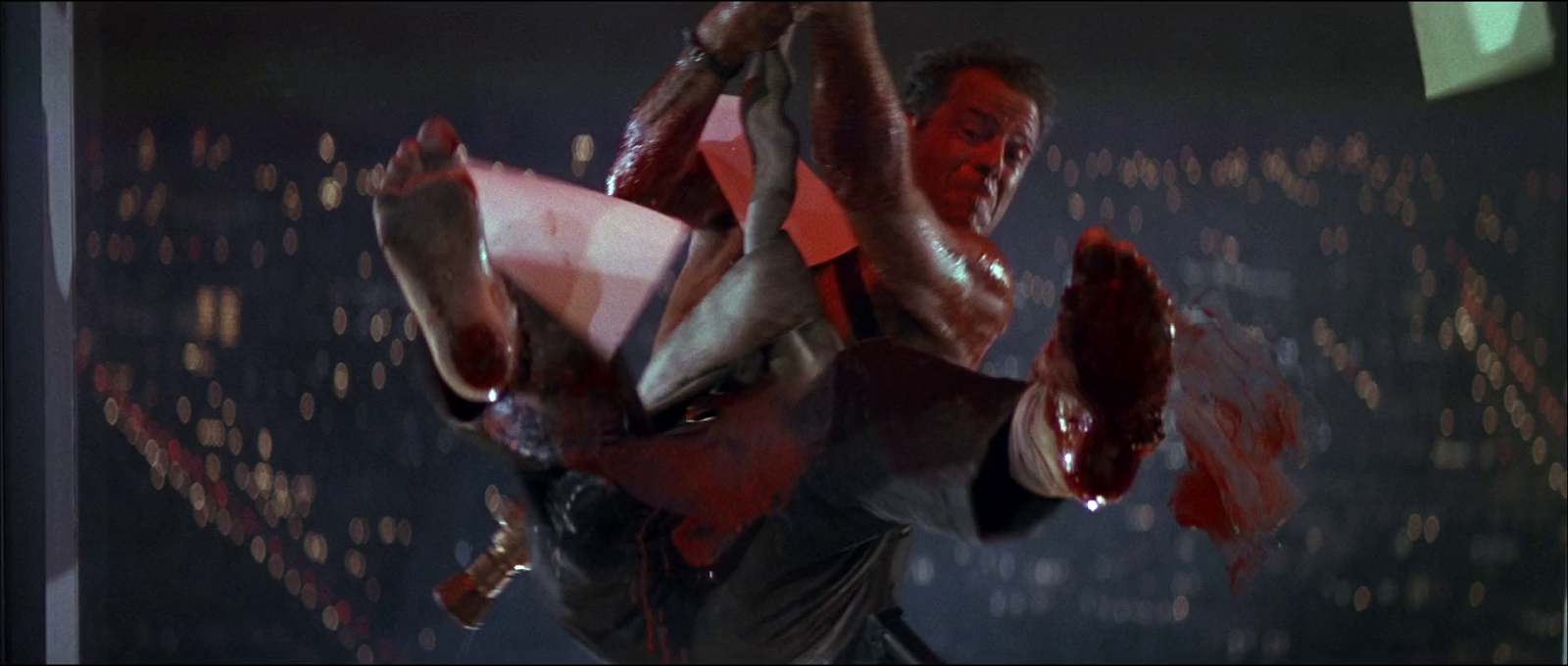
Unstoppable force, say hi to immovable object

There is something in this man's way
There is something in this man’s way

Pop quiz time!

Apart from advancing the story, theme and character development, what is the one key component every scene should contain?

Okay. Pencils down.

A big ol’ piece of pie to everybody who said “conflict”. Without it, your script’s on a one-way trip to Boringtown.

I recently became involved in a discussion with a starting-out writer who asked about the best way to describe how a sequence in his script could play out. After looking at the source material (based on true events), I said if he only writes what happens, there won’t be any drama to it. It needs conflict.

“Conflict how?” he asked.

That’s what it come down to, isn’t it? A lot of newer writers hear “conflict”, and they immediately think two characters are supposed to be arguing. Sometimes that might apply, but it’s not necessarily what it means.

Conflict is two opposing forces going up against each other, and those two forces could be anything (within the limits of your story, of course). Most of the time, one side will be your character and the other will be something or someone standing in their way of achieving their goal, be it immediate or overall.

Which would you rather watch? A story where everything goes just fine for the main character, or one where they’re always dealing with some kind of problem?

One of the great things about conflict is that it can come in any shape or form.

“What if a character opens a window?” was the follow-up question. “Where’s the conflict there?”

There isn’t any. If you’re reading a script and get to a scene that only involves a person opening a window, you’d think “What purpose does this serve?” and tell the writer to cut it.

The conflict would be if it won’t open. There’s a story there. Your curiosity is piqued. Questions are raised. Why won’t it open? Why do they want it open? What are they willing to do to get it open? What’ll happen after they get it open?

Conflict helps move the story forward. Part of our jobs as writers is to come up with new, original and imaginative ways to portray that conflict. The way I have the character open that window is probably totally different than how you would.

Even the central question of your story shows conflict: Will the main character achieve their goal?

While you work on your latest draft, take the time to examine each scene, even the ones only a line or two long. Is there conflict of some sort?

If there is, great. If not, you need to get some in there.

Am I wrong, or just stubborn?

Sometimes you're the puller, and sometimes you're the pullee
Sometimes you’re the puller, and sometimes you’re the pullee

Ever since I started working on the western, a lot of comments have been made pertaining to the belief that certain aspects of it are just not believable (including the always-popular “It’s not historically accurate.”). Therefore, the story doesn’t work.

But I didn’t let that stop me from writing it. In fact, a majority of the notes on the previous draft were quite complimentary and enjoyed the originality and execution of how it all played out.

Jump to the present. I’ve recently become involved with an online writing group. Despite some negative experiences in the past, this one came recommended, so I’m just starting out with them.

Since I don’t have pages for the western rewrite yet, I sent in a revised version of the logline. In all honesty, I don’t really like it. It feels very lacking and incomplete, hence my need for help.

So far, only two people have commented on it, each saying they cannot get past the number of ways this idea can’t work.

Argh.

This kind of response has always bothered me. As writers, our imaginations are the biggest tools in our arsenal. The possibilities of what we can come up with are endless. Just because it’s not how you would do it means my way is wrong; we’re just taking different approaches.

I’ve never been one to use “because I say it does” as a counter-argument, and will never, ever say “you just don’t get it”. I prefer “I can make it work,” and will spend a lot of time and effort figuring out how.

Which pretty much sums up how I’ll deal with this for now.

Like I said to them, there’s a solid logline out there somewhere. It’s finding it that’s the hard part.

Beginning anew

blackboard
The next necessary step to moving forward


Hi there. Nice to be back. And to all you new readers out there – welcome! Feel free to take a look around.

When last we spoke, I was about to embark on a major rewrite of two outlines.

One of them is just about finished, while the other is somewhere in the early parts of Act 2.

Neither has been easy.

The toughest obstacle to overcome has been hanging on so tightly to that which has come before. Significant changes have to be made, or there’s no point to the rewrite.

This isn’t to say I’m totally disregarding what I’ve already written. For example, in a previous draft, a character is killed in a certain way. In this new one, the same method of killing is used, but for a totally different character in a different scenario, and it now holds a lot more significance in terms of the overall story.

While you can’t force yourself to come up with new ideas, you can challenge your creativeness by simply asking “What’s already here is good, but what’s another way this could happen?” There are always options and choices. Don’t limit yourself. Have fun with it.

Another benefit to these rewrites is since I have a fairly strong grasp of how the stories are supposed to play out, I can now concentrate on building up character development (something pointed out and recommended by several note-givers), which also allows for some beneficial quiet and revealing moments between rousing action sequences.

As much as I enjoyed coming up with a lot of those sequences, several have been cut in order to focus more on the characters. I’ll miss them, but they had to go (and could be possibly be resurrected for future use, as mentioned above).

Results so far have been encouraging, but I won’t really know until actual pages get written.

Corny as it may sound, letting yourself develop new ideas and approaches really is quite liberating. And the more you do it, the easier it gets.


Ask a Multi-Award-Winning Script Consultant!

Erik Bork

The latest in a series of interviews with script readers and consultants who would be worth your while to work with if you want to get your script in shape. Today’s spotlight is on Erik Bork, who also runs the website Flying Wrestler.

Erik Bork is best known for his work as a writer-producer on the HBO miniseries Band of Brothers and From the Earth to the Moon – for which he won two Emmy and two Golden Globe Awards. He’s also worked on the writing staff of two primetime dramas, sold multiple original series pitches, and written pilots and features for such companies as Universal, Sony, NBC, Fox, Imagine, Original Film and The Playtone Company. He teaches screenwriting for UCLA Extension and National University’s MFA Program, and has been called one of the Top 10 Most Influential Screenwriting Bloggers.

His book The Idea: The Seven Elements of a Viable Story for Screen, Stage or Fiction is now available.

1. What’s the last thing you read/watched that you thought was incredibly well-written?

I’m continually impressed with how DOWNTON ABBEY tells interesting, emotional, heartfelt stories that are grounded in the realities of its setting, for the various kinds of people who populate it. I’ve been re-watching the first three seasons lately – and think it’s great model for what makes characters and stories compelling, and easy to invest in.

2. How’d you get your start reading scripts?

I’d been a professional screenwriter for about a decade and was being asked to speak to writers groups, teach classes, and give feedback on scripts.

3. Is recognizing good writing something you think can be taught or learned?

Absolutely!

4. What are the components of a good script?

An intriguing and original concept about a compelling and high stakes problem for a character most people can relate to (either the character, and/or the problem) – which focuses on that character as they actively try to solve it, which is complicated and difficult for them, and entertaining for us to watch. I think working with the ten genres in the SAVE THE CAT books are a great tool for working on achieving this.

5. What are some of the most common mistakes you see?

Writers jump to script too quickly, without really developing a concept that has the ingredients necessary to have a chance at success. Stories often don’t have a main character that readers understand and have reason to care enough about, and sometimes it’s not told subjectively through that one person’s point-of-view. The main story problem is often not high stakes enough to the main character’s external life situation (as opposed to their internal life of thoughts, emotions and attitudes). It might not be an active enough challenge where they are pushing the story forward, or a problem that is big enough and hard enough, with enough twists and turns to it. Ultimately, it comes down to achieving the audience’s strong caring, and holding onto that – which is not easy to do.

6. What story tropes are you just tired of seeing?

I get tired of violent adventure stories with life-and-death stakes and a simplistic good vs. evil approach. It’s easiest to grab an audience with that, but it tends to leave me cold – especially when it’s just about visual spectacle, as opposed to realistic characters going through something relatable.

7. What are the three most important rules every writer should know?

-Basic story concept is the most important thing, and hardest to get right.

-The audience must emotionally become one with your main character, which isn’t easy to achieve.

-It’s hard and rare to write something that REALLY works, even for professionals – so stay open to feedback, lots of rewriting, and a long-term process that requires a lot of persistence and ongoing belief.

8. Have you ever read a script that was an absolute, without-a-doubt “recommend”? If so, could you give the logline?

I don’t really provide coverage-style “recommend”/”consider”/”pass” ratings, and don’t exactly think in those terms. I’m more about helping the writer better their craft and project(s), and never look for or expect a script that comes to me to be something they could instantly do something with in the marketplace.

9. How do you feel about screenwriting contests? Worth it or not?

They’re in no way a panacea or golden ticket, and most of them probably won’t do much to advance one’s career – unless you finish really highly in one of the top contests. But it can be a good way to see how you’re doing, and get quality feedback, if you find the price reasonable.

10. How can people can get in touch with you to find out more about the services you provide?

You’ll find my script consulting page on my “Flying Wrestler” blog. You can also e-mail me directly at erik@flyingwrestler.com.

11. Readers of this blog are more than familiar with my love/appreciation of pie. What’s your favorite kind?

Cherry, hands down.