Strong rope & solid knots required

rope bridge
As long as it leads somewhere

I’m a big believer in tying story elements together whenever possible. While this should already apply to key details within the story, sometimes it’s simply a matter of a setup and payoff, even if it seems like a throwaway item. Bonus points if it ties in to your primary storyline. Which it should.

Case in point: in the opening scene of CHINATOWN, Gittes is showing his client photos of the man’s wife’s infidelity. The man, heartbroken, tells Gittes “if there’s anything you ever need, let me know.” The scene ends, and we figure that’s that. This is what kind of guy Gittes is and what he does, and then we transition into the main storyline. Events play out, and Gittes finds himself cornered in a tough spot.

So how does he get out of it? He leads his pursuers to a house he claims has the answers. But when he knocks on the front door, who answers it? The guy from the opening scene. We’d totally forgotten about him, but it’s a perfect choice. It ties things together, works within the context of the story, and anybody else would have not worked.

Everything in your story should serve a function in helping move the story forward, no matter how small or insignificant it might seem.

Do you have characters or events in your script that are strictly one-time-only? What purpose do they serve? If you took them out, would it make a difference?

And if you do keep them, is there any way to change them around so that you have a solid setup and payoff that tie into the overall story? It might not be as tough as you think.

In the outline of my current project, I had some smaller scenes in the first act that were totally unconnected. Going through it a second time, I’ve been finding ways to connect them. Sometimes it’s about using a character making a return appearance, or having some key scenes take place in the same location. Again, it’s all about what works within the context of the story.

(Admittedly, I’m also working on this from the mindset of keeping the budget low. If having the same character appear twice, rather than it being two separate characters, or being able to use a location more than once means less money that needs to be spent, than so be it. It’s an influence, not a rule. But this is me. You may choose to take a different approach.)

Another benefit of tying elements together is that it shows how much thought and effort you’ve put into crafting this story together. The evidence is right there on the page. You’re proving that you’re actually thinking this through and not just randomly throwing things in and hoping something sticks. You’d be surprised how many writers do that.

Don’t be one of them.

Let’s get those brains stimulated, people!

You mean movies can be smart AND good?

One of my favorite things to do as a parent is go to the movies with my daughter. It’s a nice feeling knowing I’ve instilled in her the appreciation of the whole moviegoing experience. It also helps that there’s a fantastic two-screen (one of a handful of similar small neighborhood theatres in San Francisco) a few blocks from us.

And as she’s getting older, our choices are growing in number. Strictly kid-based animation has given way to PG-13 fare, so we try to see what we can when possible.

Earlier this summer, we caught JURASSIC WORLD and INSIDE OUT within a week’s time. She really enjoyed the dinosaur flick. I thought it was fun, but felt it relied more on the nostalgia factor rather than smart storytelling (“Remember when we helped Grandpa fix that old car?”). I found the latest offering from Pixar to be pure genius, while she found it to be simply “okay”. I asked why she liked the first movie more than the second.

“I think I like movies where you don’t have to think too much.”

Gasp.

I won’t go so far as to say it was a dagger in my heart, but you can probably understand my being taken somewhat aback.

I could easily chalk it up to that she’s still relatively young and hasn’t latched on to my love of the movies to the extent that I have. Like I said, the list of what she’s seen is somewhat limited. I’ve done what I can, and hopefully can continue to contribute to it.

But as a writer, what’s my biggest takeaway from this?

Obviously I want to write scripts for films that will be embraced by the general public, which means they’d have to be simple enough that anybody could follow along, but also written in a way that the reader/audience doesn’t feel insulted or talked down to.

All this talk about needing to appeal to the lowest common denominator has always bothered me. It makes it sound like there’s no point in trying to write something smart.

I beg to differ.

Getting the reader/audience to really think about the story gets them more involved. You hooked with them with the beginning, kept them intrigued throughout the middle, and now they’re compelled to find out how it all ends. Isn’t that what it all comes down to?

I love it when I read a script where it’s obvious a writer knows what they’re doing when it comes to telling a story. Setups and payoffs. Multi-dimensional characters. Plotlines where I know what the endpoint is, have no idea how we’re going to get there, and am getting a real kick out of taking the journey.

This is the kind of writing we should all strive to create.

It’s easy to write something that doesn’t try to challenge the reader/audience, and the reaction will probably be similar. “Boring.” “Unoriginal.” “Meh.”

Push yourself to write something that offers up something new, or at least a new twist on an old standard. Give us something we haven’t seen before, or totally weren’t expecting. Not just one part. THE WHOLE THING. There’s something exhilarating about venturing into new territory. Take us there.

We’re writers. It’s what we do.

Ask a Man-of-Distinction Script Consultant!

The latest in a series of interviews with script readers and consultants who would be worth your while to work with if you want to get your script in shape. Today’s spotlight is on writer-consultant-Scriptmag contributor Ray Morton.

Ray Morton is a writer and script consultant. He writes the Meet the Reader column at Scriptmag.com and is the author of seven books, including A Quick Guide to Screenwriting and A Quick Guide to Television Writing. Ray is available for script consultation and can be reached at ray@raymorton.com. Follow Ray on Twitter: @RayMorton1

1. What’s the last thing you read/watched that you thought was incredibly well-written?

I recently re-watched ORDINARY PEOPLE for the first time in a long time and was blown away by how precise Alvin Sargent’s wonderful screenplay is. To begin with, it’s a very moving story. The construction is incredibly tight — always moving forward toward the climax. And every scene and moment in the script both reveals character and moves the narrative forward. It is masterful work on the level of a Swiss watchmaker.

2. How’d you get your start reading scripts?

A friend of mine worked in development at Castle Rock. She told me they were looking for readers. I was already a working writer, but was looking for work in between gigs, so I did a piece of sample coverage. They began using me and things went from there.

3. Is recognizing good writing something you think can be taught or learned?

I think you have to have an affinity for good writing. Whether that can be taught or not, I don’t know. For me, it developed naturally as a result of doing a lot of reading, which I’ve always done since I was a kid. I think you can be taught what elements make a viable screenplay.

4. What are the components of a good script?

A good script starts with a strong premise. From there, a story must be developed that is well constructed and makes the most of the premise. A good script has a protagonist with a strong, clear goal that develops in the first act and that he pursues throughout the second and third acts.

The protagonist must be someone we care about — not like, necessarily, but who we have some sympathy for and in whose plight we can invest ourselves emotionally. The supporting characters should be vibrant and distinctive. The dialogue should be strong — each character should speak in her/his own unique voice. The script must be what it promises – a comedy must be funny, a horror movie must be scary, a drama must be moving, and so on. And the ending must be satisfying — it must feel like the absolutely right conclusion to the story we’ve just witnessed.

5. What are some of the most common mistakes you see?

By far, the most common mistake aspiring screenwriters make is to spend all of Act I setting up a particular premise and then abandoning that premise in Act II and taking off on an entirely different tangent, so that the script ends up reading like two entirely different stories that just happen to feature the same characters. The other most common mistake is a lack of clarity — as to what the premise of the story is, who the protagonist is, what his goal is, what the motivations behind the major actions and events in the story are, and so on. A third common mistake are scripts written like novels, with paragraph upon paragraph devoted to telling us what a character is thinking and feeling on the inside — things that will never be seen on screen.

6. What story tropes are you just tired of seeing?

I’m tired of non-linear storytelling — there has been so much of it in the last ten years and so little of it done well. I’m tired of flashbacks, which are overused and ruin the flow of stories. I’m tired of stories that begin in the middle, jump back in time, then catch up halfway through. All of these things have been done to death to the point where I am longing to read a story that begins at the beginning and unfolds chronologically until it ends at the end.

7. What are the 3 most important rules every writer should know?

I’m not a big believer in rules per se, but the three things I think screenwriters need to know are:

-Screenwriting is dramatic writing and you need to understand the basic principles of dramatic writing to be an effective screenwriter.

-You need to rewrite. Too many aspiring screenwriters are reluctant to rewrite – they’ll futz around the edges, make a few cosmetic changes, and leave it at that. You must be ruthless with your work — willing to go over it again and again and really fix what doesn’t work, or you will never write a good script.

-This is a business and you must act accordingly — there are no shortcuts or magic tricks, no one owes you anything, and you must behave professionally at all times even if the people you’re dealing with do not.

8. Have you ever read a script that was an absolute, without-a-doubt recommend? If so, could you give the logline?

I’ve read two. One was the script that eventually became the Geoffrey Rush film SHINE. The draft I read was just about perfect (although the final film was very different from the screenplay and I didn’t like it nearly as much). The second was a script called CRICKET SPIT, about a young girl whose doctor father lies to her (out of well meaning kindness) about her best friend’s terminal condition, which causes a rift between parent and child. It was a “small” movie and never got made but it was terribly moving and just brilliant.

9. How do you feel about screenwriting contests? Worth it or not?

The top 5 or so — the NichollBig Break, etc. – can be very worth it, because most of those contests can bring you to the attention of the industry in a number of ways (hooking you up with producers, introducing you to managers and agents, etc.). The lesser ones – ones sponsored by no-name organizations and ones that keep urging you to add extra services (buying coverage, buying a seat at the awards ceremony, etc) –  are a waste of time and money.

10. How can people get in touch with you to find out more about the services you provide?

They can go to my website – raymorton.com – or email me at ray@raymorton.com

11. Readers of this blog are more than familiar with my love/appreciation of pie. What’s your favorite kind?

Chocolate silk, hands down.

Ask an International Multi-Hyphenate Script Consultant!

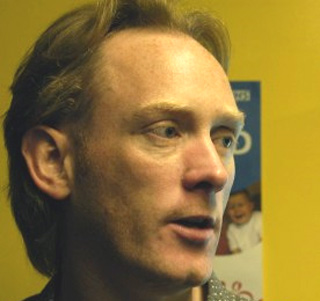
Danny Stack

The latest in a series of interviews with script readers and consultants who would be worth your while to work with if you want to get your script in shape. Today’s spotlight is on writer-director-editor-analyst-contest organizer Danny Stack of Scriptwriting in the UK.

Danny Stack is a screenwriter whose TV writing credits include the revamped Thunderbirds Are Go! and the BBC’s flagship soap EastEnders, amongst others. He also writes and directs, and is currently in post-production on his live-action children’s feature film Who Killed Nelson Nutmeg? Danny has many years experience as a story analyst for a number of film companies, such as Working Title, Pathe Films, Miramax (Harvey Weinstein era) and the UK Film Council, to name but a few. He was development script editor for the British film The Man Inside, and he script edited the Irish-language feature film Kings.

1.What’s the last thing you read/watched that you thought was incredibly well-written?

The Knick by Jack Amiel and Michael Begler. It’s a TV period drama about The Knickerbocker hospital around the turn of the 20th century. The drama is very character-driven but extremely engaging. Steven Soderbergh’s direction is also very distinctive and interesting, adding to the immersive milieu of the show.

2. How’d you get your start reading scripts?

I was a commissioning assistant in the Channel 4 comedy department. A large part of my job was logging all the spec sitcom scripts. I farmed them out to a handful of readers but started reading and writing my own reports, too, and really enjoyed it. Once I left Channel 4, I approached film companies asking to read scripts for them. I did a few sample reports, and went from there!

3. Is recognizing good writing something you think can be taught or learned?

Learning to recognize good writing should sharpen your existing storytelling instincts. For example, I didn’t know anything about inciting incidents or three-act structure when I was green and keen, but when I read my first screenwriting book, those terms made complete sense to my natural instincts about story in the first place.

4. What are the components of a good script?

An original idea, interesting characters, good dialogue, unpredictable plot, a solid structure, humour.

5. What are some of the most common mistakes you see?

Long set-ups or unnecessary introductions of characters, or indulging in backstory. Over-written scene description. Plain or over-familiar dialogue. Similarly plain or over-familiar characterization. Female characters being treated or written poorly.

6. What story tropes are you just tired of seeing?

Advanced aliens who are unaware of, or can’t comprehend, human emotion. ‘One last job’ crime set-ups. The straight-talking, overweight female friend often seen in comedies.

7. What are the 3 most important rules every writer should know?

These aren’t rules, more things writers should be aware of:

-The first ten pages of your script are vital in making a good impression.

-It’s extremely unlikely you’ll get your first script made.

-Structure is your friend, not something to be railed against.

8. Have you ever read a script that was an absolute, without-a-doubt “recommend”? If so, could you give the logline?

I think I’ve only given around half a dozen RECOMMENDS (out of literally thousands of scripts!). One of those RECOMMENDS had this logline:

“An adulterous husband’s life falls apart when his job comes under threat while his wife gets involved with a pyramid money making scheme to alleviate her boredom and frustrations.” This might not sound MUST READ but the writing was sharp, funny and inventive, and deftly managed an ensemble cast. After I recommended it, the exec read it, liked it, invited the writers in, and helped them find an agent.

9. How do you feel about screenwriting contests? Worth it or not?

I actually help organize a screenwriting contest in the UK. It’s called the Red Planet Prize which is a scheme to find new TV writers. It’s about helping and mentoring writers rather than just announcing a winner and then nothing. Plus, it’s free to enter. I’m very proud of setting it all up, and it’s helped kickstart a few careers, most notably with Robert Thorogood and his BBC series Death in Paradise. So yes, screenwriting contests are worth it, but don’t be sucked in by every single one; weigh up the pros and cons (is there a entry fee? Do I get feedback? Is the prize any good? etc.), and roll the dice!

10. How can people get in touch with you to find out more about the services you provide?

On my website dannystack.com

11. Readers of this blog are more than familiar with my love/appreciation of pie. What’s your favorite kind?

I have an annual Pie Night with my friends where we cook 5-6 varieties, and then choose a favourite. Last year’s special was a traditional steak & ale pie, delicious! I’m quite partial to a hearty fish pie, too. And lemon meringue pie for dessert. You’re not going to make me choose one, are you? NO FAIR.

Ask a Guy Who Takes Comedy Very Seriously!

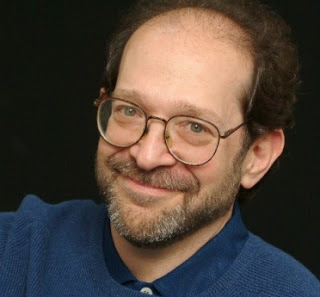
Steve Kaplan

The latest in a series of interviews with script readers and consultants who would be worth your while to work with if you want to get your script in shape. Today focuses on writing comedy, so the spotlight is on Steve Kaplan, who runs the Comedy Intensive course.

1. What would you call a good example of some great comedy writing in recent TV or film?

It’s sometimes difficult to separate great comic writing from great comic performances. That being said, I think the best comedy writing on television occurs, day in and day out, on THE DAILY SHOW and THE COLBERT REPORT. Both shows are able to combine sharp satire with great comic characters, and in the case of THE DAILY SHOW, much of the comedy benefits from the relationship between Jon Stewart’s somewhat befuddled and beleaguered news anchor and his crew of inspiringly loony correspondents.

Much has been written about the death of the sitcom, but Network TV still offers the great work from THE SIMPSONS (25 years, and still going strong) and MODERN FAMILY’s writing staff, while cable is a treasure trove of niche delights, from sketch shows like INSIDE AMY SCHUMER to episodics like LOUIE, VEEP, GETTING ON, and EPISODES. I’m also looking forward to the BREAKING BAD prequel, BETTER CALL SAUL.

The comedy feature record is spottier. Big hits like DUMB AND DUMBER TO and THE HANGOVER 3 may have made a lot of money, but for me, my favorite comedy of 2014 was THE GRAND BUDAPEST HOTEL — funny, lovely, odd, stylish, a little sad, touching and in the end, really about something. (As of this writing, I still haven’t seen THE INTERVIEW, but I’m really looking forward to it. The trailer made me laugh out loud, it provoked North Korea into a mammoth cyber-attack on Sony—what’s not to like?)

Film comedies I’ve enjoyed from the past few years include SILVER LININGS PLAYBOOK, AMERICAN HUSTLE, MOONRISE KINGDOM, THE TRIP and THE TRIP TO ITALY, THIS IS THE END, NEBRASKA, WARM BODIES, THE WAY WAY BACK, TED —exactly the way I like my comedies. Some were silly and looney, but looking over the list, most were funny, lovely, odd, stylish, a little sad, touching and in the end, really about something. What can I say. You might like vanilla; I like chocolate. In the end, it’s subjective.

2. What’s your comedy background?

As a kid, I was awkward and kind of odd—I was drawn to comedy because I noted that in comedy movies, the funny guys were awkward and kind of odd, but sometimes got the girl! That was good enough for me!

In college, I studied acting and directing. After college, I was given an opportunity to start an Off-Off Broadway theatre. I convinced my two partners that we should start a theatre that was completely devoted to comedy. Manhattan Punch Line helped launch the careers of actors like Nathan Lane and Oliver Platt, and writers like Michael Patrick King, Peter Tolan and David Crane. While at the Punch Line, I taught classes and worked with and directed sketch groups. I began to wonder why something that was incredibly funny on Thursday night would get no laughs on Sunday. Why sometimes the funniest performance of a play was at its very first table read? What was going on here? That’s when I started seriously exploring the art and the science—some would even call it the physics—of comedy.

At the time, I was teaching an improv class. Without telling the actors, I started experimenting with them—devising improv games to get at the core of comedy: how it works, why it works, what’s going on when it stops working, and what the hell can you do about it?

These experiments led to the discovery of a series of techniques, which in turn led to a forty-week Master Class in comedy. When I moved to LA, I it was suggested to me that I gear my course to writers. “You could be the Robert McKee of comedy!” was how Derek Christopher (who produces the annual Story Expo in LA) put it. That led to teaching comedy around the globe, and working with companies like DreamWorks Animation, Disney Animation, Screen Australia and Film Victoria, working as a consultant with writers and producers, publishing my book, The Hidden Tools of Comedy, and ultimately, being interviewed by you.

3. Who are some of your comedic inspirations/role models? What is it about them in particular that appeals to you?

That’s a hard question to answer. I’m a fan of great comedy, and the list of great comedy writers performers and creators could go on and on. There are parts of careers that inspired me—early to mid Woody Allen, late George Carlin, some Mel Brooks, Bob Hope in the ROAD movies, Steve Martin in ROXANNE and L.A. STORY and BOWFINGER, Monty Python, FAWLTY TOWERS, THE MARY TYLER MOORES SHOW, SEINFELD, Lily Tomlin, THE BOB NEWHART SHOW, ALL IN THE FAMILY, Richard Pryor, Chris Rock, Louie C.K., Lenny Bruce, Sarah Silverman, Tom Lehrer (okay, and Allan Sherman), George Burns, Bill Irwin, Judd Apatow, BROADCAST NEWS and AS GOOD AS IT GETS. I’m sure I’m leaving out twenty that after this is posted, I’ll hit myself on the forehead, shouting, “How could I forget _________?!!?”

What they all have in common, in some fashion, is an immediacy, honesty (in some cases, a ferocious honesty), an ability to see a slightly off-centered view of the world, and then share it so we see it as well. They all made me laugh, and most had the ability to touch the heart, to make you care and still be funny!

4. Do you think someone can be taught to be funny, or is it something that just comes naturally?

Groucho Marx once said “you can’t teach funny.” But the Marx Brothers were a terrible, just terrible, act when their mother Minnie first pushed them out on stage. But working eight shows a day in vaudeville, picking up hints and tips from the other performers, they honed their act into one of the greatest comedy teams of all time. But it wasn’t ‘natural’; it was through apprenticeship, observation, and yes, being taught by other performers.

While you can’t teach someone to be more talented, you can teach someone to act and write to the best of their ability.  And just like you can teach drama, you can certainly teach comedy. Yes, comedy can be taught.

5. What would you recommend for a writer who wants to develop or sharpen their comedy-writing skills?

What can writers do to sharpen their skills? Hang around with other funny people.

There are two great ways to do that. One would be to join an improv group or take improv classes. Since much of comedy is character-based, the best way to get inside a character’s head is to be one. Even if you’re not interested in being a performer or stand-up, the comic skills you’ll pick up are invaluable when writing material, whether it’s long form or short form, or just a set-up and punch line.

The second piece of advice would be to form or join a writers’ group. Once you’ve written your material, it’s imperative to hear the material read out loud in front of even a small group of friends and colleagues. It’s basic to comedy: the interaction between script/performer and audience. You’ve got to hear how those golden pearls play when read by humans to humans. You’re not looking for hours of rehearsal and polished performances, but just an intelligent read can tell you what’s alive and kicking in your script, and what’s dead as a doornail, only you don’t know it yet. So, in a nutshell: Funny people get funnier when in the company of other funny people.

6. Are there any comedy cliches you consider overused? Which ones are you just tired of seeing?

I’ve really tried to think of some that I hope never to see again, but I kept coming up with exceptions to the rule. Spit-takes are overdone, yet I still laugh when Desi or Danny does one. Getting kicked in the balls is another, yet there’s a beat in MONSTERS, INC. when Billy Crystal’s one-eyed character lands hard on his privates, and I’m sorry, it’s only a cartoon, but it’s funny. At least I thought so. I guess the difference is a meme or bit done by rote, and one enhanced by a great character or performance.

The things I am tired of seeing are scripts overloaded with weak, puerile jokes; scripts in which every character is a wise-cracker or failed stand-up comedian.

7. What’s the funniest joke you’ve ever read or heard from a non-professional ?

Hmmm. . . my six-year old niece once asked me, “Did you hear about the peanut walking alone in the park at night? It was a salted.” I thought that was pretty funny.

8. How can people contact you to find out more about your services?

My website is www.KaplanComedy.com, and my email address is Steve@KaplanComedy.com. In addition, you can follow me on Twitter at @skcomedy or on Facebook at Facebook.com/KaplanComedy. In addition to presenting one and two day workshops in the US and abroad, I’m also available for script consultations, whether on full-feature scripts, pilots, webisodes or treatments.

9. Readers of this blog are more than familiar with my love/appreciation of pie. What’s your favorite kind?

Man, that’s a tough question. I love Boston Cream Pie and apple pie a la mode, but if I’m on a desert island, and can only have one slice, I’ll go with pumpkin pie—ice cream on the side!