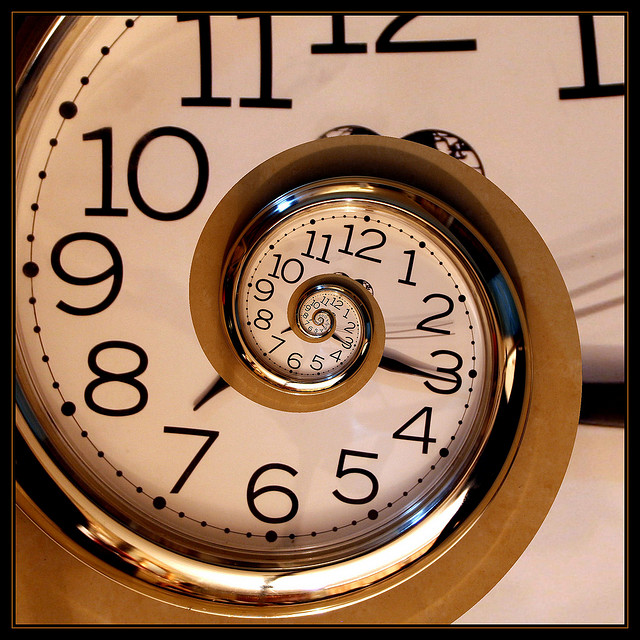
Just a moment of your time, please

It’ll only take this long, right?

Even though I don’t actively participate on a lot of online forums, I still enjoy reading them, occasionally throwing in my two cents when I think I have something worth saying.

On one such forum, an experienced writer offered to provide detailed notes on the script with the logline he liked the most. He was very detailed and meticulous in laying out the guidelines and rules, including that the script “MUST be ready to read NOW. No exceptions.”

Up until that caveat, I’d thought about submitting the logline for my mystery-comedy, but knew the script still needed work, so instead opted to hold off and wait until I thought the script was ready. And I said words to that effect in the comments.

Much to my surprise, he responded almost immediately.

“Now that’s what I love to see. Writers respecting the investment of time and energy of others. I’m taking about five hours out of my life to do this and I want to feel the script I’m about to read will be worth it. Good on you, Paul, for being so conscientious. It’s one of the responsibilities of a writer no one tells you about, but it’s absolutely vital for building and sustaining a career.”

I never thought of it that way because I was looking at it from my perspective: I didn’t want offer up a script I didn’t consider ready yet. But he makes a very good point – the other person has their own schedule, and you need to be respectful of that.

It’s easy to forget that even though you’ve put a lot of time and effort into your script, now you’re imposing on somebody else to devote a sizable chunk of their time to giving it a solid read-through. That’s a lot to ask, especially when they’ve offered to do it for free.

When somebody asks me if I can take a look at their script, I always let them know it’ll probably take me longer than I think to get those notes to them – and it usually does. Nobody’s complained about it (to my face, anyway). And when the situation is reversed and someone’s giving me notes, I’ll send the script with a note of thanks and that there’s no rush. I’ll distract myself from the waiting game by working on another project or two.

We all only have so much time to spare to devote to work on our own material, let alone someone else’s. Just be grateful and appreciative that someone’s willing to sacrifice some of their time to help you out, and definitely be just as willing to return the favor.

In a timely manner, of course.

Go for the hard turn

bullitt gif

I just finished reading a friend’s comedy script. It was okay. It needs work, but the one thing I couldn’t shake was how the story played out pretty close to how I expected it to. There weren’t any real surprises.

However, one of the things that really stood out about this story was that deep within it was the idea for the same kind of story, but from a totally different angle. Not only would this open up new and original ideas, but it also made me think that this new story would be one I don’t think I’d ever seen/heard of before.

How many times have you read a script and known what was coming? Don’t you love that feeling when you read something and get what you were totally not expecting? A story that keeps you eagerly wondering “what comes next?” is one to be thoroughly enjoyed. The more surprised we are, the better.

Cliches. Tropes. Clams. Old reliables. Whatever you want to call them, writers with less experience use them because they’ve worked before. It takes a lot of effort to NOT use them.

The challenge is to come up with a new way to present these old ideas. “Familiar yet different,” as the saying goes.

It can be a little intimidating to take those first steps into unfamiliar territory, but you want the journey the reader takes through the story to be memorable, right? So why not take that chance and head in a new direction?

Go through your latest draft. Are there elements to it that feel tired or overused? You’ll know them when you see them. Is there a different way to do or say the same thing?

You can even go so far as to imagine “What’s the least likely thing that could happen/be said here, but still takes the story in the right direction?”

Try it. You might be surprised. And if you’re surprised, chances are the reader will be too.

A refresher course we can all use

Okay, class. Who needs more time to work on their script?

I’ve had a lot of goings-on with loglines over the past couple of days, which prompted me to re-post this gem from a little over 2 years ago.

Enjoy.

“Scenario:  You’re at a social function, engaged in idle chit-chat. The topic of you being a screenwriter comes up.

“What’s your story about?” they will undoubtedly ask.

The chance you’ve been waiting for!  What do you say?

You want to pique their curiosity, and not bore them.

In the simplest of terms:  provide a quick summary of the main characters(s) and what happens in the main storyline.

Avoid too much information, non-essential characters, intricate subplots, how it’s a metaphor for this totally different other thing, or generic phrases like “and learns about themselves” or “stumbles into a world she wasn’t prepared for” or the ever-dreaded “wackiness ensues.”

What are the components of an effective logline? Just the following:

1. A protagonist with a flaw.

2. An antagonist with a goal.

3. The situation that pits them against each other

4. What’s at stake/what happens if the protagonist fails?

That’s pretty much it. Keep it simple. Nothing too specific or generic.

Make sure you emphasize the genre. If it’s a comedy, play up the comedic angle. A thriller, go for the suspense. That sort of thing.

And most importantly, make it sound interesting. This is your best chance to grab their attention, so make the most of it (and make sure the script is just as good).”

-3rd half-marathon of the year this weekend. Training’s been more sporadic than I would have liked, so hoping to break 1:55, but will settle for under 2 hours.

Let’s get those brains stimulated, people!

You mean movies can be smart AND good?

One of my favorite things to do as a parent is go to the movies with my daughter. It’s a nice feeling knowing I’ve instilled in her the appreciation of the whole moviegoing experience. It also helps that there’s a fantastic two-screen (one of a handful of similar small neighborhood theatres in San Francisco) a few blocks from us.

And as she’s getting older, our choices are growing in number. Strictly kid-based animation has given way to PG-13 fare, so we try to see what we can when possible.

Earlier this summer, we caught JURASSIC WORLD and INSIDE OUT within a week’s time. She really enjoyed the dinosaur flick. I thought it was fun, but felt it relied more on the nostalgia factor rather than smart storytelling (“Remember when we helped Grandpa fix that old car?”). I found the latest offering from Pixar to be pure genius, while she found it to be simply “okay”. I asked why she liked the first movie more than the second.

“I think I like movies where you don’t have to think too much.”

Gasp.

I won’t go so far as to say it was a dagger in my heart, but you can probably understand my being taken somewhat aback.

I could easily chalk it up to that she’s still relatively young and hasn’t latched on to my love of the movies to the extent that I have. Like I said, the list of what she’s seen is somewhat limited. I’ve done what I can, and hopefully can continue to contribute to it.

But as a writer, what’s my biggest takeaway from this?

Obviously I want to write scripts for films that will be embraced by the general public, which means they’d have to be simple enough that anybody could follow along, but also written in a way that the reader/audience doesn’t feel insulted or talked down to.

All this talk about needing to appeal to the lowest common denominator has always bothered me. It makes it sound like there’s no point in trying to write something smart.

I beg to differ.

Getting the reader/audience to really think about the story gets them more involved. You hooked with them with the beginning, kept them intrigued throughout the middle, and now they’re compelled to find out how it all ends. Isn’t that what it all comes down to?

I love it when I read a script where it’s obvious a writer knows what they’re doing when it comes to telling a story. Setups and payoffs. Multi-dimensional characters. Plotlines where I know what the endpoint is, have no idea how we’re going to get there, and am getting a real kick out of taking the journey.

This is the kind of writing we should all strive to create.

It’s easy to write something that doesn’t try to challenge the reader/audience, and the reaction will probably be similar. “Boring.” “Unoriginal.” “Meh.”

Push yourself to write something that offers up something new, or at least a new twist on an old standard. Give us something we haven’t seen before, or totally weren’t expecting. Not just one part. THE WHOLE THING. There’s something exhilarating about venturing into new territory. Take us there.

We’re writers. It’s what we do.

This is feedback?

I'M LOUD, WHICH MEANS I'M RIGHT!
I’M LOUD, WHICH MEANS I’M RIGHT!

Oh, the hell and agony I must endure so as to spare you, my loyal reader, from hopefully having to experience the same thing.

Once again, your humble author has been savaged by the sharp knives of online criticism. This time around, it was regarding the logline for my mystery-comedy.

Perhaps I’d been lulled into a sense of false security by recently receiving positive feedback on it from other sources. Feeling buoyed by those encouraging comments, I posted the logline somewhere else. Even though I like how it currently reads, that doesn’t mean it can’t still be improved.

Ever notice that a lot of online forums are usually organized with the intention/suggestion/guideline that participants “offer up helpful advice” to those seeking it? More on that in a minute.

There was one positive response, which was quickly shoved aside by one of a more…negative nature.

Among the highlights:

“…probably one of the worst concepts I’ve ever heard.” (*Ahem* PIXELS?)

“Maybe if it was written for 5-year-olds…” (because that hasn’t worked for Disney)

“That’s how hokey your entire concept comes across as. Sorry, but I think it’s truly dreadful. (sad face emoji)” (So glad they threw the emoji in or I would have totally missed their point.)

Younger-writer Me would have not taken these comments well. Present-day Me laughed my fucking head off.

You don’t like it? Fine. Makes no difference to me. But why all the hate and insults? All I’m reading are the thoughts of a bitter asshole who doesn’t understand the term “constructive criticism”.

If your overall message is simply “Your idea sucks, and now I’m going to shit all over it!” then what’s the point of even saying anything? Do you think your vitriolic rant is going to make me suddenly stop working on it?

There were so many ways I wanted to respond, and came really close to doing it several times, but instead opted to just stay silent. No matter what I said, it would probably be misconstrued and more than likely start an unnecessary battle of words. Not worth it.

Remember that little guideline for the group regarding “helpful advice”? How exactly does anything that was said do that? Anybody can say they don’t like something, but at least give a valid reason why. Another member chimed in that “you have to take the comments if you post”. I agree, but that means the comments have to be worth taking in the first place.

A friend offered up this reminder: “When someone criticizes, it needs to be specific and constructive. Otherwise, it has no value.” I’d say that’s pretty accurate, and definitely applies here.

An even more amazing aspect to this whole thing is that this is the exact same person who issued a similar diatribe over the logline for my western last year. As far as my research can tell, they are still a self-proclaimed “director, producer, screenwriter and script consultant,” although without any identifiable credits or internet presence.

The whole purpose of providing feedback is to use your knowledge to help the other person make their something better, and in a way that’s not insulting or belittling. In this case, neither happened.

This was just an angry opinion showing a total lack of knowledge, help and encouragement, and definitely could not be considered feedback in any true sense of the word.